Paul
I finished contouring the welds and the porting came out real nice. I
had a question on potting the housing using the Liquid Aluminum from DEVCO.
Is there any preparation that needs to be done to the aluminum prior to
potting? Like taking it down to bare aluminum and etching?
Mike C.
Absolutely. You bet. Epoxy is not going to stick until you grind it
down to the bare aluminum and convert the aluminum surface with this kit.
Get it in yacht stores.
IMHO not worth it as if it ever needs a pin hole leak repair it will be a
pain in the ass to dig it out of there.
It is much better to fix any leaks with low viscosity MG Chemicals liquid
silicone rubber. Used for conformal coatings on electronic circuit boards.
Good to 400 F. In fact I recommend putting some in the gap around the SS
tube and the inner wall of the rotor housing now just in case. You can use
an eye dropper to it. All it takes is a tiny amount.
Paul Lamar
What gets me is when I was asking about my housings I was told to they
should be potted, and nothing about the etching at all. Now the word is not
worth the trouble. So I potted them, and right after it cures, up comes this
etching thing. Am I screwed? Did I just waste another $400? I'm really
getting frustrated.
C. Smith
Not to worry Craig. We bored right through the JB Weld you put in there. In fact
it takes some chatter out of the boring process. You can still dribble some
silicones liquid and capillary action will take it where it needs to go. No big
deal. Your rotor housings are fine. No need to take it out.
---------------------------------------------------------------------
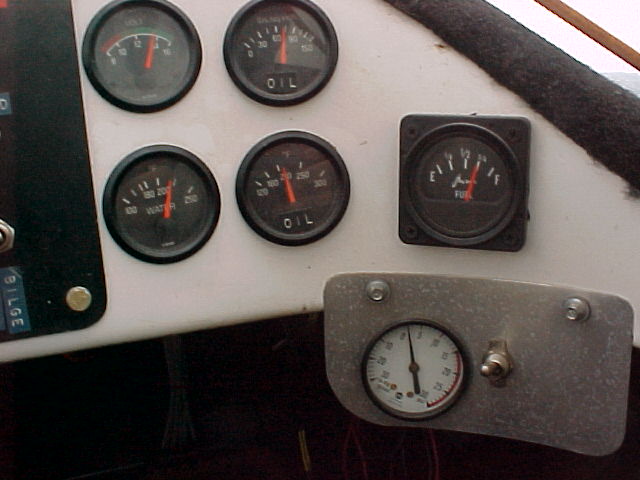
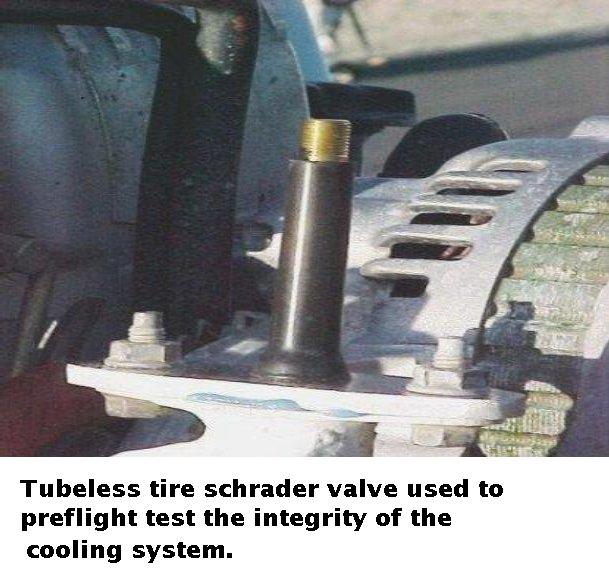
BTW When it comes time to fly part of the preflight is a cooling system
integrity check where you pressurize the cooling system with a portable air
compressor or bicycle pump and watch the coolant pressure gage for bleed off.
All liquid cooled aircraft engines should have a coolant pressure gage on the
instrument panel. That is mentioned in my book. The pressure goes above and
below atmospheric so you need to get the right kind of plus and minus gage.
Here is a picture of the right kind of gage on Ken Welters rotary powered Coot
amphibian Also a picture of the tubeless tire valve on Perry Mick's Long EZ.
This is regardless if you have a p-port engine or not. It checks the O-rings
between housings as well.
Paul Lamar
--
The Rotary Engine NewsLetter. Powered by Linux.
ACRE NL web site.
http://www.rotaryeng.net
Youtube key word UTUBPLEASE
Copyright 1998-2009 All world wide rights reserved.