Paul,
Good news! After spending many, many months (years) trying to get my oil
temps down, I finally discovered that the problem was a defective oil
cooler. It appears that the only oil cooling was from the oil/water
exchanger. While temps were too high for comfort, especially during
summer,
it did cool the oil well enough to keep me flying throughout the Texas
summer. After just recently discovering the defective cooler, I replaced
it
with a Modine of similar size & style and flew it for the first time today.
WOW! What a difference, possibly enough to remove the oil/water exchanger
altogether (more testing is requried). Addimitedly, the OAT was in the mid
40's, the return oil temp was down in the 150*F range, when it had been
around 210 - 240*F. On today's flight, in cruise configuration, the
coolant
was 165-170 with cowl flap closed.
Also, it appears that Lynn Hannover is correct (big surprise) about the
best
horsepower being produced at around 160*F oil temp. I saw an extra 11
knots
IAS today over my typical cruise speeds. I'm sure it wasn't just my
imagination as the fuel flow was also higher. (Gotta take the bad with the
good.)
So, if you want to go fast(er), work on reducing those oil temps.
Mark S.
That has happened before. Was it a 2nd gen Mazda cooler?
What was wrong with the old cooler? Was the oil thermostat still in there?
Paul Lamar
Paul,
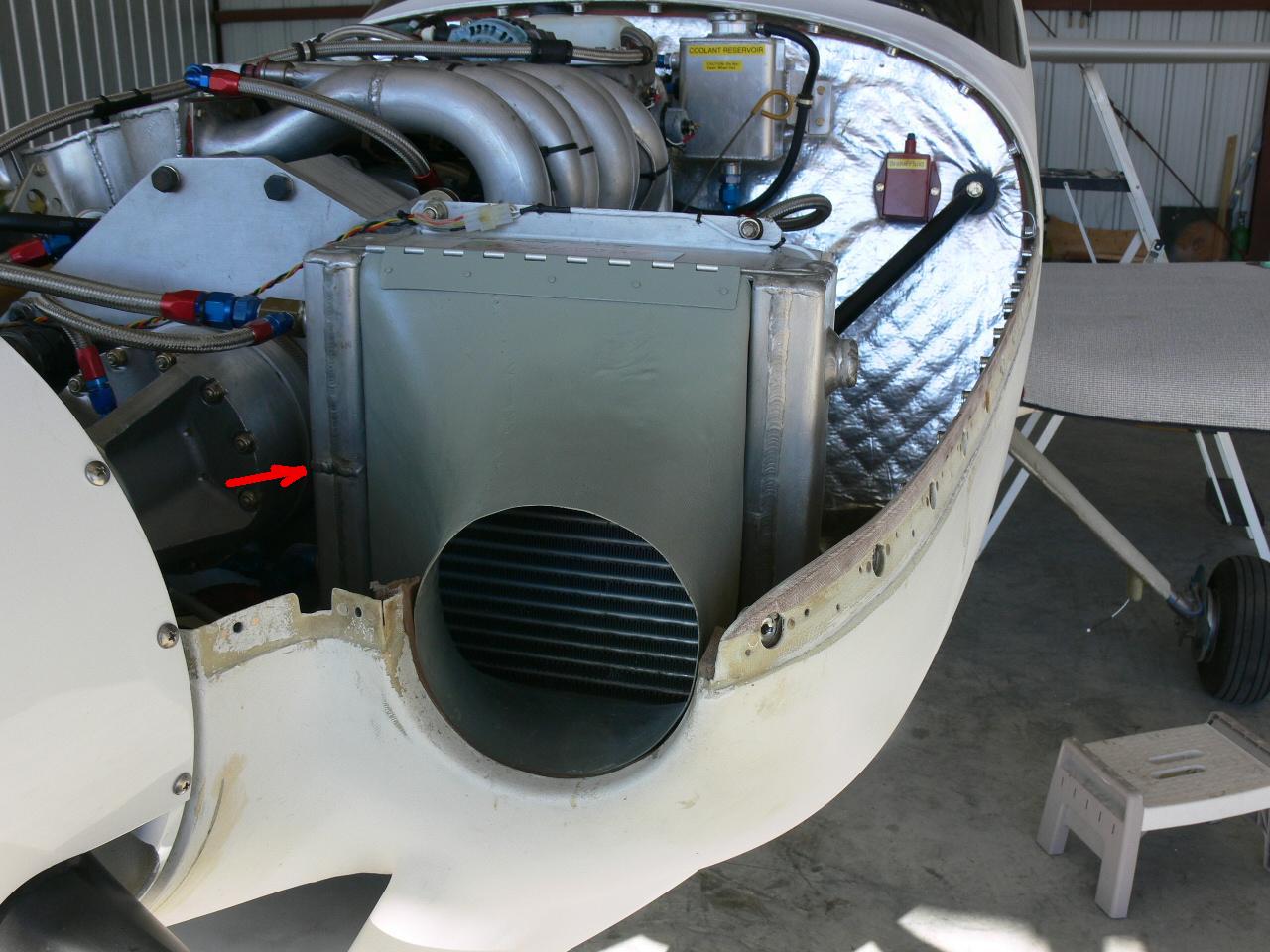
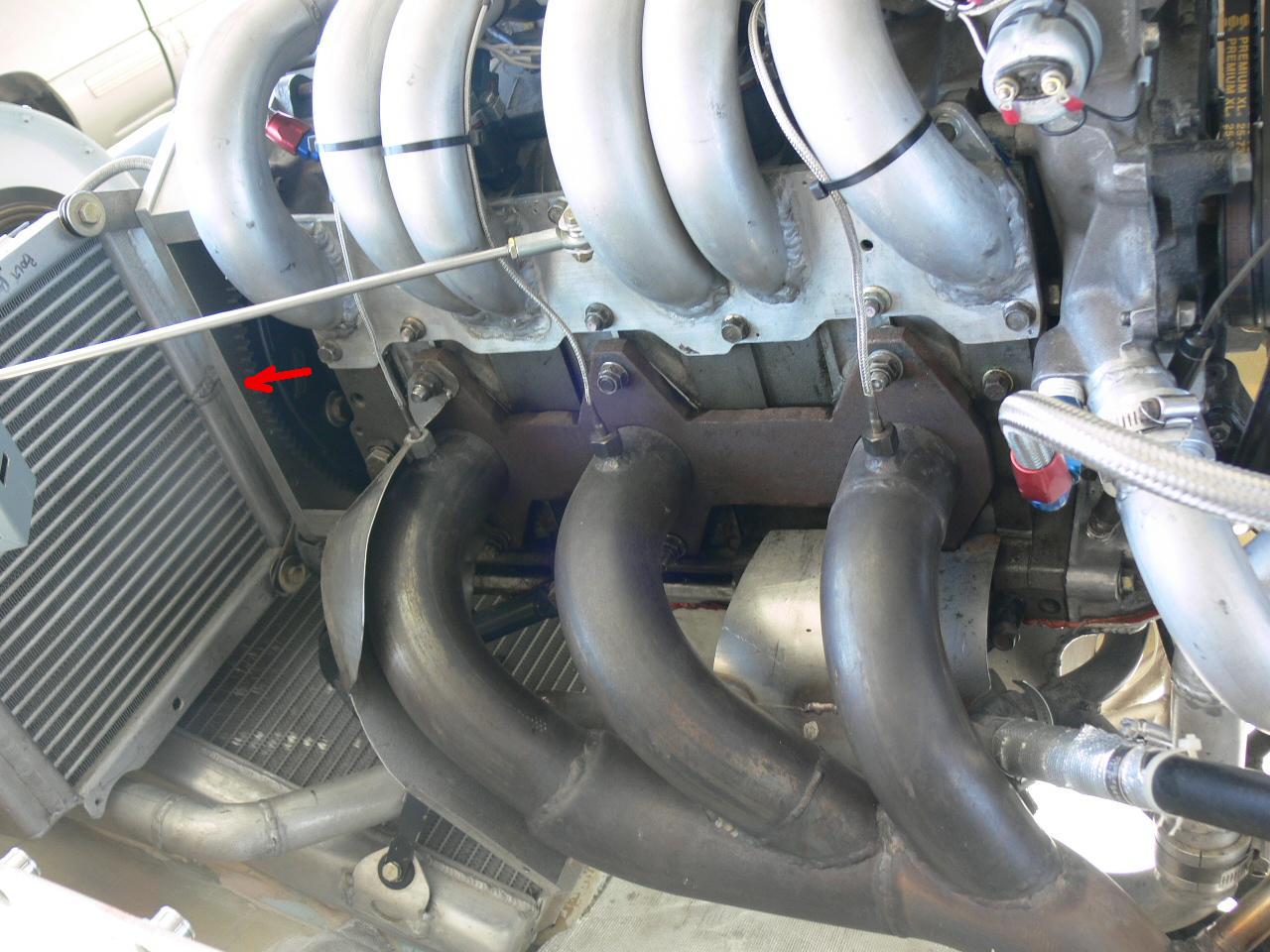
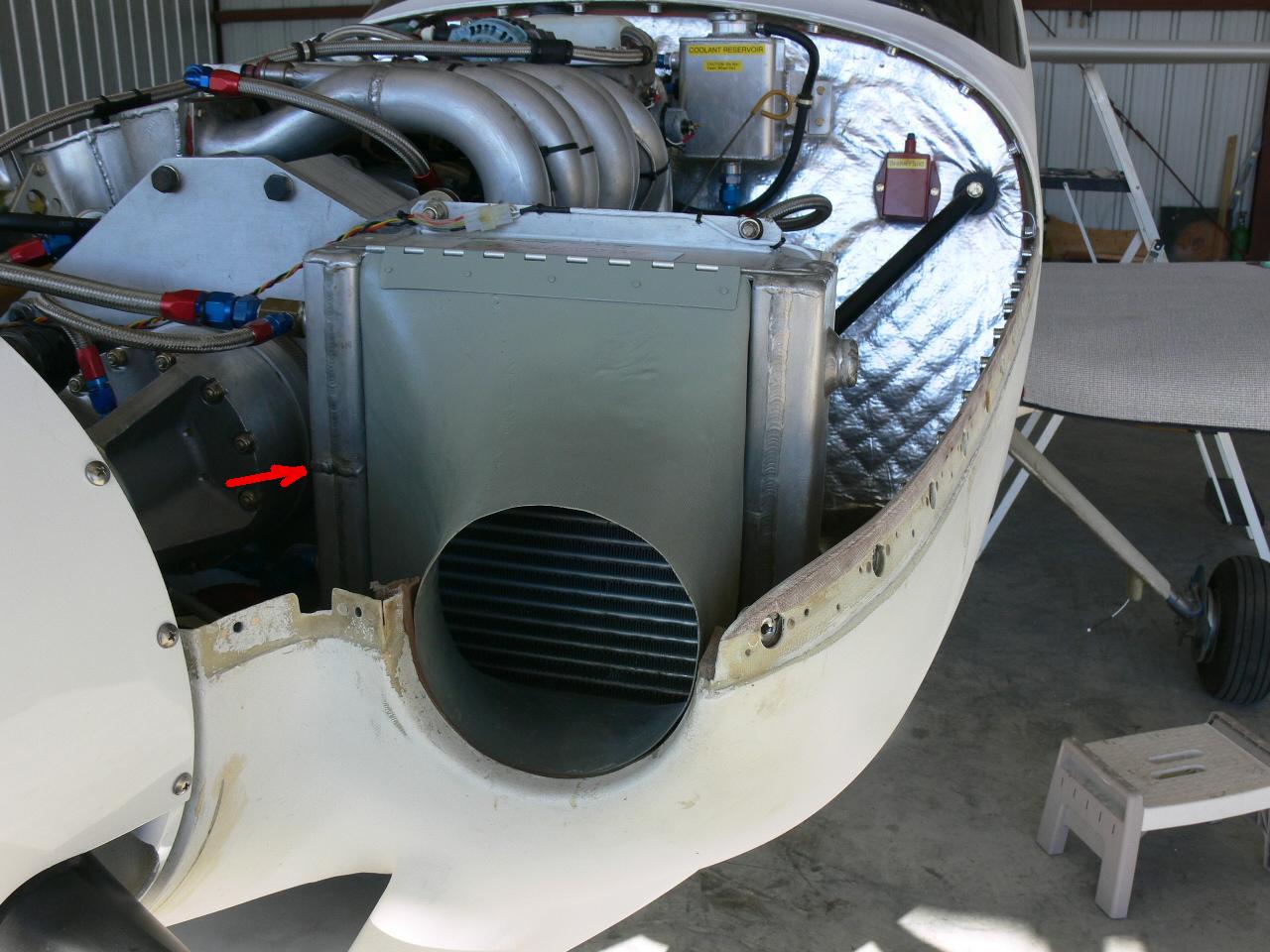
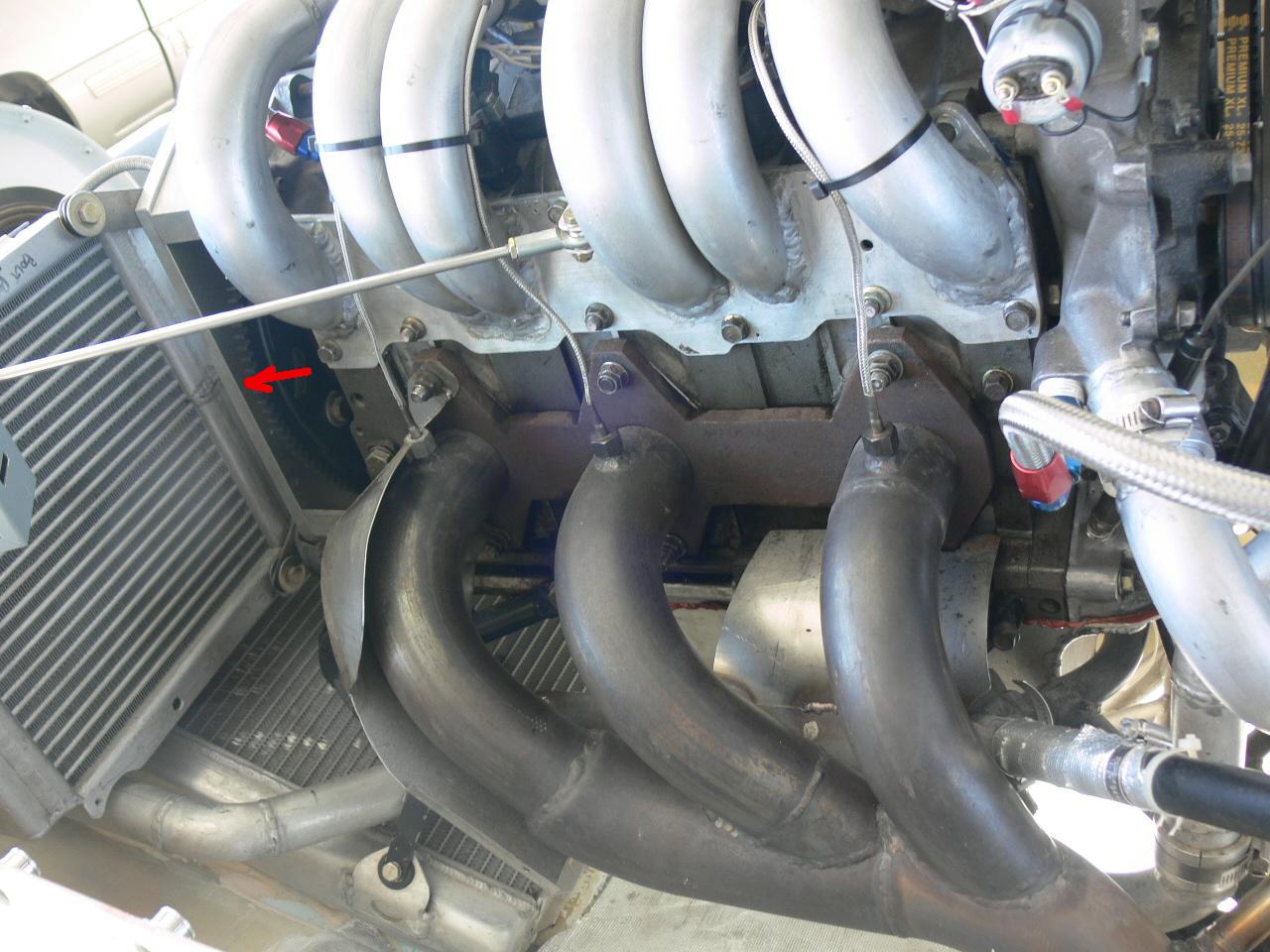
It was a Fluidyne oil cooler. It is the one in the pictures you have of my
a/c. This is a dual-pass cooler, so the inlet/outlet are on the same end.
The inlet/outlet tank is partitioned into two halves by a divider. For some
unknown reason, most likely due to over-pressurization, the tanks (both
ends) swelled. This allowed the divider to pull away from the core (the
divider is only welded to the tank, not to the core) and the oil could then
pass under the divider, bypassing the core entirely. (owner of
Fluidyne) told me that these coolers are designed for up to 300 psi working
pressure, and they pressure test them to 400 psi. Since I have no way to
pressurize to 400+ psi, I don't know how this could have happened.
Mark S.
OK we have seen that before as well. Perry Mick experienced that. I had no idea
you were having so much trouble. Obviously Gary lied.
A lot of oil coolers are not up to the oil pressure seen in a rotary engine.
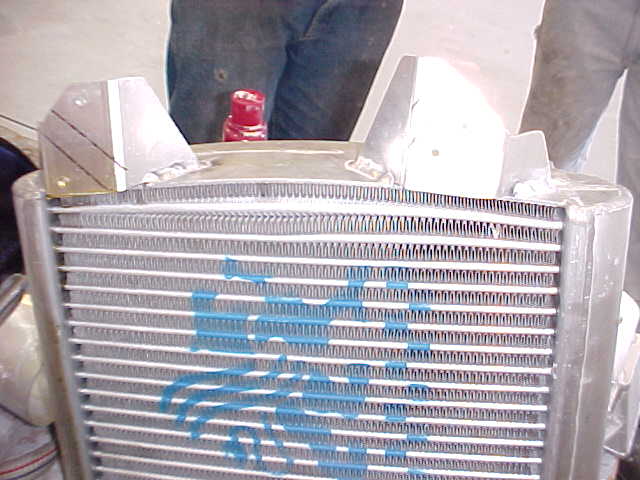
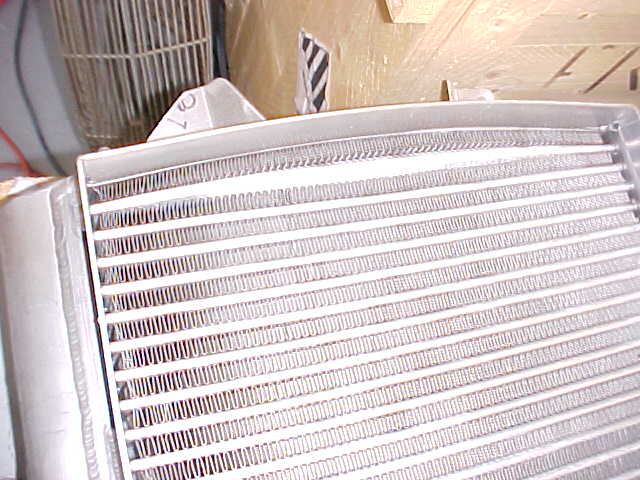
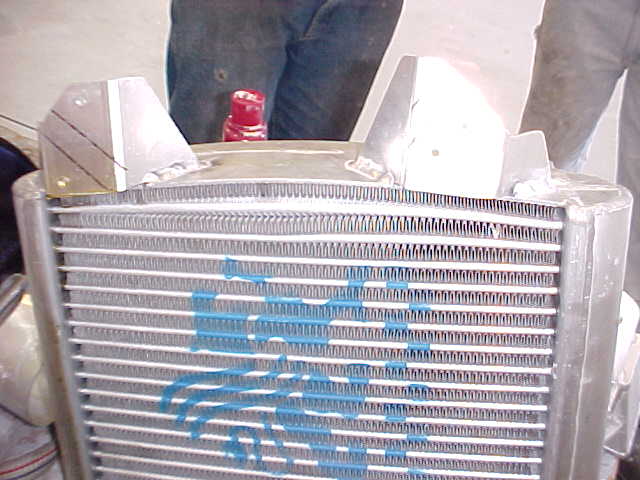
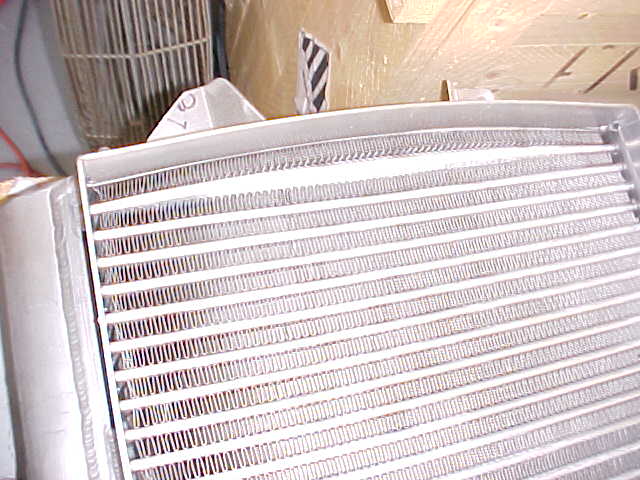
Here is a couple of shots of an early Griffin design. They have since changed
the design to beef up the oil tubes. Some other brands have failed and caused in
flight fires.
When the oil is cool I have seen 140 psi in the oil system.
When buying an oil cooler make sure it will endure at least 300 psi. Good ones
are rated at 300 psi. It is also a good idea to put two oil temp sensors in. One
ahead of the cooler and one after the cooler for purposes of trouble shooting.
Paul Lamar
--
The Rotary Engine NewsLetter. Powered by Linux.
ACRE NL web site.
http://www.rotaryeng.net
Youtube key word UTUBPLEASE
Copyright 1998-2009 All world wide rights reserved.