Paul,
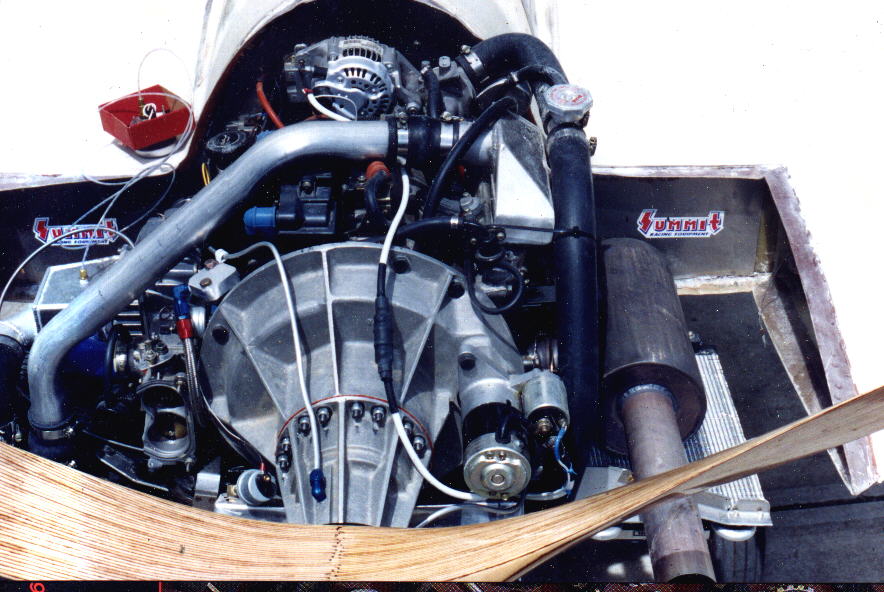
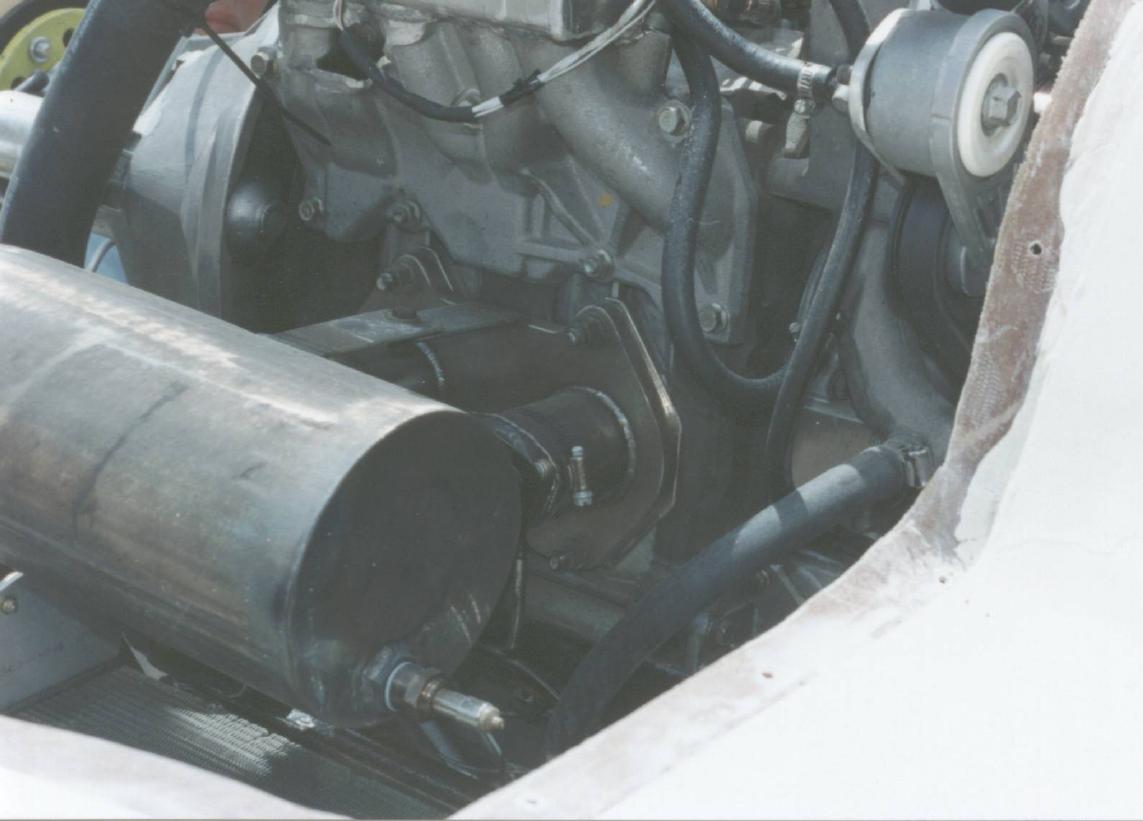
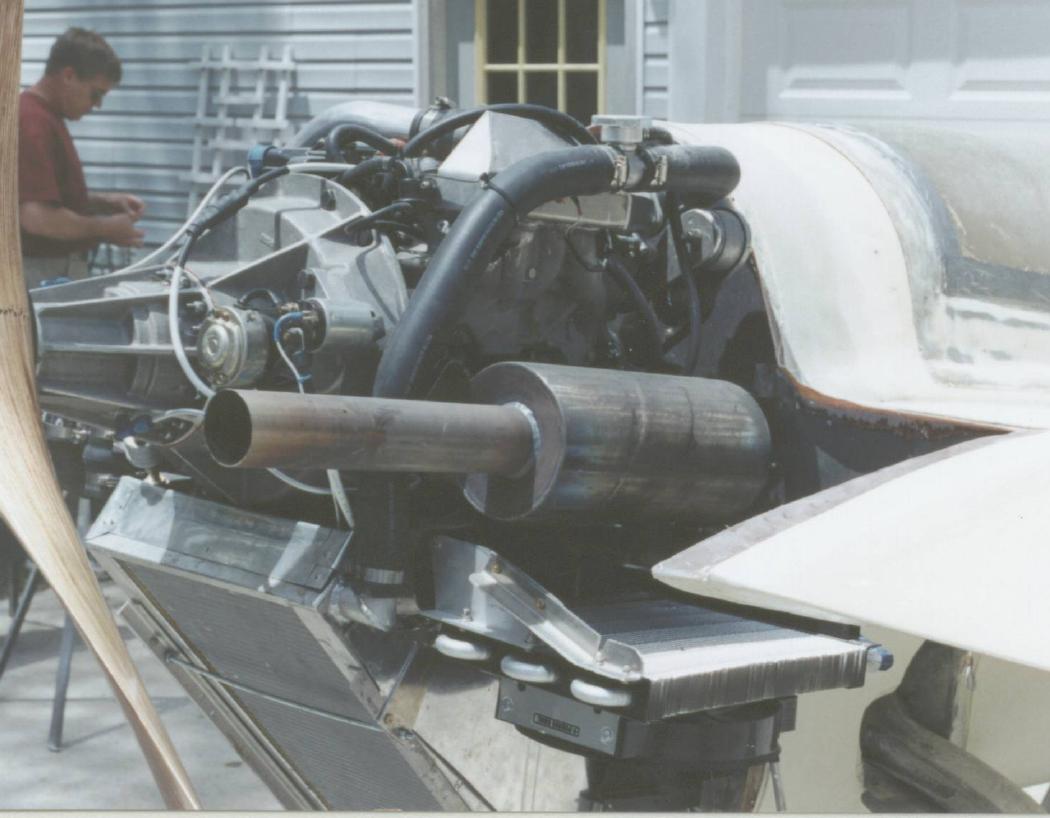
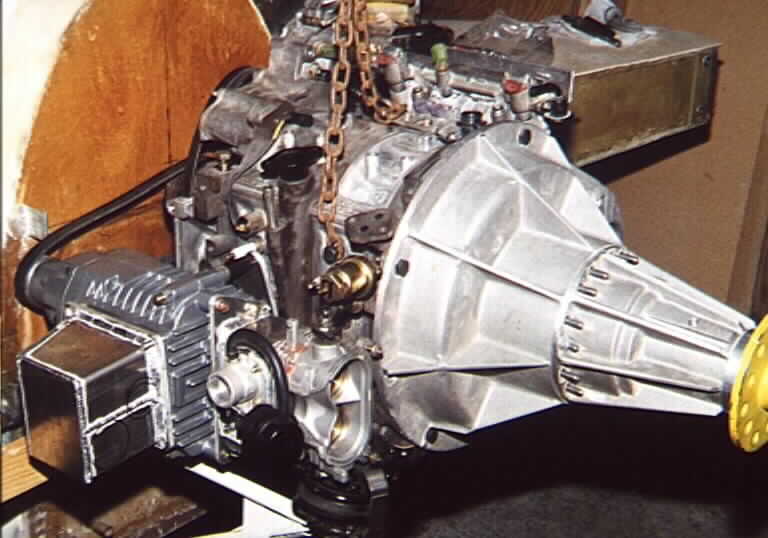
Could you post the assembly pictures of the Mistral muffler again? I
can't seem to find them.
Thanks
Doug in Japan
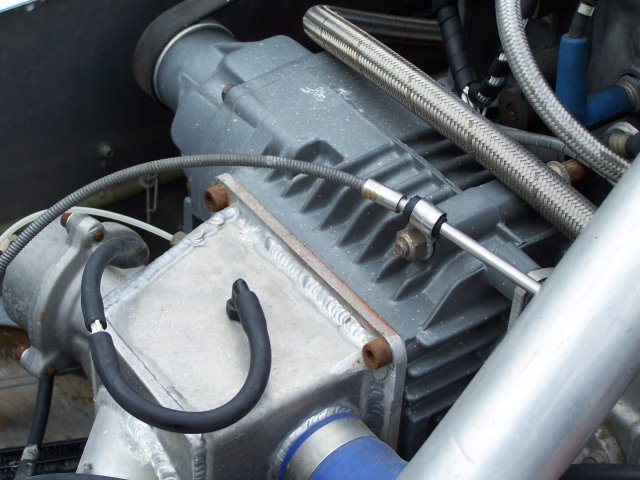
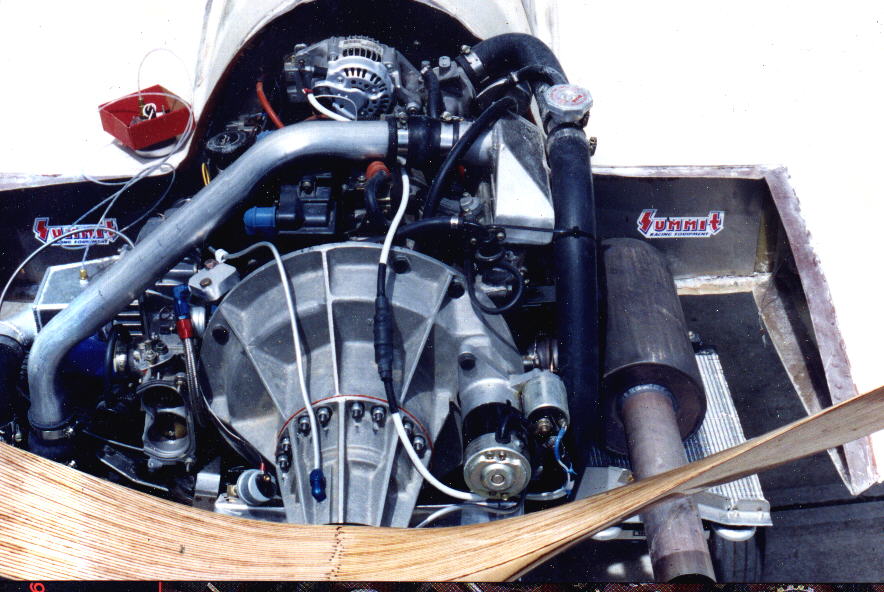
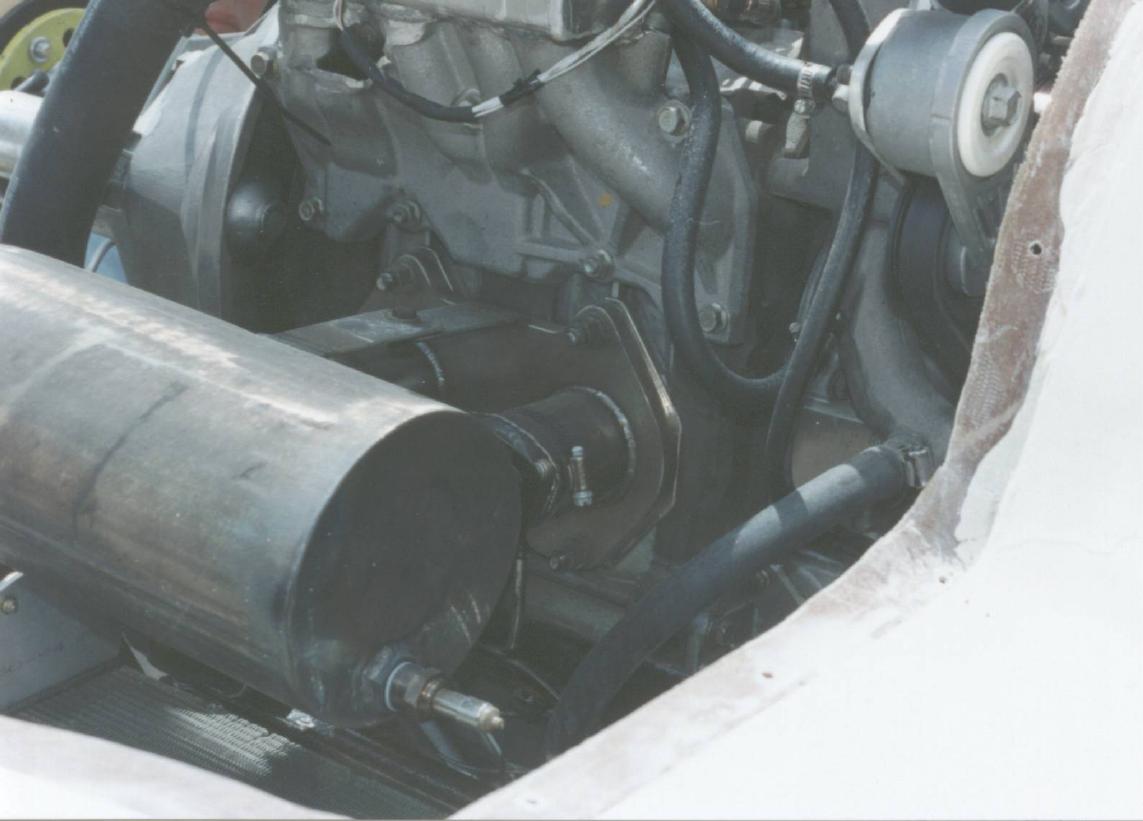
I think this is all I have.
This might be OK in Inconel but it could melt and clog the outlet.
The thing that works the best is a six or eight inch cylindrical
tangential muffler with a 2 inch or 2.5 inch dia. cooling tube down the
center. Every square inch of surface area is exposed to cooling air on
one side. Make it out of .065 304 SS. Nothing goes inside except the
cooling tube. Put a fish tail on the exit to quiet it further.
Paul Lamar
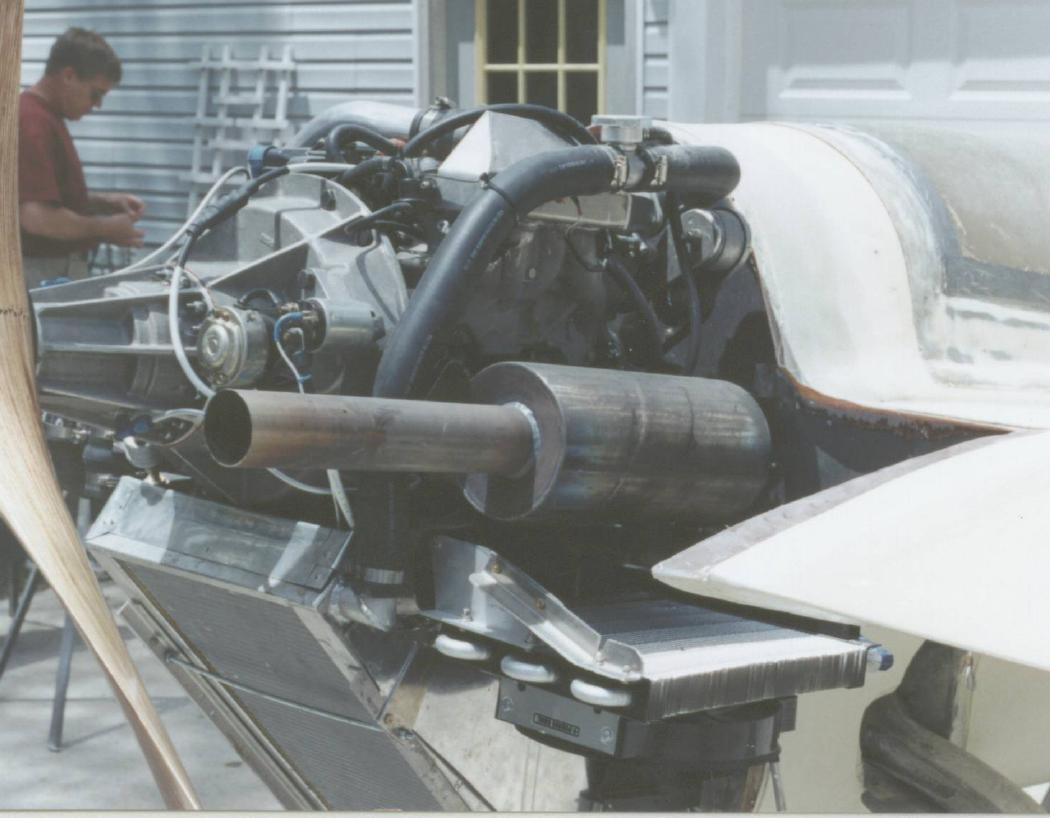
The Mistral muffler had some nice features. Notice the slip joint in the
large diameter tube between the header pipes. Any leaks or cracks would be
carried away by the cooling piping. The brackets at the top of the picture
were probably to keep the cooling sleeve at a fixed distance. The cooling
sleeve is probably not welded to either bracket.
The down fall is the holes in the stub tubes, and the flat end caps on the
stub tubes. The shock wave hitting the flat end of the tube would provide a
powerful tension pulse to the tube. The holes combine to reduce the total
tube wall left to deal with the loads and appears to be just short of
adequate.
Consider the tube will be glowing orange in operation. The energy of the
pulse might have been reduced to manageable if the end cap had been conical
with the point toward the engine.
The tube diameter does not appear to be large enough to block the generous
down tube, so, I suggest one tube may have failed, releasing a large enough
piece to lay across the down tube to partially block it.
The loss of one pipe would have changed the tune of the system
dramatically, perhaps enough to nearly shut off the engine.
A cooling sleeve on the outside would reduce temps inside the cowl in grand
fashion. So that idea is a keeper. It would also reduce damage should a
muffler failure occur. The cooling tube through the center
would extend the life as well, but the Mistral design would not have
supported that piece but it could have been done with a slightly different
design.
So, if one side of any muffler component is not exposed to cooling airflow,
it better be real thick walled or it will die. There will be times when
you fiddle with the mixture when the pieces will be glowing orange. If it is
exposed to the pulse in the exhaust flow it has to be round, conical or
hemispherical. If it is flat it will die. The further the muffler is from the
engine the longer it will last.
Lynn E. Hanover
We had a guy by the name of Tom Jordan built a Limo EZ with a super charged
13B. I attended a Grazin In The Grass fly in somewhere south of Kansas City
in March 2003.
The muffler consisted of a large can and the exhaust
pipe extended into the can it's full length. A bunch of holes were drilled
in the pipe where it was inside the can. You could stand behind
the aircraft at full chat in a gale and look down the exhaust pipe
into the muffler. That thing was making 300 HP as trees a block away
were waving in the breeze. One large old Oak tree 30 foot tall was
blown over just 50 feet behind the prop. That pipe inside the muffler
was white hot. Almost transparent.
I lost track of Tom and his airplane. Does anybody know where it is
now?
Paul Lamar
--
The Rotary Engine NewsLetter. Powered by Linux.
ACRE NL web site.
http://www.rotaryeng.net
Youtube key word UTUBPLEASE
Copyright 1998-2009 All world wide rights reserved.