Accident occurred Wednesday, July 21, 2004 in Erie, CO
Probable Cause Approval Date: 12/3/2004
Aircraft: Davis-Zenair STOL CH 801, registration: N10627
Injuries: 1 Uninjured.
According to the pilot, the airplane's 1988 liquid-cooled Mazda Twin-rotor automotive
engine had accumulated approximately 2,500 road miles, but the airplane had accumulated a
total of only 1.5 hours of flight time. The pilot said he was conducting the initial test
flight and had completed 10 takeoffs and landings on runway 33. While on crosswind
following the 11th takeoff, he noticed that the indicated engine coolant temperature had
increased from, a normal operating temperature of 110 degrees F., to 220 degrees F. The
increase in temperature was followed by a drop in engine rpm and a partial loss of engine
power. Unable to maintain pattern altitude, the pilot attempted to land on runway 09, but
the pilot was forced to land in a plowed field approximately 200 feet short of the runway.
The impact displaced the left wing aft, collapsed the nose landing gear assembly, and
buckled the firewall. An examination of the airplane revealed no anomalies.
The National Transportation Safety Board determines the probable cause(s) of this accident
as follows:
impact with terrain during a forced landing following a loss of engine power for
underdetermined reasons. A contributing factor was the lack of suitable terrain for a
forced landing.
==========
801's have the glide ratio of a brick; this pilot had only 1.5 hours in his when the prop
stopped. This is a common theme in 801 accidents; inexperienced-in-model pilots select a
landing target unexpectedly outside the poor glide range of the airplane, and collide with
something hard. Once proficient, a pilot can slip an 801 into a parking lot.
On the other hand, a surprising number of these guys have walked away from badly damaged
planes. The only injuries have been fatalities from 2 accidents: 1. an in-flight breakup
from a pilot doing acrobatics, and 2. an unlucky engine out collision with a tree.
5/7 accidents resulted from engine stoppage, most from fuel starvation (not exhaustion)
1/7 was the in-flight breakup, pilot was doing loops at 4000 ft and lost the tail
1/7 Alaskan pilot taking off in the bush was blown into some trees by a gust
--Kenny A.
=========
On Jan 27, 2010, at 6:31 PM, Rotary Engine wrote:
*N10627
"110 F normal"? I don't think so :) I think his gauge was way off.
IMHO I don't think the 220 F engine temp was the only cause of loss of power
unless the old rubber coolant O rings melted and allowed coolant into the
combustion chamber. The NTSB is frequently wrong when it comes to rotary engines.
Hard to say at this point what caused a loss of power.
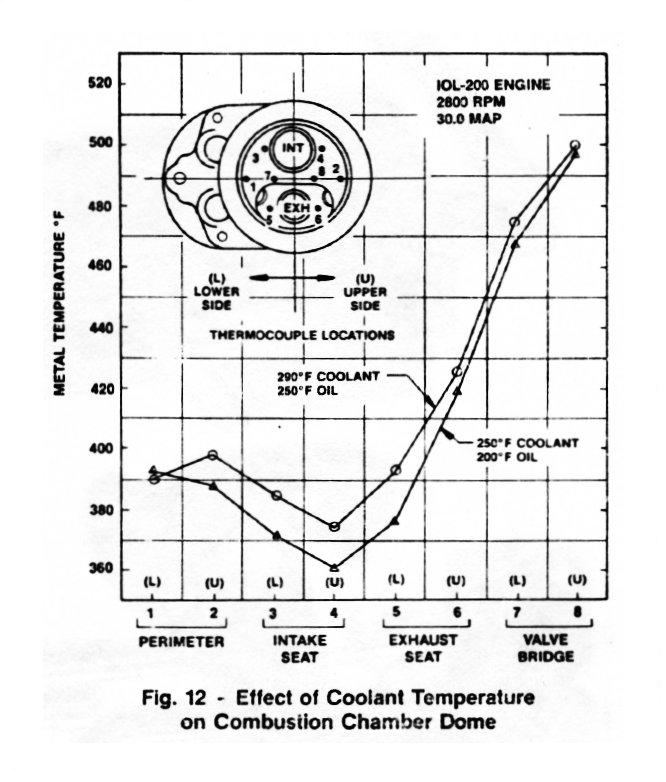
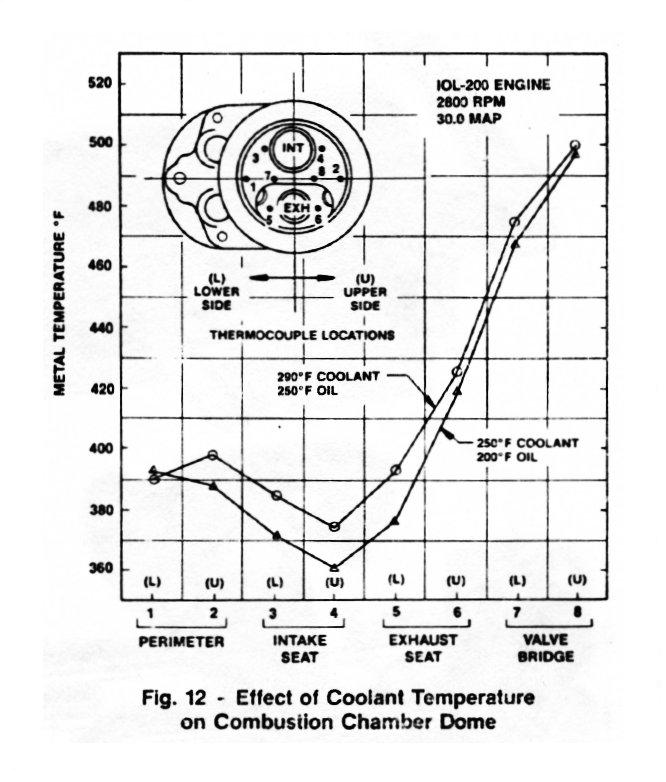
That does bring up a point of why the liquid coolant temp is not
a true reflection of the metal temperature around the combustion
chamber in a liquid cooled engine.
Take a look at this chart from Continental. Two curves.
One 200 F and the other 250F while the metal temp is nearly
the same at around 500 F.
Paul Lamar
--
The Rotary Engine NewsLetter. Powered by Linux.
ACRE NL web site.
http://www.rotaryeng.net
Youtube key word UTUBPLEASE
Copyright 1998-2009 All world wide rights reserved.