Paul,
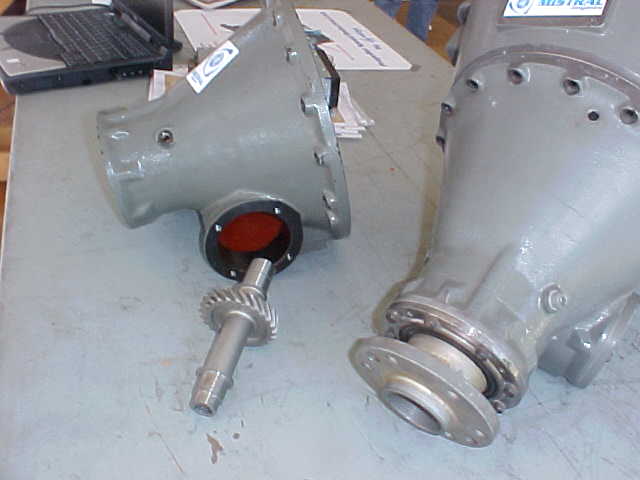
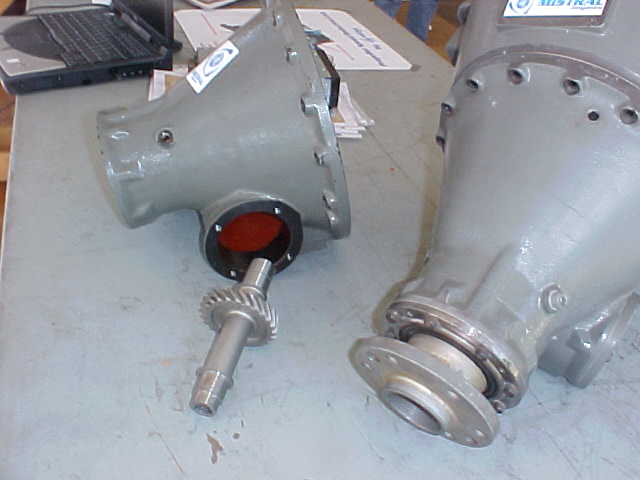
Any suggestions for a lightweight starter that will fit the 13B? This is
the latest
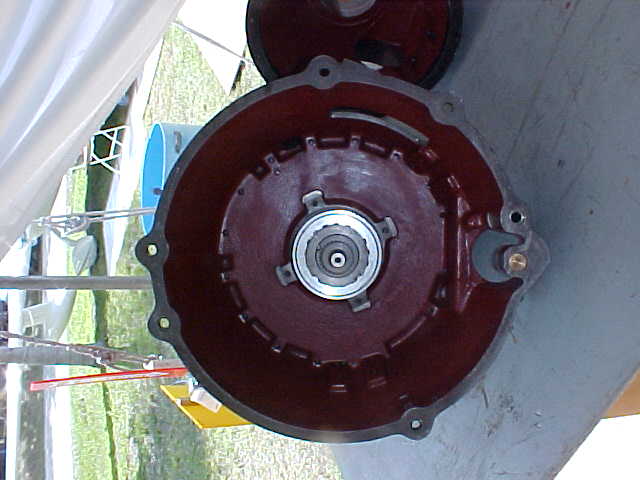
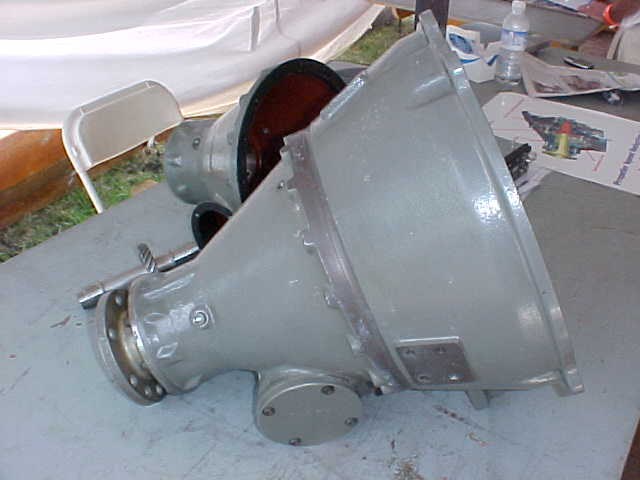
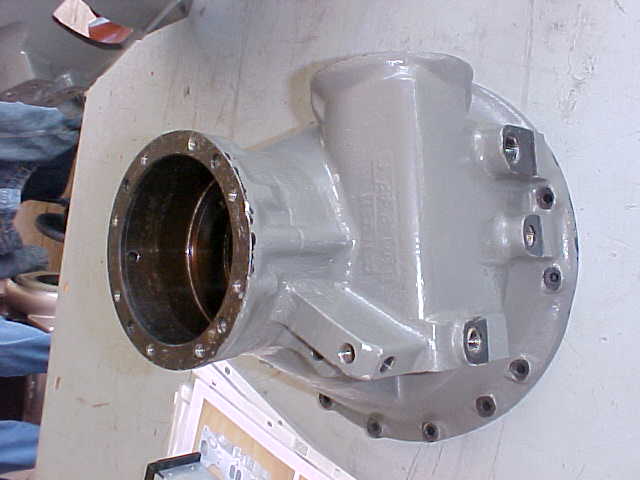
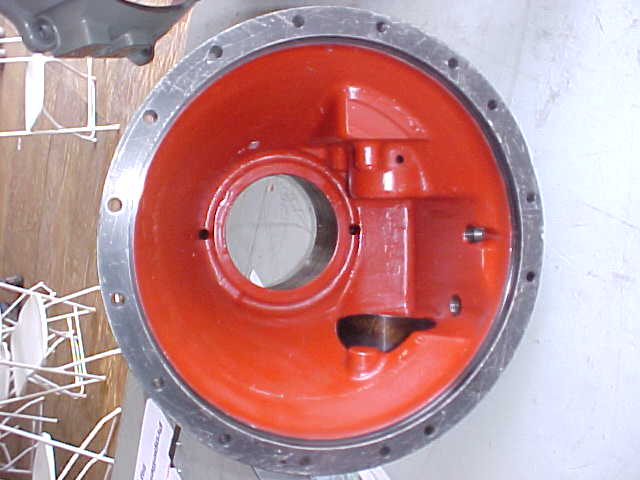
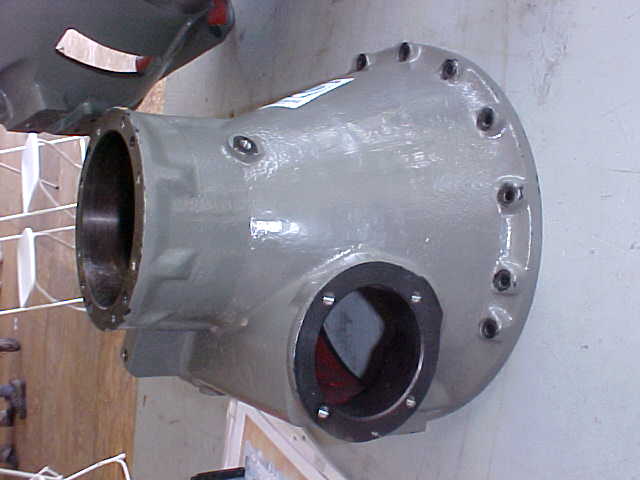
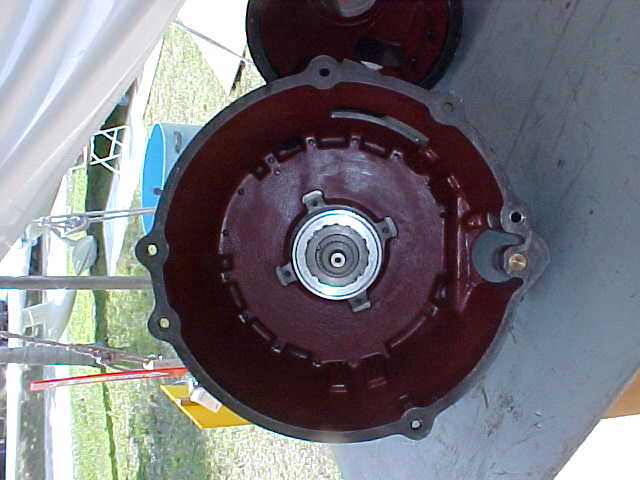
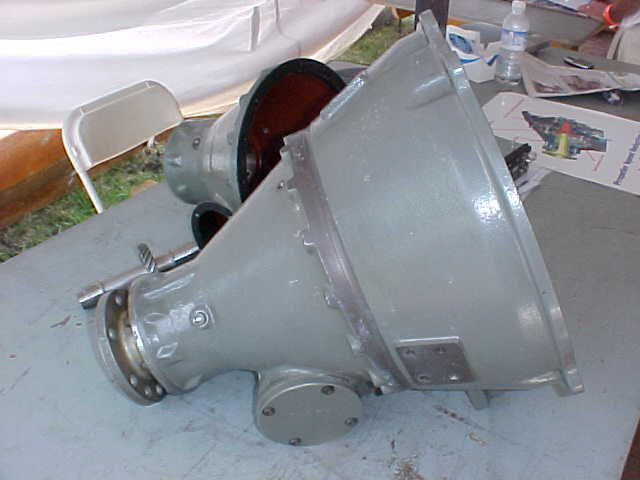
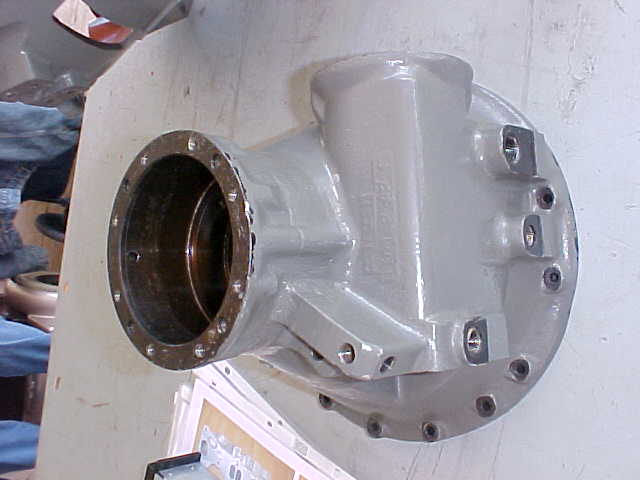
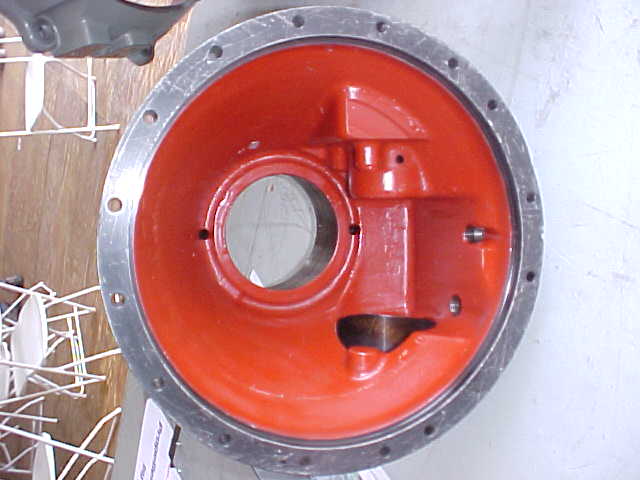
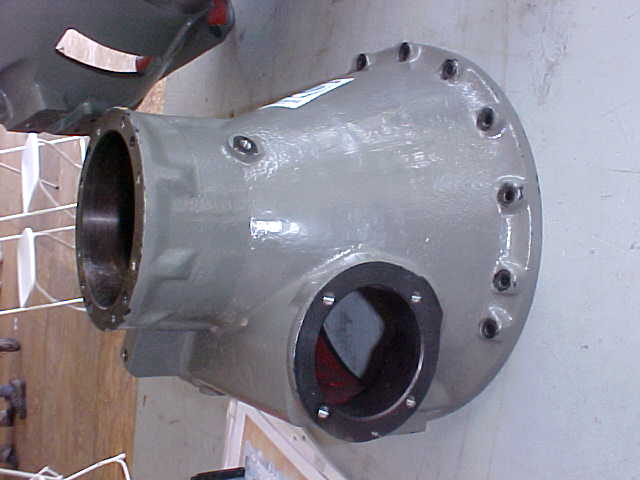
bottleneck, before I can finish modeling the Bell housing and PSRU. I
think I tossed the
1985 boat anchor that came with that housing.
Doug
They are all about 7 pounds. You have a real problem because
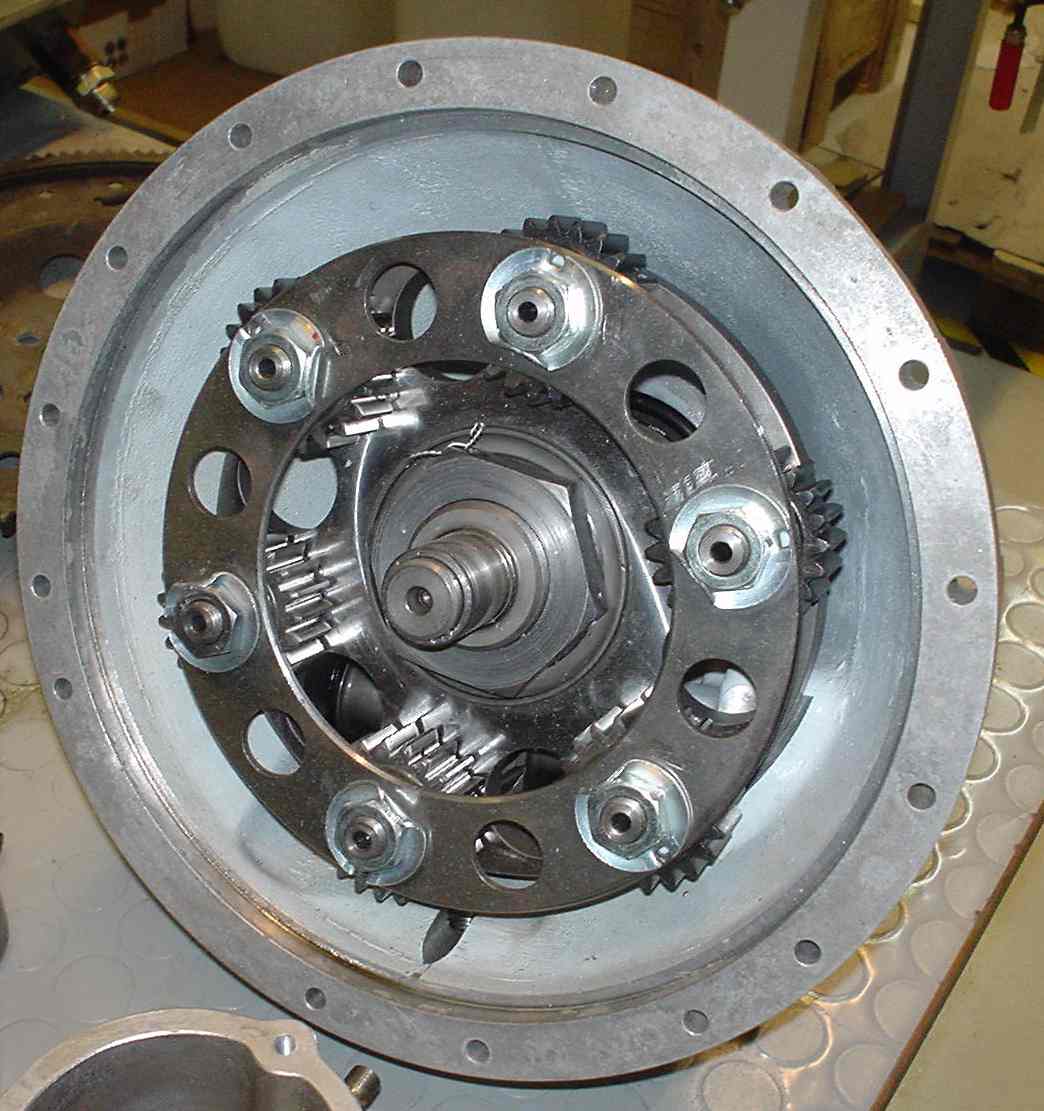
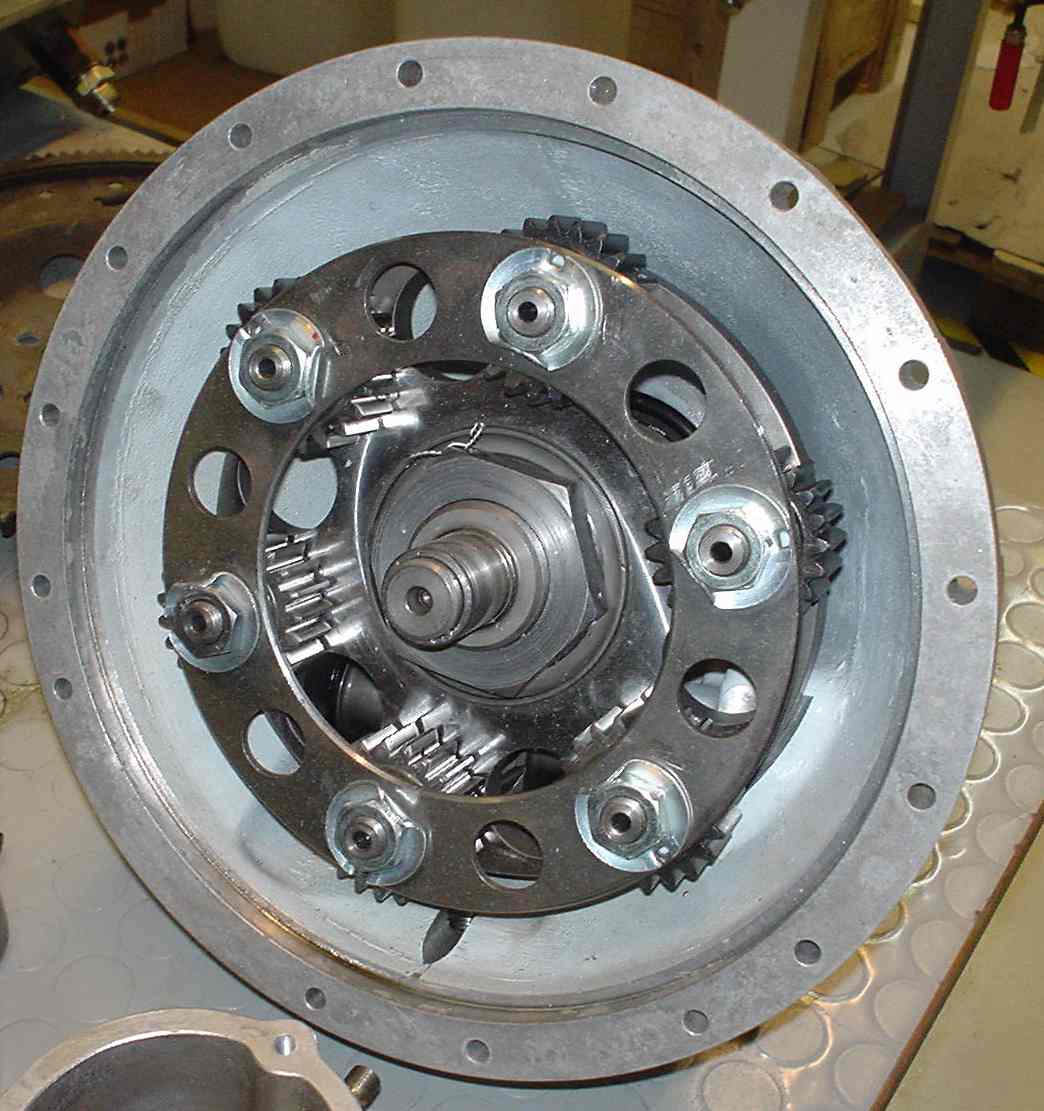
the Bell 47 PSRU has no room for a ring gear. You might have to install
a ring gear on the front of the engine. The DG 1 had a gear drive starter
generator in the front mounted accessory case. Not as heavy as it seemed
because it was doing two jobs. GM has some belt drive starter generators
on some new 2009 Chevy-Malibu so-called pseudo hybrids.
http://alternativefuels.about.com/od/2009hybridreviews/ig/
2009-Chevy-Malibu-Hybrid-/Malibu-Hybrid-motor-alternator.htm
"The motor/alternator of the Belt Alternator Starter
(BAS) hybrid system is driven by a high tension belt
from the engine crankshaft. It boosts power under
acceleration, charges the battery, and restarts the
engine after AUTO STOP."
I think that is your best bet.
Paul Lamar
Paul,
That accesory drive case looks just like the one on a solar turbine. Do
you
know if Dave adapted it?
Bill Jepson
I think it was custom made by Racing Beat. Jim Mederer built aircraft
engines
for others as well. This one is particularly cosmetic :)
Paul Lamar
Paul,
The GM Belt Alternator Starter (BAS) requires 36 volts to run. What you
would save on starter weight, you lose on having to carry two extra
batteries.
Caption for the picture reads, "The black box with the blue cable houses
the
36-volt hybrid battery that powers the motor/alternator for engine assist
as
well as restarting the engine from AUTO STOP mode. Protective cover
removed
for photo."
Mark S.
That certainly is a drawback for most of us.
The batteries can be smaller as power is power regardless of the voltage.
Battery power is a fixed function of battery weight. A starter requires
roughly 3 HP or 2300 KW. At 12 volts that would be 186 amps.
At 36 volts that would be only 62 amps. Certain devices like CD ignition
systems work better with high voltage as they are already converting
12 volts to 400 volts.
One could use 3 small motor cycle batteries. Wired in series.
One could also use lithium ion for a better battery power to
weight ratio. In some cases one would need a custom designed
voltage switching converter to convert 36 volts to 12 volts
for powering radio's and other stuff.
In Doug's case he has little choice. Doug is in love with
electricity anyway as that is his main biz :) Here is a picture
of his electric car powered by solar wind turbines in the
back ground. He is the perfect man to do the development.
Paul Lamar
Paul, Do you have a guess where to get a part number and price for the
alternator/starter. I like the idea of using three riding mower batteries
in
series for the starter and charging. With a composie airframe having ground
wire requirements anyway, puting the batteries in series for charging and
starting and parallel for other functions seems doable. Also I could
segregate avionics, lighting, and engine off the three batteries. If the
cost is similar to the combined price of a new starter and alternator which
I have to buy anyway for the four rotor it sounds perfect for me.
My airframe will be a prototype where battery weight is useful for
adjusting CG and as an added advantage the cable weight reduction from the
36 volt system is at least 8 pounds for a behind the seat battery location.
I haven't found anything more on the internet than was repored
here. The engine displacement and cranking speed comparison to a rotary
will
need to determined, but it has possibilities.
george grimes
I have no idea but they will be in junkyards sooner or later.
Switching from three in series to 3 in parallel is very doable
now a days because of advances in solid state switches.
Paul Lamar
Paul,
I like the idea, but it looks like the first gen BAS is not living up to
expectations, but may be fine for our needs. GM is supposedly coming out
with a more powerful BAS in the 2011 models. May be worth the wait.
Ref.
http://green.autoblog.com/2009/06/11/gm-to-discontinue-mild-hybrid-malibu-vue-aura-for-2010-model-y/
Mark S.
Looks like a new generation BAS on the market for 12v systems.
http://images.google.com/imgres?imgurl=http://cms.ukintpress.com/UserFiles/Generator-(B-ISG).jpg&imgrefurl=http://www.enginetechnologyinternational.com/news.php%3FNewsID%3D16188&usg=__5QDdw19dUnpAT_CulmY3J7t5gn4=&h=258&w=300&sz=24&hl=en&start=27&um=1&itbs=1&tbnid=IKD0foz035OGuM:&tbnh=100&tbnw=116&prev=/images%3Fq%3Dgear%2Bdrive%2Bstarter%2Bgenerator%26ndsp%3D18%26hl%3Den%26rls%3Dcom.microsoft:en-ca:IE-SearchBox%26rlz%3D1I7ADFA_en%26sa%3DN%26start%3D18%26um%3D1
"It's being reported that among the models that General Motors has decided to
discontinue going into the 2010 model year are its existing mild hybrids. The Chevy
Malibu, and Saturn Aura and Vue have been available with GM's belt-alternator-starter
(BAS) system since 2007 but have never sold in any significant volumes. The system
primarily provided automatic start stop functionality with a little bit of electric boost
and regeneration. The system was limited by a weak motor and 36V battery system."
"We checked with GM's hybrid spokesman Brian Corbett about the status of the mild
hybrids. Corbett told ABG that currently there are no plans for retail sales of any of the
mild hybrid models."
Near the end of the article it makes mention of being able to produce 25 Kw (33 hp) for
brief periods. I wonder who will incorporate that extra power for a brief takeoff limit
(of maybe 60 secs??) Probably need one heck of a battery.
Greg in Canada
Paul,
Actually I agree with Matt. "Can be done", Is possible" and "Is practical" are worlds
apart. I have been going back and forth on this issue for years and have tons of
experience in charging different types of batteries at different voltages with different
types of generators and different charge controllers. It really takes a large amount of
time to get a system right with new components.
THE PERCIEVED PROS.
Lighter weight wiring runs. 1/3 the ampacity.
Save space. Eliminate the starter ring gear and its 8lbs of weight and 7 lbs of starter
motor.
Substitute a heavier alternator and its two pound controller.
THE CONS
In a word 'Complexity'. Controller that changes the alternator from a fairly benign
charging source to a 160 amp+ sucking motor depends on robust solid state FETs. Having
changed enough bullet proof, never-will-fail FETs out of generators in my life I know they
need to be kept cool. Also Murphy resides in the production room of these devices.
Translation: Only the less than stellar FETs (one in a million defects) will find its way
to the most critical application. Re-starting a motor in flight could be considered
critical.
Batteries. Now this topic and the charging there-of is a 'it depends' answer. Generally
the more exotic the battery, the more finicky and the more expensive the controller is. I
definitely wouldn't want a LiH battery of any significant size in my airplane. Especially
in an amphibian. LiH combined with moisture makes hydrogen and fire. 'nuff said:)
Non standard voltage.
A stated 36 volt system is actually providing 42 to 45 line dc voltage depending on the
type of battery chosen. Use of DC-DC converters to power the avionic bus from the combined
battery pack is the wiser idea. Direct use of high voltage to motors requires a robust
switch with a resistor to dampen the stronger arc.
What about the motors for the hydraulic landing gear, flaps or retractable sponsons?DC-DC
converters then becomes plural and become large and heavy for 500 watt motors. Add
another failure mode in what some pilots already distain in electric/hydraulics.
Sourcing parts. Starter/alternators, or more likely their controllers, are not an item
that can be sourced at the local market in the majority of places in the world. Having a
unique airplane is one thing, but it would be better to achieve uniqueness through elegant
engineering.
Conclusion. Less wire weight is a good thing. How about 24vdc nominal? System voltage
with two Concorde or GIL, AGM batteries will be around 28volts. Wire size is halved.
Have two 12v. nominal alternators each charging a dedicated battery.
Busses can be one 24vdc (heavy momentary loads) and one or even two 12 volt busses.
Use a bell housing, a ring gear and a 24 volt starter motor, or adapt a small planetary
gear set and clutch so that the starter motor can be belt driven either from the front or
back of the engine.
In my case* Take the weight saved from lightweight all-aluminum engine and move the
counter weight providing batteries from the tip of the nose back closer to the CG thus
cutting down on wiring runs.
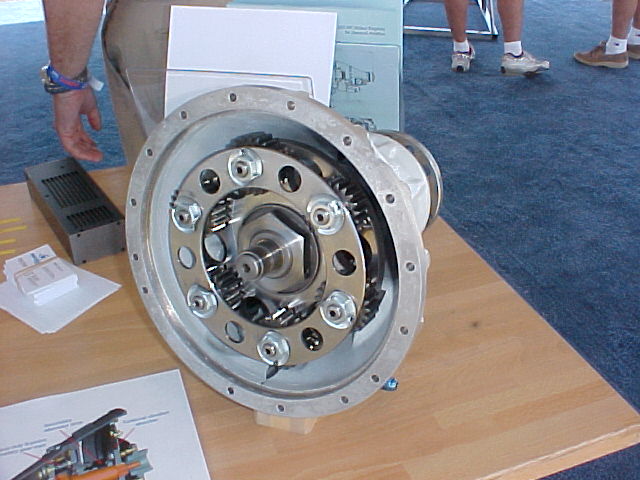
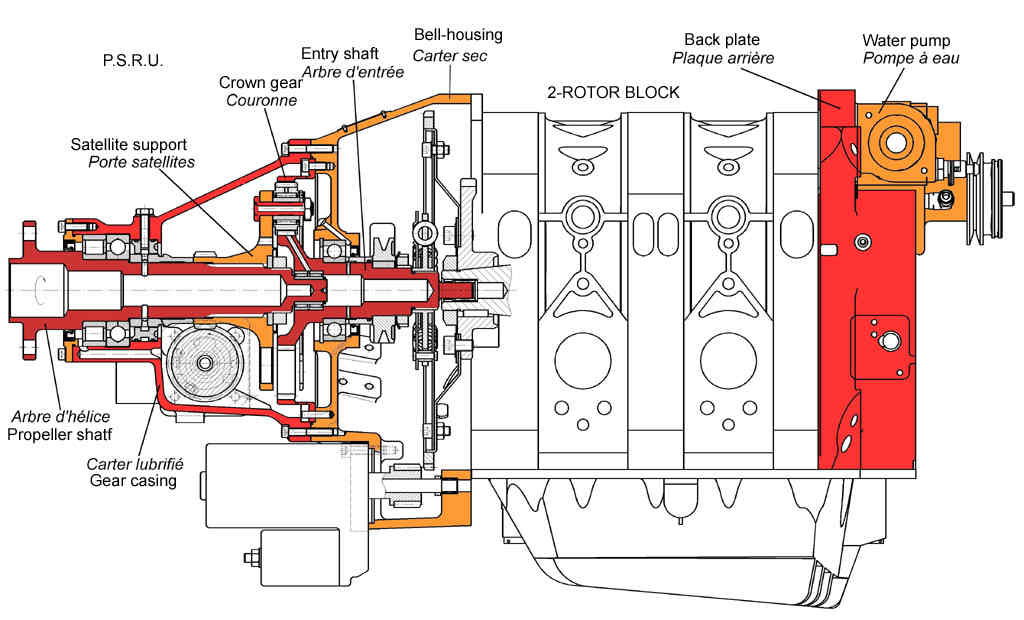
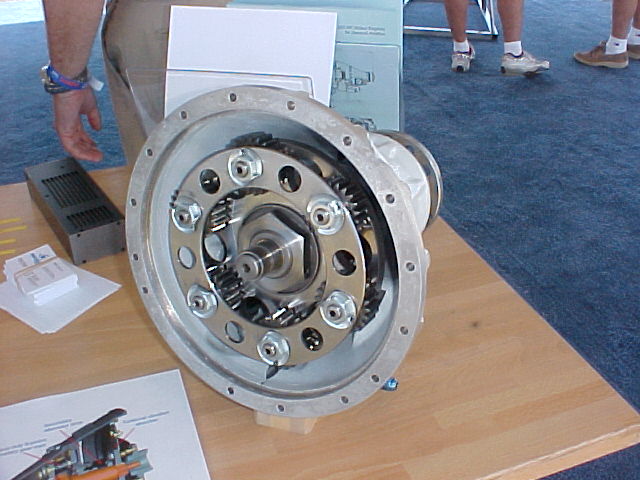
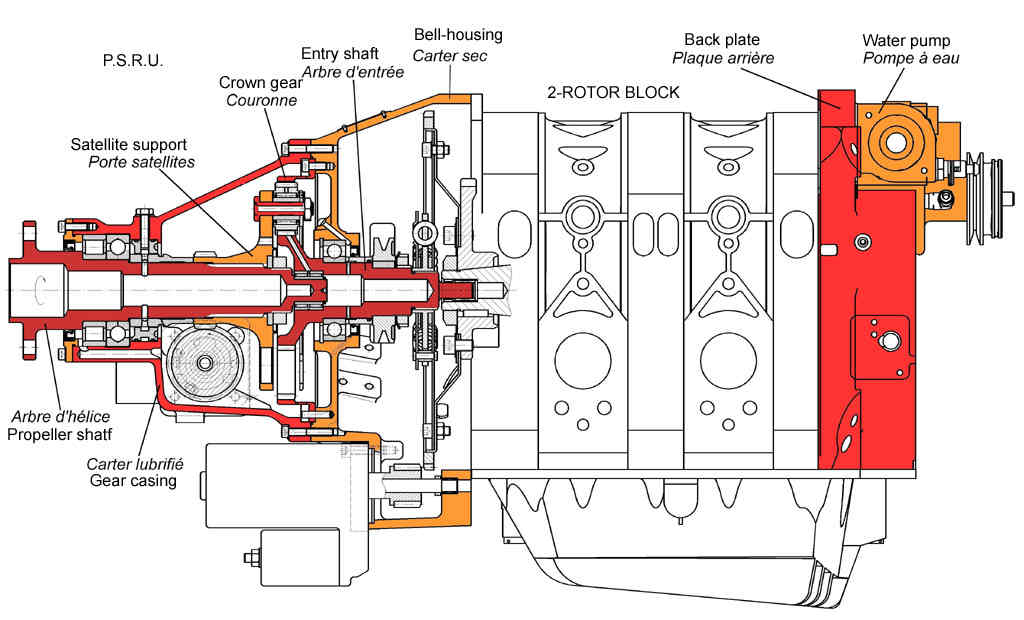
Paul, contrary to what you stated I can put the RX-4 bell housing on my engine and
install a normal starter gear, starter motor and mount the Bell 47 PSRU to that. I just
didn't like the look of it, and it forced me to mount the engine 1 inch farther back.
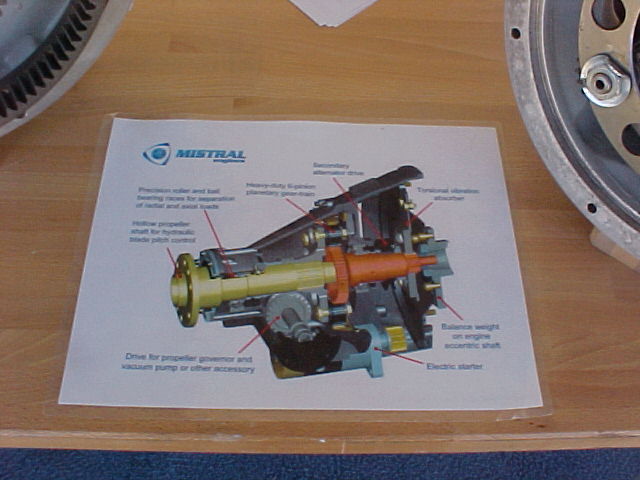
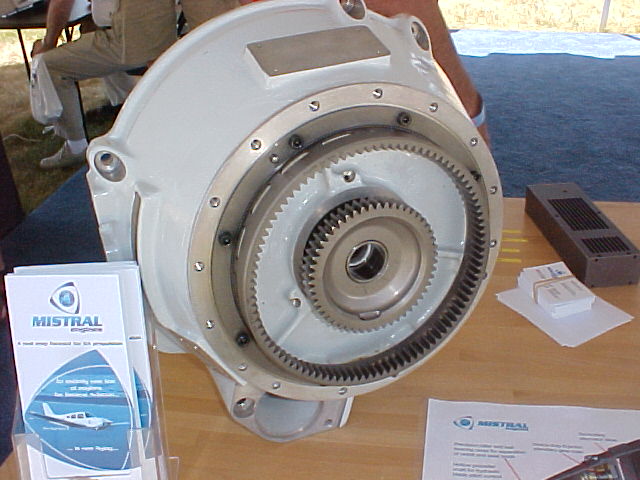
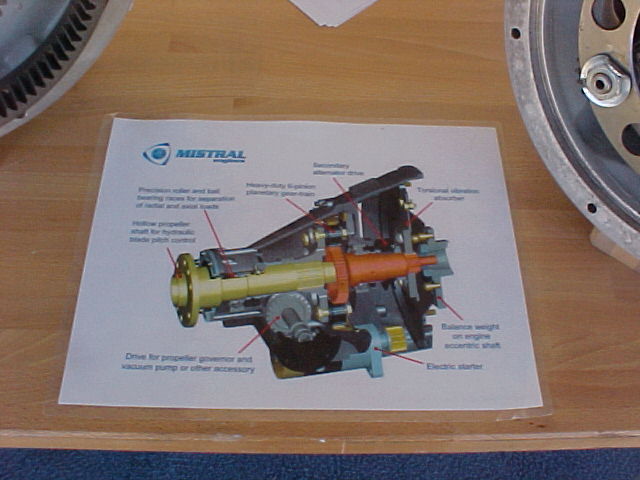
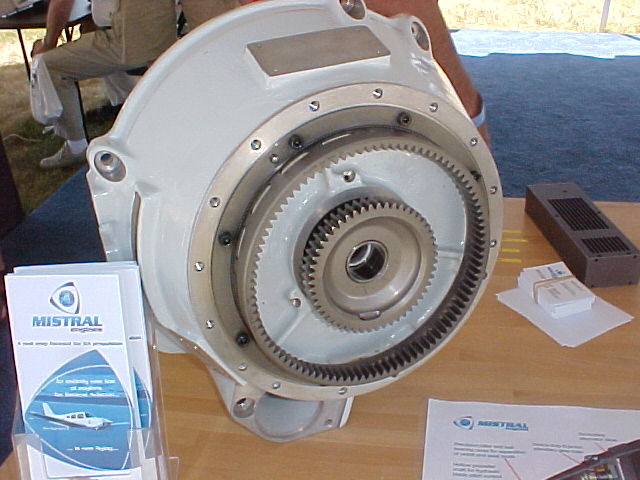
The issue with the Bell 47 is the same one that Mistral had to deal with.
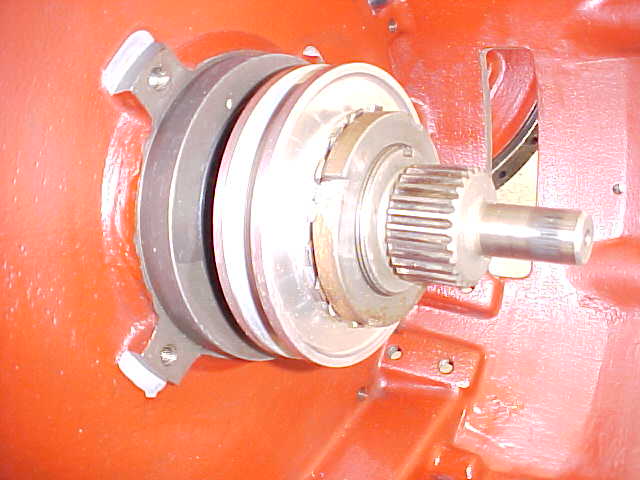
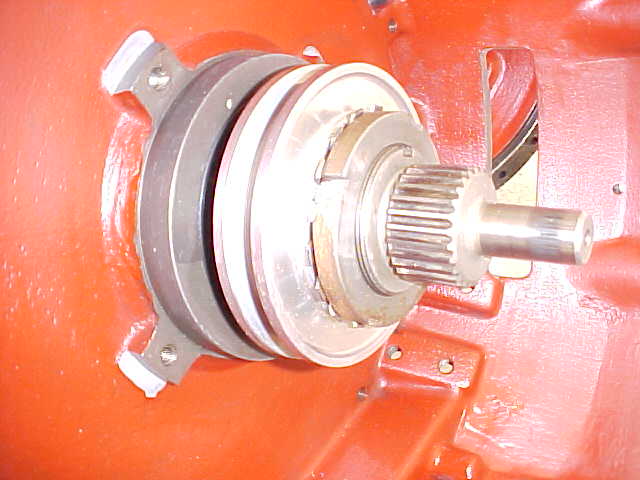
In short the sun gear and its drive shaft needs to be supported by a bearing and a sleeve
to kept from exerting side forces on the e-shaft. Both Mistral and the RX-4 semi
automatic bell housing have that central bearing, sleeve, oil seal and oil delivery line
built into their bell housings.
Mistral has a huge inner ball bearing supporting the outside of the sun gear shaft. The
shaft is hollow and another internal sleeve is inserted to catch the end of the prop shaft
passing through the planetary cluster. Both rely on outer large splines to transfer power
from the planetary cluster to the prop shaft. Both have a threaded inner prop shaft to
lock the planetary cluster in place. These features insure that any side load or
gyroscopic tendency will be arrested by the bell housing bearings. Dave Garber as you
noted didn't do that and it would only be a matter time before the rotor bearing failed.
At this point I am dropping my quest for the exotic BAS system and going back to the Bell
housing idea and look at ways to weld some engine mounts strong plates onto the side of it.
Doug in Japan
--
The Rotary Engine NewsLetter. Powered by Linux.
ACRE NL web site.
http://www.rotaryeng.net
Youtube key word PaulLamar2
Copyright 1998-2009 All world wide rights reserved.