Hi Paul,
I haven't updated the group on my progress in quite a while, so today is a
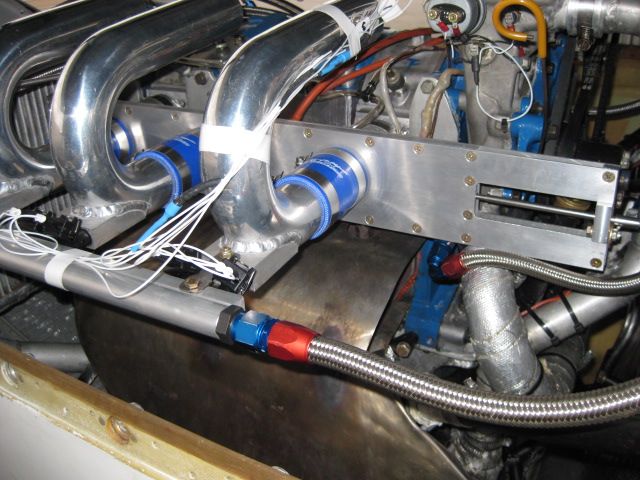
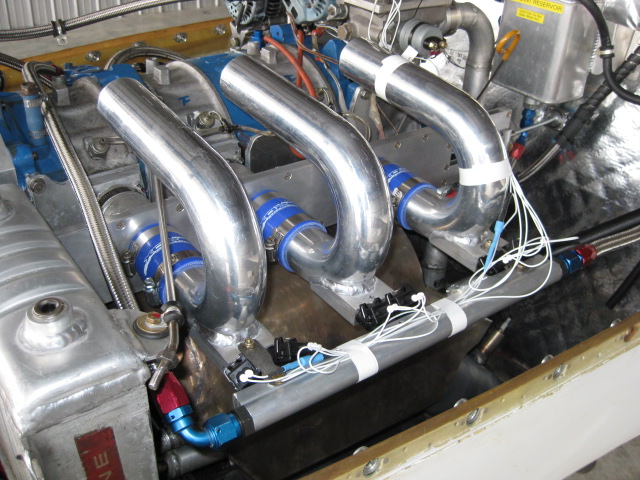
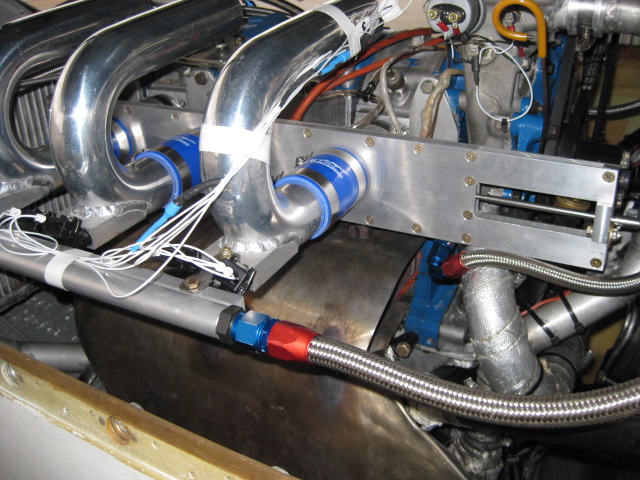
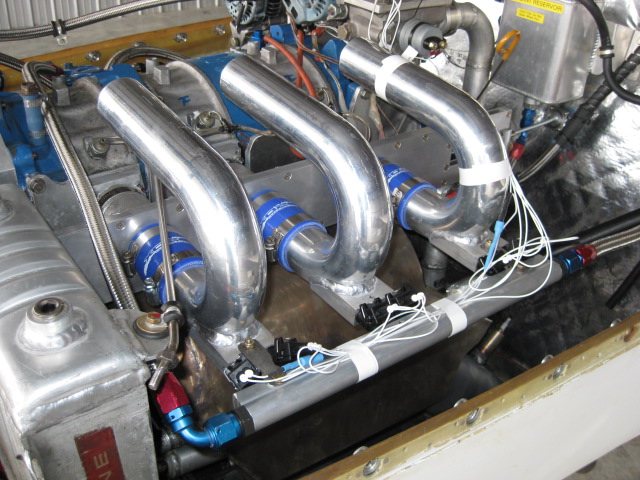
good time to do that. As you know, I've been building a p-port 20B using
your design of slide throttle. The engine is together and in the airframe.
In fact, I've actually flown it with the old intake (p-ports blocked off).
The slide throttle is also technically complete and installed in place of
the old intake. Today I ran the engine with the slide throttle, with mixed
results. The slide throttle was very smooth open-to-close, until the engine
started. With three rotors sucking against the slide, it immediately got
very difficult to actuate. On top of that, after the engine warmed up, it
became extremely difficult to slide. I figure that I can cure the temp
related problem by milling the teflon slide down .010 or so. However, I was
hoping you would have some ideas on how to reduce the slide forces during
low/mid throttle settings.
Mark
Too bad I did not think of this earlier. Your engine is one third larger
than the two rotor so the force on your slide during the over run
at 15 psi is 124 pounds as opposed to only 82 pounds on the 2 rotor.
The coefficient of friction of Teflon is reported at .06
so in theory the load on the throttle cable, worse case scenario,
is 7.44 pounds. For a two rotor it is .666 of that or about 5 pounds.
From your description it sounds like three or four times that
number or .18 to .24. Mark Supinski says throttle force is no
problem on his two rotor p-port.
The brand or exact type of Teflon makes a difference. The friction
coefficient can be as high as .2 for some brands and types.
My suggestion is uses a fish scale and a sample chunk of the Teflon
you have and place a brick on the Teflon and try to slide
it along on aluminum sheet pulling it with the fish scale.
Weigh the brick and tell us what the brick weighs and the
fish scale reads. I'll do the same tomorrow with the
Teflon sheet I have.
Try to record the manifold pressure down stream of the slide
(on the engine side). 30 inches of Hg is 15 psi.
Teflon has a coefficient of thermal expansion .000075 inches per inch per degree
F. So a temp rise of 130 F would be .00997 inches per inch. In 3 inches it
would grow about .030 so that is the total clearance you will need at top
and bottom. Thickness wise it would be only .004. The gasket in there
should cover that. It is more likely the height of the Teflon is
the high temp sticking problem.
The required slide travel is 2 inches so a throttle lever that moved four inches
would reduce the force on the slide to half of what it is now. I think as
much as six inches of throttle movement would be acceptable. That would give
you a 3:1 advantage.
The other thing to minimize is bends in the throttle cable.
The friction laws apply to that too. If you put a lever in there
you might design a pure push/pull rod system.
Paul Lamar
--
The Rotary Engine NewsLetter. Powered by Linux.
ACRE NL web site.
http://www.rotaryeng.net
Youtube key word PaulLamar2
Copyright 1998-2009 All world wide rights reserved.