In order of when received.
Please vote on your favorite.
The first 3 were done with Solid Works.
Jeff, Jarrett and Larry.
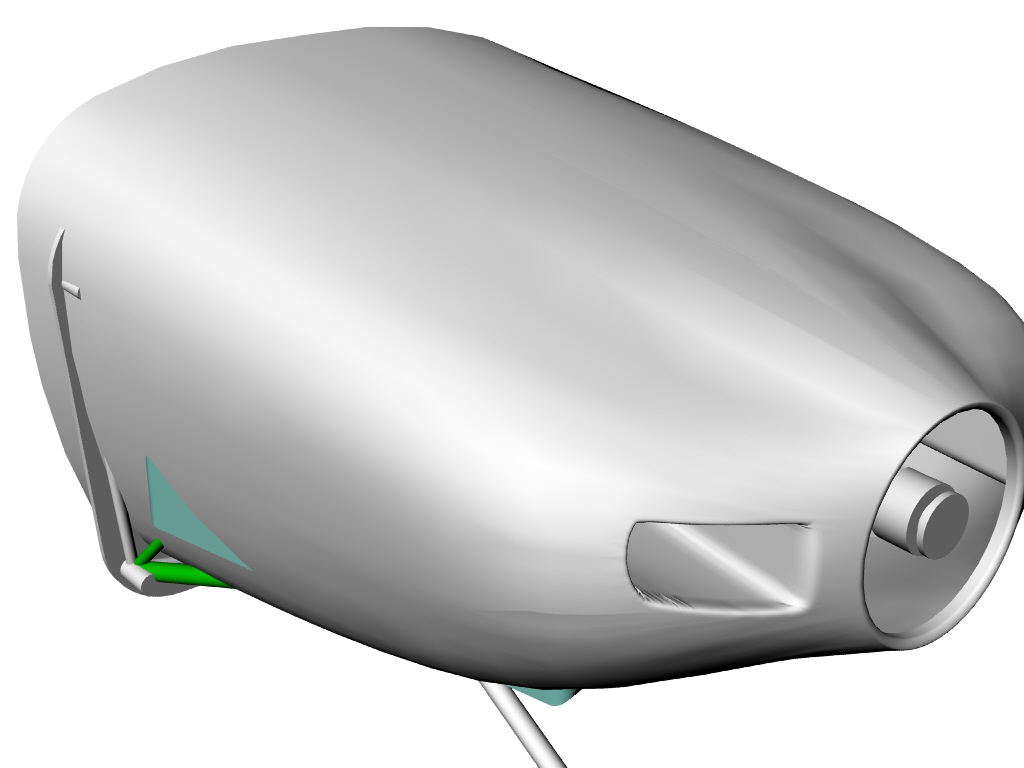
The next one was done by George with Rhino.
George did a remarkable job based on only
three weeks of learning.
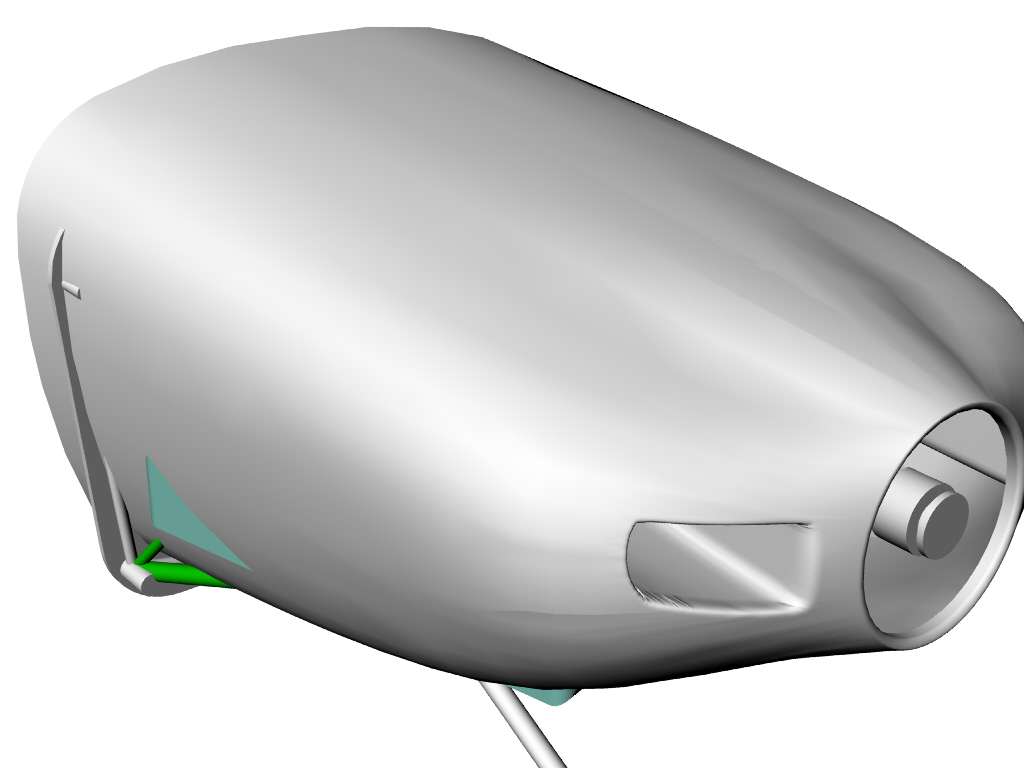
I took George's design and used Rhino
to make a few improvements like radius the
cooling openings for the last entry.
IMHO the point is that the $4000 cost of Solid Works
is hardly justified compared to the $1000 cost
of Rhino. They both do simple things like
mechanical parts with about the some quality.
Solid works has a slight advantage for mechanical
parts.
IMHO Rhino is clearly a better tool for cowlings.
Paul Lamar
--
All of these look great, I'd be happy to have any of them on the front
of my plane (if I had one:( )
- Part of the choice boils down to what a user wants--something that
looks "conventional" even though we don't have a horizontally opposed
engine under there, or something that looks good and also fits the
actual cooling requirements of our installation.
I vote for Larry's design, with Jeff's as a close second.
If I had any talent and any skill with Rhino, I'd draw a wide, thin
profile design like Larry's, but with no intakes at the front, and put
a wide scoop underneath to feed a low-mounted horizontal radiator.
Again, all are great. Thanks to all for contributing.
Mark W.
Paul
You attached the same file twice, there was a file called "RV10 cowling
stock"..
SW is a very powerful program but Surfacing is not it's strongest
feature. Try fairing surfaces in a wing root and you will see what I
mean...There are people that can do that but very advanced users..If you
need to make a living doing designing, SW is the best value out there
with great support.........
I built over 5 different versions of this cowl (others not sent) by just
changing numbers on sketch's in minutes once the main body was
created.....parametrically it's awesome....
jeff
Sorry, Can you send it again as a iges or step?
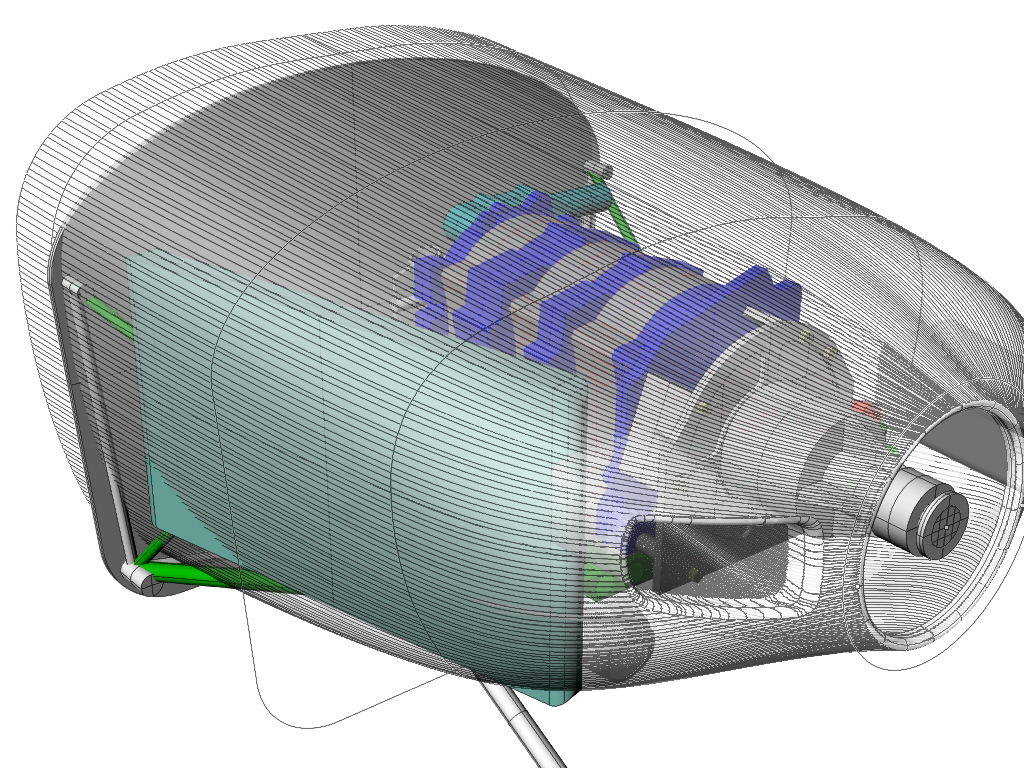
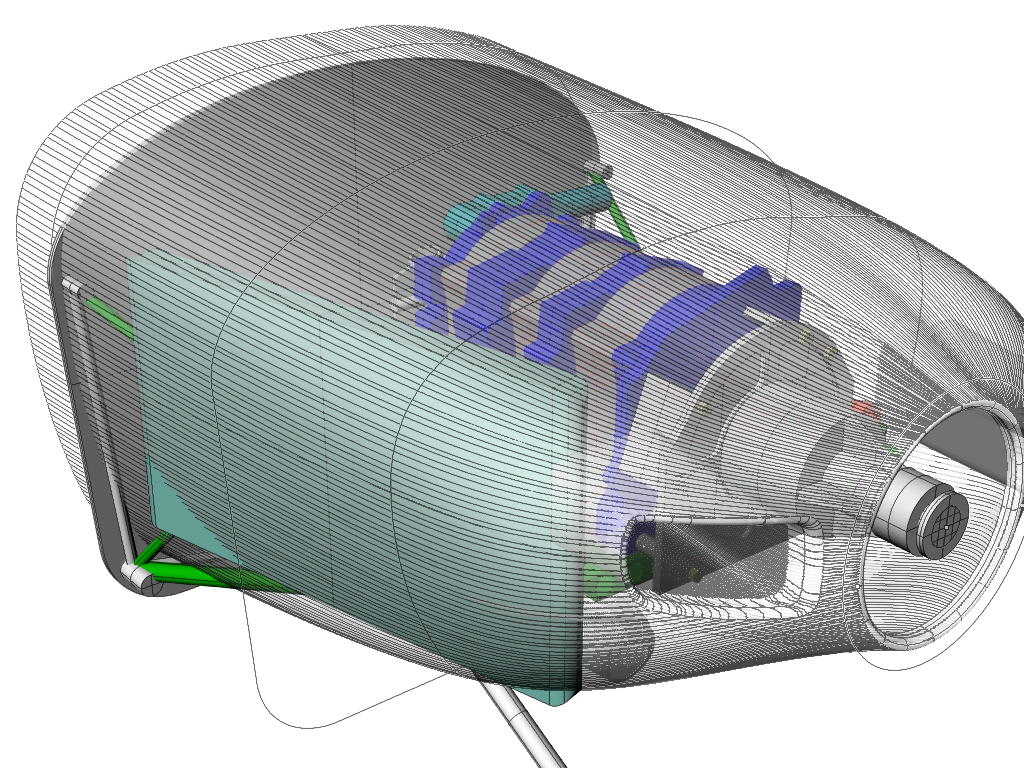
What I did on all of them was render them twice. Once to show
the mold lines and the other without mold lines. In Rhino they
are called "curves" and "iso curves". One can learn a lot about
the process by looking at the mold lines.
The same thing is done in Rhino by turning on "control points"
and dragging them.
--------------------------------------------------
All six of these cowls are the same Rhino dwg.
They are just scaled 1D, 2D or 3D. One step process.
Paul Lamar
Paul, I was wondering if you could put the rotary engine model you
use for the motor mount renderings in the contest cowels to see if they
enclose the engine. The provided side view was helpful for the profile but
we had no front or top views for the 3D of the engine. I realize the intent
was to model the stock cowl to test the CAD software, but it would be nice
to see if any of them actualy cover the engine. An Iges file of the engine
might also be something to post on the newsletter. A builder with Cad
software could add in his oil and water coolers and build the cowel curves
around that with the internal ducting modeled.
For my entry I surrounded the engine profile but haven't modeled
Jeff's PSRU plate to see if it sticks out. Also I assumed the bottom rear of
the cowl was a hinged cooling flap and rendered it in the closed position.
Without the cooling flap the bottom tunnel
would need lowered to provide the exit opening area required, about a five
minute job at this point. Four minutes to size the area and thirty seconds
to design the cowl iges file, and the last thirty to loft the shape and save
the file.
Personally I vote for the Larry design since it looks most likely
to enclose the engine with enough volume for the cooling radiators, I spent
more time making sure it matched the rest of the fusaloge without any kinks
in the firewall area while trying to add a little ramp speed. With such a
large firewall cross section there seems to be abundant volume for all the
necessary components.
george grimes
BTW If we were doing a buck form we also need to offset the surface in
enough for the cowl thickness
------------------------------------------------------------------------
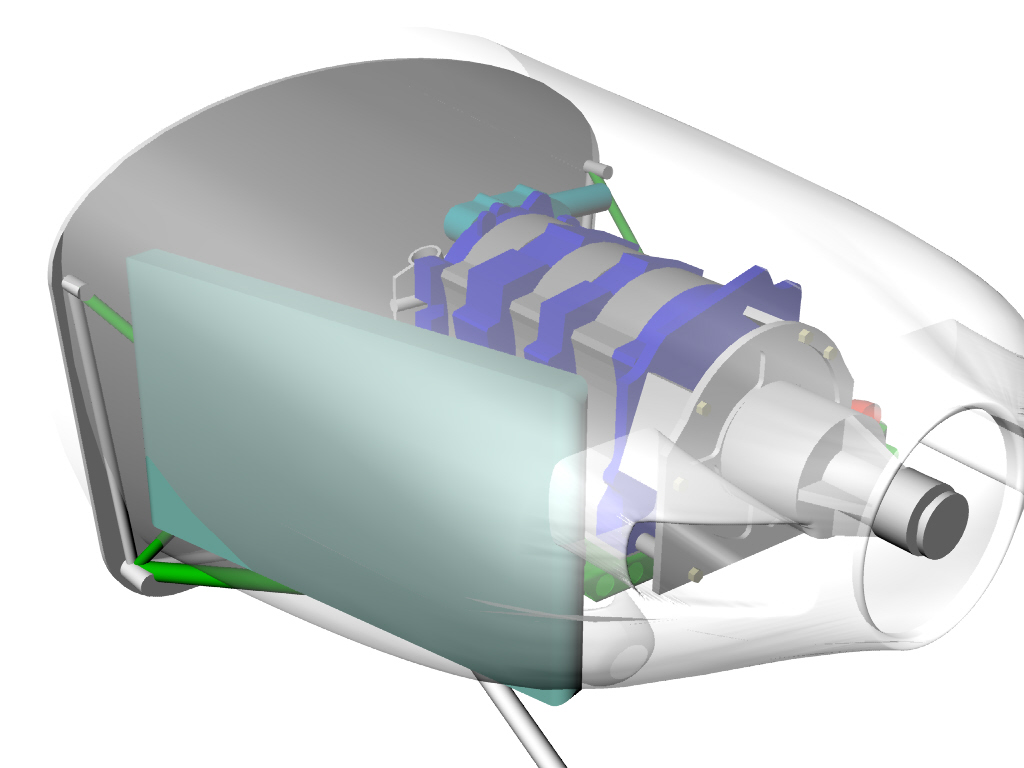
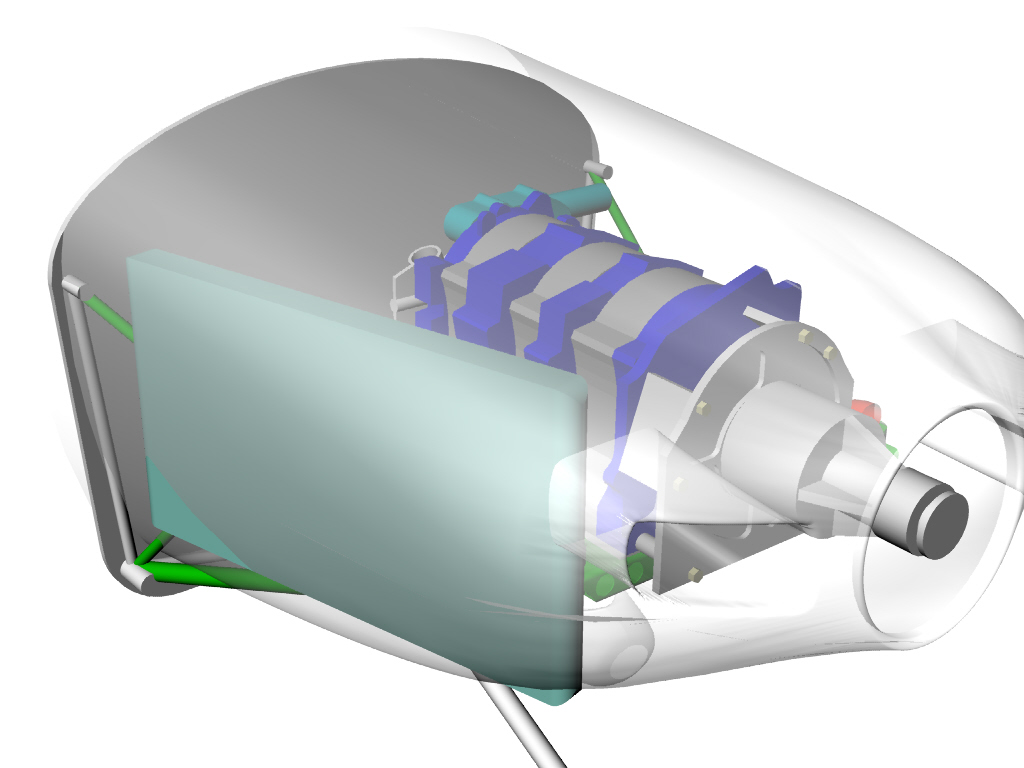
Good idea George. Here is your cowl modified by me super imposed
over an RV10 motor mount I did as far back as 2007.
With a few minor mods it would fit perfectly. That is not to say
this motor mount is accurate. As I recall nobody ever sent
me the actual dimensions of an RV10 cowl so I am not sure
I have the thrust line and cowl length accurate. The firewall
shape is fairly accurate as it was derived from a head on
photo.
Paul Lamar
--
The Rotary Engine NewsLetter. Powered by Linux.
ACRE NL web site.
http://www.rotaryeng.net
Youtube key word PaulLamar2
Copyright 1998-2009 All world wide rights reserved.