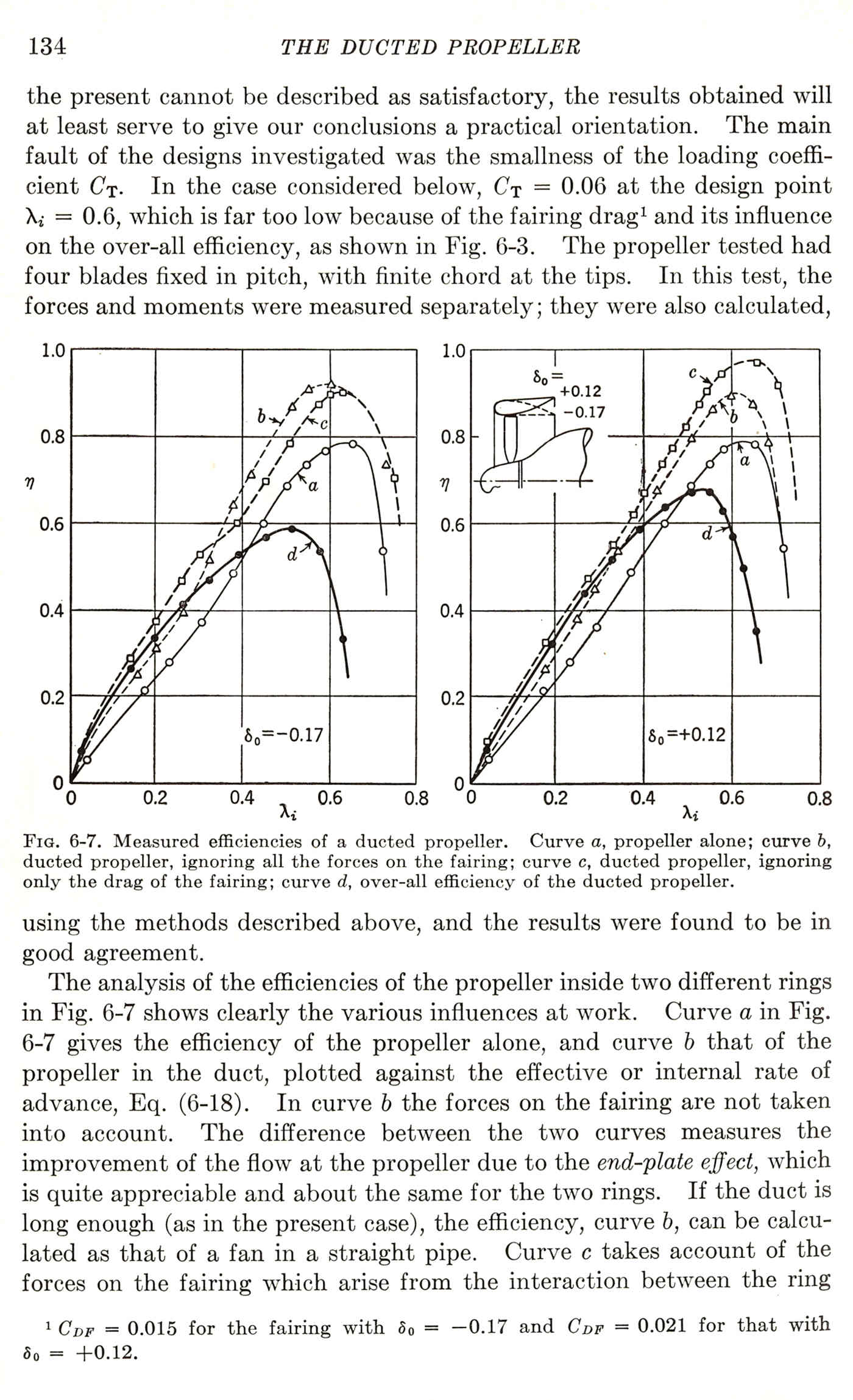
Ducted fans have been tried over and over again for decades
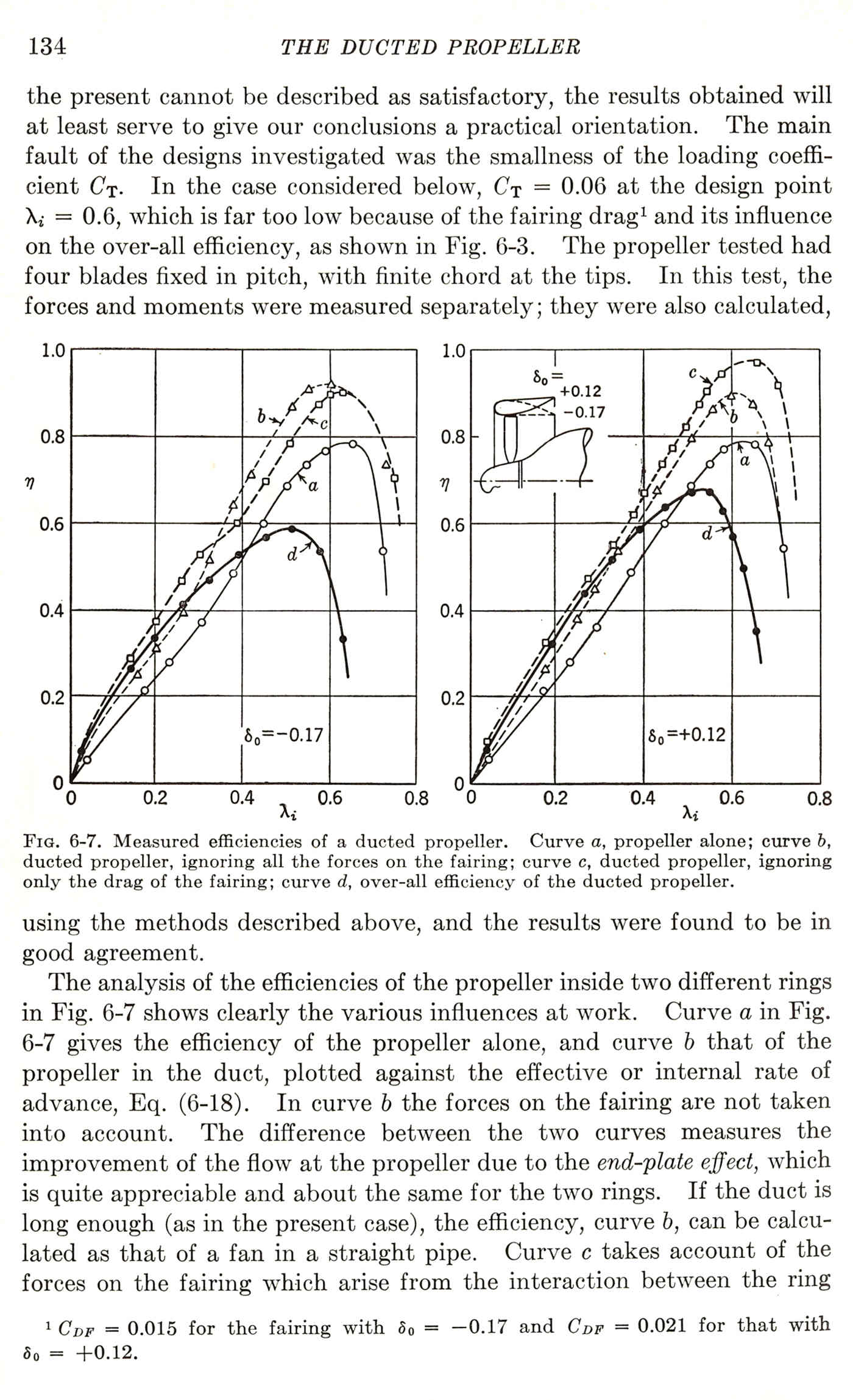
all with the same bad results. Kuchmen & Weber summed
up the problem in this graph. The drag of the duct outweighs
the increase in thrust.
Paul Lamar
Thank you, I appreciate the info. That makes sense too. Bummer though, I
was
hoping I would be able to get rid of the old Continental and replace it
with
a pistonless engine. :-)
By the way, what is the TBO on a 13b rotary and what is the approximate
expense of an OH just in case I find a home built with one?
Bruce
I don't think anybody really knows what the TBO is. Some guesses based
on iron apex seal wear is 3000 hours. Perhaps 2000 hours may
be more realistic. I don't think anyone has more than 2400 Hours.
Silicon Nitride apex seals wear at a much lower rate. E-shaft and rotor
do not fatigue. Main and rotor bearings last indefinitely at the
RPM we use in air craft applications. Keep it cool and keep it
supplied with clean oil and it will out last you :)
http://www.rotaryeng.net/Rotor-v-Piston.html
Paul Lamar
Paul,
As a "fan" of ducted fans for use in Hovercrafts and Air Boats and some
other applications where it seems like everyone in those markets or a
majority use ducted fans.
I have a question for you as you have a strong opinion (with data to
support) that the drag of the fan blades outweighs the thrust benefits.
What if one was to use a duct with a two or three blade prop what are the
advantages or disadvantages of this combination use?
Thanks Paul for any input you can provide me regarding this.
Eric Barger
The number of blades has no relevance.
Air boats are in a different speed range. Apples and oranges.
In that case static thrust is everything. Ducts are good.
Here is one I got a ride on. No ducts :) Exception to the rule.
I am so sad this is not still around. I did ride a smaller
one not too long ago in 2005 Ryde and Southsea.
http://www.hovertravel.co.uk/
Paul Lamar
Paul,
If I want my hovercraft to fly at say 120 MPH, and safety is a concern on
the ground with an open prop, and we are using a duct currently do I gain
anything by using a two blade prop instead of a fan blade?
This above is a hypothetical, or is it simply the duct that is creating
the
additional drag you refer to in your inefficiency of a duct in flight.
I have tested props (static thrust) and ducts and there is an extreme
static
thrust advantage. And I understand the apples to oranges I just want to
understand the real differences in performance between a fan and a prop
inside a duct. I have not experienced any testing with this combination.
Thanks
Eric
What is the point of your hovercraft? Is it to take off vertically?
Is it going 120 MPH a few feet off the water? If you are concerned
with MPG at 120 MPH I would use a prop. Most hovercraft however have
a top speed of 60 MPH over water.
It certainly won't go 120 MPH over the average ground.
The average ground is not level enough so it will collide with
something sooner or later.
In other words what is your over all goal?
In the speed ranges where ducted fans pay off in airliners
is from around 450 MPH to 600 MPH. In those cases
there are many blades.
I have no info on a two blade fan as opposed to a
three blade fan for static use. I suspect however
the multi-blade fan may have an advantage.
Paul Lamar
Paul,
I was trying to see if a two blade, or a three blade prop in a duct would
provide good static thrust like a fan and also reduce the drag from the
fan
especially if the fan stops. It appears that you have not tested or have
any
results of testing with a two or three blade prop in a duct. Anyone on the
form that may have done some testing with ducts and props?
Thanks
Eric
As I understand it you want good static thrust and high efficiency
at high speed. What you want the V22 Osprey has. Read this.
http://www.rotaryeng.net/VTOL.html
Helicopters have good static thrust as well. The larger the diameter
of the prop the better the static thrust.
If you are looking to eliminate the gear box and use a ducted fan
instead the performance over a wide speed range will be severely
handicapped.
Perry Mick tried a 3 blade fan for 13 years. Gave up and switched
to a gear box, prop and went 30 knots faster with improved MPG.
http://www.mickaircraft.com/duckt.htm
Paul Lamar
I love pusher designs like these, but I never hear anyone talk about
whether the propeller noise exhibits that typical 'slapping' or
'grinding'
noise on these particular designs? Is the fuselage design clean
enough that the airflow is smooth enough to avoid that?
Gene Kahn
It was not quiet.
Paul Lamar
Ducted fans on canard pushers are like fins on a Cadillac.. Some
people are really enthusiastic about them, but they serve no practical
purpose. :)
Matt-
Maybe I'm wrong, but isn't this just a giant ducted fan? Seems to work fairly well.
Tony
Yes it is Tony but if you will reread what I said above it is
working in a different speed range. Did you not read this message
the first time around?
It all boils down to this. If you have enough HP to go 600 MPH
then by all means use a ducted fan. Damn the fuel burn full speed
ahead. Top speed is the cube root of HP. If you have HP cubed
go for it. Airliner turbo fans have gobs of HP. In the range
50,000 and up. They also burn gobs of fuel.
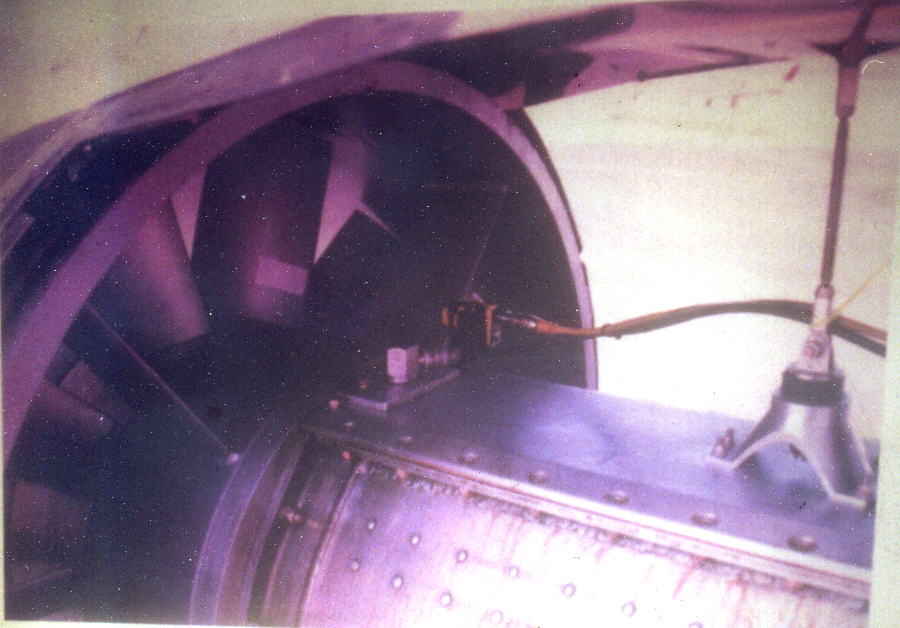
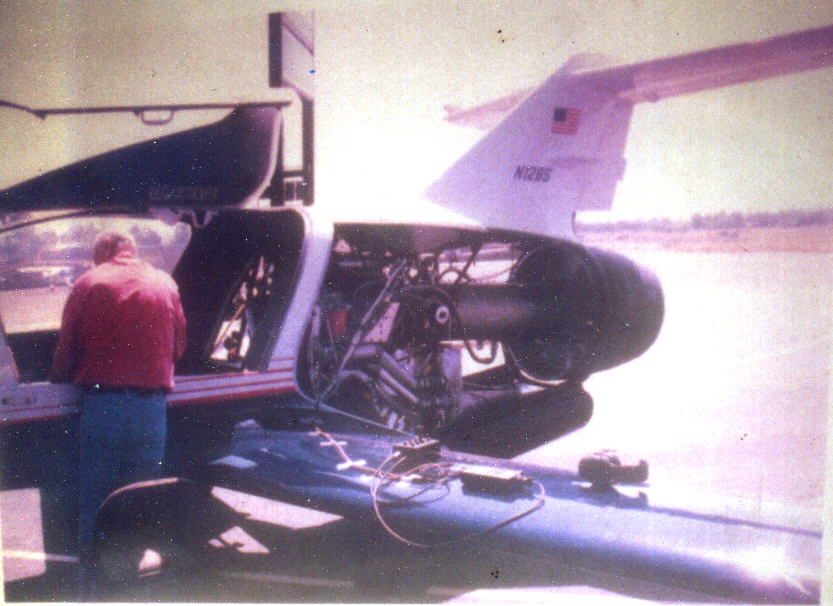
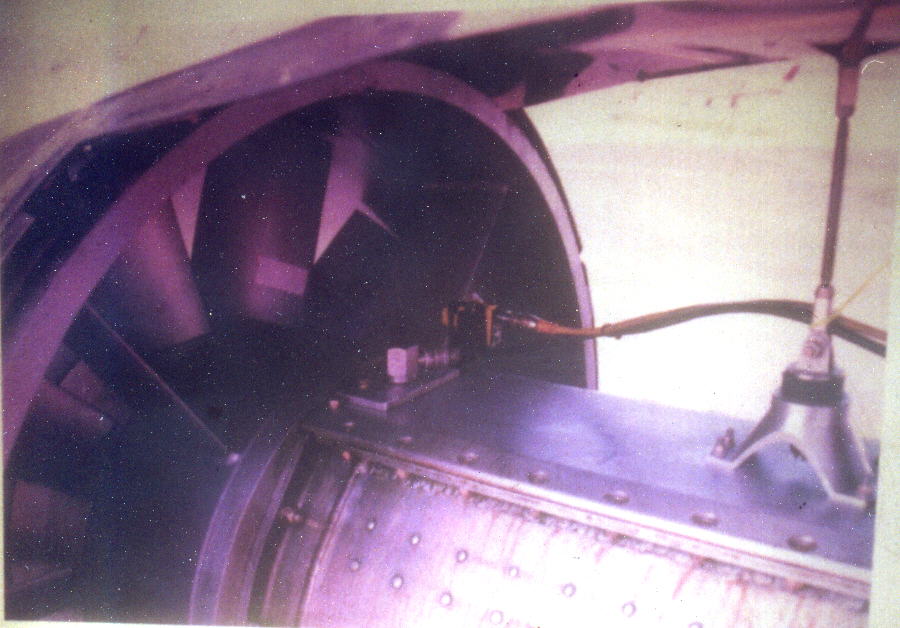
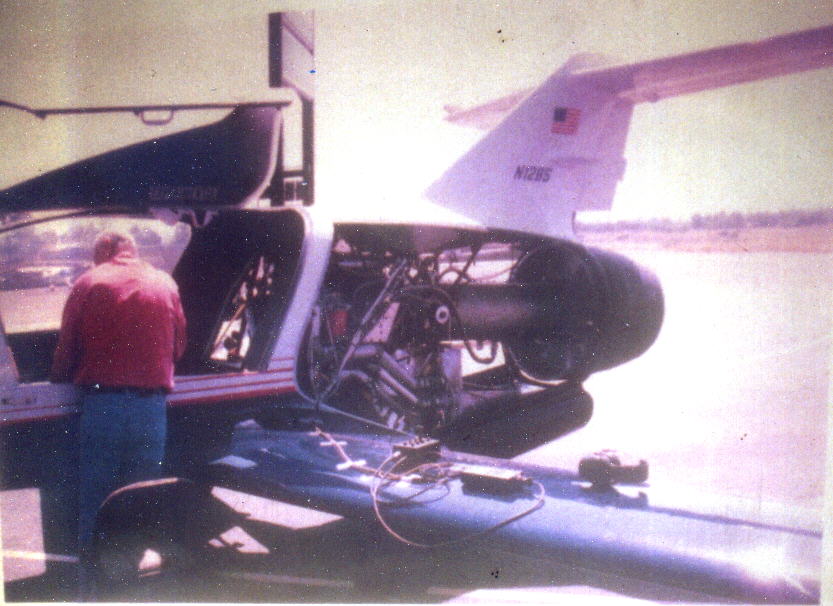
Here is a picture of a ducted fan turbo charged Mazda 3 rotor aircraft
that was an abject failure. It has been sitting in a hangar in Ramona
Ca for the last half dozen years. If a turbo charged 3 rotor won't make
it work... what will? The guys that designed this are some of the
top aviation engineers in the country.
Just a little short on smarts however :) It failed after all.
Those that fail to learn from history are doomed to repeat it.
Paul Lamar
--
The Rotary Engine NewsLetter. Powered by Linux.
ACRE NL web site.
http://www.rotaryeng.net
Youtube key word PaulLamar2
Copyright 1998-2009 All world wide rights reserved.