Today was the day of judgement, the measure of my building prowness- no,
not the first
flight, but the weight and balance. My plane weighs 1091 lbs, weighed as
it should be- no
usable fuel, full oil and coolant. I for one would go with the aluminum
housings if they
cost me up to $1500 more than the cast iron ones. If they saved 70 lbs
total, that would
be around $21 for each pound saved, to get my plane down to a more svelte
1021 lbs. I'm
sure I could probably get another 15 lbs off if I did some weight
reduction on my Shertz
beam front mount, along with other things. I also went a bit heavy on my
engine mount- 1"
dia x .049 thick tubes on some of the mount. I at least have confidence
that my mount
should hold up. The CGs all work out OK- design range is between 6
8.7 -77.7 inches aft of datum. Here is how it works out:
Vans states that most RV-4s come in around 950 lbs. Gross recommended is
1500 lbs.
Mine:
Empty 66.2, wt.1021 lbs
with 180 lb pilot, but no fuel-68.51, just a bit out of CG by .2 inches,
total wt. 1271
with 180 lb pilot and full fuel 68.8, total wt. 1465-
with 35 lbs baggage- cg-70.38 total 1500
If I want to take a passenger with full fuel and baggage, they'd better
not weigh a thing,
or I'll be flying over gross recommended weight.
Brian Trubee
Jeff's motor plate will help as it in effect eliminates the 9 pound weight
of
the Scheretz beam. It weighs about the same as Tracy's plate but
the motor mounts are built in. Not helpful for Brian as he is too far
gone for a new motor mount.
One inch .049" tubing weighs about .0462 pounds per inch. Four pieces
30 inches long therefore weighs 5.5 pounds. 3/4 OD .049 4130 tubing
weighs .0346 pounds per inch so if you replaced just the top two tubes
with 3/4 you would save 2 pounds. Careful design is important with
no tubes in bending.
I think 10 pounds can be gotten out of Tracy's gear box with out too much
trouble. See the attached PSRU parts weights.
Aluminum end housings are $1500 each. I am not sure about the TBO however.
If you are 100 pounds over gross your climb rate assuming the
same power will be down 1500/1600 or .9375%. Top speed will hardly
be affected. If the climb rate is given as 1500 FPM with a 150 HP
O-360 than a P-port rotary would be about 2500 FPM. I suspect a
few pounds would be saved in the intake manifold with a p-port
slide throttle setup.
--------------------------------------------------
Correction on the tube savings. 30 inch 1 inch OD tubes
weigh 1.375 pounds each for a total of 5.5 pounds.
So you would only save about a pound and not two pounds.
If a tube is in tension or real short use 3/4.
Paul Lamar
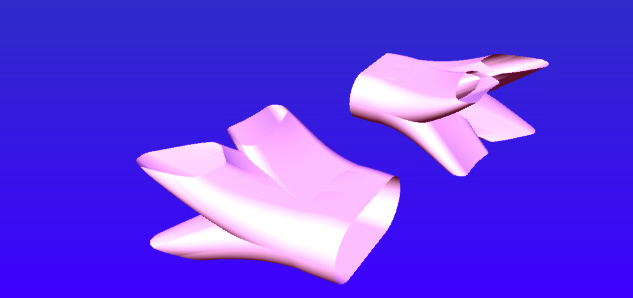
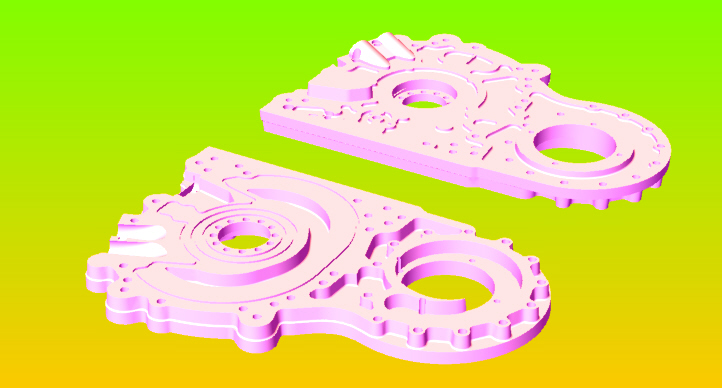
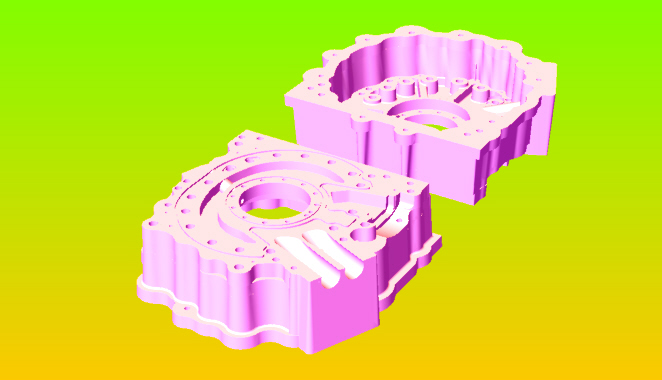
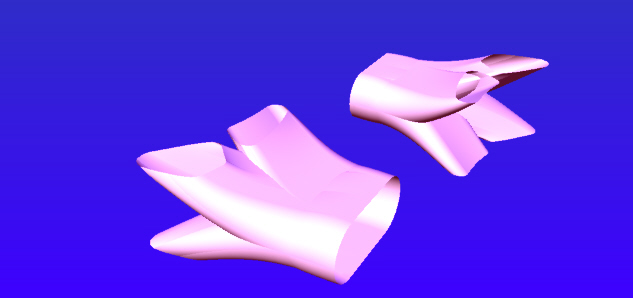
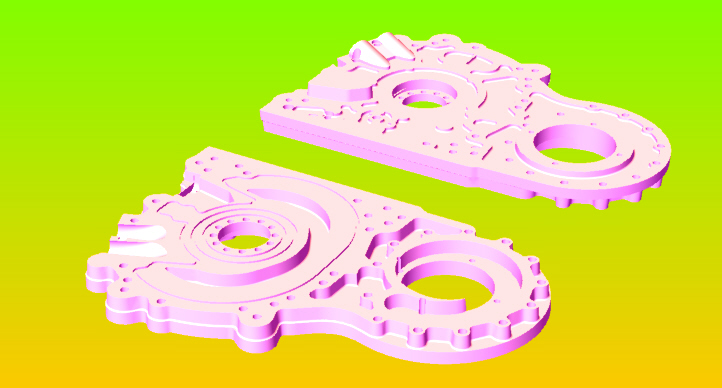
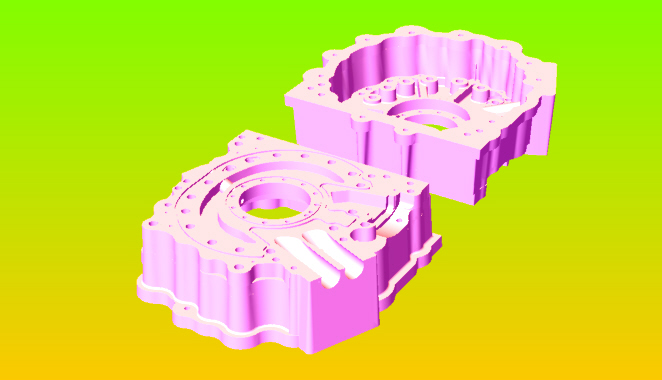
Paul, I am going to attempt to send JPEG renderings of some of the
aluminum side housings. I also did iges in solidworks surfaces style and stl
which I hope to give to you if you get to sun-n-fun also there are 3Dm rhino
files, with the curves used to generate the parts to allow changes. This is
about a third of the rendered immages. I can send a few more tomorrow. I
haven't done the replacement wide housing for the three rotor which is a two
piece "O" ring sealed part similar to the center housing except with oil
galleries and a stationary gear. I am waiting to see if I can spec a two
rotor front stationary gear since the flange will be inside the housing.
There is a total of 21 pieces to do one thru four rotor and with the wide
center housing six rotor configurations.
I didn't get some of the interesting bits on the attachment list
and can't seem to delete them so I will just send it and have to do a second
list later.
george.grimes7@gmail.com
Paul, It looks like the first few sent so I will add a few. I am sending
the machined version of the parts. There is also a pattern version of each
part for sand casting. No cores are required and only one cope and drag. The
reason for csting is to use 390-17% sillicon aluminum to incorporate the
silicon carbide in the part rather than having to apply some sort of surface
wear coating. The other reason is that turning the front and back faces in
the lathe and drilling holes takes care of most of the machining. Water "O"
ring seals for RX7 housings are easy to incorporate although I am using RX8
with the water seals in the rotor housings. There is one drive end
bellhousing with the flange extended 3" for Tracy's PSRU. There are 3
front options, one nearly stock, one with a low mount Chrysler HEMI water
pump for four and six rotors, and another that is a bellhousing that
connects two engines in series with two stock E-shafts. There are three wear
plates choices. One is similar to stock, one for P-port intake and exhaust
with a dynafocal mount, and one for side ports with dynafocal mount. There
is only one two piece center housing with water outlets for water in and out
that are well away from the slide throttle with outlet on top and inlet on
the cold side. The cooling is parallel rather than series that you suggested
at sun-n-fun last year.There will be a three rotor housing next and the
water pump cover still needs inported from autocad 14 to rhino 4 which I now
know how to do. Basically you import the curves and use the rebuild command
of Rhino then loft, extrude or surface back into solid (surface) parts.The
side port version is an eight intake port with two ports on the end
housings and two per rotor on the center housing. Exhaust porting is stock
RX8 with stock heat shields. The side port patterns leave a wall in the port
which allows use of P-ports on intake or exhaust. There are two cast in
injector mounts per rotor pointing at the intake port. Bosses for RX8 or TX7
front covers and water pumps are on the pattern. Additional front cover
bosses to use rolled thread tie rods with nuts on both ends to replace the
tension bolts are on the to do list.
I hope you get a chance to look these over before sun-n-fun if you
stop by on the return from aero so we might discuss any additions I may need
to add.
I want to import my airframe into Rhino and export it for X-plane so
I can fly it with the new verticle tail (now a 1/2 camber) to see if I get
more speed. The symetrical tail ended up with 7 degrees angle of attack at
no deflection of the rudder. I only used 550 HP for the first run which is
conservative for a turbocharged four rotor. Does anyone know what file
extension imports into X-plane???
george grimes
--
The Rotary Engine NewsLetter. Powered by Linux.
ACRE NL web site.
http://www.rotaryeng.net
Youtube key word PaulLamar2
Copyright 1998-2009 All world wide rights reserved.