I
*FINALLY* get to send this email...
3/17/2010 - 10:46 AM MDT
K00V - Meadow Lakes Airport, Peyton CO
OAT: 50F
Winds: 5kt out of north
Field Elevation: 6875
Density Altitude: 7680
Mazda 13B rotary, NA with Peripheral Porting
2.85:1 redrive, standard prop rotation
Mustang II N512SR leapt into a blue Colorado sky from runway 33 like a
bat out of hell (no homesick angels here). Takeoff roll was 1500 feet
max; tough to tell from our vantage point at the ~3000 foot point of
the 6000 foot runway. At the controls was our test pilot Bill
Mitchell (2008 EAA AirVenture Spirit of Flight Award winner for flight
testing). Climb out was max-performance at 85 indicated. (Appx
1000fpm indicated) Aircraft was climbing through pattern elevation by
the end of the runway.
Bill departed the pattern and took the airplane east of the field to
10,000 feet. Water temps throughout the climb were a chilly 178F max.
Oil temps were not as kind, 197F on takeoff, 217F when departing the
pattern, and 241F at 10,000 feet. Oil temps quickly dropped back to
215F on level out, but none the less are a source of concern. We'll
see if a less aggressive pitch angle on takeoff (and hence a faster
IAS during the climbout) helps the oil temps during the next flight.
If not we'll have to start looking at what we need to reconfigure.
For this flight, they were what they were -- Bill had to get enough
maneuvers in be able to safely land again, so once around the patch
and land again was not in the cards. The quick drop back to 215F on
level out made everyone feel better.
Bill put the airplane through is paces for basic flight
maneuverability. He reports the airplane flies hands-off straight and
level when properly trimmed there is no 'heavy' wing behavior.
Power off stalls (clean) broke smartly and evenly at 64 indicated.
Relieving the back pressure on the stick resulted in almost no loss of
altitude during the stall. Dirty stalls at all flap settings
similarly broke smartly and evenly at 62 indicated. Power on stalls
broke quickly/aggressively at the same 64 indicated. There is little
or no buffeting prior to any stalls the airplane was completely
controllable at 65 indicated before stalling at 64.
We did have an issue of all things with the pilot seat locking
mechanism. As a former Cessna test pilot Bill warned before the
flight that we were likely to find the locking mechanism did not stay
engaged. He was proved correct in flight and was not able to get the
seat to firmly stay in place. This cut short 1st flight since Bill
was not able to have full rudder authority with the seat sliding
backward. Bill is not a tall fellow, and was only able to get ½ of
typical rudder motions with the seat in the aft position.
Bill reports the engine performed flawlessly throughout all phases of
the flight. He was comfortable enough with its behavior to do things
like the above mentioned power on/off stalls during 1st flight. The
engine responded promptly to all throttle commands. Very smooth in
operation at all rpms, and he was easily able to detect on final when
the prop went from producing forward power to windmilling & creating
drag as he throttled back. Maximum rpm (that he noticed) was around
7000 (~2450 prop). Given that our prop is only a 68x68, we would
expect to be able to get to the electronics limit of 8000; it would be
surprising if the engine could not do better than 7000 at cruise / max
speed that will have to be a test for another day. Bill's comment
at the end was that the only smoother engine would have been an
electric motor but finding an extension cord long enough is tough
He was pleased/impressed and had no engine related squawks (other than
oil temp during climb). From the ground the engine sounded fantastic.
Very smooth, and really a quite pleasant note. I've said before that
no one can accuse my engine of being quiet on the ground, but even the
local A&P who was watching the festivities from his FBO commented
that it sounded nice & surprisingly quiet on takeoff. Who'da thunk
it...
Removing the cowl after the flight revealed... nothing. Everything
looked great with no signs of anything amiss. We'll be doing some
more disassembly and inspection before the next flight to make sure
everything is hunkey-dorey.
Terry and I both extend our heartfelt thanks to Paul Lamar, and the
rotary aviation group. Without Paul's over and above assistance,
including 2 trips to Colorado Springs to inspect the install & a 1200
mile road trip to pick up an ailing engine in the middle of Utah we
would certainly never have gotten to 1st flight, much less a first
flight that was entirely uneventful from an engine perspective. (You
haven't lived until you've driven 600 miles in the middle of a Utah
summer, parked by the side of the highway in the literal middle of
nowhere, and erected a shop crane to hoist a 13b out of 1 minivan and
into another, followed by a 600 mile trip home).
Mark & Terry (Rocky Mtn High)
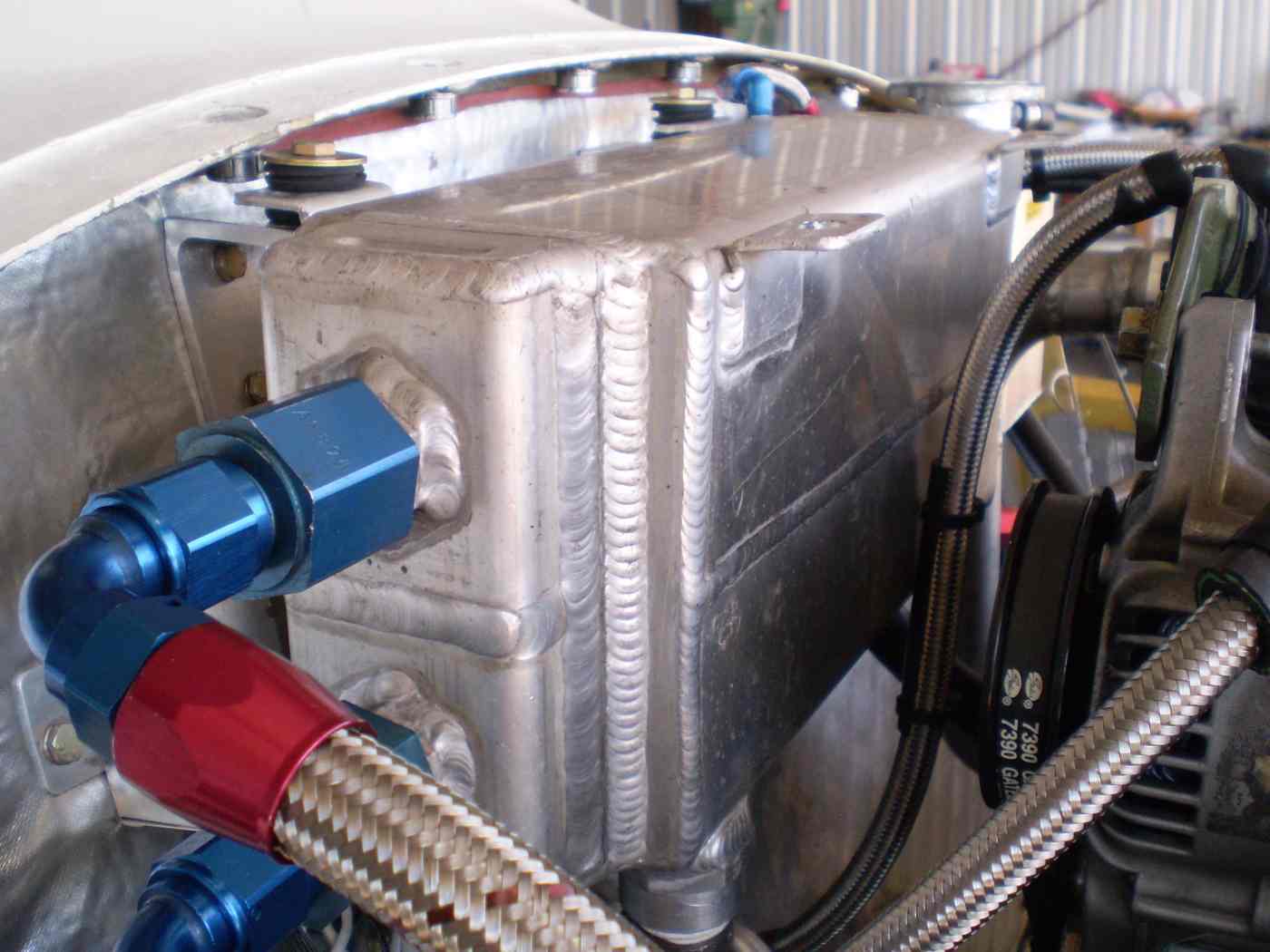
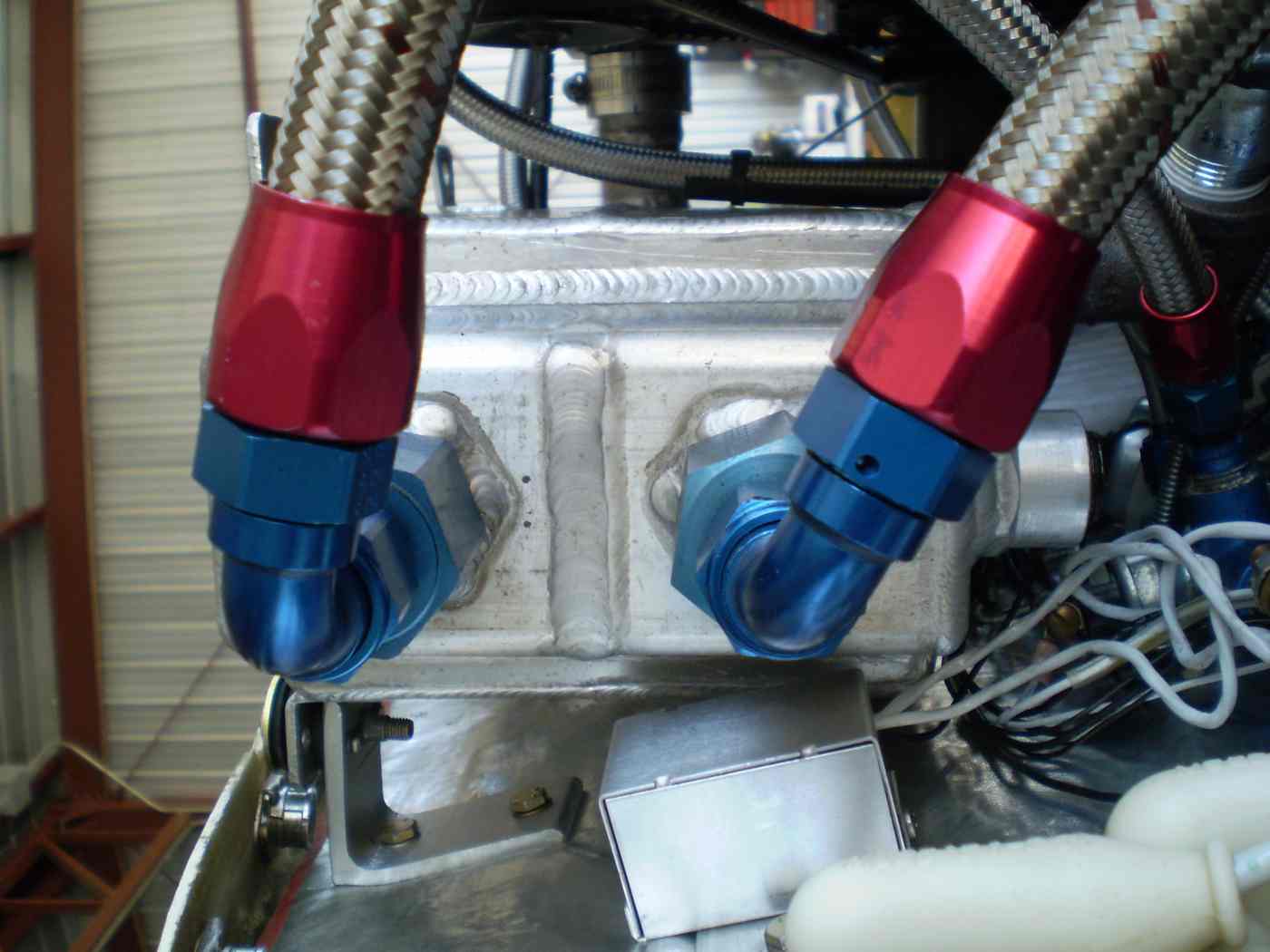
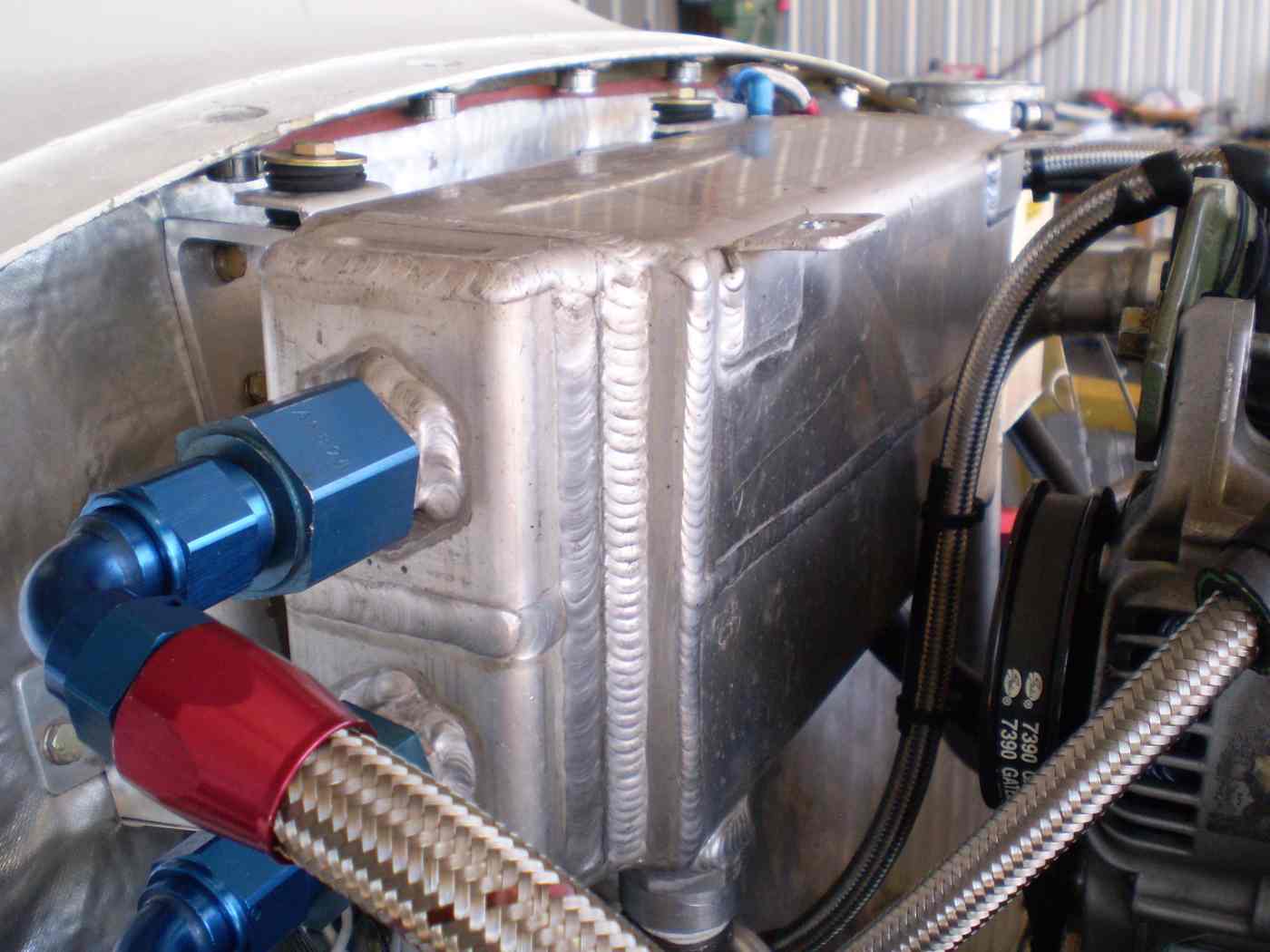
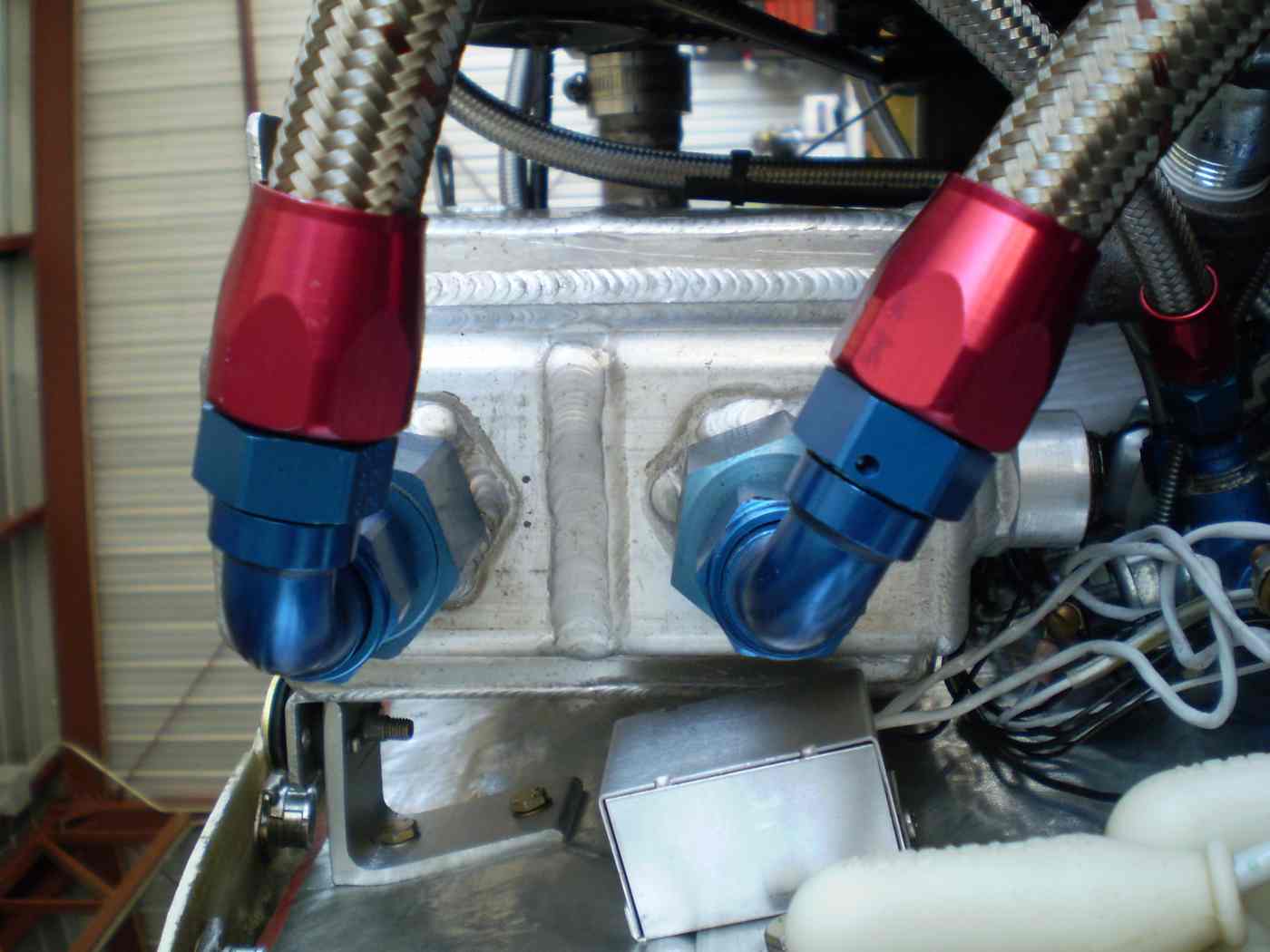
** Mark Steitle, would you please take some good pics of your dual oil
coolers & how they are mounted? If ours isn't going to cut it, I was
liking the looks of yours when you came for a visit last summer. We
should have no problems implementing your style setup (which is known
to work).
I am relieved finally! Thanks to all the guys at Mazdatrix for building
a great engine.
Paul Lamar
Mark,
Way to go!!! Its been a long time coming. My oil temps were up into that
range on my first flight and I just went around the patch once and landed.
Glad things went so perfectly for you.
Regarding my high oil temps, it took me a while, but I discovered that I had
a defective oil cooler that was allowing the oil to bypass the core. Once I
replaced it with a new oil cooler I was able to remove the oil/water
exchanger. Since you're running a p-port, your horsepower is higher than a
regular side port 13b, so unless you used a 13B-REW oil cooler, it may not
be up to the task. I also discovered that Lynn Hanover was right on the
money in that you'll get more horsepower out of the engine if you can keep
the oil temps down around 160*. While installing an oil/water exchanger did
get my oil temps down some, all it really did was to transfer the heat from
the oil to the water. It still has to be transferred to the air sooner or
later... better sooner. So, I would recommend improving the airflow through
the oil cooler (possibly a larger exit duct), or installing a larger (or
more efficient) oil cooler.
Mark S.
Austin
Right on Mark.
Paul Lamar
--
The Rotary Engine NewsLetter. Powered by Linux.
ACRE NL web site.
http://www.rotaryeng.net
Youtube key word PaulLamar2
Copyright 1998-2009 All world wide rights reserved.