Hi, I really enjoyed your 35 MPG rx-8, and I was wondering if instead of a
third smaller rotor if you could turn off one of the 2 rotors?
If you wrote an article and I couldn't find it I apologize.
Also, subscribe :)
Yes. The drawback is you still have the friction of the dead rotor.
Paul Lamar in Bartow
Paul,
The rotary is obviously compact and reasonably light, which makes it
attractive for aircraft, but the efficiency problems you are trying to
address are what limits its popularity in cars.
Consider that a garden variety BMW 328i sedan already gets 35 mpg at 65 mph,
even though it weighs at least 300 pounds more than an RX-8 and at has least
five percent more aerodynamic drag. And the 328i is also geared too short
for optimal fuel economy, in order to retain some top-gear acceleration.
The next generation 3-series will likely include a four-cylinder turbo with
probably more power than the 230 hp of the 328 and 65-mph fuel economy
upwards of 40 mpg. Though I'm sure that the rotary can, and will, be
improved, the Wankel is competing against a moving target.
Csaba Csere
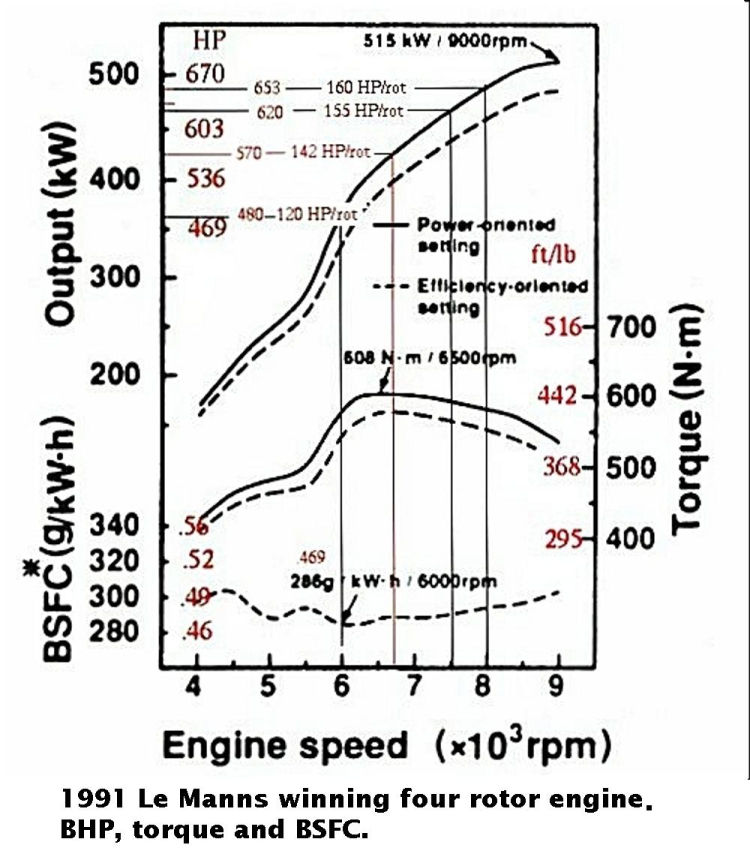
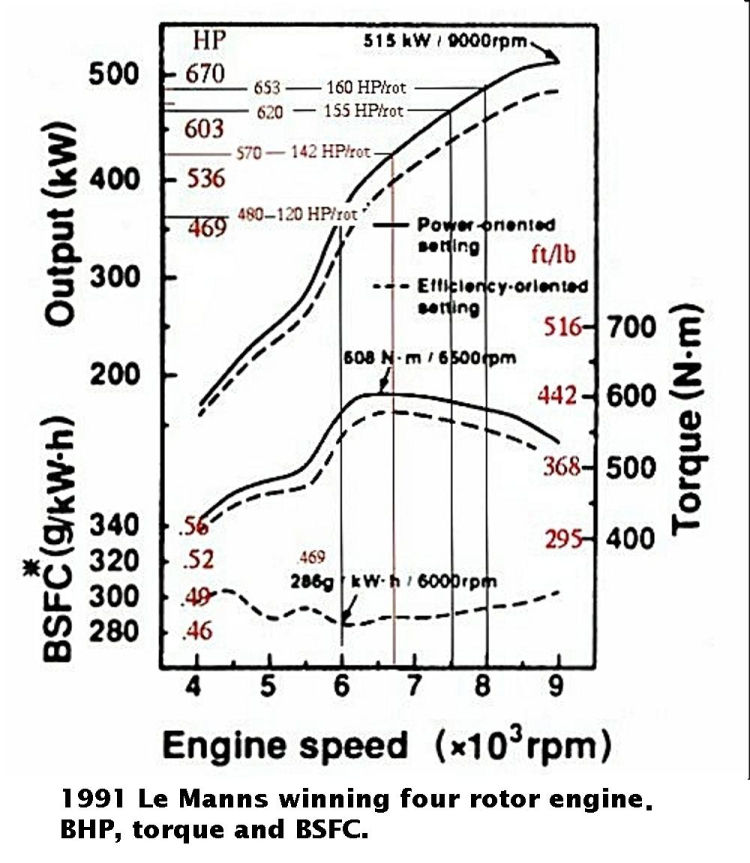
Yes I am well aware of the current BSFC problems with the current rotary
engine in automotive applications. However the moving target is not moving
very fast. The piston engine is near the end of its development cycle while
the rotary is just getting started.
We just did a video interview with the CEO of Wankel Supertech in Germany and
they have apparently solved the low power BSFC problem by a slight change in
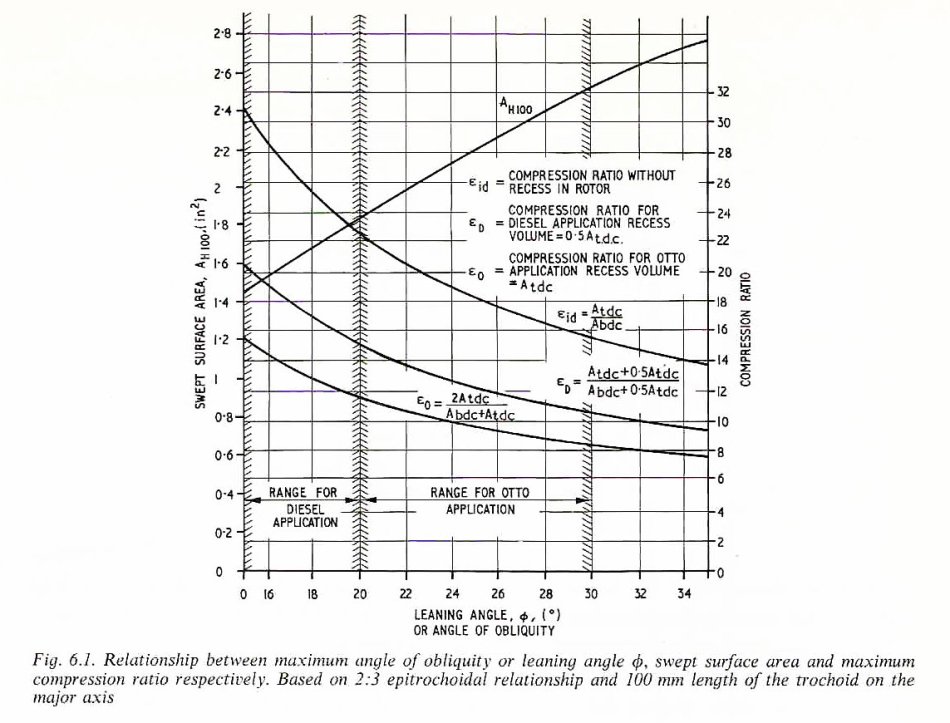
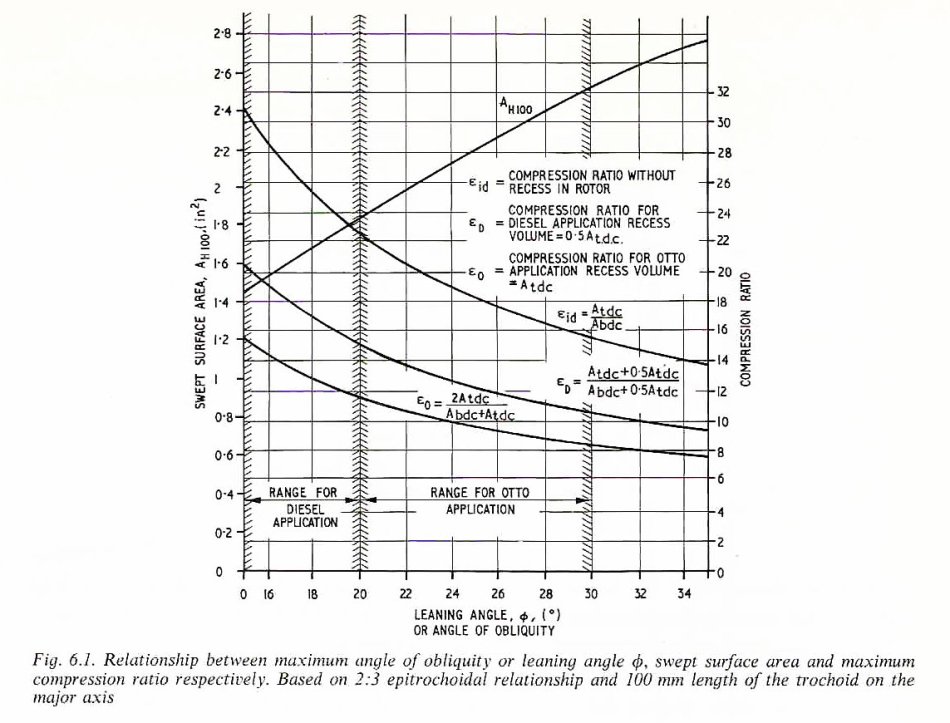
the R/e ratio. Compression ratio is now up from 10:1 to 14:1. They are
claiming a BSFC of 240 grams/KW-Hr. That translates to .389 BSFC down from
.52 BSFC. The current RX8 gets about 25 MPG at 65 MPH so that alone
would increase it to 32 MPG while retaining the size and weight advantages
of the rotary. A mere switch to a paddle shifted, all mechanical auto
transmission would further improve the steady speed MPG on the RX8 by
lowering the freeway cruise RPM.
The rotary remains the best engine to apply the turbo compound principle
as there is no exhaust kinetic energy lost to the exhaust valve.
That positions the Wankel engines as potentially the most efficient
portable internal combustion engine of all time shy of large electrical
turbo compound (AKA bottoming cycle) electrical power plants. These plants
are 60% efficient by using the waste heat in the exhaust to generate steam
for steam turbines.
Half the kinetic energy in the exhaust is currently lost in the exhaust
valve. Diesel engines are now embracing the turbo compound configuration
despite the exhaust valve.
Car engines appear to be shortly forced into this configuration by misguided
political considerations :) CO2 is not a pollutant. It is essential
for life.
Ansdale has a better chart on this compression ratio thing but you will have
to wait for it until I get back to LA and can scan it.
Paul Lamar in Bartow