Hi Paul & Group -
Is it in the public domain how mazda sealed the lemans periphiral
ports to
the
outside of the rotor housing? Are your sealing caps copied from that
engine
?
Fly & Build good -
Bryan Wilkinson in Un - grounded England
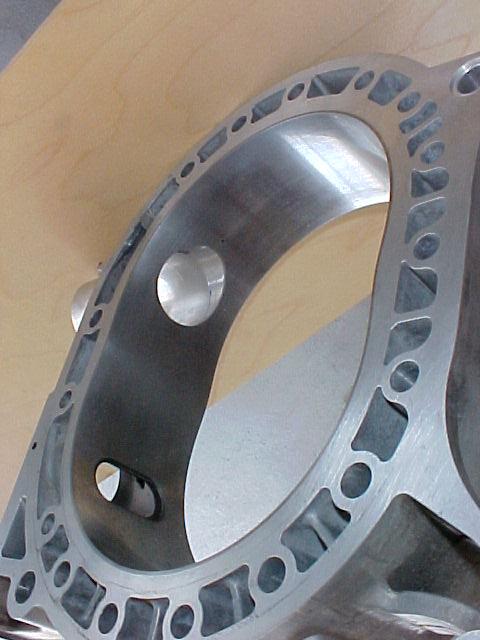
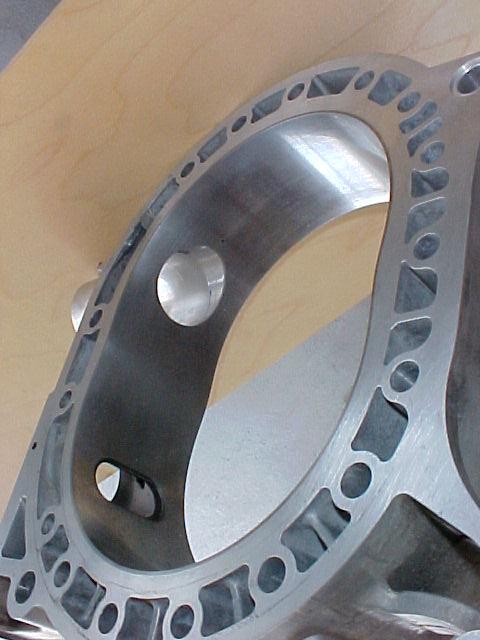
Mazda sand cast special p-port rotor housings for racing.
Very expensive.
Paul Lamar
Paul,
Any chance you have the dimensions of the D ports in those special
castings?
Can't quite see the exhaust shape in the pics.
Thank you!
Ed Carver
Don't have them Ed. Rather radical timing for 10,000 RPM or more.
Paul Lamar
Is the D shape beneficial for our use in an aircraft engine? Or can it
simply not work reliably? I have read nothing on this issue. As soon
as I
learned about P porting, I considered D shape. But had no reference to
usage. Too dangerous to try when round works well enough?...
Ed
It will work but it gives very little additional HP at 7500 RPM.
It is mainly designed to work at up to 11,000 RPM for racing
purposes for every last HP that counts. The big draw back
is it makes building the p-port rotor housing far more difficult
than merely welding in a new tube which is what we are now doing.
It is just not cost effective for our purposes.
Paul Lamar
Are the dimensions of the D equal or larger than the circular port on
the exterior of the housing?
If so, I don't think it would be too tough to make the D shaped port..
Need a mandrel on which to shape the rotor end of the tubing.
And a projection of the D shape onto the wear surface. Print that
onto a sticker. The sticker should have a couple of alignment marks
on it including a center point.
- Use a hydraulic press to force the stainless tubes onto the mandrel.
- Bore a small pilot hole through the housing, through the wear surface.
- Put the sticker onto the wear surface - aligned with the pilot hole.
- Bore the housings as normal.
- Trim the material out to the D as indicated by the sticker. Check
as you go with the mandrel formed tube.
- Weld the formed tube to the wear surface.
- Cut the tube flush with the wear surface.
- Blend to a nice shape. Correct leaks.
I agree that it's not worth the extra effort for aircraft use..
Matt-
AT Racing Beat I noticed the P-port has a noticeable curved upper lip
for a softer blend into the chamber...they install the port slightly
different, probably more difficult but it has a nice transition that
may keep turbulence down.....
Working with the stainless tube, you realize how soft it is..it could
be, with the proper machined port shape, carefully soft peened and
curved up enough to give a similar form.....not sure if there any
benefit to this idea for our purpose,
but that sharp and abrupt edge may be improved.......just a thought.....
jeff
Some of us would'nt mind the extra effort to create a more efficient port layout. The
upper edge contouring may be for lowering potential wear on the apex seal. Similar to the
beveling of ports in a two stroke engine. I am unfamiliar with rotary design, and am now
sorting these things out.
The straight bottom edge of the D shape may create and abrupt release of the tension on
the seal and therefore necessitate a smooth elongated bevel at the top of the D.
Ed
The current design actually forms an oval hole in the housing
which is more benign than the contoured port. The 13B p-port is
easier on the apex seal than the stock 13B side intake as the
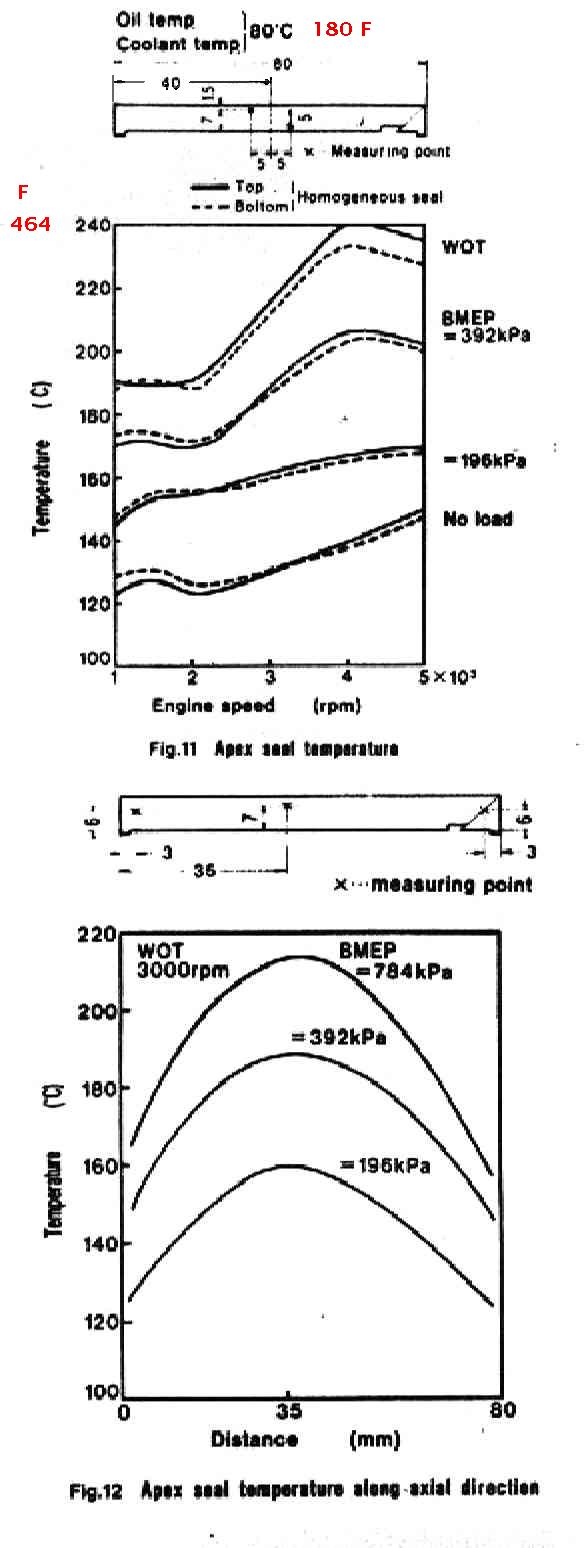
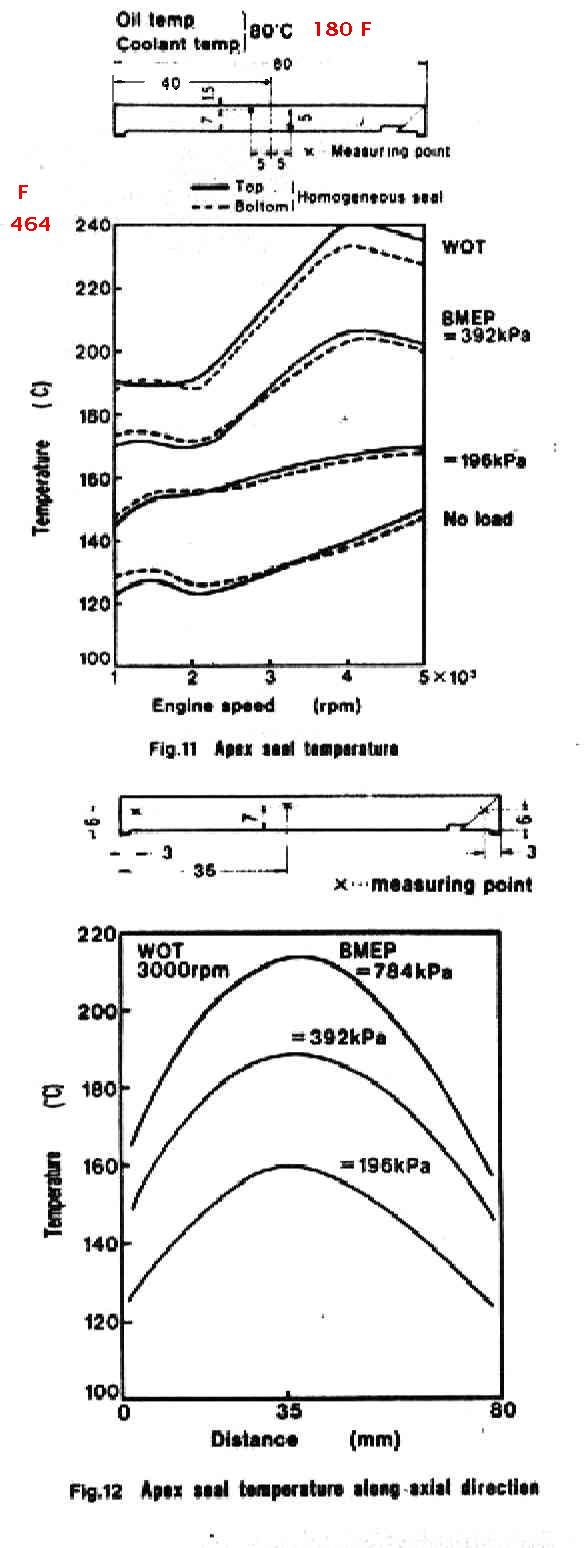
incoming charge cools the seal. In a stock 13B the seal runs 500 F at
the center. Also unlike the 13B p-port exhaust there is no
pressure drop across the seal near the intake p-port.
I would not be a bit surprised if an apex seal in a p-port engine
lasted longer than in a side port engine. The p-port exhaust is
very hard on an apex seal. As the temperature of a metal increases
so does wear. This is one reason silicon nitride ceramic seals out
last steel or iron seals.
BTW do not use after market steel apex seals as they are very
damaging on the rotor housings and do no retain lubricant like
cast iron. There is a very good reason cast iron seals
are used in piston engines and rotary engines.
Also read
http://www.rotaryeng.net/seals.html
Paul Lamar
--
The Rotary Engine NewsLetter. Powered by Linux.
ACRE NL web site.
http://www.rotaryeng.net
Youtube key word PaulLamar2
Copyright 1998-2009 All world wide rights reserved.