Mark,
Hows is the p-port 3 rotor going?
Paul
Mark Steitle wrote:
Hi Paul,
The 3-rotor is coming along just fine. I flew it last Sunday after
replacing the water pump (old pump started dripping coolant from the
shaft/seal). However, I replaced it with a spare 20B pump, not the
Renesis
that I've been working on. That will come later. I'll be sending you $
for
an inlet/outlet adapter.
As for how it is running, I would say it is running fair. It is rough at
around 2000 rpm. I'm seeing a low EGT on rotor #1, which I will try to
adjust using EC-2 mode 4. If I can't get it to adjust, I will have to get
the injectors cleaned.
You may remember that I'm running 3 MSD 6-A ignitions. Those are working
out great, but I'm not convinced they're worth the weight penalty. I've
started the engine and heard it running on 2-rotors (fouled plug), only to
clear up a few seconds later. I checked the plugs after Sunday's flight
and
they looked better then the trailing plugs which are still being fired by
the EC-2. So, I don't think the plugs will have any trouble handling the
multi-spark environment. But then I took it easy as I've made a number of
changes lately and I'm still a little nervous. It starts similar to the
old
engine, except it requires less fuel (no priming). I turn the mixture
knob
to about 3 o'clock position and hit the starter, then return the knob to
12
o'clock once it starts. Very nice! Once warmed up, just hit the starter.
One of the biggest successes is the new tangential muffler. It is much
quieter than any of my previous mufflers. However, it was beginning to
bubble the paint on the lower fuse, so I had to add a turn-down piece.
Solved the problem.
One side note... my old engine was plagued with oil leaks. I think the
oil
was seeping through the base of the housings (the area between the oil pan
flange and the outside the o-ring perimeter). I didn't use any sealant in
this area when assembling my first engine. This was a big mistake. Lynn
H.
pointed out that this is a common mistake from novice rotary builders
(thanks Lynn). So, I used Hylomar on these areas on my new engine... and
no
leaks! Life is good!
Cooling seemed a little higher than I would have liked to see on climb
out,
but they came right down once I leveled off. OAT was 78*, oil got up to
205, but dropped to 175 in level flight. Water was 157* in level flight.
But I was running it easy, so I'll be watching the temps very closely in
future flights. In retrospect, I climbed out at 85 rather than 110 like
usual. So, I'll have to keep the speeds up and see how the temps look.
See ya,
Mark
Glad to hear it about the muffler. Sorry about the pun.
Does it have the central cooling tube?
Picture?
Paul
There is no cooling tube as the oil cooler is too close (need to move that
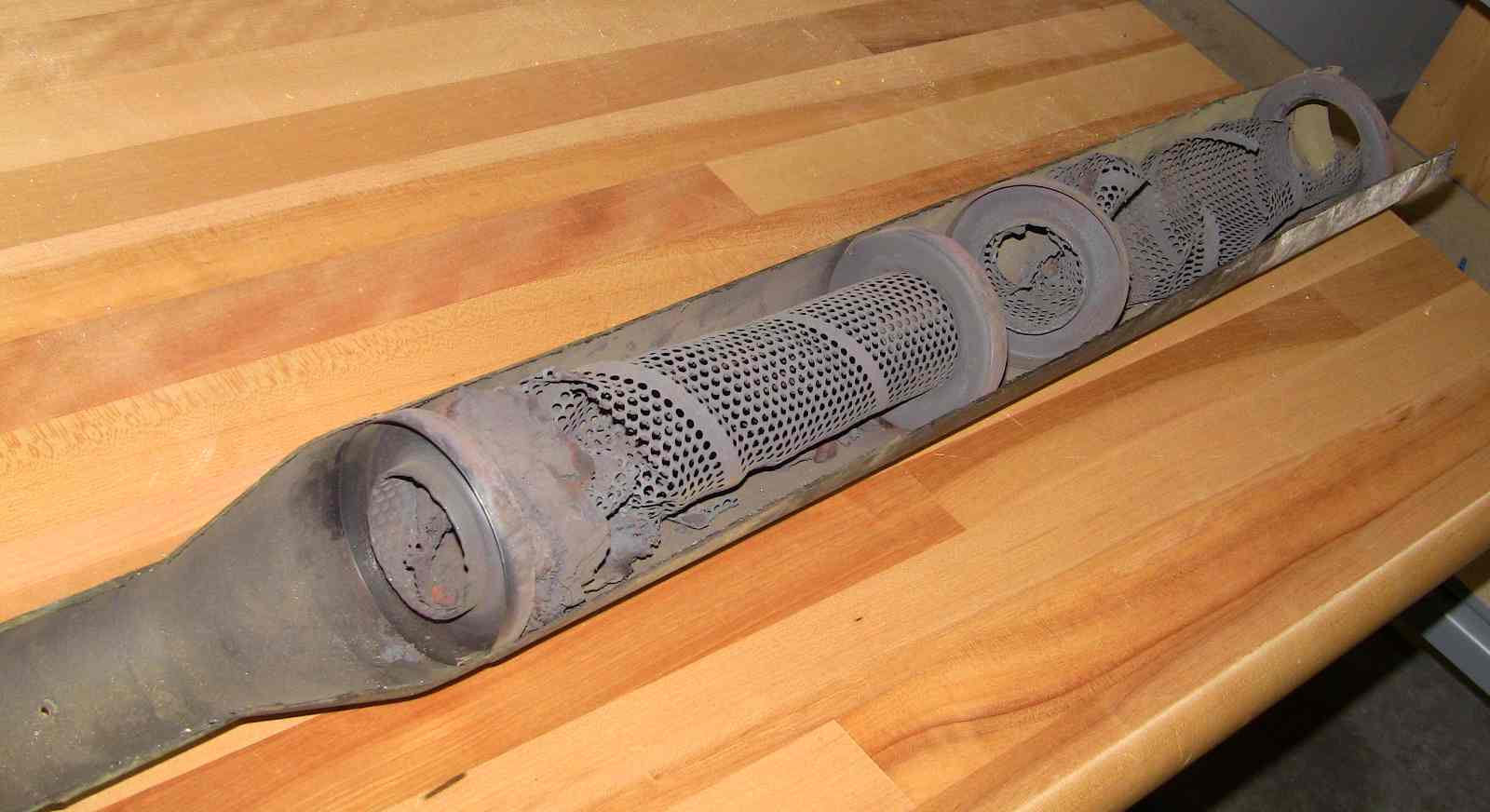
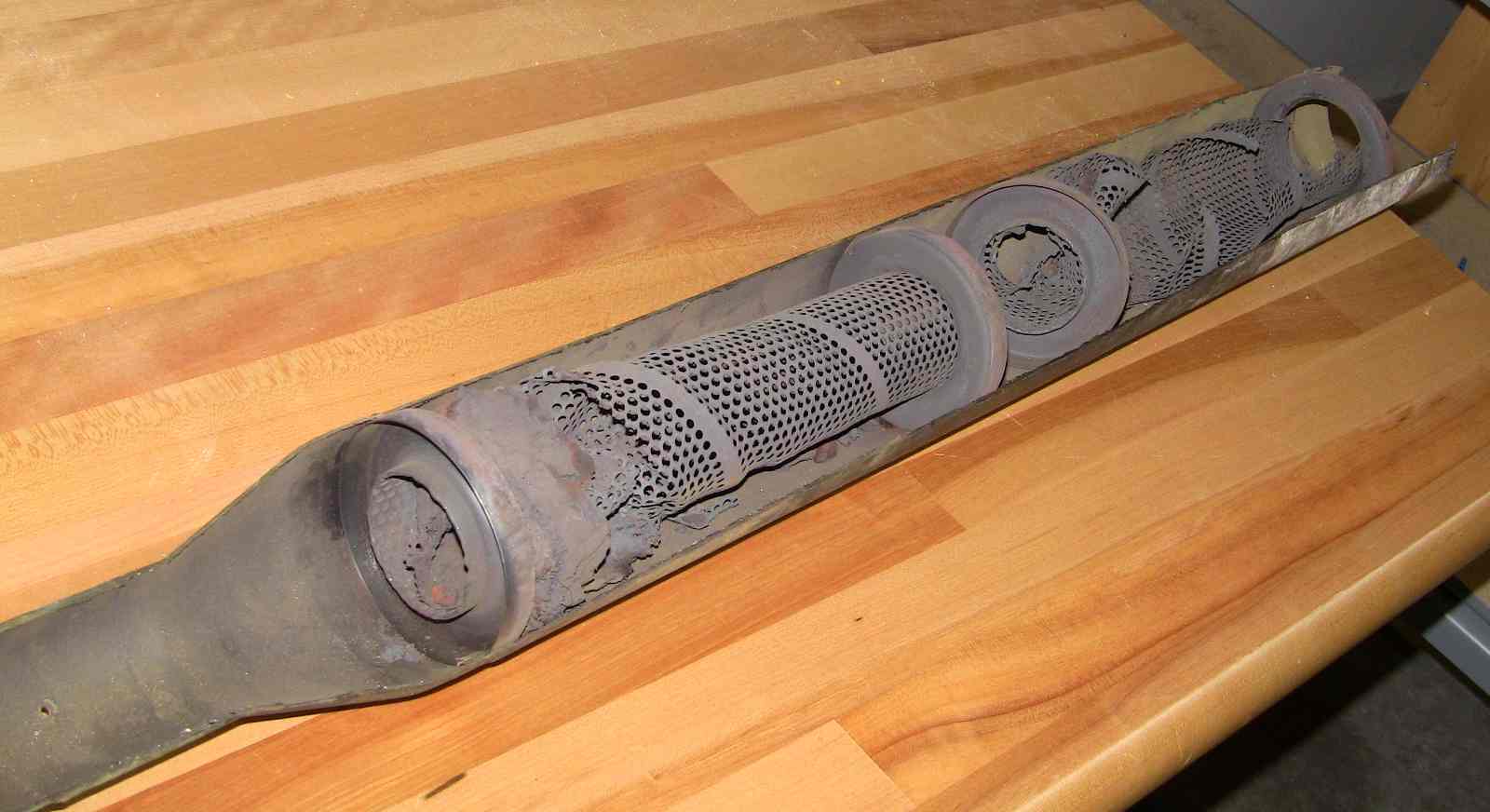
forward). However, it does have an internal baffle (inconel 625) that
consists of a tube which has 109 1" diagonal slits cut in it. One edge of
the slits was then dimpled inward to form 109 D-shaped holes for the exhaust
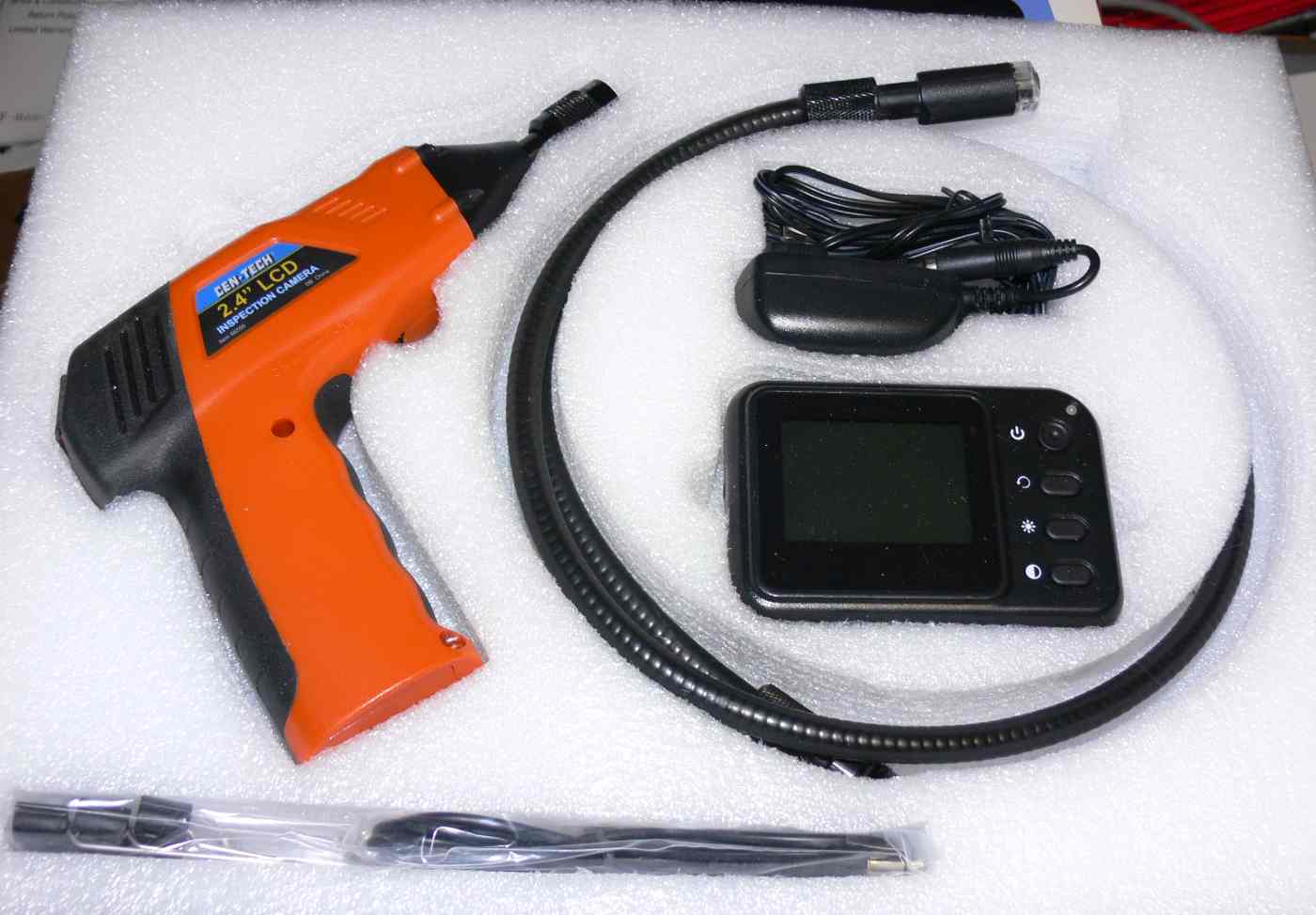
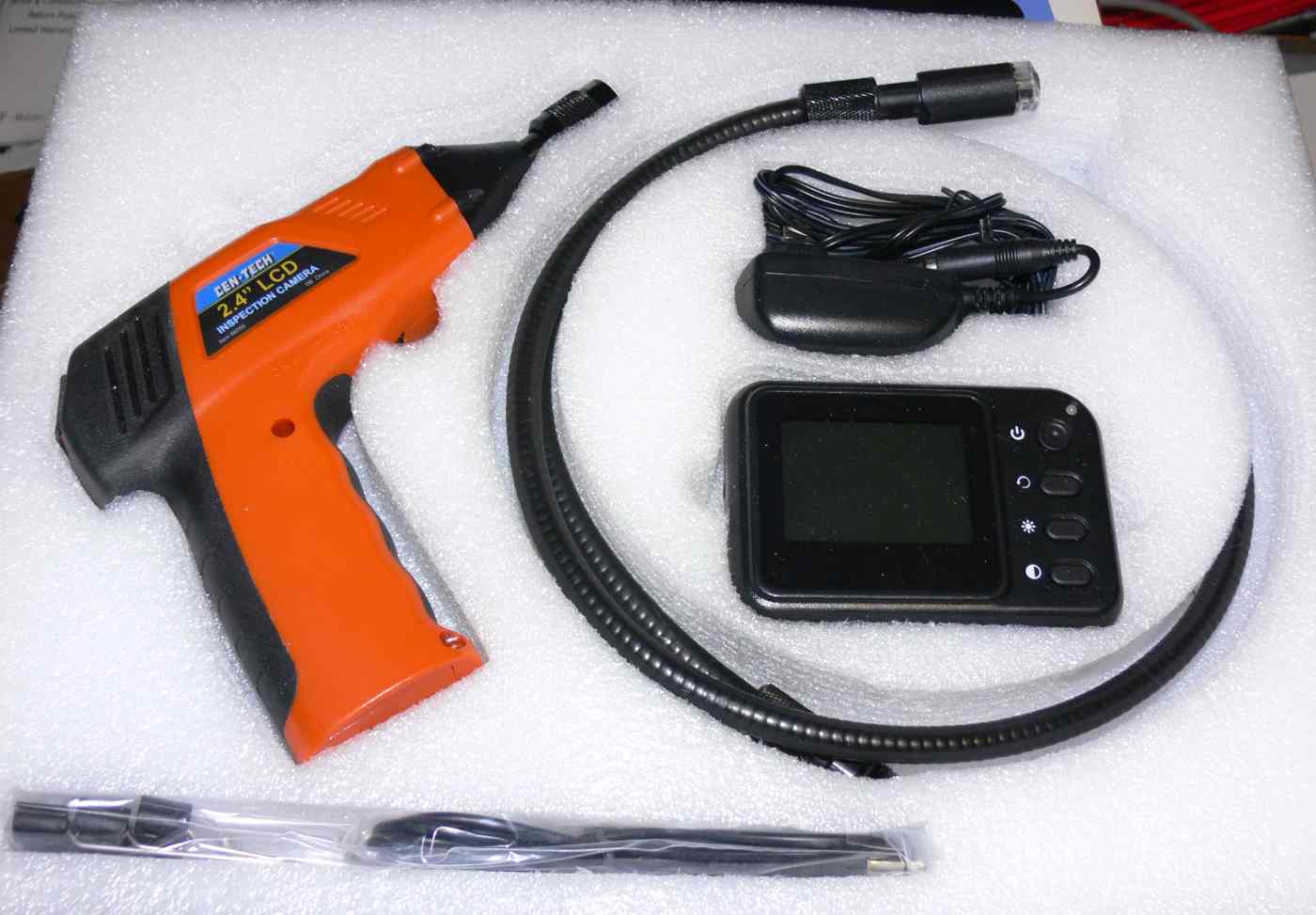
to exit through. I can inspect the inner baffle with an inspection camera
through the three inlets.
Mark
I think we need to add that muffler inspection procedure as a
preflight inspection. The length of the inspection camera neck
is 3 feet long so keep that in mind when designing your exhaust
system. If you use the cooling tube that would allow external
inspection of that device.
You don't want this to happen to your muffler.
Cheap insurance for $100.
Paul Lamar
--
The Rotary Engine NewsLetter. Powered by Linux.
ACRE NL web site.
http://www.rotaryeng.net
Youtube key word PaulLamar2
Copyright 1998-2009 All world wide rights reserved.