Mark,
Hows is the p-port 3 rotor going?
Paul
Mark Steitle wrote:
Hi Paul,
The 3-rotor is coming along just fine. I flew it last Sunday after
replacing the water pump (old pump started dripping coolant from the
shaft/seal). However, I replaced it with a spare 20B pump, not the
Renesis
that I've been working on. That will come later. I'll be sending you $
for
an inlet/outlet adapter.
As for how it is running, I would say it is running fair. It is rough at
around 2000 rpm. I'm seeing a low EGT on rotor #1, which I will try to
adjust using EC-2 mode 4. If I can't get it to adjust, I will have to get
the injectors cleaned.
You may remember that I'm running 3 MSD 6-A ignitions. Those are working
out great, but I'm not convinced they're worth the weight penalty. I've
started the engine and heard it running on 2-rotors (fouled plug), only to
clear up a few seconds later. I checked the plugs after Sunday's flight
and
they looked better then the trailing plugs which are still being fired by
the EC-2. So, I don't think the plugs will have any trouble handling the
multi-spark environment. But then I took it easy as I've made a number of
changes lately and I'm still a little nervous. It starts similar to the
old
engine, except it requires less fuel (no priming). I turn the mixture
knob
to about 3 o'clock position and hit the starter, then return the knob to
12
o'clock once it starts. Very nice! Once warmed up, just hit the starter.
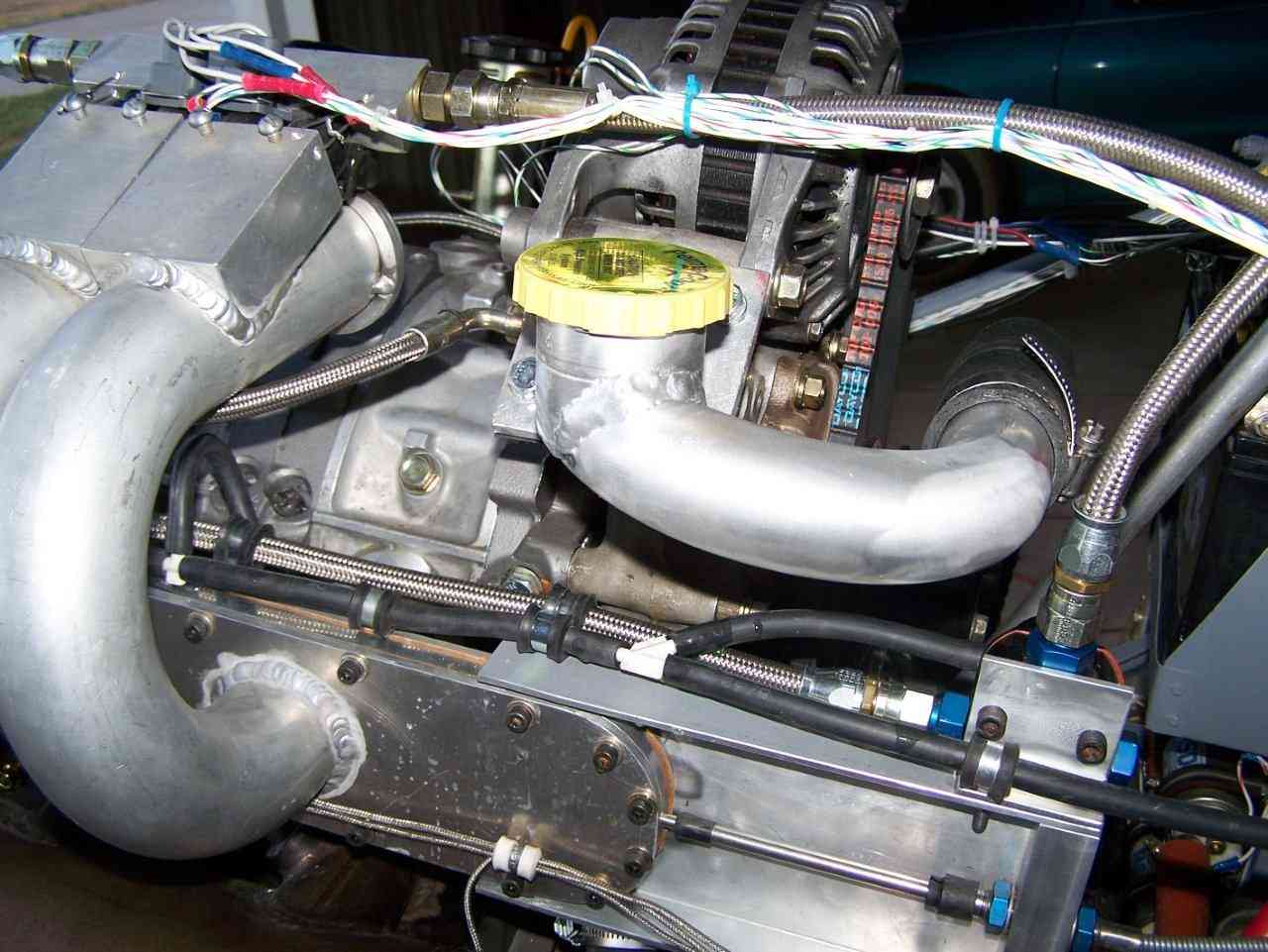
One of the biggest successes is the new tangential muffler. It is much
quieter than any of my previous mufflers. However, it was beginning to
bubble the paint on the lower fuse, so I had to add a turn-down piece.
Solved the problem.
One side note... my old engine was plagued with oil leaks. I think the
oil
was seeping through the base of the housings (the area between the oil pan
flange and the outside the o-ring perimeter). I didn't use any sealant in
this area when assembling my first engine. This was a big mistake. Lynn
H.
pointed out that this is a common mistake from novice rotary builders
(thanks Lynn). So, I used Hylomar on these areas on my new engine... and
no
leaks! Life is good!
Cooling seemed a little higher than I would have liked to see on climb
out,
but they came right down once I leveled off. OAT was 78*, oil got up to
205, but dropped to 175 in level flight. Water was 157* in level flight.
But I was running it easy, so I'll be watching the temps very closely in
future flights. In retrospect, I climbed out at 85 rather than 110 like
usual. So, I'll have to keep the speeds up and see how the temps look.
See ya,
Mark
Glad to hear it about the muffler. Sorry about the pun.
Does it have the central cooling tube?
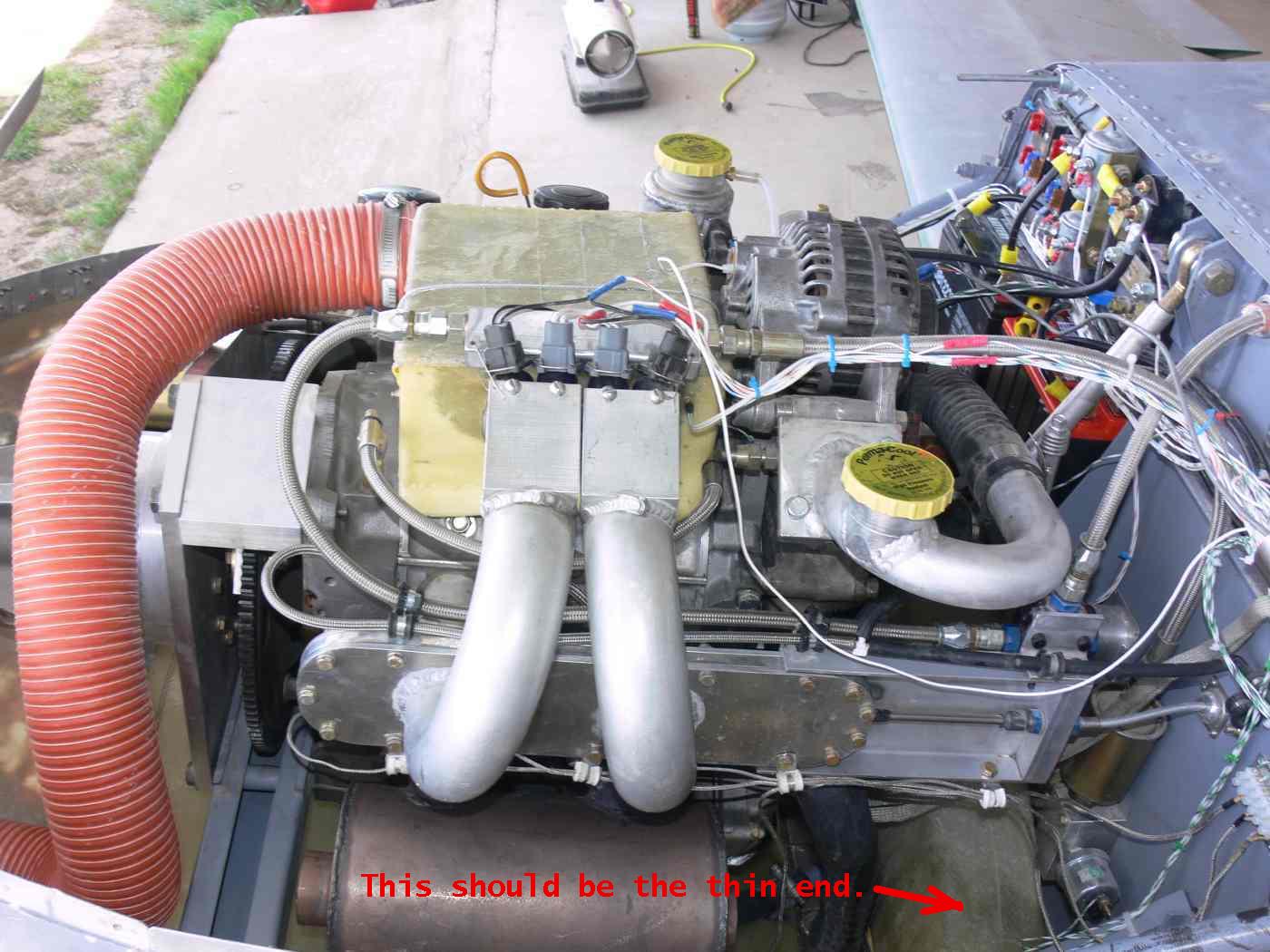
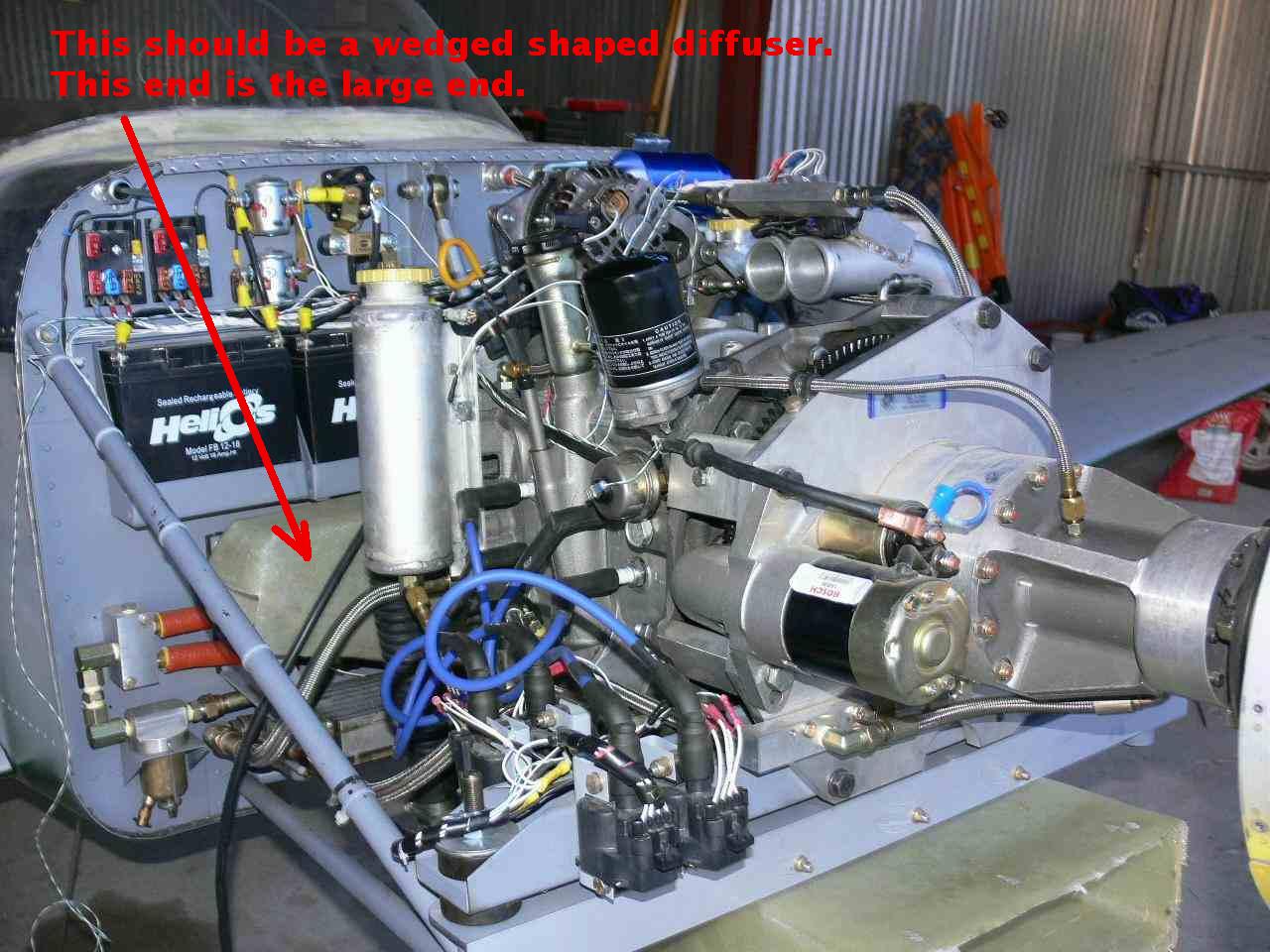
Picture?
Paul
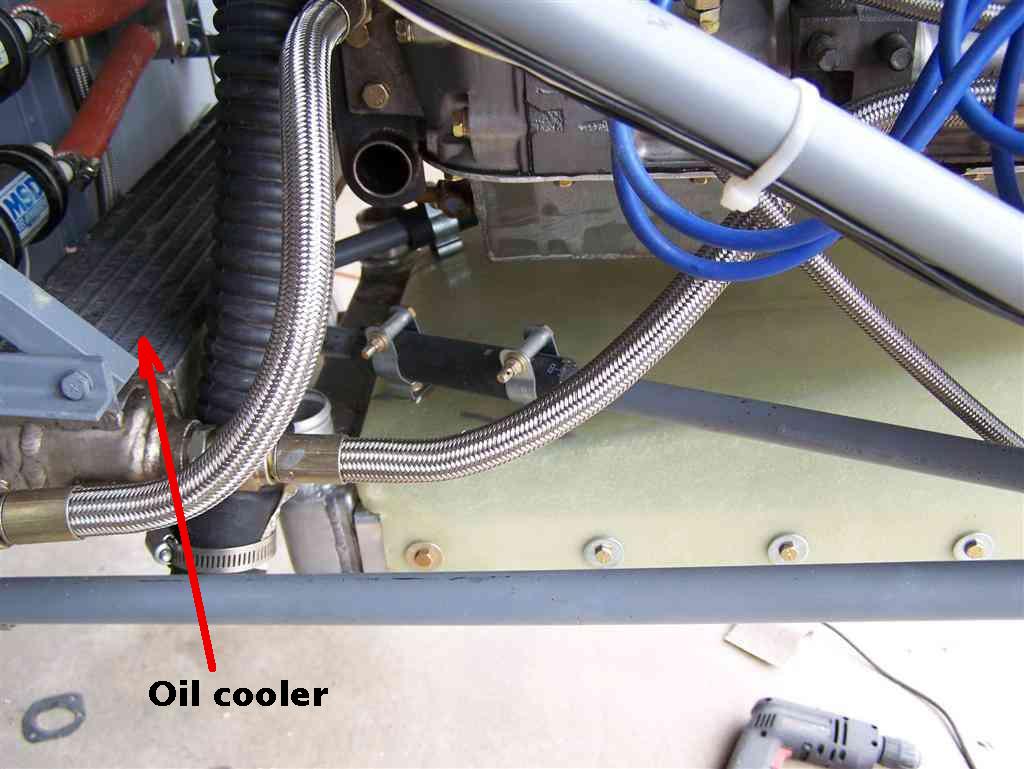
There is no cooling tube as the oil cooler is too close (need to move that
forward). However, it does have an internal baffle (inconel 625) that
consists of a tube which has 109 1" diagonal slits cut in it. One edge of
the slits was then dimpled inward to form 109 D-shaped holes for the
exhaust
to exit through. I can inspect the inner baffle with an inspection camera
through the three inlets.
Mark
I think we need to add that muffler inspection procedure as a
preflight inspection. The length of the inspection camera neck
is 3 feet long so keep that in mind when designing your exhaust
system. If you use the cooling tube that would allow external
inspection of that device.
You don't want this to happen to your muffler.
Cheap insurance for $100.
Paul Lamar
Yes, I already have the inspection camera.
Mark
UPDATE: After an inspection of the deep dark bowels of my tangential
muffler, I flew for about 45 minutes today. Temps on the ground were in
the
upper 80's, at 3000 MSL the OAT was 68*-70*. I climbed out at 105kts
indicated and oil temps stayed around 195*F, water was 175*F. (I measure
the oil temps out of the engine as well as the return oil temps. The oil
out temp was 235, so I was dropping 40* through the oil heat exchanger.)
After leveling off, the temps dropped down to 160-165* for coolant,
170-175* for oil. I confident that at normal cruise altitudes (8-10,000
msl) the oil temps should be down closer to the magical 160* number.
There must have been a piece of crud in one of the injectors for the #2
rotor because the EGT was 400-500* lower than the other two. The #2 EGT
gradually increased and finally got to where the other two were at, approx
1600-1650*.
It still needs some tuning but a low ceiling prevented climbing above 3000
msl.
All in all, a good flight.
Mark S.
What kind of performance numbers and fuel burn are you seeing Mark?
Rate of climb? Cruise speed. Cruise RPM. Max RPM?
Are there two injectors per rotor or just one?
Paul Lamar
Paul,
Yes, two injectors/rotor. I don't have any performance numbers as I am
not
pushing it, but taking it easy. My gut feel though is that the tangential
muffler may be hurting performance. Lynn H. commented that the p-port is
very sensitive to exhaust back pressure. I'll do some speed runs later,
after the engine is broke in (100 hrs or so) and post the numbers.
BTW, as it applies to the Everett Hatch award, I was wondering if you
would
recognize a win in a sanctioned race by the Sport Air Racing League,
assuming an average speed of 225 mph or more? My n/a 20B Lancair ES fits
nicely into the Sprint class as it is 1) less than 240 cu. in displacement
and, 2) normally-aspirated. Or, I could also fit within the FX-Red class,
which is 1) less than 320 cu. in. displacement, 2) normally-aspirated, 3)
at
least two fixed gear. But I would be handicapped by displacement, so I
would probably run in the Sprint class. That's assuming this p-port motor
works out as planned.
Mark S.
We had not considered that as the Dayton to OSH 500 mile race gets a lot
more ink. The race winners are displayed in a special paddock near the
center
of the air show. The goal is to show off the performance of the
rotary. However if you use 300 HP on average to go 225 MPH with a
BSFC of say .6 your fuel burn would be 180 pounds per hours.
Total hours for 500 miles would be about 2.25 so that would be 405
pounds of fuel or 65 gallons of fuel.
How much does your tank hold? Most ES's are 105 gallons.
So you should be able to do that no problem. The RV's are short
on fuel tankage so they would have a problem running that race.
We tested the 13B p-port it on the dyno with two exhaust pipes
32 inches long into one. And then a muffler after that.
That is roughly the same as Everett Hatch used to run with his
p-ports. We are not looking for 150 HP per rotor at 10,000 RPM
as the road racers need. I think we can get along with a bit
more back pressure. All we need is 125 HP per rotor.
We ran the tang muffler and it seemed to run OK
but it was too noisy to do any sustained high power runs.
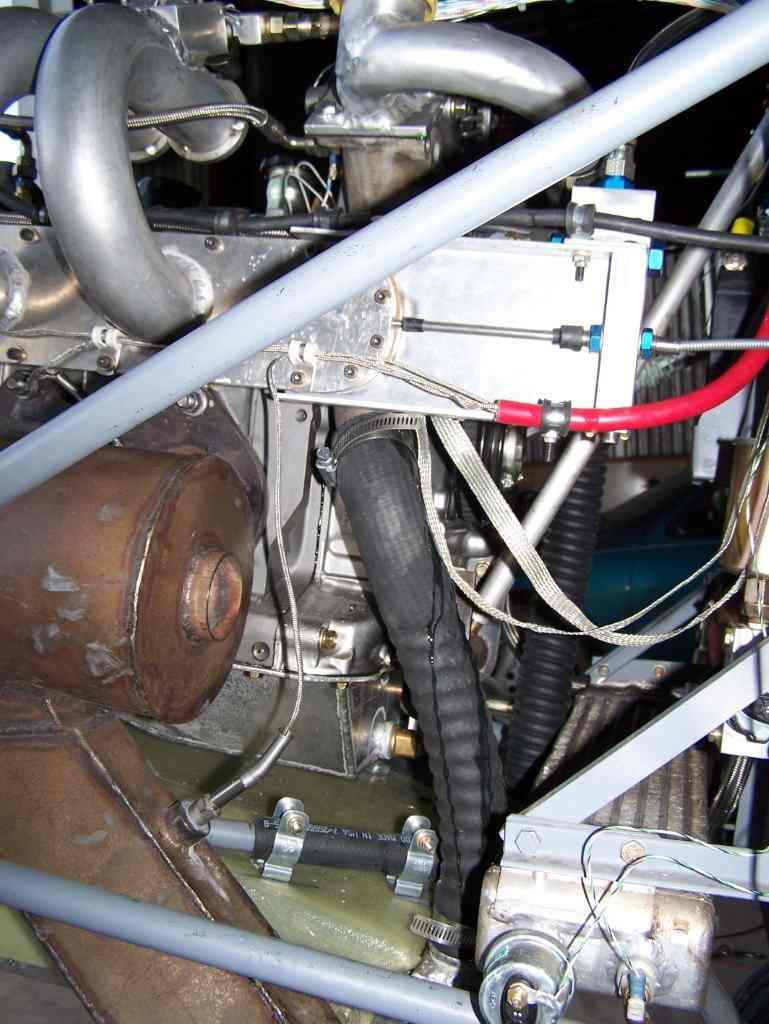
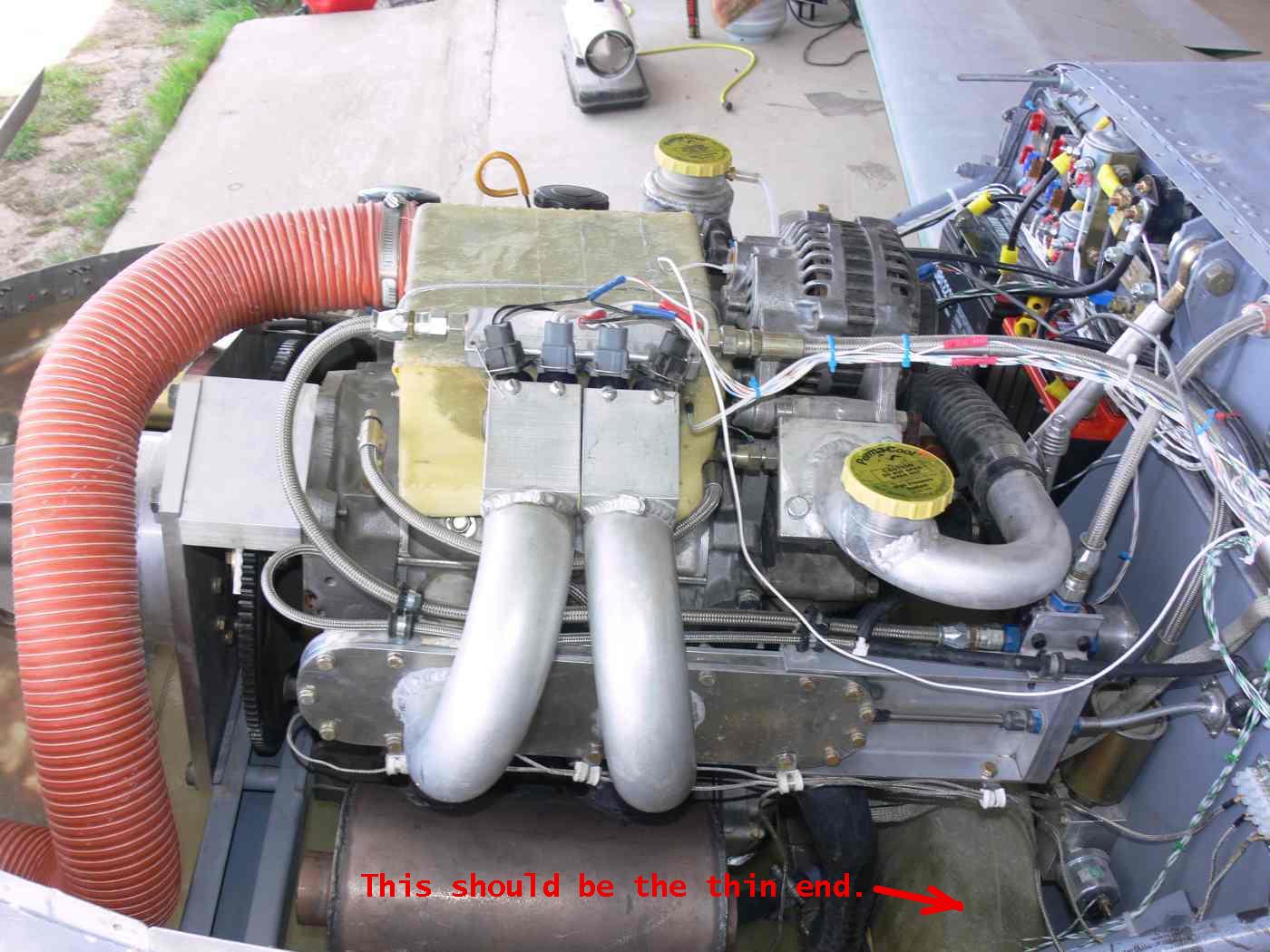
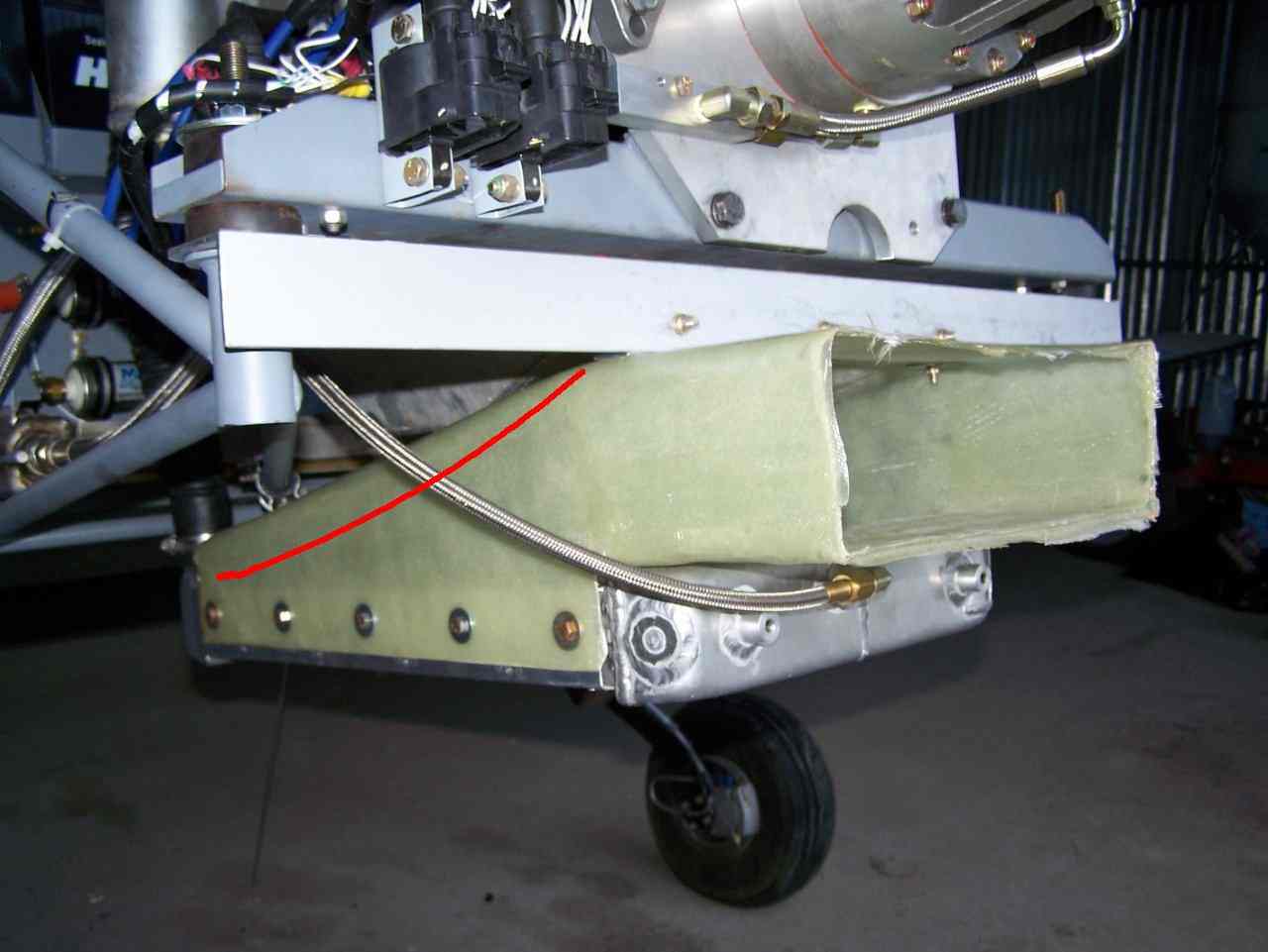
Note the huge rectangular down pipe which Mark Sus has now made
smaller.
Mark Suspinski is going to measure the pressure in
the tang muffler as soon as he has
solved another issue. The best way of doing that is use
that Hytech Automation data acq system (Mark Sus still has it)
and a Free Scale pressure sensor.
Weld into the muffler a two foot lenght of steel
brake line tubing with a bunch of tiny holes drilled around
the inside end. That will form a static pressure tap. Use silicone
rubber hose good to 500 F to connect the cool end of the steel brake
line to the Freescale pressure sensor. You could also use an absolute
pressure gage that reads out to 30 psi. Kind of like a supercharged
radial engines manifold pressure gage that reads to 60 inches of HG.
Don't try a water manometer as 12 inches of water is only .45 psi.
You would need one 50 feet high :)
Paul Lamar
Paul,
Well, then I guess I could run a race or two by the Sport Air Race League
so
as to collect some good performance data. My ES holds 94 gallons of fuel.
Should be enough for 500 miles.
Steel brake line tubing would last about a minute inside the tangential
muffler. We would need 321SS at a minimum.
Mark S.
Depends on where you put it. Off in a corner would be the best place.
I have not found small 321SS tubing yet. It only needs to last a few
minutes anyway.
These look like 100 mile races. They look easy.
http://www.sportairrace.org/id317.html
I think you will be at a disadvantage with a Hoffman or MT prop.
It is a real shame we don't have a hyd prop psru that can handle
metal CS props. So much to do and so little time :)
Metal props go faster than carbon or wood. I don't know
why people make carbon props so thick at the tips. In theory
they could be made as thin as metal.
Paul Lamar
Paul,
I could reach VNE (220mph) in straight and level flight with my old motor
running the 3-blade M/T prop. So, where do I go from there?
Mark S.
More power does not help top speed much. However you should see
a dramatic improvement in climb rate. Top speed is proportional to
the cube of HP. Drag (K) is what top speed is all about.
Assume for the moment you had 275 HP and you went 220 MPH.
(275)^.333333 X K = 220
^.333333 means cube root in computer language.
K = 220/(275)^.333333 = 33.83
(New HP)^.333333 X K = New top speed.
HP Top Speed MPH
250......213
275......220
300......226
325......233
350......238
375......244
400......249
With 375 HP (in theory) you would go 244 MPH.
Also depends somewhat on the actual twist and tip airfoil of your
constant speed prop. The vector sum of circumferential tip speed
and forward speed changes at the same RPM.
Looks like this would be a piece of cake for you Mark.
Unless Tracy gets in the race first with his 3 rotor RV8 :)
Maybe we will have to raise the average speed to 240 MPH for the Everett
Hatch
Memorial $1000 prize :) Just kidding. Nobody has won the 220 MPH $1000
prize yet
but Tracy Crook has come close at 214 MPH in the Sun 100 a few years ago.
Unfortunately they did away with that race.
BTW Kit Planes magazine should pick up on this:
http://www.sportairrace.org/id317.html
Air racing. I'll send an email to Marc Cook as he will be publishing
another one of my articles soon.
Paul Lamar
Paul,
I was considering racing in the Taylor 100 as Taylor, TX is near Austin and
so this would be an easy event to participate in. Dayton to OSH would
require a much bigger effort.
A question on horsepower... If your engine loses 40% of its power at
altitude, wouldn't starting out with more horsepower at sea level equate to
higher speeds at altitude?
Mark S.
Yes and that is the rational for Mark Sus's P-port as his airport is 8000
foot density altitude. The jury is still out on how it is working
as his prop is yet to be optimized. He basically has a fixed pitch 172 prop
on there and I suspect the tips are going into a negative angle of attack
at 150 MPH. When he dives the engine does not pick up any RPM.
Paul Lamar
Paul,
I visited Mark when I was in Denver and checked out his project (wasn't
flying at that time), and he checked out my 3-rotor installation. Good to
hear that he's flying, but would like to hear more. Maybe he could borrow a
prop from someone on the field.
Mark S.
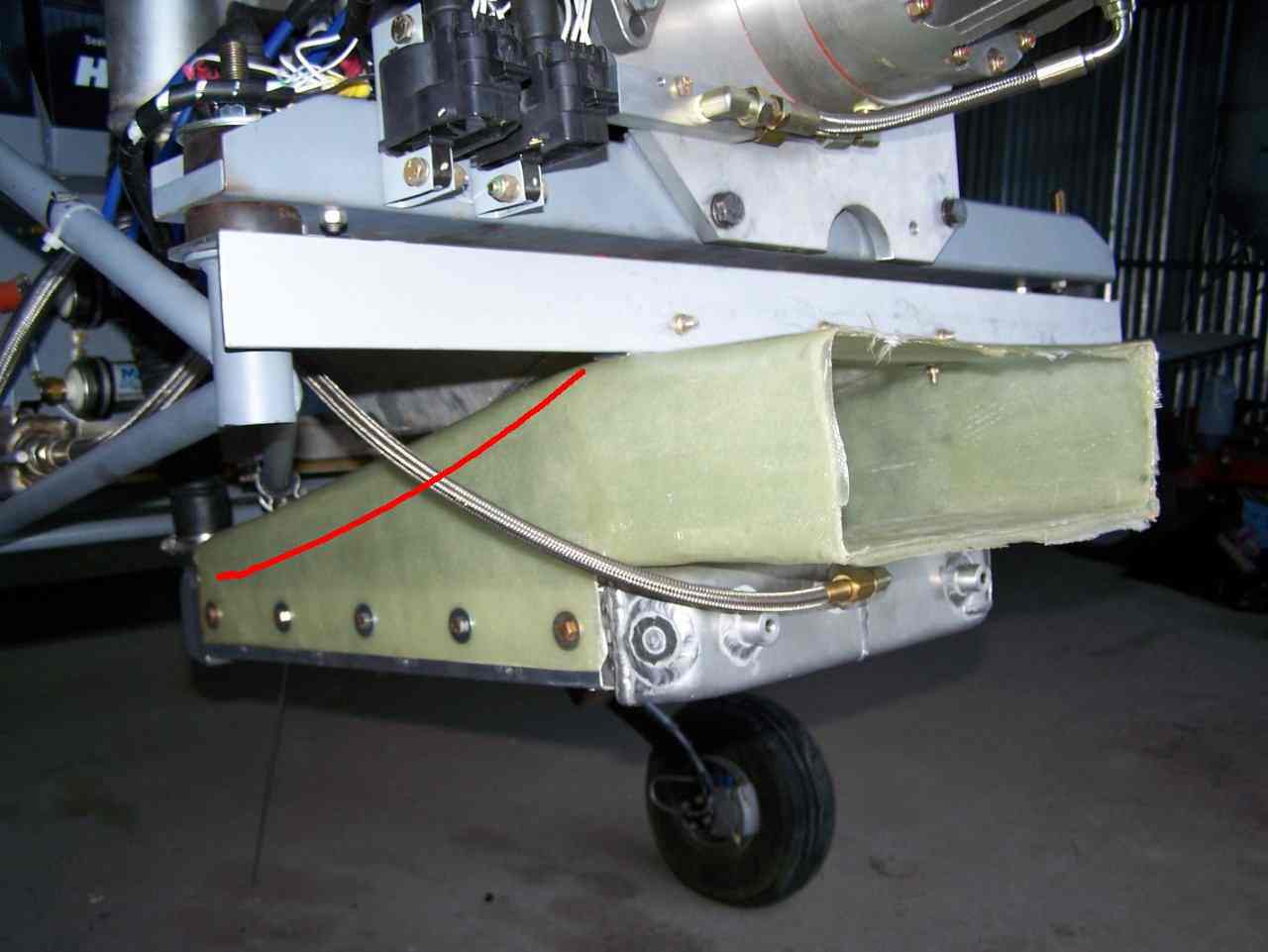
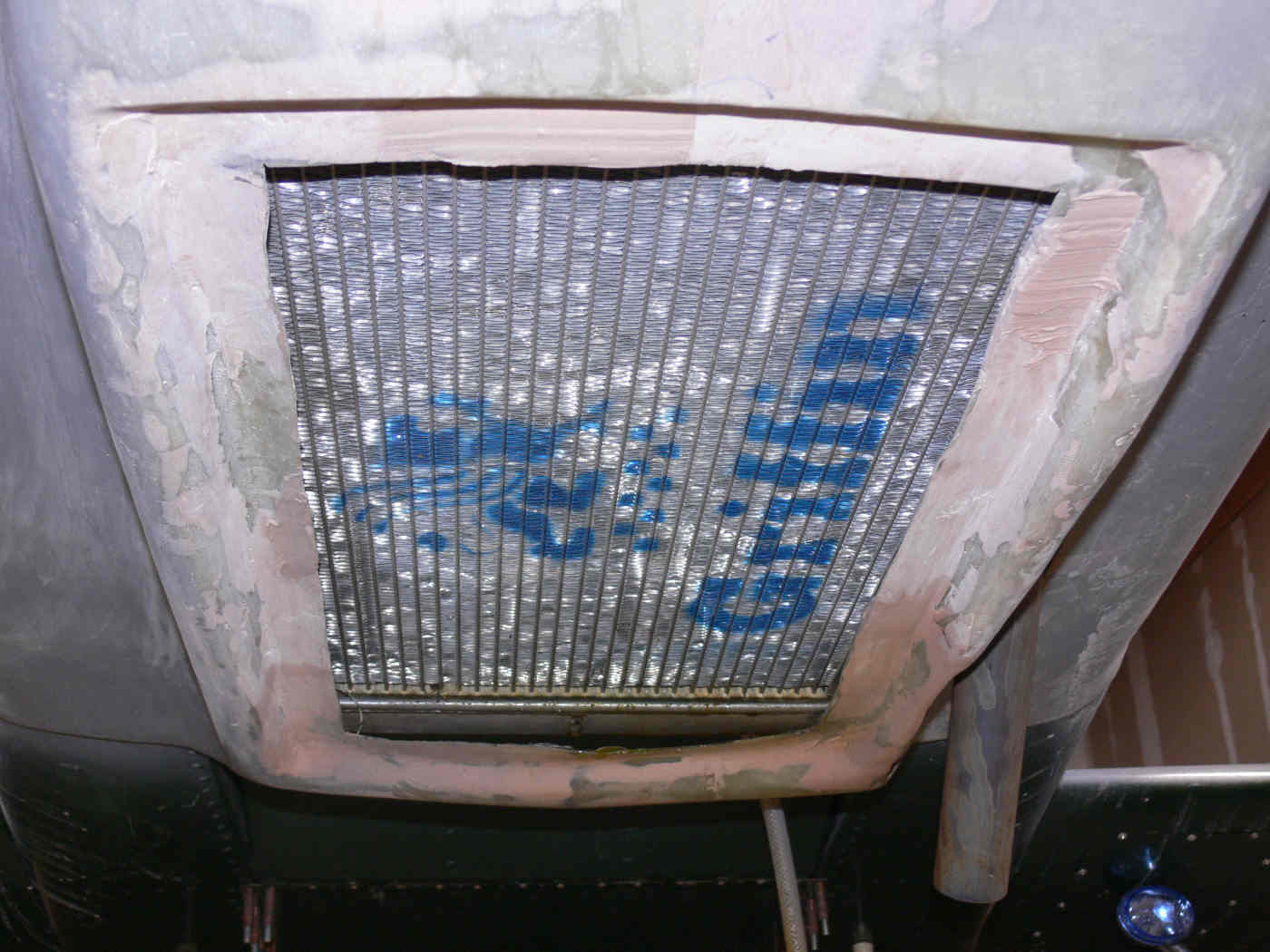
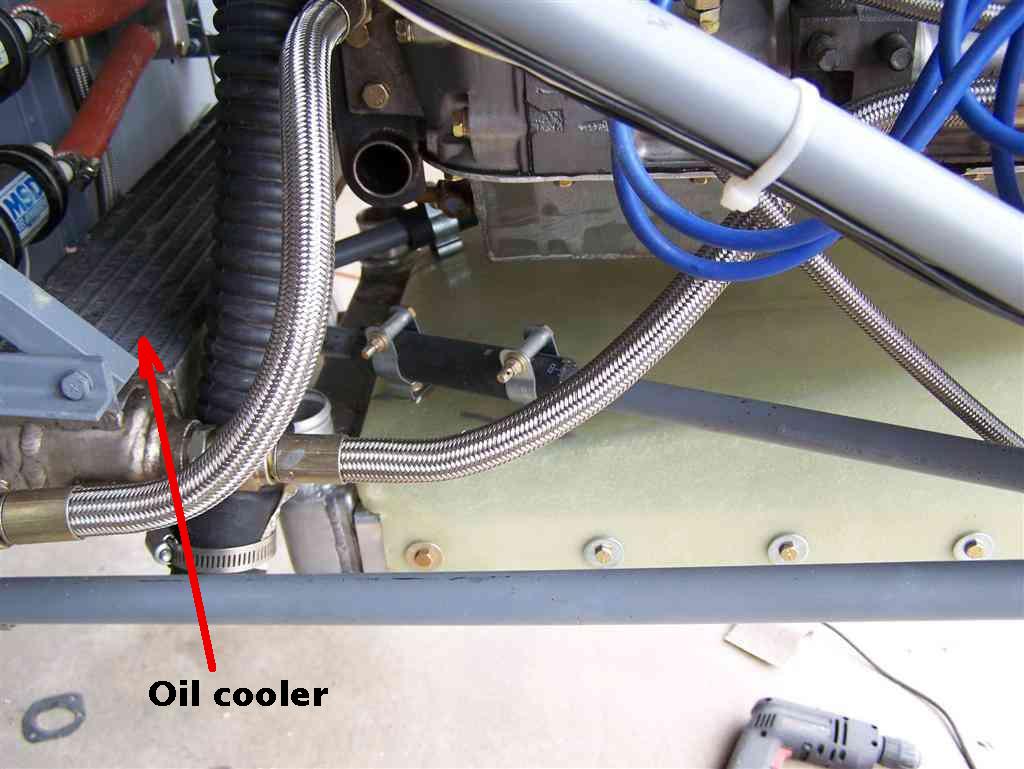
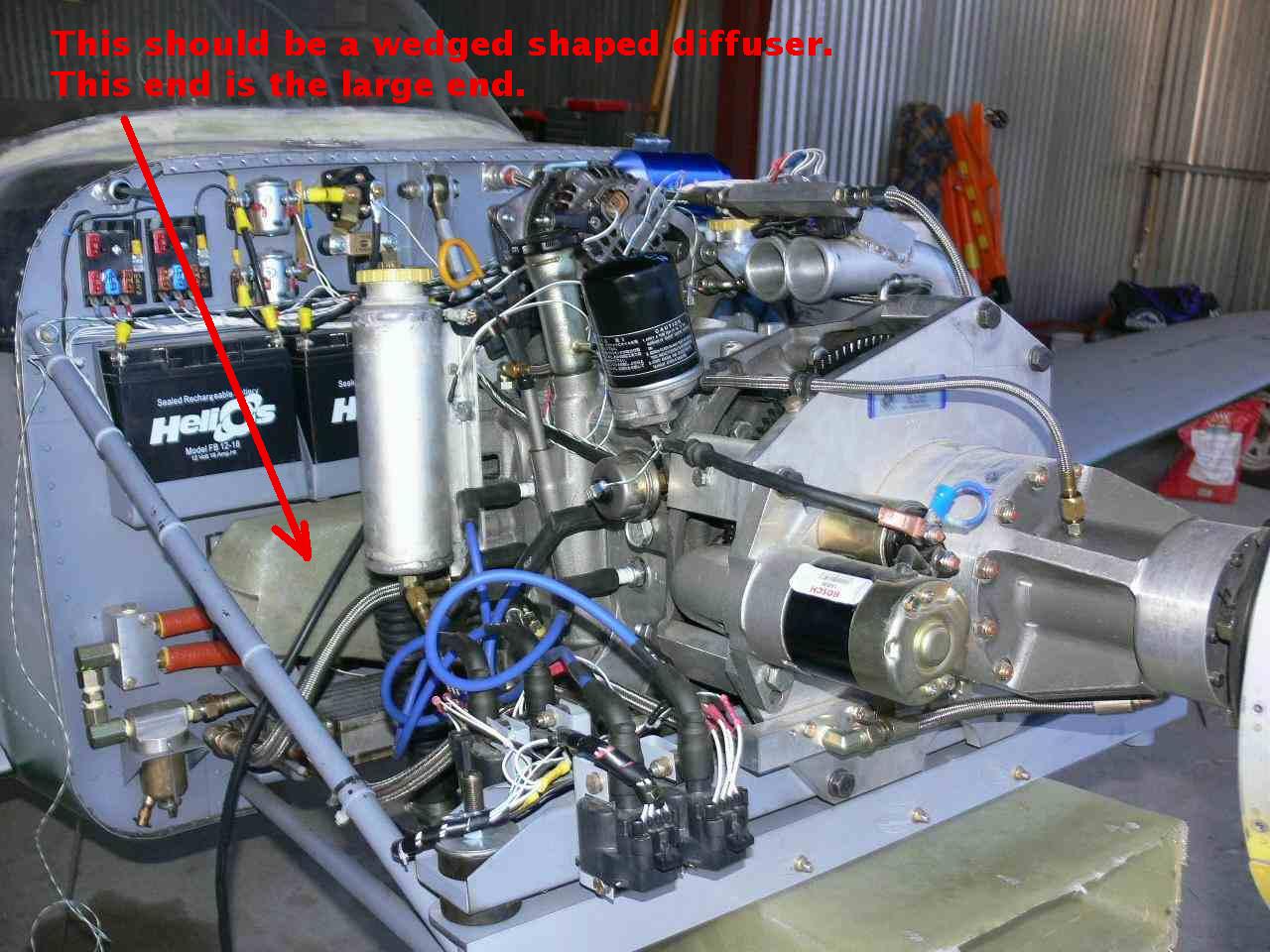
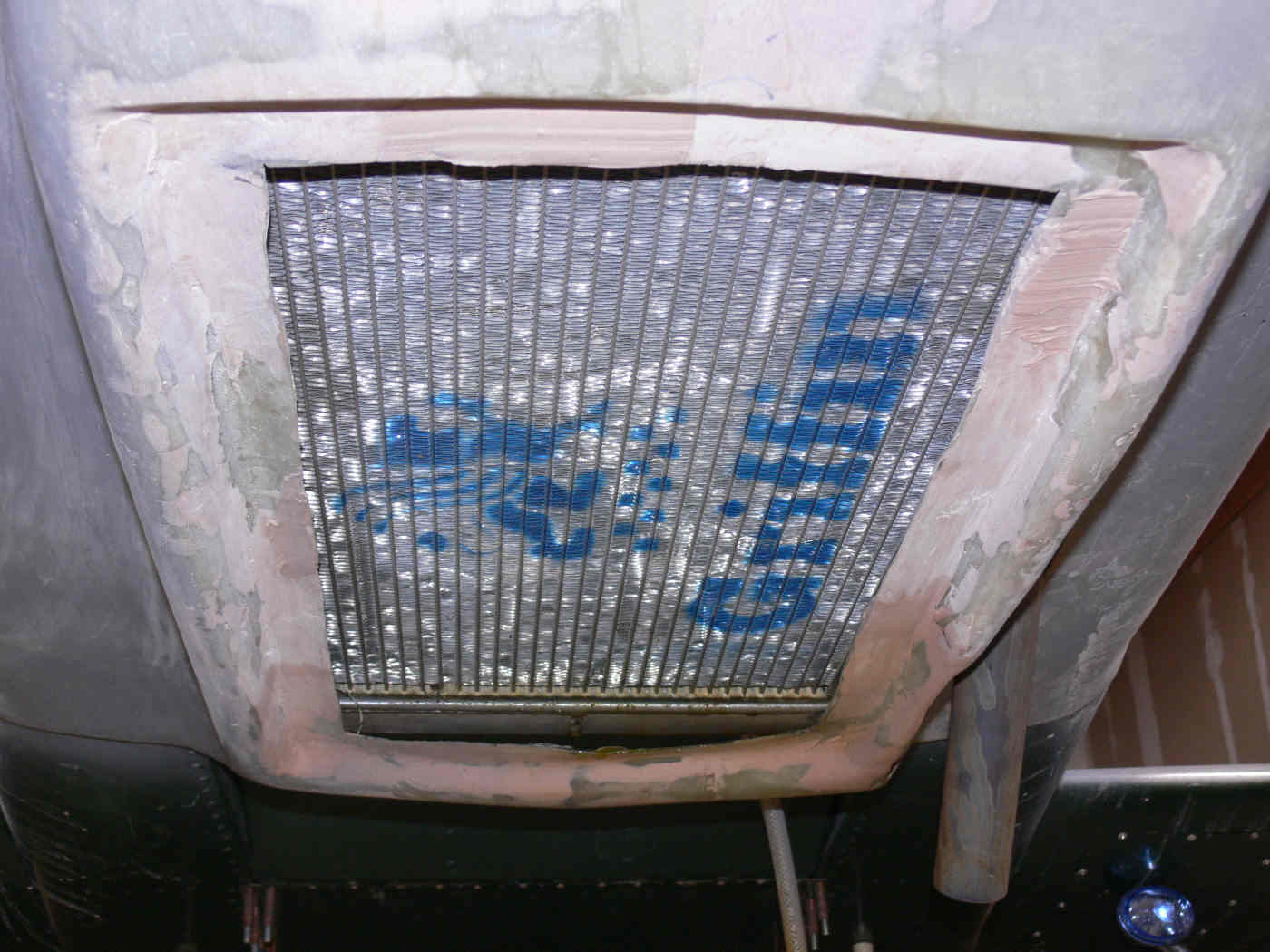
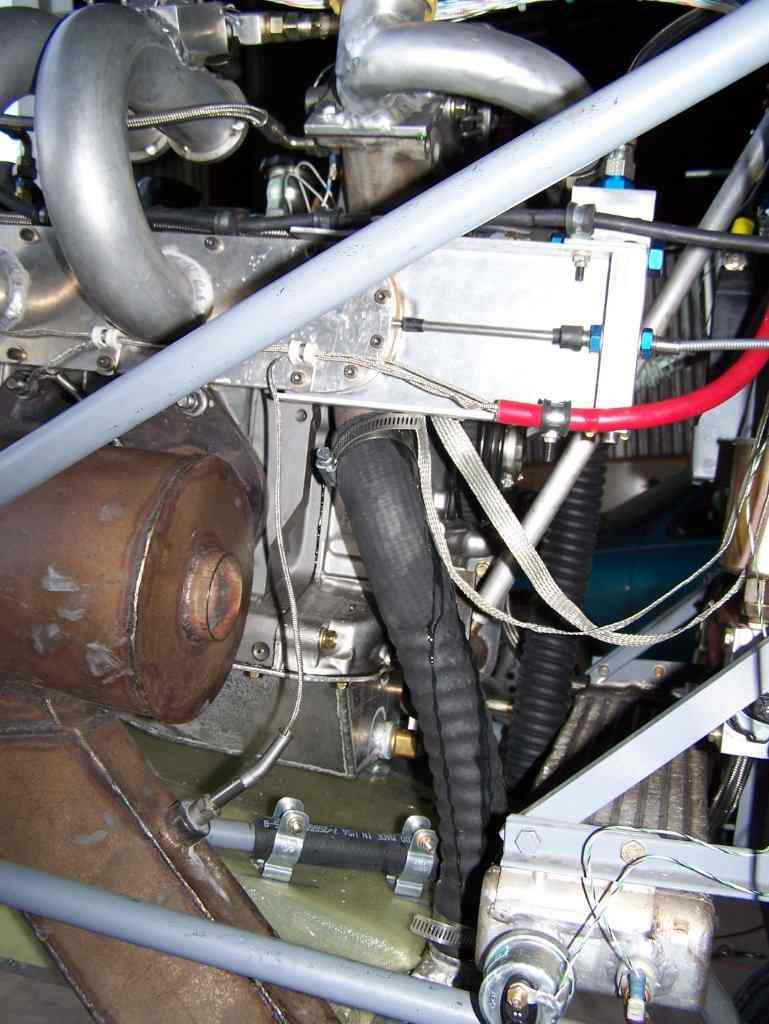
He redid the oil cooler ducting as oil was running
too hot. It was mounted horizontally behind the engine
and he moved it along side the rad under the engine.
He thinks it is working much better but he has not flown
that configuration yet.
He thinks he has a stuck starter right at the moment.
He also plans to start over on the tuning. It appears
to be out of wack. We thought at first it was fuel starvation
but that has been ruled out by checking the pressure at
the fuel rail.
He is going to "slavishly follow Tracy's tuning instructions and
see if it results in different behavior".
We both agree a PC interface with a visible fuel map would be better.
Ed Anderson showed me his fuel trim map at Sun n Fun and I was
surprised at how non uniform it is. I forgot to ask Ed where is manifold
pressure tap was located. I'll send him email and see if he will tell
me.
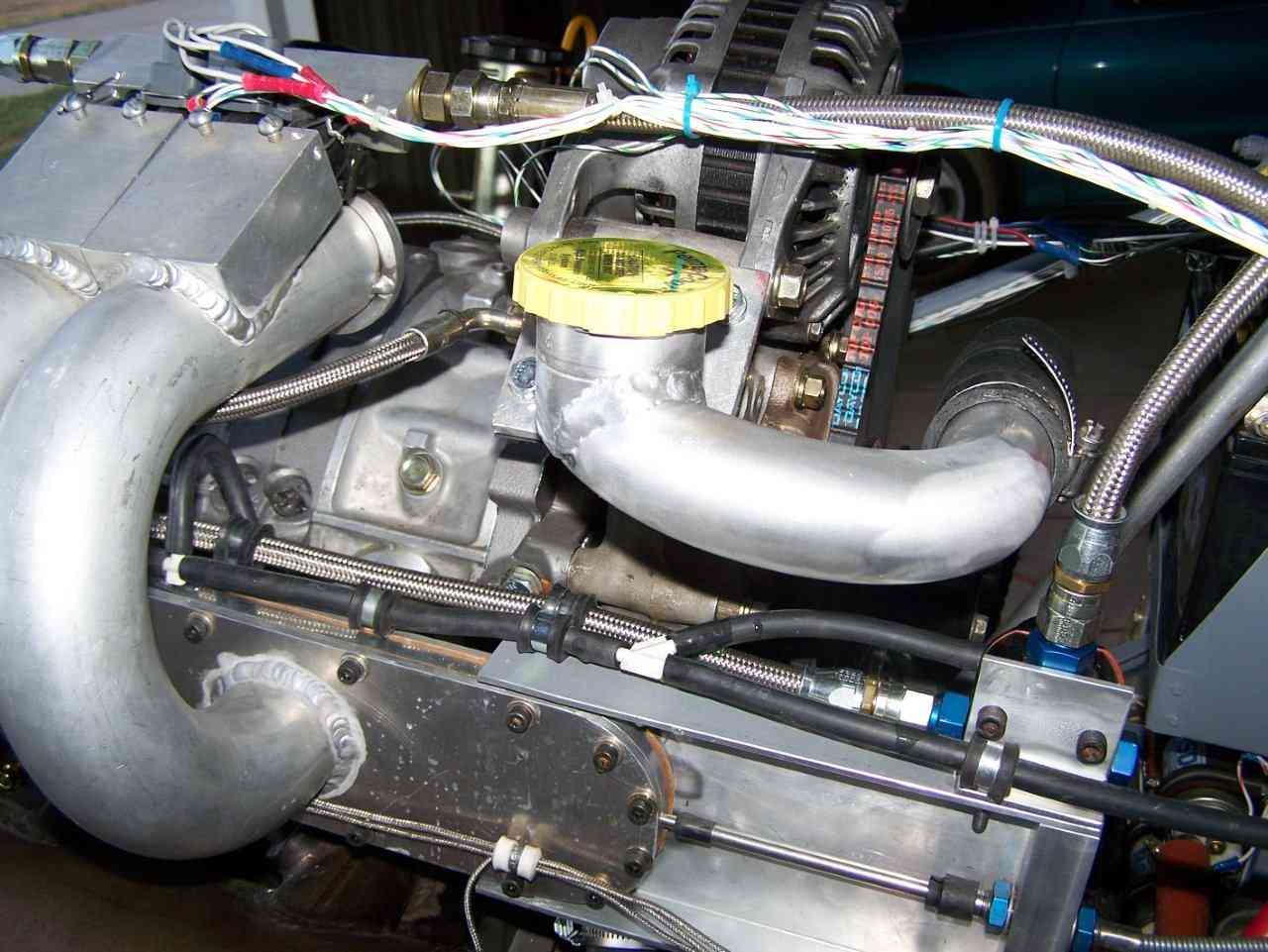
Mark Sus is using the oil injector holes pressure taps.
What does your fuel trim map look like Mark S.?
Paul Lamar
--
The Rotary Engine NewsLetter. Powered by Linux.
ACRE NL web site.
http://www.rotaryeng.net
Youtube key word PaulLamar2
Copyright 1998-2009 All world wide rights reserved.