It would be handy if you could test your EFI with out
having it on the engine. In other words in the shop.
What you need is a Crank Angle Sensor AKA CAS simulator
and a hand vacuum pump for the MAP sensor. The vacuum
pump is no problem as they can be had for around $20 in auto
parts stores.
The Crank Angle Sensor simulator is just a variable
frequency variable pulse width generator. Unfortunately
manufacturers of these device want several hundred
dollars.
It took me a few hours to make one suitable for testing
an EFI system from parts I had lying around. Nothing
you can't find in Radio Shack. I was only interested
in 7500 RPM as that is worse aircraft engine case so this one
is fixed frequency... fixed pulse width out. With a couple of
pots it could be made variable frequency.
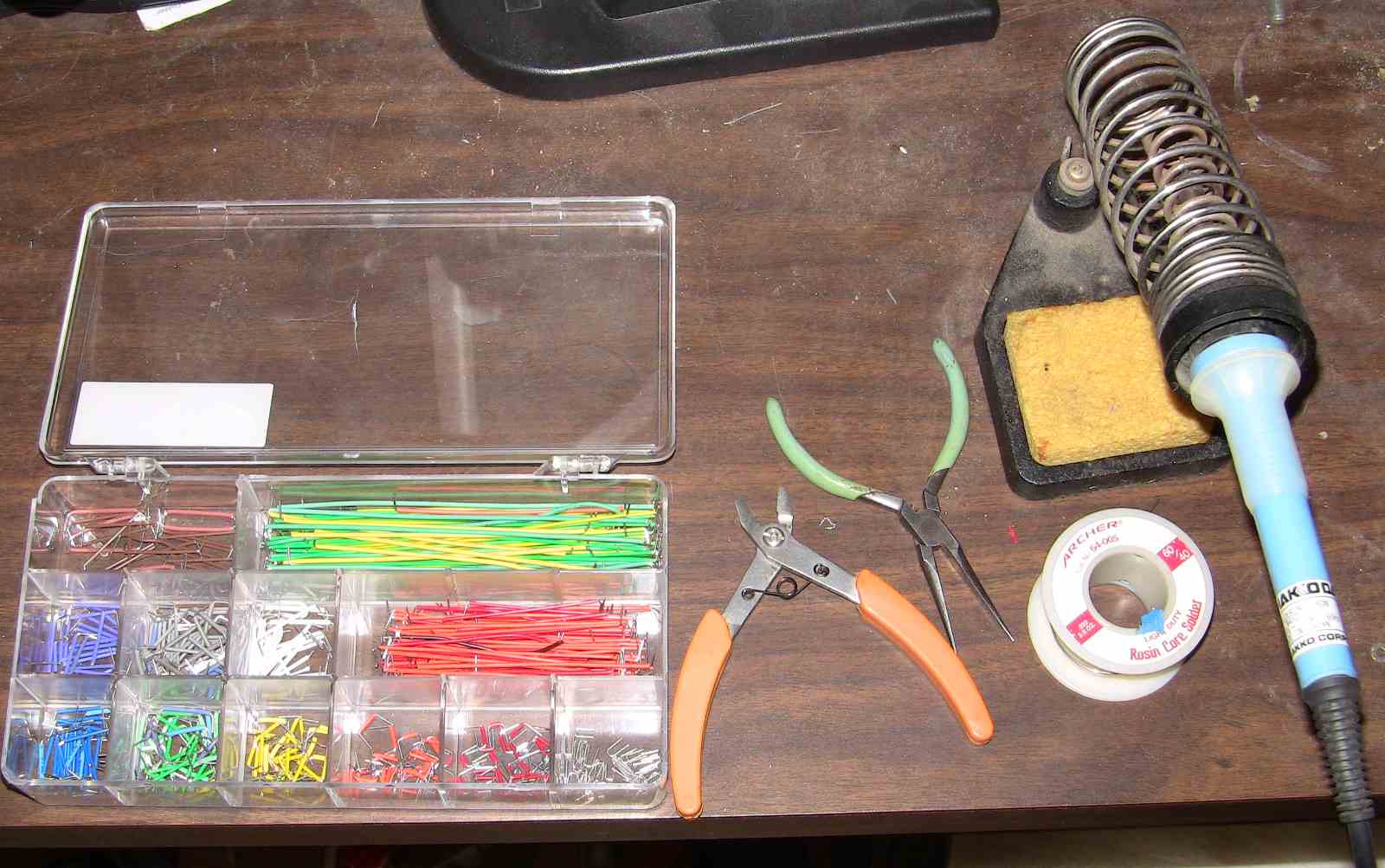
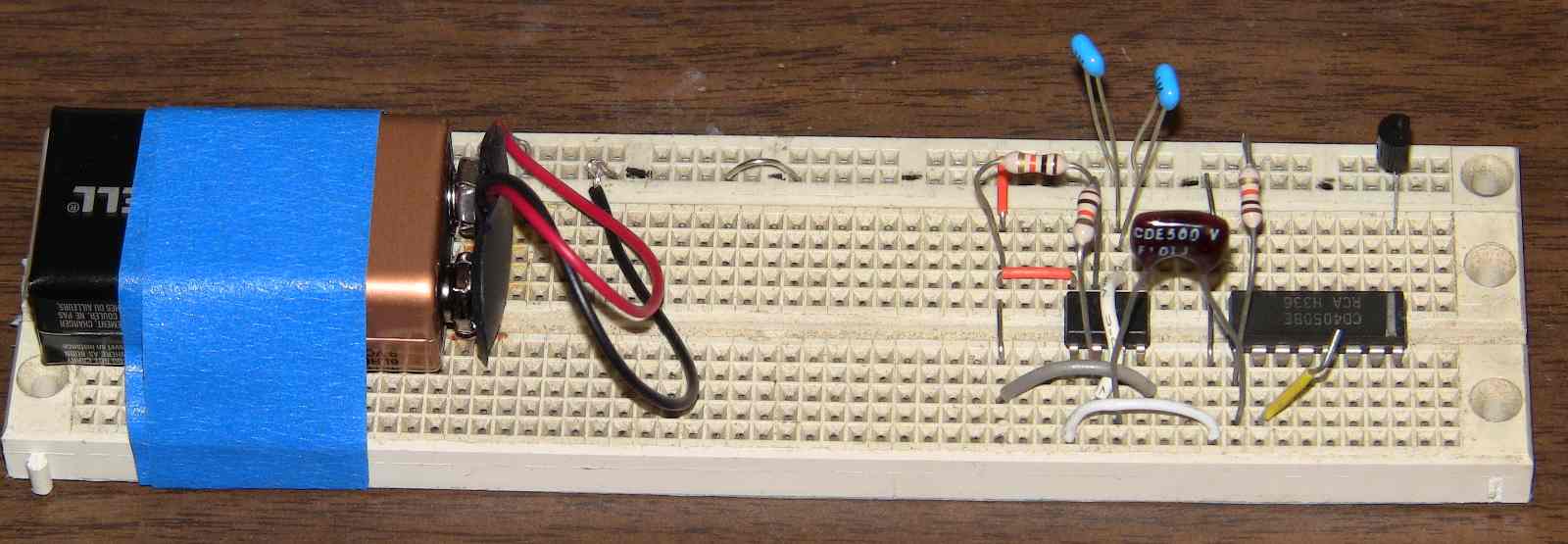
Here are all the tools you need and a picture or
two of the device.
If enough people show an interest I will do a pc board
and/or an assembled unit. My guess is $50.
-----------------------------------------------------
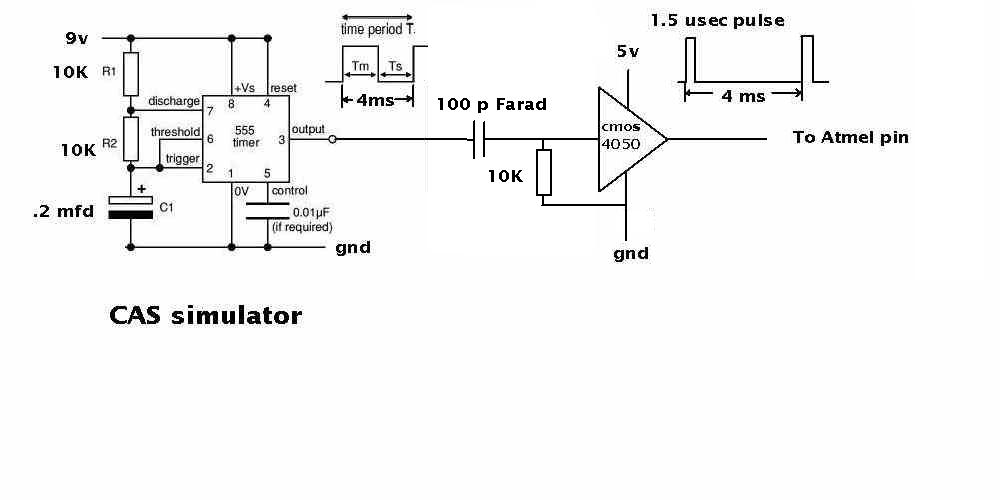
Ops I left out a couple of parts in the schematic.
Here is the corrected version.
BTW your Atmel computer makes a great 8 channel 1 Mhz oscilloscope for
digital 5 v signal levels such as found in automotive
computer systems. Real scopes costs $1000's. If you doubt
your CAS is working check it with your Atmel.
Here is all you need for a program.
Sub Main()
Dim val as Integer
do
val = GetADC(82) 'pin 82
Console.Write(CStr(val) &",")
loop
End Sub
The data comes out in a string of numbers.
254 the the signal is high. Zero or close
to it... the signal is low. You can actually
measure the amplitude and rise time of the pulse. The
pulse amplitude will be some where between
254 and zero.
I set this up and tested it. The program
works fine but I did not want it to start
recording data from go so I added this code.
I wanted it to start recording data when
data appeared. Just like the EFI system
runs a program when it sees a CAS signal.
I found I had the wrong syntax on the ZBasic
2nd version EFI system code so I had to change it to this.
Sub Main()
dim val as integer
call putpin(82, zxoutputlow)
do
if getpin(82) = 1 then 'Loop until pin 82 goes high.
exit do
end if
loop
do 'now keep reading the pin and sending it out.
val = GetADC(82)
console.write (CStr(val) & ", ")
loop
End Sub
The program waits for the CAS to go high on pin 82
than it starts reading pin 82 with the A t D and
sending the data out to the PC. It will do that forever
until you turn the power off. Pushing reset on
the Atmel computer runs what ever program is downloaded
into the flash memory last so if you push reset
it won't stop. It will keep running. That is different
behavior than your PC. That is good news for an EFI system
as a short power interruption will not stop the
program from running. Restore power and the program
will run as will your engine :)
The A to D is not as fast as I thought it was... so
the scope frequency is only about 500,000 Hertz
or there abouts. This is a storage scope that
can capture just one non repeating pulse. That adds
to the cost of an ordinary oscilloscope. Most
scopes in the $1000 range can not do that.
The program will trigger however on a CAS pulse
as narrow as 1.5 micro seconds. It also triggers
at about .35 volt level on the rising edge.
That is good news so the program does not have to
worry about double triggers.
I can also see why it might be possible to detect
a complex trigger wheel like the RX8 although I don't
need to go there. A simple two tit trigger wheel is
all I need. One for each rotor 180 degrees apart.
Paul Lamar
--
The Rotary Engine NewsLetter. Powered by Linux.
ACRE NL web site.
http://www.rotaryeng.net
Youtube key word PaulLamar2
Copyright 1998-2010 All world wide rights reserved.