Poul Woelfle has his two rotor AIXRO running at 11,000 RPM
and 130 HP. Probably weighs next to nothing. My guess is
is less than 75 pounds not including the PSRU.
The major breakthrough is Silicon Nitride rollers in
the rotor bearings. Twice the operating temperature
of steel rollers. Widely used in NC machine tool spindles and
turbo chargers.
The go cart world will never be the same.
Poul has the squarest combustion chamber of any rotary on the
market. That allows a super large p-port for better
breathing at high RPM.
http://www.karting1.co.uk/wankel-kart-test.htm
The AIXRO supercharged engine holds the worlds altitude
record for rotary engines at 27,000 feet.
Austro Engines new AE75R scaled up Norton/Midwest based engine
is very close to certification. It is 50% more displacement
than the Norton. HP is 75 HP at 7000 RPM in one rotor form. Over 500 one
rotor 50 HP engines have been sold for for Schhicher Motor Gliders.
Engine core weight is 61.7 pounds. Fire wall forward with cooling
system and coolant is 78.5 pounds.
This would be great in two rotor form at 150 HP.
Paul Lamar @ Aero
Paul,
I have been biting my tongue on this one and have been waiting for
someone
to bite. No one did.
Doesn't anyone see this for the breakthrough it potentially is?
By using the Ceramic Bearings my guess is they picked up a great deal of
RPM's. I do not mean to put words in anyones mouth, but will this let
AIXRO
approach an "Oil Free" Rotary (a-k-a, Dr. Bryzik's (diesels in the 80's)
?
Does anyone grasp the significance of that?
In the Gas Turbine Arena significant time, money, and treasure have been
spent on trying to develop Integral Starter Generator(s) and Oil-Free
"Foil"
bearings to in essence to eliminate 2 systems or integrate them enough
to
potential reduce nacelle diameter. Some of what has been done in the gas
turbine arena falls into the do not ask what I do for a living type of
stuff, but that is ok. But the point is, in terms of Rotaries is this,
(could this) adaptation of Ceramic Bearings be the (or a) key feature to
getting a "Charge Cooled" engine (Like Eric Barger's Rotamax) to truly
leapfrog other engines and work by reducing thermal loads on other heat
sources other combustion?
On a tangent question, has anyone ever thought of utilizing these
coatings
for further reduction in friction and again eliminate the load or reduce
a
system entirely?
http://remsuperfinish.com/rem/isf_vs_friction.html
http://www.microblueracing.com/
Am I thinking way to out of the box here, but is an "Oil Free" Rotary a
possibility?
My best,
Anthony J. Liberatore
Why bother? What does it buy one?
What this really is.... is a cost breakthrough.
You can get 11,000 RPM with pressure fed plain bearings
but that adds to the cost and will take some time
to achieve in 100 HP rotaries for the LSA market.
This is here and now and can be implemented by a
number of small rotary engine makers on existing
charge cooled rotor designs.
Too bad Rotomax did not try it. They might still be here.
I suggested it to them.
Paul Lamar
snips
-----------
I am still not convinced...Both Rotamax and Aixro divert the intake
charge
to a p-port
configuration ( some to most depending on throttle position) to achieve
better hp numbers.
Karts run under full power only part of the time, which allows for good
cooling at part
throttle. Under full takeoff power (at least 5 min) will there be
enough
rotor cooling?
Dan F
Poul tells me the ceramic rollers work well at high power.
There are some people in England working on an all ceramic
rotary with no cooling at all.
Time will tell.
Paul Lamar
Paul,
You said:
"There are some people in England working on an all ceramic rotary with
no
cooling at all."
And you said to me why bother with the coatings?
What if the all ceramic doesn't work, why work towards an "un-cooled"
rotary
using other methods (i.e. the coating links if they worked) ?
We have Carbon-Carbon pistons (Hirth 2 strokes) why not a Carbon-Carbon
Rotor?
Anthony
The problem is getting the ceramic to stick to iron.
When the coating comes off you can kiss your $800
rotor housings goodbye.
Second; a thin coating of ceramic on a rotor is of no value.
Yes it works on turbine blades but rotors do not see
the same severe conditions.
If an all ceramic rotor fails the engine is junk anyway.
Those on the cutting edge are doomed to be impaled on it.
Paul Lamar
-
Paul,
The coatings I was referencing are anti-friction in nature.
Would they help on the eccentric/rotor gears, on the tricaloid (spelled
correct?) apex seals, and shaft contact points with bearings?
My best,
Anthony
What kind of coatings? DLC?
Paul Lamar
Paul,
My appologies for not responding sooner.
I believe these process is known as Isotropic Finishes, not the DLC.
"The Micro Blue" folks claim theirs is patented. I do not know how it is
different. Note these are expensive.
The question begs, is this process in cunjuction with ceramic bearings a
game changer for rotaries.
Here are some videos of the "Micro-Blue" process, as well as other links.
http://www.youtube.com/watch?v=0cPaJ4YtdTg&feature=related
http://www.youtube.com/watch?v=IjN8_HqRWN4&feature=related
http://www.youtube.com/watch?v=KJIh1yAO0_E&feature=related
http://www.youtube.com/results?search_query=microblue&aq=f
http://www.cosworthusa.com/store/pc/viewPrd.asp?idcategory=9&idproduct=135
http://remsuperfinish.com/rem/isf_vs_friction.html
http://www.microblueracing.com/
My Best,
Anthony
I would hardly call these proprietary coatings a breakthrough.
In no way comparable to the use of silicon nitride roller bearings.
In some cases, where they are not telling you the chemistry, they could be snake oil.
DLC is an open process widely understood and used. DLC stands for Diamond
Like Coating and is used by Mazda on RX8 engine corner seals. Several
companies around the world are supplying DLC coatings. The improvements
are small. There are lots of old Mazda 12A and 13B engines around the country with
over 300,000 miles with no coatings :) However in a 24 hour race one can win
by being as little as one foot ahead. What percentage is that?
Cosworth does not do well in current Formula 1 racing.
Renault, Mercedes and Ferrari engines dominate. Redbull powered
by Renault is currently leading in the manufacturers championship.
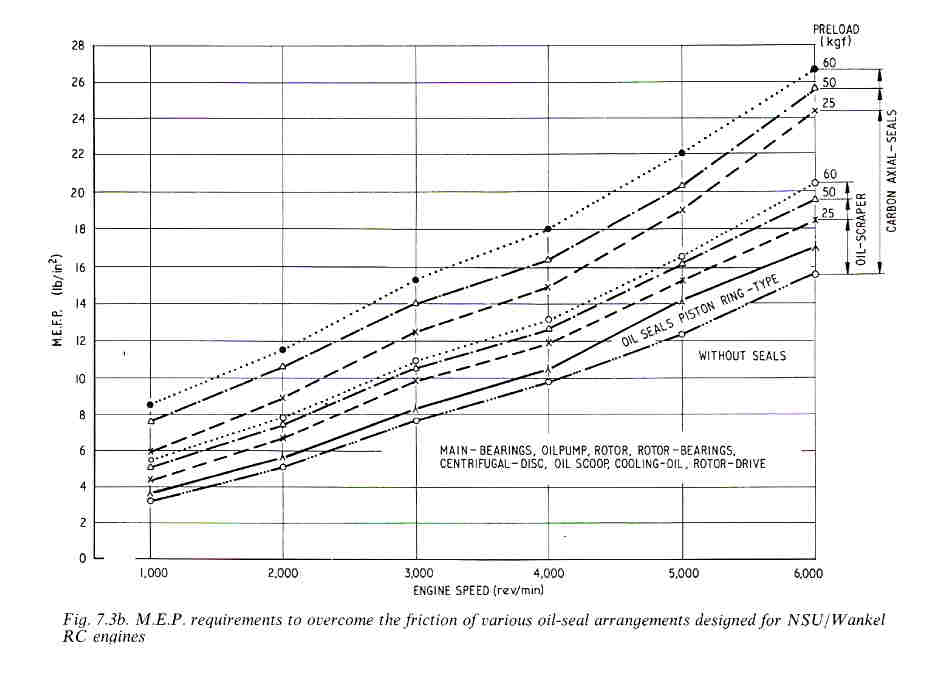
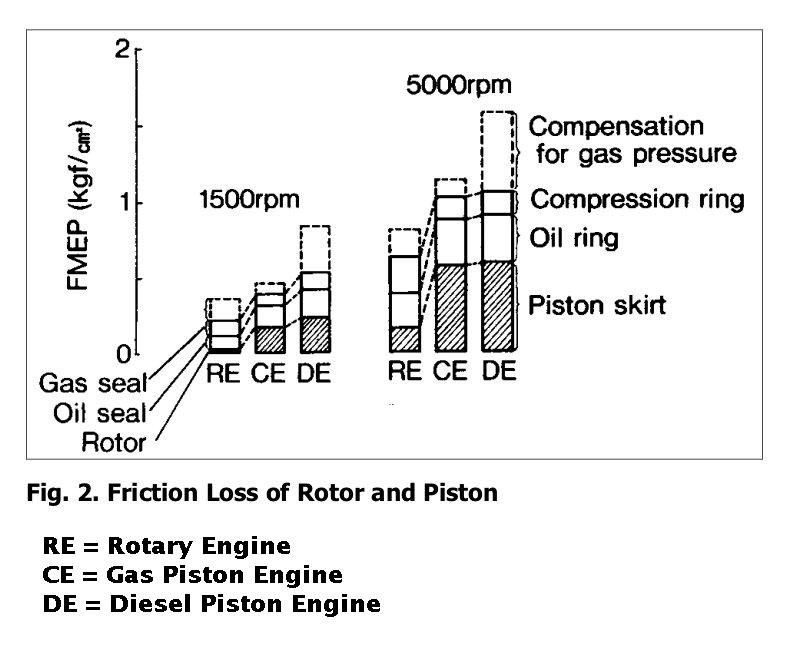
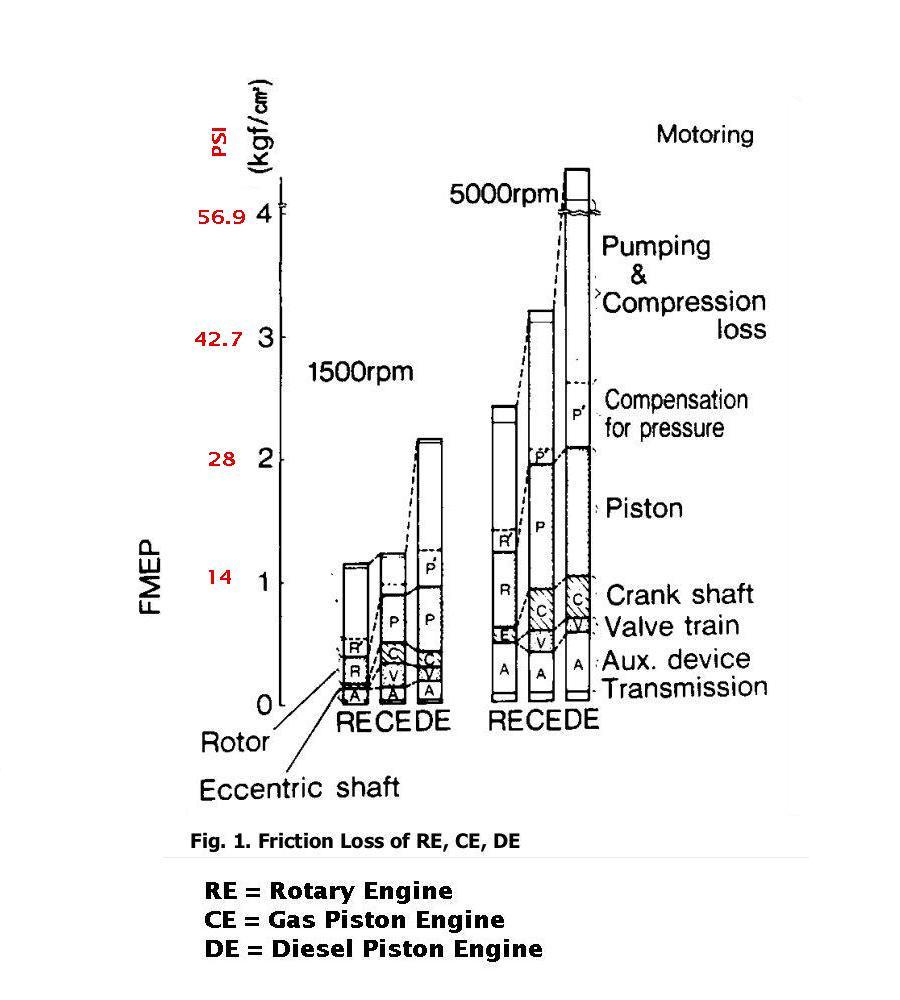
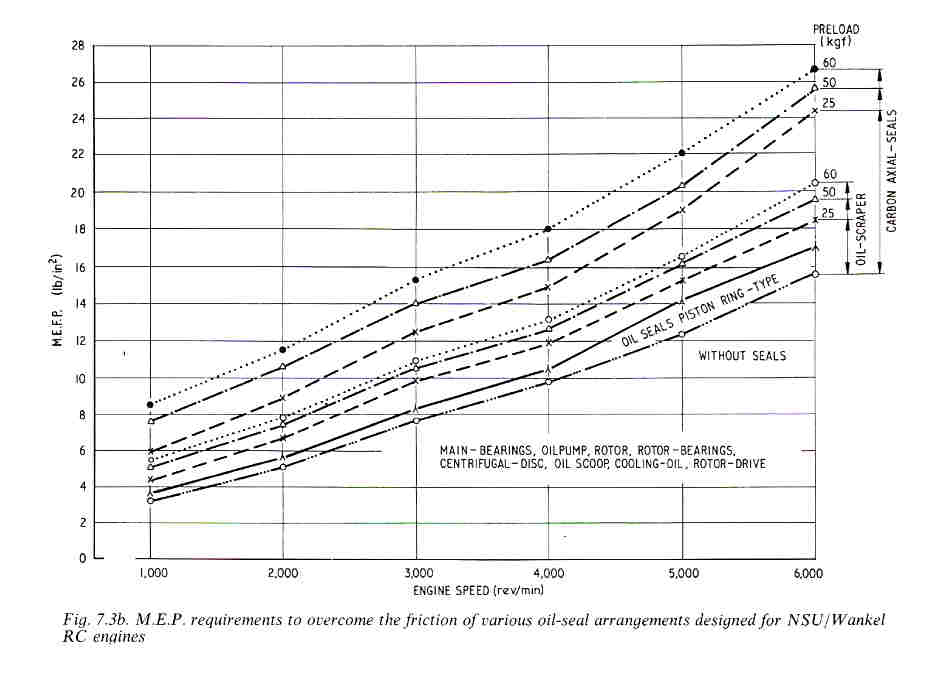
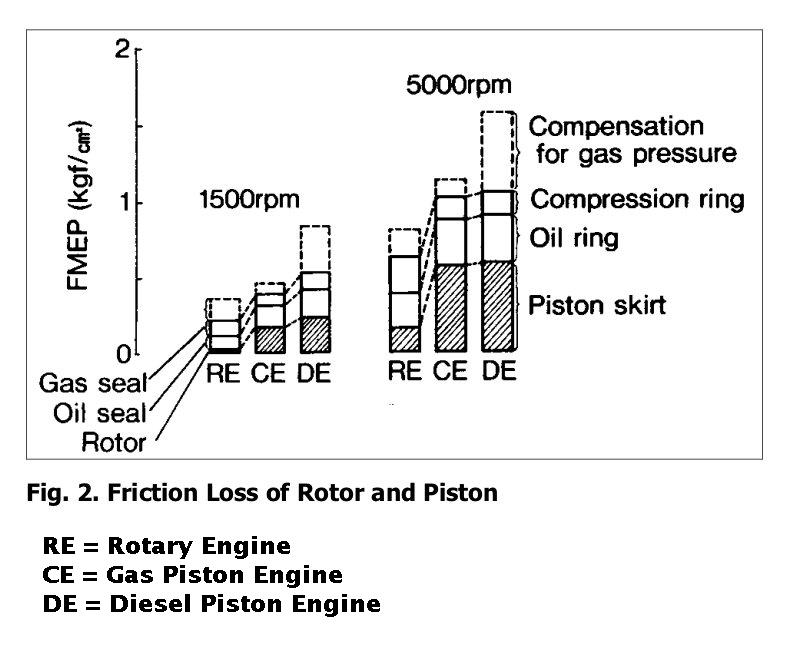
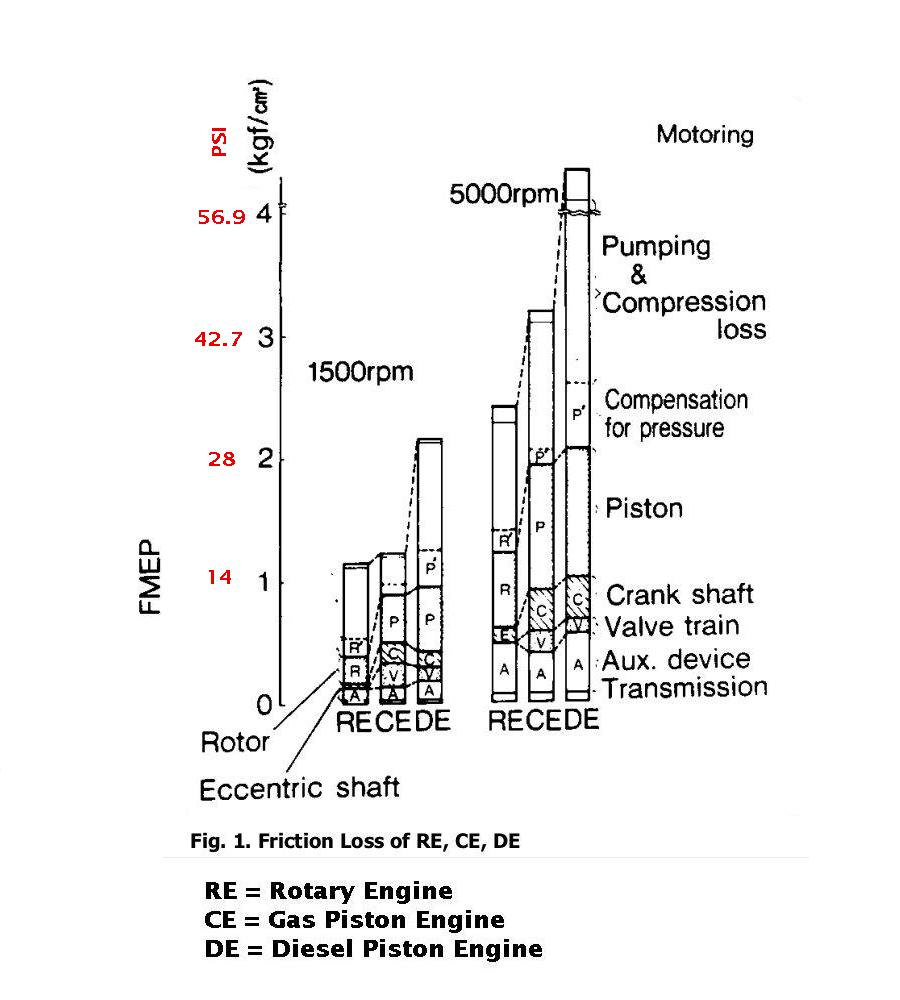
Also the friction in a rotary engine is less than the friction
in a piston engine. Here are some graphs on the subject.
Any money spent on coating development would be better spent
on turbo compound where the demonstrated potential improvements
are on the order of 20%.
Paul Lamar
--
The Rotary Engine NewsLetter. Powered by Linux.
ACRE NL web site.
http://www.rotaryeng.net
Youtube key word PaulLamar2
Copyright 1998-2010 All world wide rights reserved.