I suspect Tracy's PIC has its hands full at high RPM
reading this :) The single pulse by it self is probably
rotor one. The wide pulse is probably rotor 2.
I have no idea what Tracy is doing. He probably
considers the single pulse is the same as the
old 2nd gen crank angle sensor.
The easy way is to use 2 or more sensors, one for
each rotor, with only one tit on the wheel.
The pictures say it all. The router motor and
Harbor Fright (:)) motor control is the hot tip.
This thing runs smooth to ungodly RPM's (up to
22,000) thanks to Jim Poole's accurate machining.
If you want a RX8 trigger wheel hub and you need to ask
the price you can't afford it :) I have a spare one.
It is putting out a very strong signal with .2 inch
between the sensor and the wheel. On the order of
8 volts peak to peak. That is a stock, high buck, RX8 sensor.
Ill try it soon with the cheap $16 ABS sensor.
Be careful. Don't let it come apart. It can kill.
Paul Lamar
Paul,
That's great progress. I would be interested to see what effect a
non-concentric timing wheel would have. I found that mine had a
.0012-.0013" variation in the gap. I decided to go ahead and
switch over
to
the Renesis water pump which will use the Renesis trigger wheel and
hub.
This should cure the problem with changing gap, and possibly cure
the miss
too. It sure won't hurt anything. ;-)
Mark S.
That out of round is not going to help. It will vary the amplitude
of the signal once per rev. Jim Mederer tells me that is a common
problem with the e-shaft on the 3 rotor.
Good idea to go back to the 2nd gen CAS. Does Tracy have a different
software package for that or will it work with either?
I have no idea what Tracy is doing but reading the RX8 trigger wheel
and firing a three rotor is not an easy thing to do in software.
How are you coming with the Hytech ?
Paul Lamar
Paul,
We had our two grandsons for the weekend, so I haven't had time to
mess with
it. It was all I could do to keep them from burning down the
house. I did
manage to slip away and go to the airport on Sunday for a few hours
(as
described above).
Anyway, I'm a bit confused on the Hytech's purpose. I know it is a
data
logger, but you have connected some sensors. Is this to do
compression
checks, or verify manifold vacuum, or both? I didn't want to exceed
the
limits of the sensors by hitting them with 100 psi if they are meant
for
vacuum.
Also, with the water pump off, I won't be testing anything for a
while.
Mark
Those are for manifold vacuum and a crank angle sensor fed into
one of the A to D.
Your right. The sensors would blow up. These are the same sensors
Tracy's use in the EC2.
What you will get is a lot of raw data that looks like this.
BTW I don't think the 15 thou run out on the end of the
e-shaft is the cause of the miss. At what RPM is it missing?
I think you should borrow my RX8 trigger wheel hub and test
the EC2 with out the engine running. I think it has a software
problem over about 6500 RPM. You won't need the water pump
for that as they engine will not be running. If the injector
pulse width is not getting wider that is the problem.
In fact come to think about it I suspect Tracy's system
quits working after the torque peak as it is based solely
on manifold press and max HP comes well after peak torque
AND peak man press. If it has trouble sensing RPM
over 6000 it will not feed the additional fuel needed into
the engine at the same man press at the higher RPMs. Particularly
since you moved the torque peak down.
A car EFI systems uses a mass air flow sensor so
air flow is proportional to RPM as WELL as throttle
opening.
That explains a lot.
We need to hook up the Hytek and see what is going
on in Tracy's system over 6000 RPM with out the engine
running.
It is like trying to determine what some one is thinking
solely by observing their actions :) The hood is welded
shut :)
I have an early EC2 from the days when nobody went over
6000 RPM. Tracy has changed the software from that time.
We tried it on the p-port eng on the dyno but could not get
it tuned. We gave up at $650 a day and put the Weber on.
Perhaps we were having the same problem.
It might be interesting for me to hook it
up with the CAS simulator and see what it does
with my scope.
The bottom line is what does yours do?
Paul Lamar
Lots of factory automotive systems only have MAP sensors - no MAF.. I
don't know if any of these engines have the organ pipe effects of the
PPort rotary, however.
I like your debug method though.
Matt-
Name some made recently?
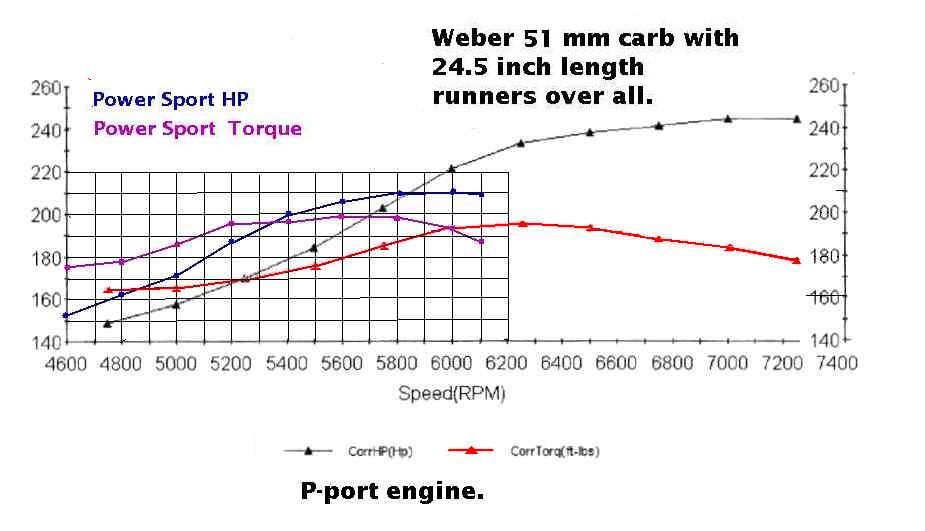
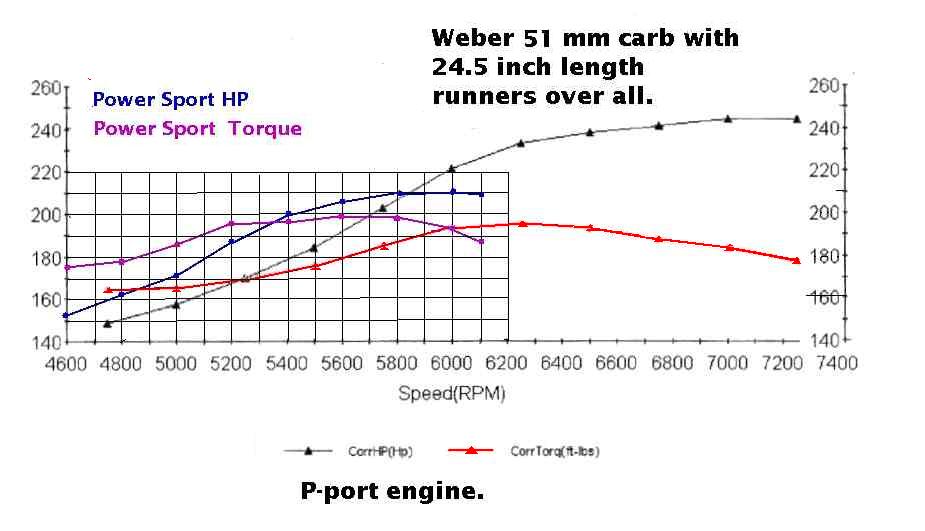
Manifold pressure can stay the same or drop off and HP can increase
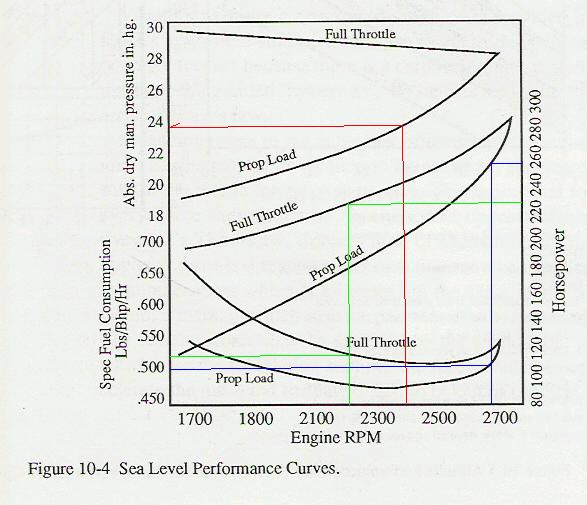
with tuned intake manifolds. Look at this dyno curve with a carb.
A carb venturi is like a mass air flow sensor in effect.
The amount of air getting into the engine is obviously increasing
after the RPM where torque is at maximum as the HP continues to increase.
Tracy is injecting fuel proportional to manifold pressure only and not the
amount of air getting into the engine. That is why MAFs are now universal.
If the tuned runners are too short you will not reach torque peak
and in that case power really is proportional to manifold pressure.
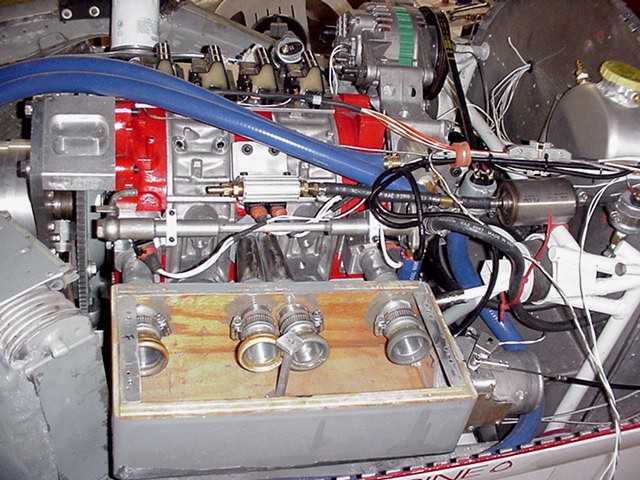
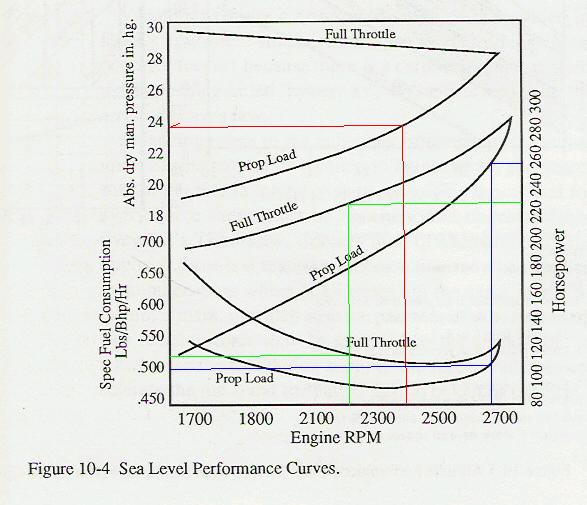
That is the case in Tracy's RV4 with the RX8 engine. Here is a picture
of that.
That is also common for direct drive aircraft engines as the RPM is limited
by the prop diameter. Aircraft engines running at design speed are
not breathing limited. Prof for this is the fact you can run
them as much as 3600 RPM and gain a lot a lot more power.
See the last jpg.
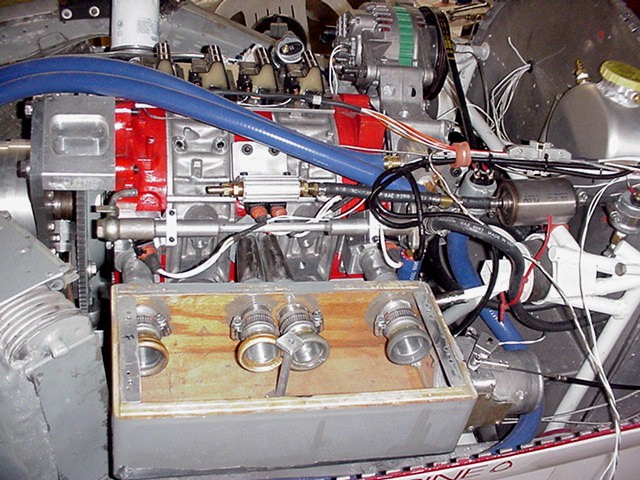
I suggest all you people building P-ports measure the pressure
from small pito tubes inserted into the intake runners
just beyond the slide throttle and tee them together.
Keep them close to the wall that is open during
idle. I'll do a 3D dwg later.
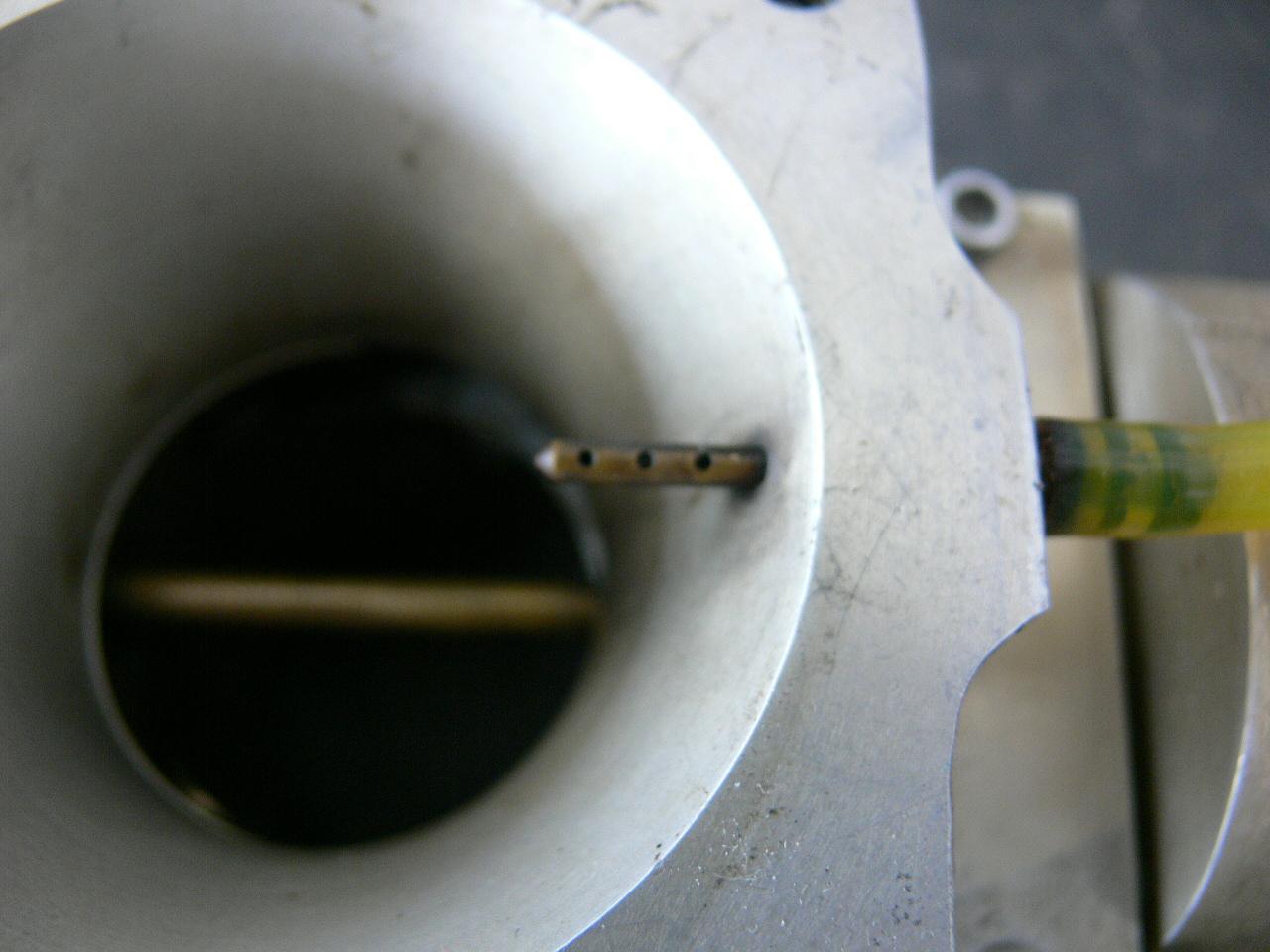
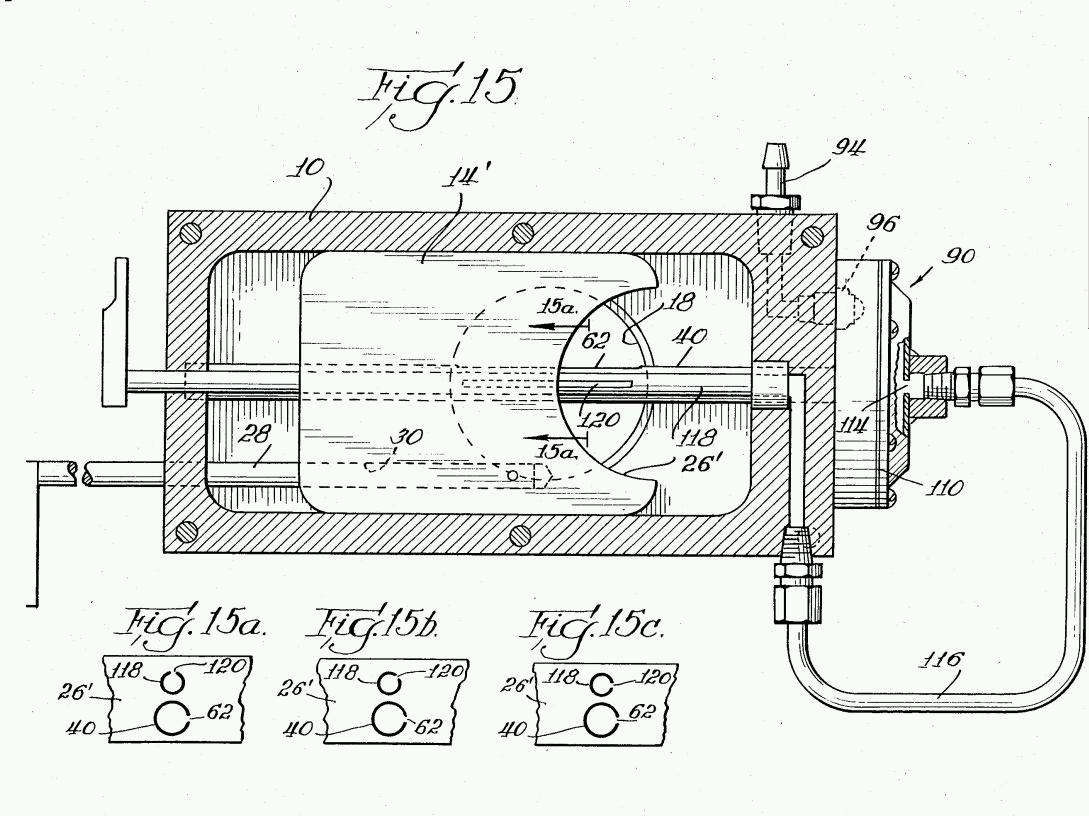
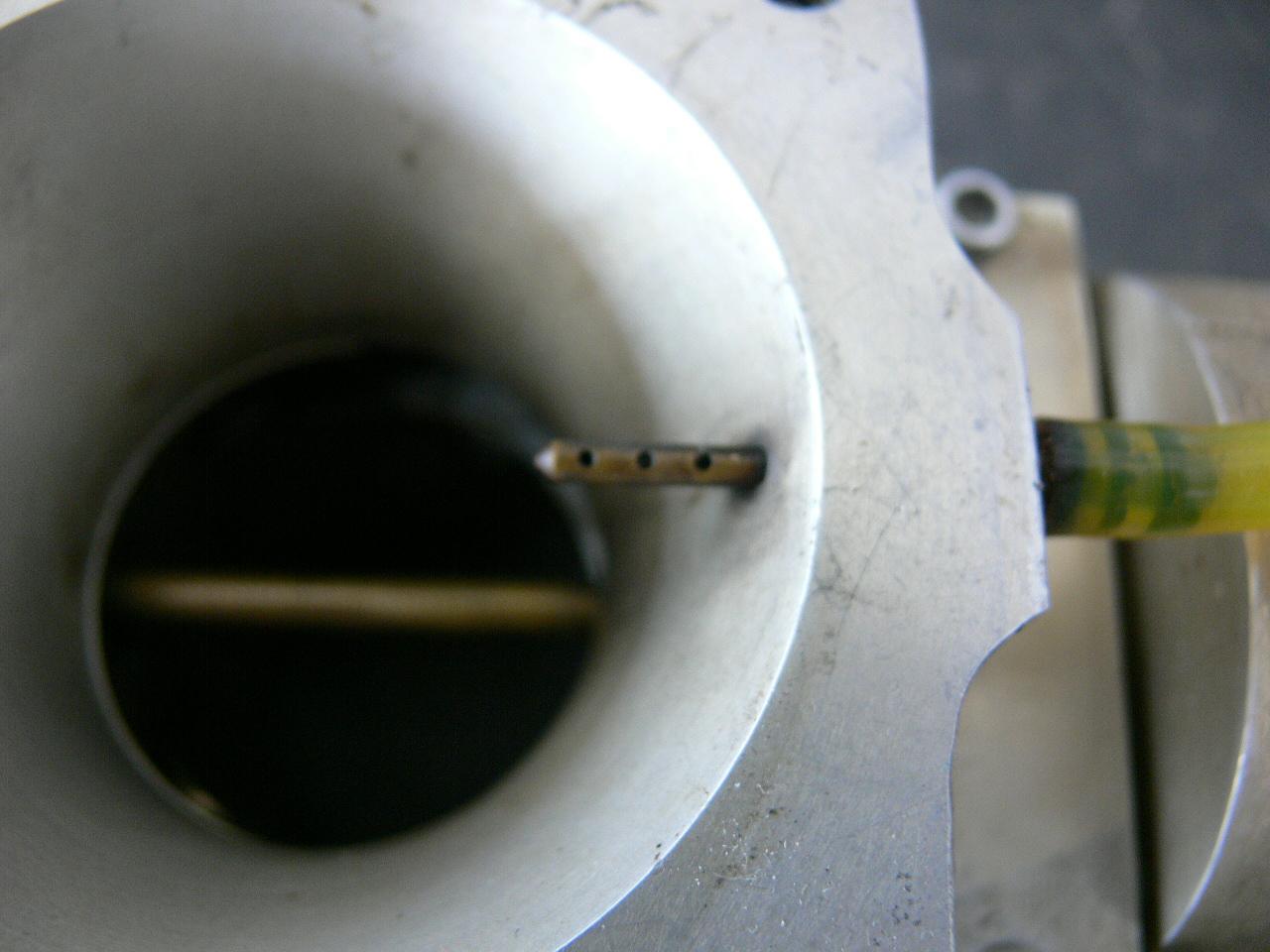
Poor man's mass air flow sensor. I have seen this
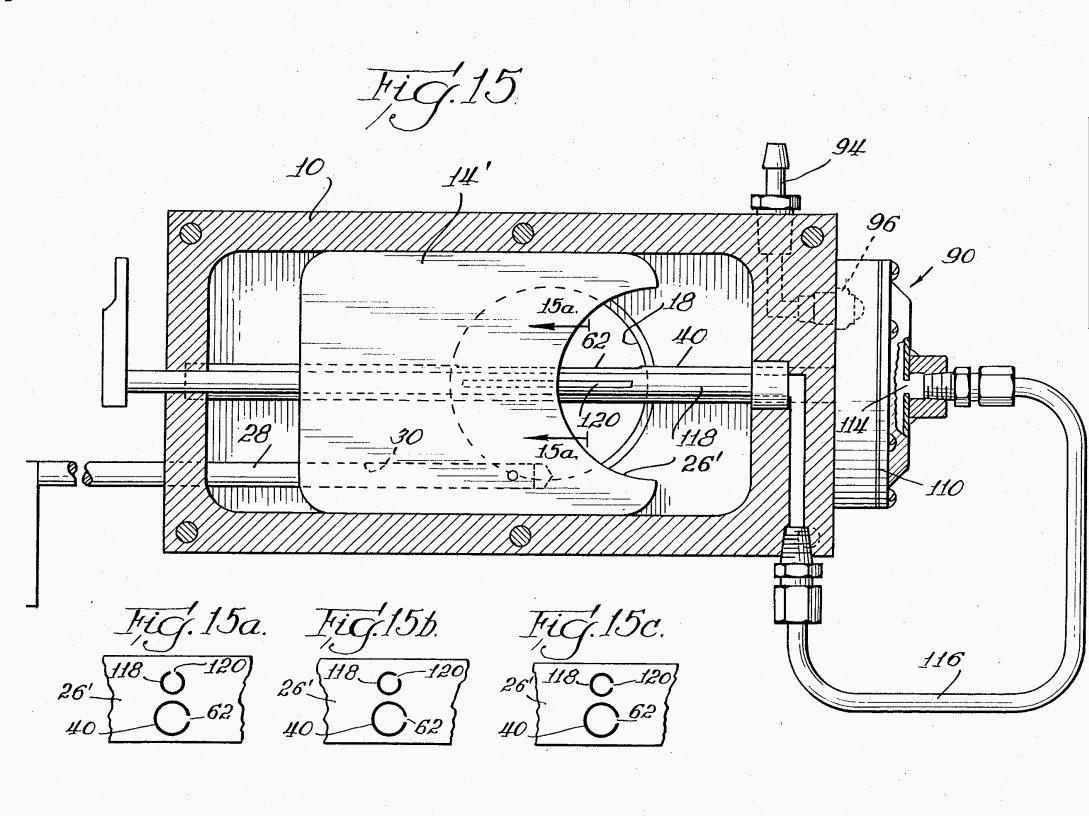
on Ellison carbs. Here is a picture and how the dynamic
pressure is sent to the fuel pressure regulator.
Of course dynamic pressure will be proportional to the square of
the air velocity but I think Tracy system can handle that
with out a software or hardware change. Assume WOT.
At 100 MPH in the runner it is 26 pounds per square foot or .180 psi.
At 200 MPH in the runner it is four times that or .72 psi.
Those numbers will be added to the static pressure
which at WOT will be about 15 psi. The total pressure
at 200 MPH in the intake will then be 15.72 or 4.6% more air
and fuel needed. At 300 MPH in the runner total pressure will
be 16.625 or 10.8% more air and more fuel needed.
Unless of course Tracy is limiting the manifold
pressure reading to atmospheric.
Paul Lamar
--
The Rotary Engine NewsLetter. Powered by Linux.
ACRE NL web site.
http://www.rotaryeng.net
Youtube key word PaulLamar2
Copyright 1998-2010 All world wide rights reserved.