Well, nothing seems to work. I discussed O rings between the sealplate and
the housing with a mechanical designer at work. He did not think it would
work. The holes drilled in the top are on a V edge which complicates the
sealing. Those holes should be on a flat section. Even then an O ring is
not the optimum solution. I will try again with a different combination and
report back. What is the disadvantage of just sealing off where the tubes
are with JB weld? Even if you test it with air, after a couple of runs on
the motor it could leak. Alternative engines are not a great confidence
builder don't want to worry about leaks too.
Joe Berki
Limo EZ
Take it apart and take some more pictures.
I'll see what I can come up with.
One way is sand off some of the anodize on the inner cover and weld on a
short section of 2 inch .065 wall alloy tube. Do away with the thick inner
flange.
Then connect the two with hose and hose clamps.
That way you can use the stock 1/4-20 bolts.
and the stock seal plate set up.
Paul Lamar
The story continues as I have tried numerous combinations to get the seal
plates sealed.
I am attempting another try as I am writing this. I have no idea where it
is leaking. I re designed the bracket to the slide throttle so I could
incorporate an O ring seal from the tube to the slide throttle.
It seems that the soap bubble method does not always give an indication of
leakage but the pressure gauge indicates drop in pressure.
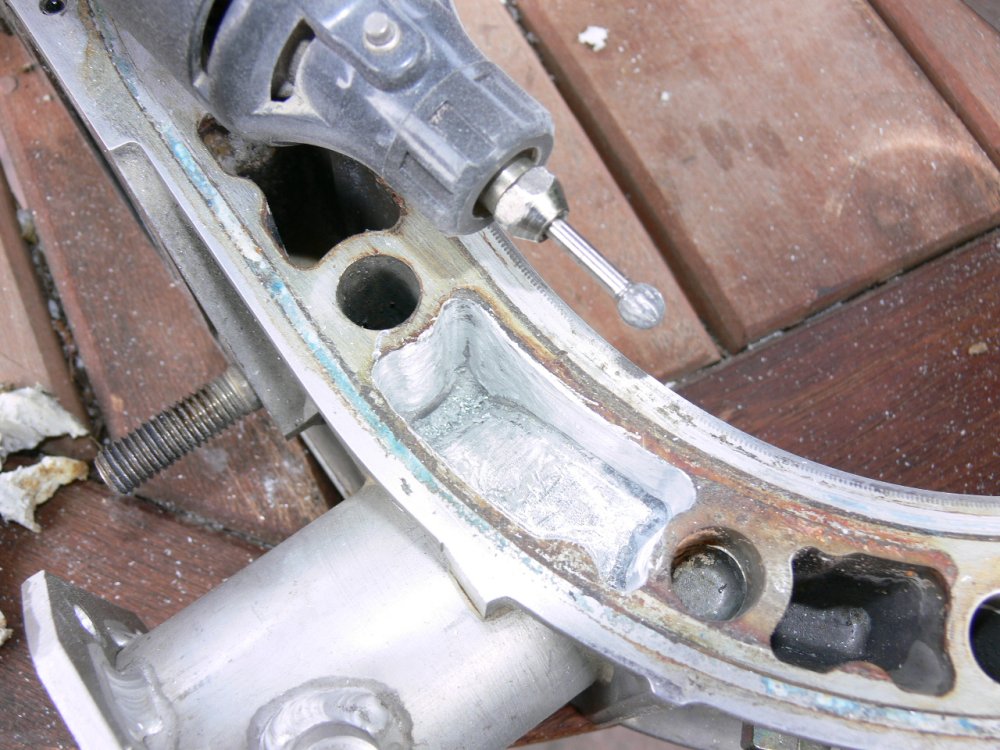
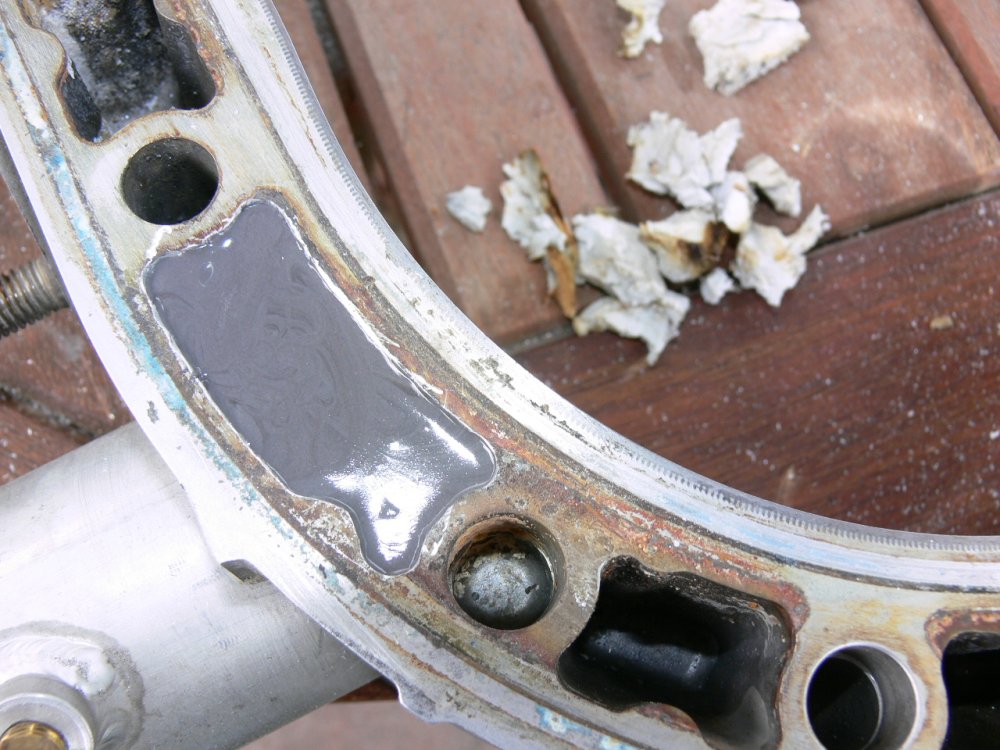
The latest attempt involved removal of the RTV and JB weld from the outside
after the seal plate was removed and spraying the silicone conformal coat on
first. I need to get a fresh tube of red RTV to rule out that the stuff I
was using was bad. I did manage to coat the inside between the screw holes
and the tube with JB weld but did not fill the entire cavity.
I'll keep you posted
Joe Berki
Limo EZ
I don't see any rubber inner tubes on those side pressure test plates.
Are you sure the leak is not there? Don't use bolts to hold them on. Use
large C clamps. The bolts are just another place to have leaks. Also use 1/2
inch thick plate. That looks like 3/8th. Not stiff enough for 50 psi.
I think you need to start over.
Don't use the same bolts and spacers to hold down the sealing block for the
slide throttle flange. Use different bolts taped into the sealing plate if
necessary or do as I suggest and weld the inner cover of the slide throttle
to short aluminum tubes and use hose and hose clamps to connect the slide
throttle to the engine.
The silicone conformal coating is for the threads on the 1/4 28 bolts only.
JB Weld will not stick to aluminum unless the conversion kit is used and the
instructions are followed closely.
Don't try to get creative here. These details are important. I spent months
developing this process.
Paul Lamar
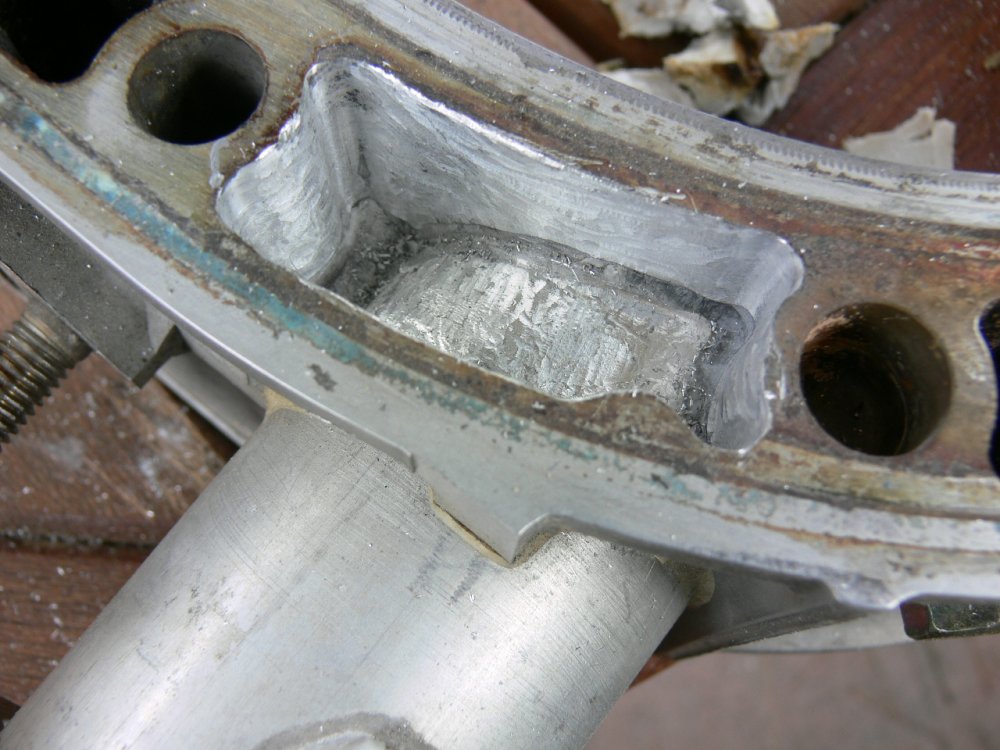
If I may throw something in here. I build some of these P ports many years
ago. I filled the entire water jacket around the p port tube with JB weld.
There is no reason to leave the water jacket open in this area. At least
that was my take way back when and I didn't have any problems with it
leaking or heating. I think I drew this conclusion on the fact that the
factory Mazda p port housings also blocked this water jacket. (this was back
in about 1974...things might have changed)
Bob
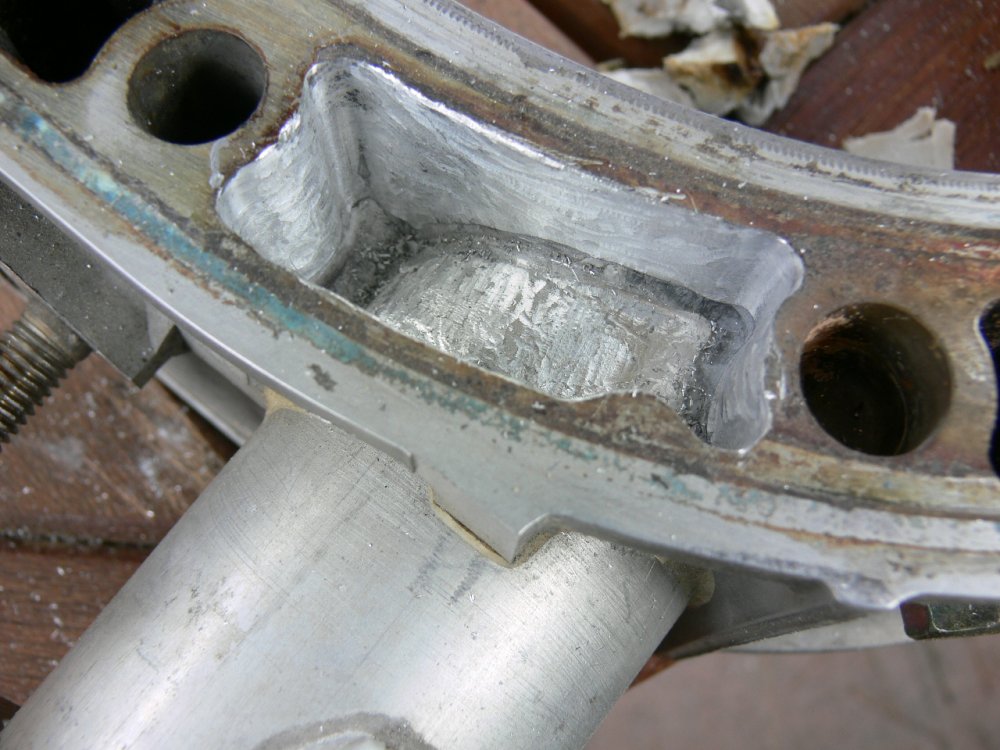
Yes and that is the method we first choose. Unfortunately due to the high
viscosity of the JB Weld getting it sealed proved problematic.
When that happened it was a pain in the ass to remove and start over.
We tried heating the JB Weld and diluting it with acetone. No luck.
We did not try Devcon Aluminum Liquid (F2) 10710 and other people
have had good success with that.
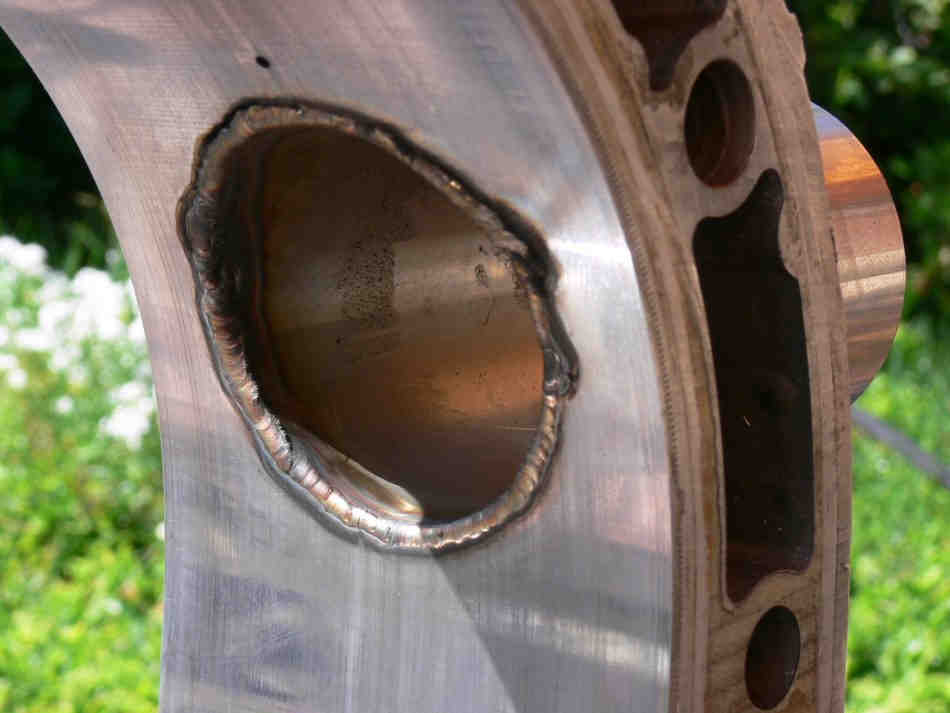
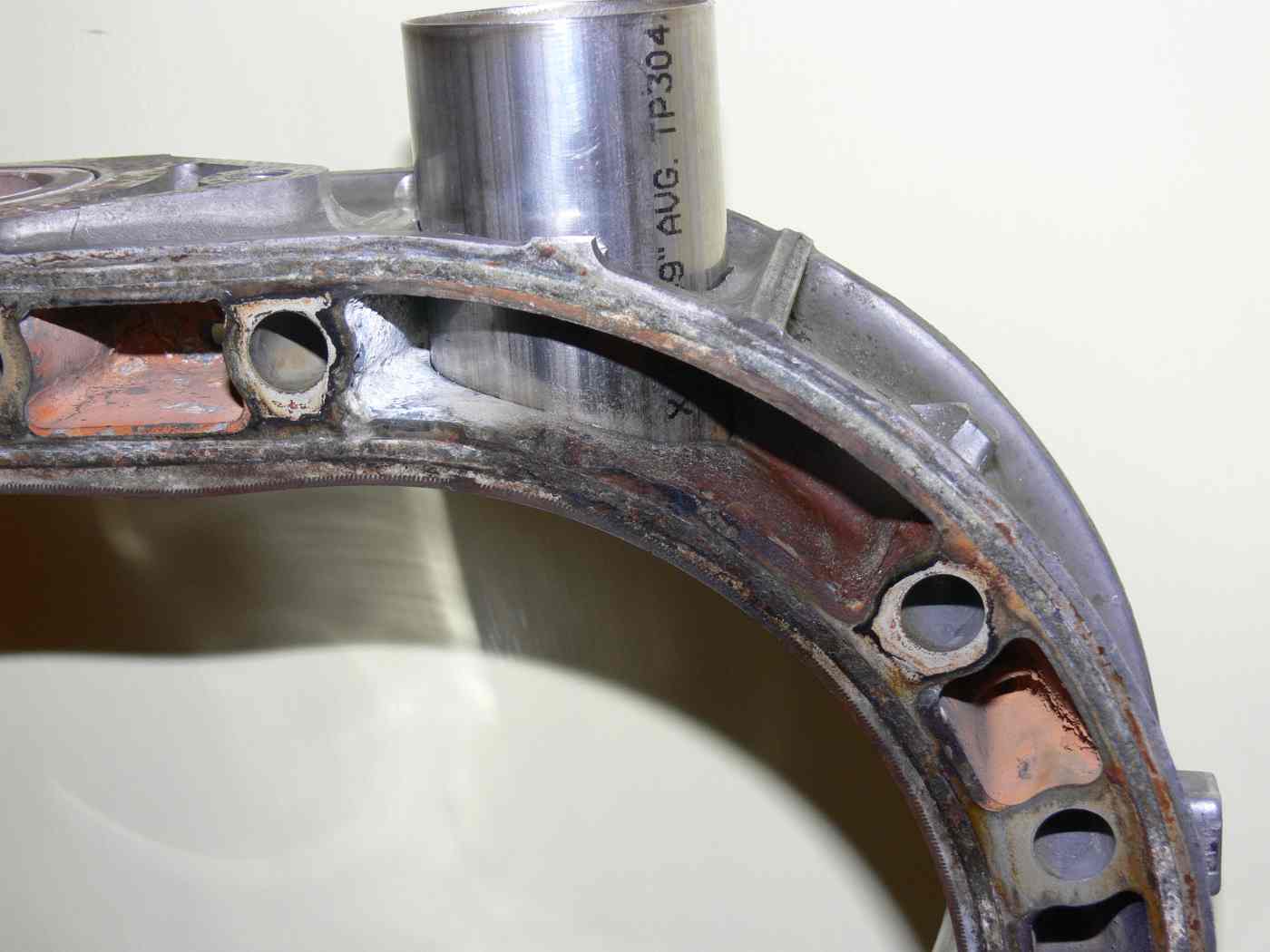
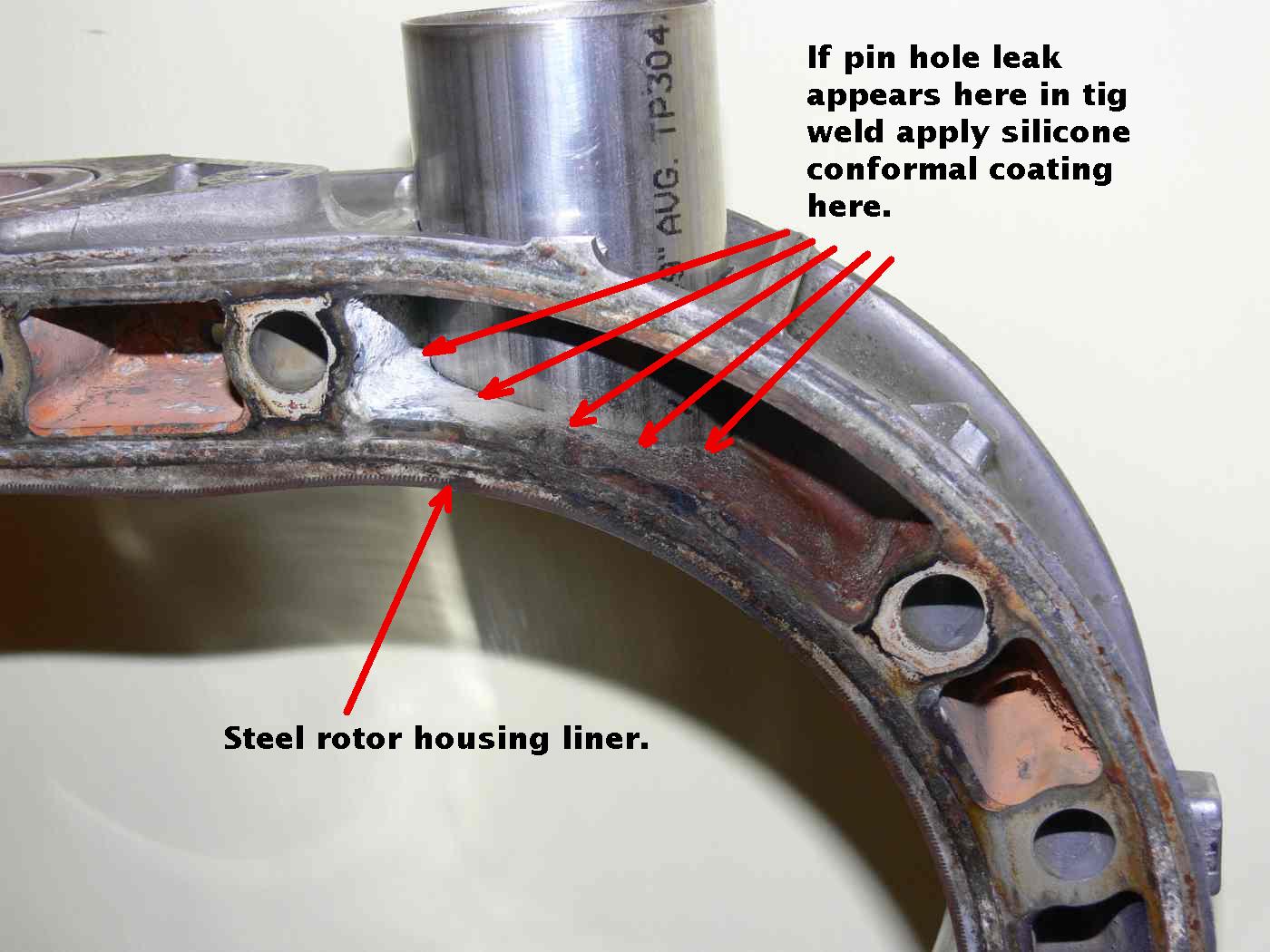
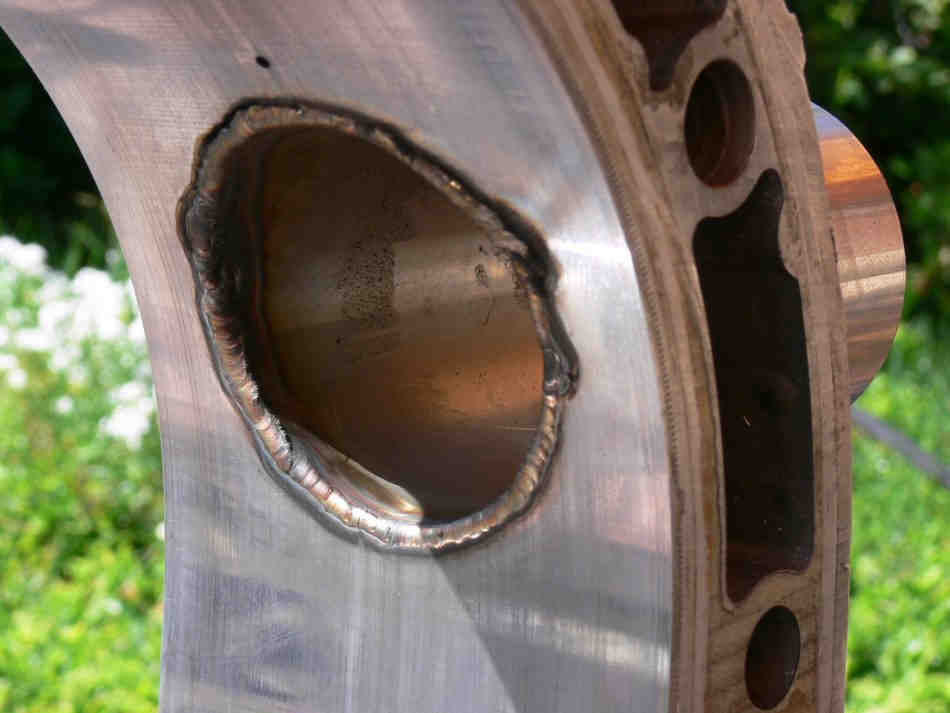
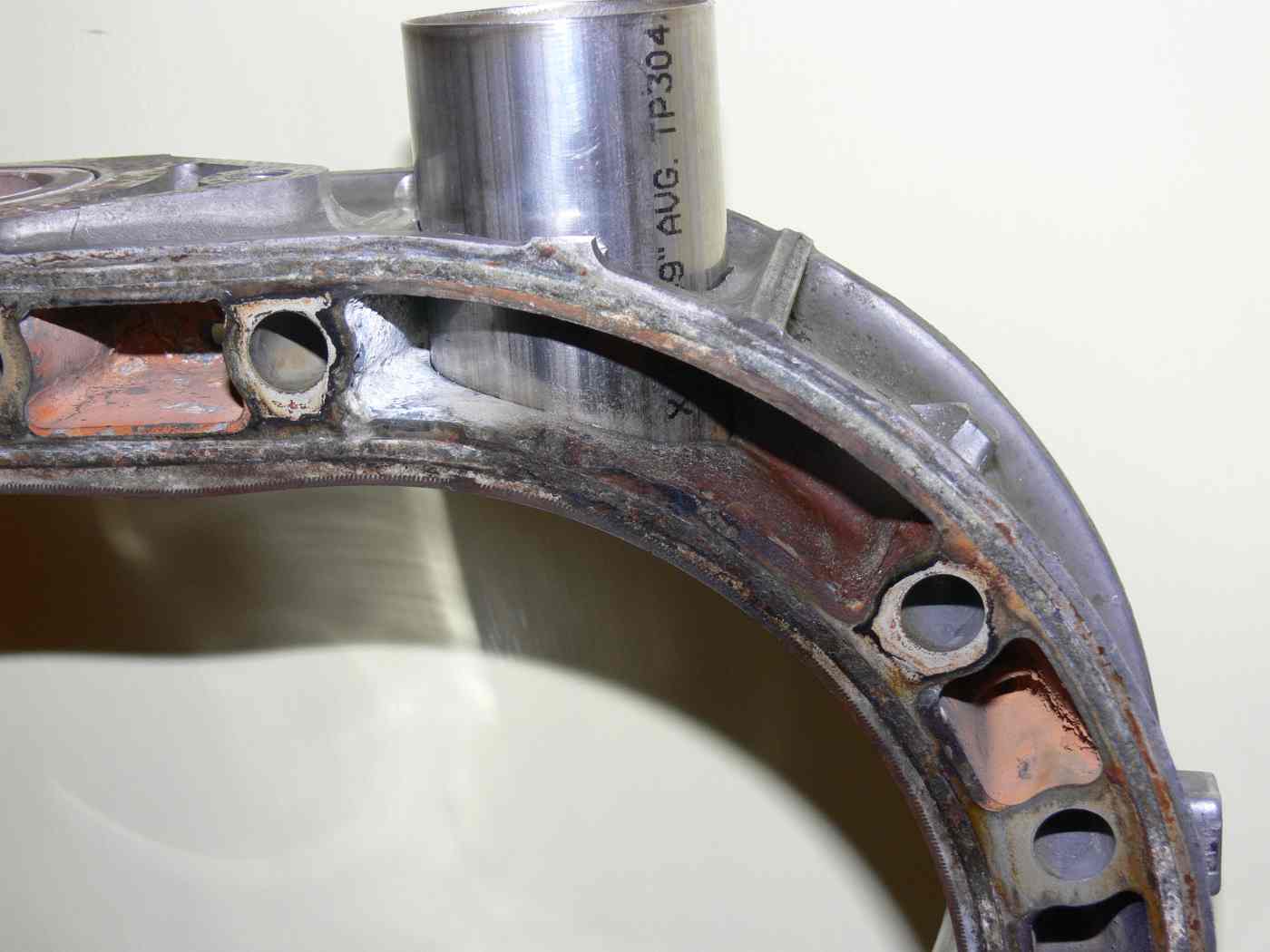
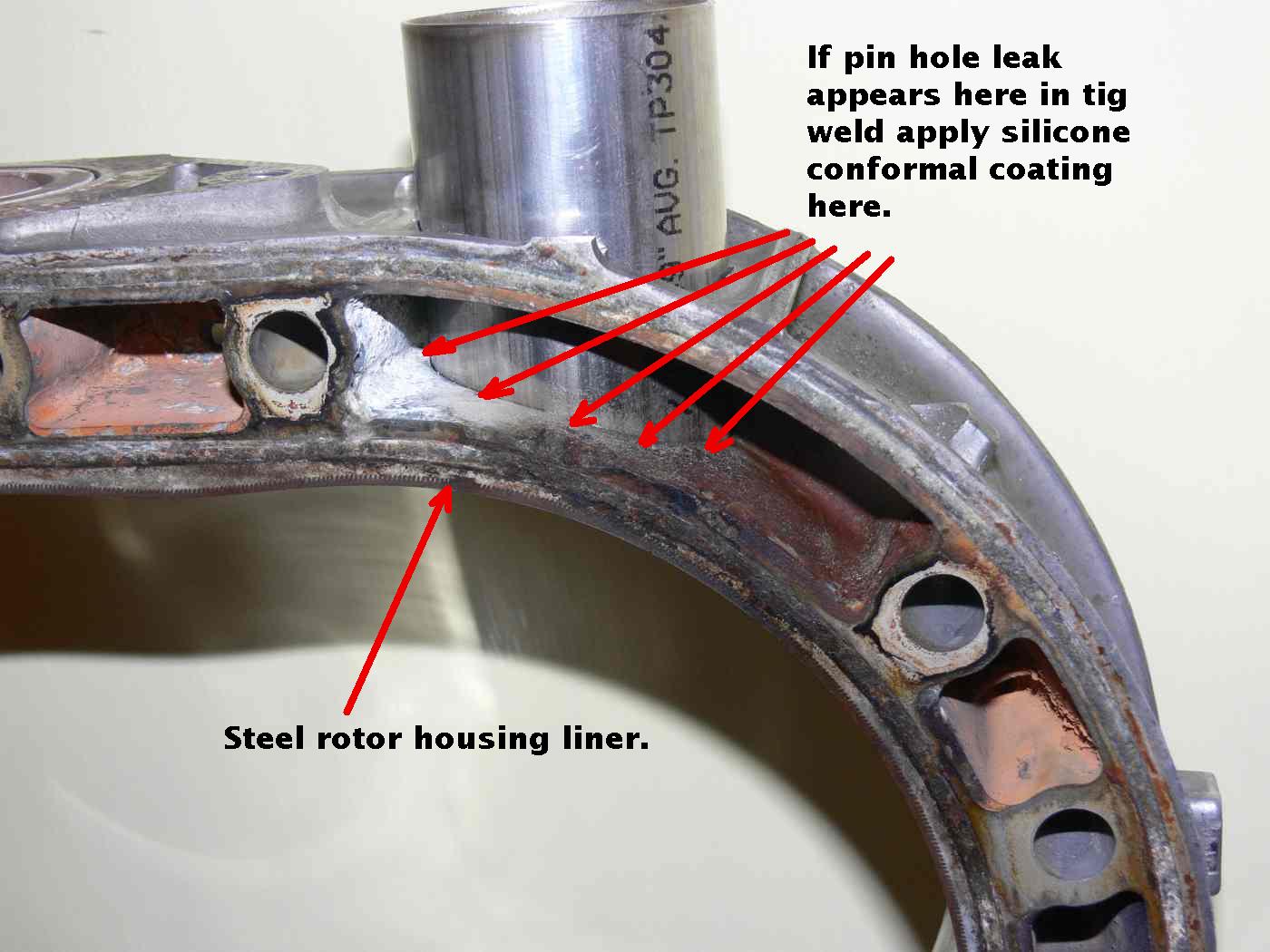
I then had the idea of tig welding a SS
tube directly to the steel rotor housing inner liner. Mark S tried
it first on a junk rotor housing and surprisingly it worked.
There was no warp-age of the rotor housing. It took only a few minutes
to tig weld it unlike the potting process. If you have an NC mill bore
the hole, like Jeff Doddridge has, it takes maybe 15 minutes
total once set up. See the end of the front page on the ACRE NL
web site.
http://www.rotaryeng.net fore contact information.
Then we built a p-port RX8 engine with
the technique and ran it on the dyno no problem at about 250 HP at
only 7500 RPM. Then Mark S built a 3 rotor version that
runs fine and has flown except for some tuning issues he is
working on. This is a complete How-to.
http://www.rotaryeng.net/Welded-steel-p-port.html
Now the theory is; we left that water jacket area un potted
with JB Weld so we had access around the tube on the inside
where it went through the inner wall. If a pin hole leak
developed in the tig welded joint we could plug it with
low viscosity 500 F silicone conformal coating.
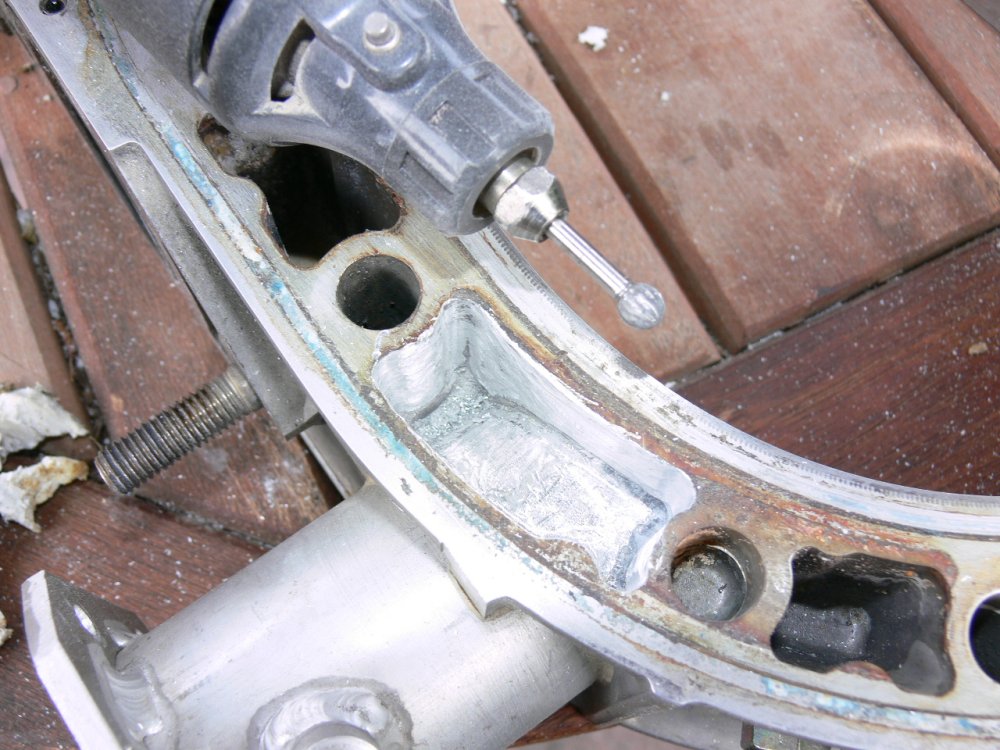
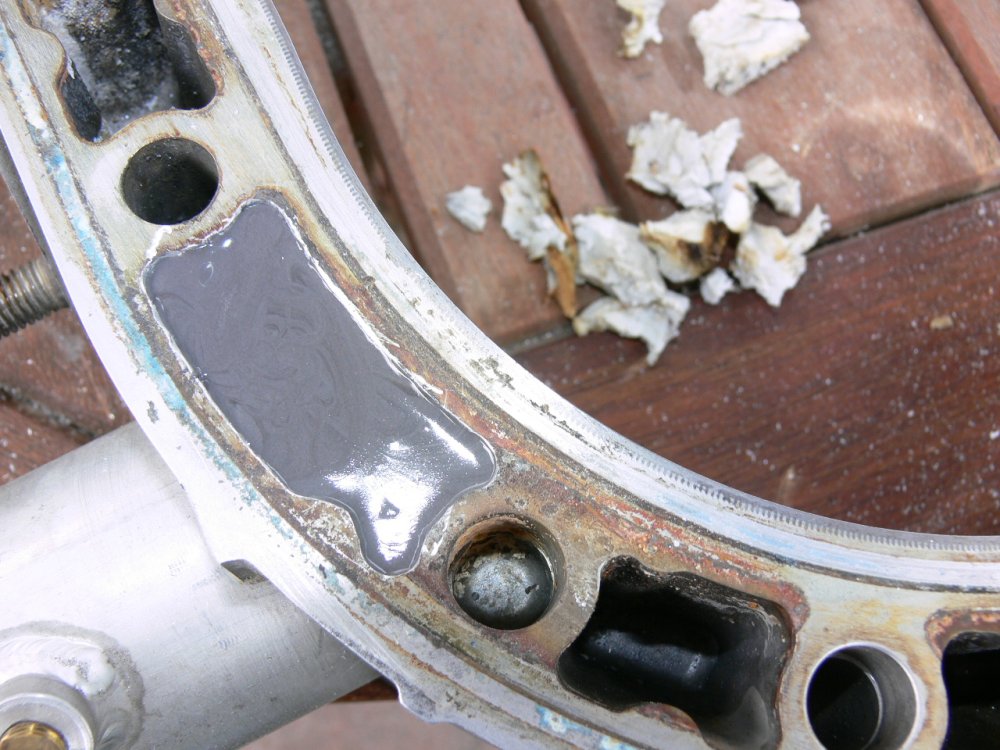
Here are some pictures of the history.
The outer seal plate was made removable so if a
leak developed later, around the tube, it could be
repaired.
Paul Lamar
--
The Rotary Engine NewsLetter. Powered by Linux.
ACRE NL web site.
http://www.rotaryeng.net
Youtube key word PaulLamar2
Copyright 1998-2010 All world wide rights reserved.