Scroll down to the bottom.
Hello, Paul,
I've read and re-read your book, "How To Cool Your Wankel" and find
it fascinating. I, and my partners are building a Glasair Sportsman
2+2 and installing an Eggenfellner 3.6L Subaru. Next week we will
have some expert help in fitting the custom Sportsman cowl we bought
from Jan Eggenfellner. We expected this to be a relatively smooth job
until I visited a good friend three weeks ago. This friend has been
flying his Sportsman with the same 3.6L Egg Subaru for over a year,
although he has only 60 hours on it. I asked him how he liked the
engine, and his one big disappointment was the cooling. He told us
that at 80F and higher, on any but the first takeoff of the day, he
has to lower the nose to gain more airspeed, and loose a significant
amount of climb performance, in order to keep the NPG+ (7psi cap)
from overheating. Interestingly, he doesn't have a problem with
overheating of his PSRU or the engine oil.
This was devastating to us. We thought Jan had figured out the
cooling problems on this engine, the most recent of his designs.
If I may,I'd like to give you some facts and dimensions of the
radiators and cowl system we purchased. We want to change what ever
we reasonably can to get our Sportsman to be functional in over 80F
weather. We understand that very likely won't be optimized for drag.
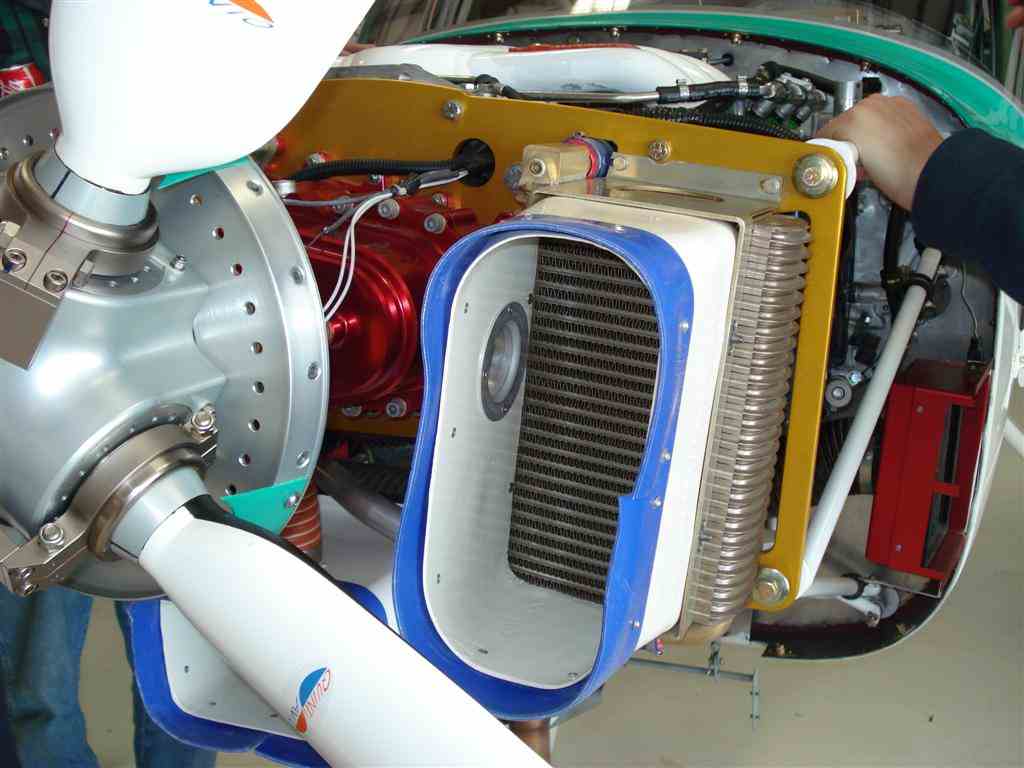
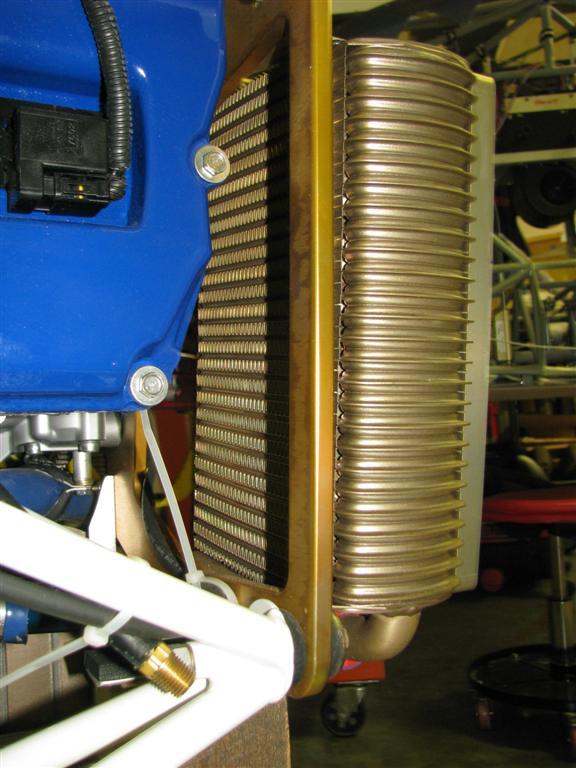
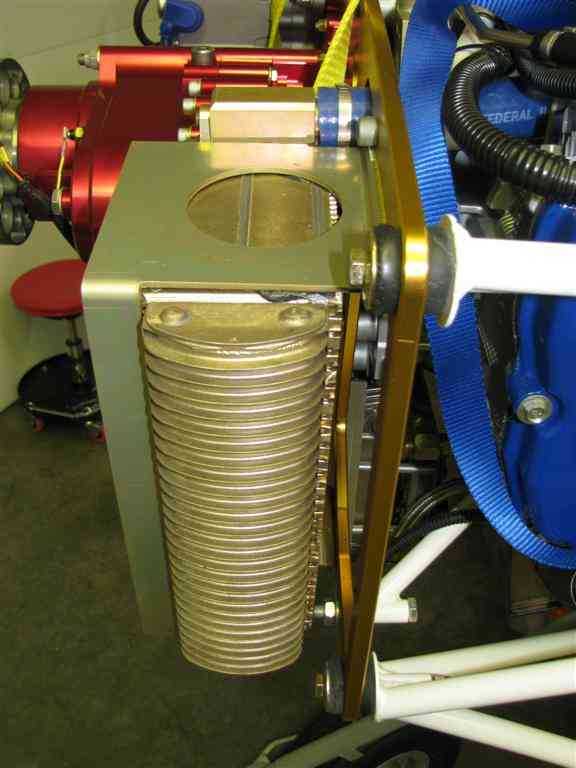
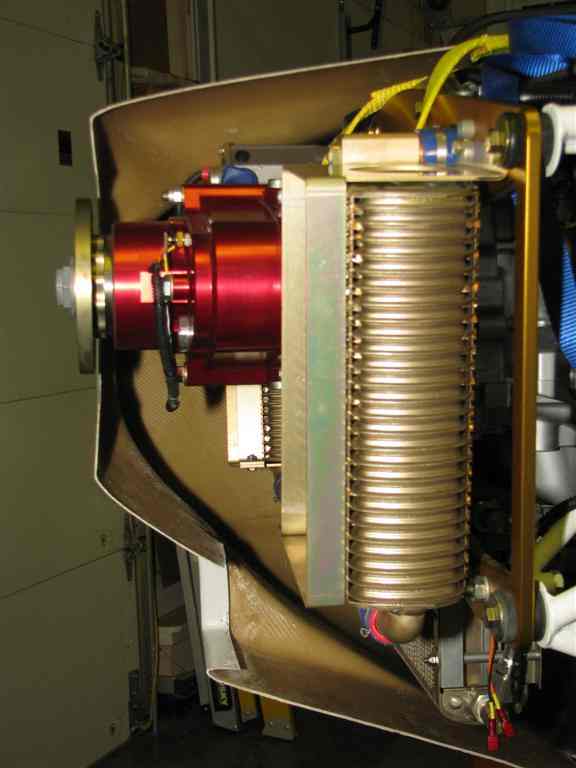
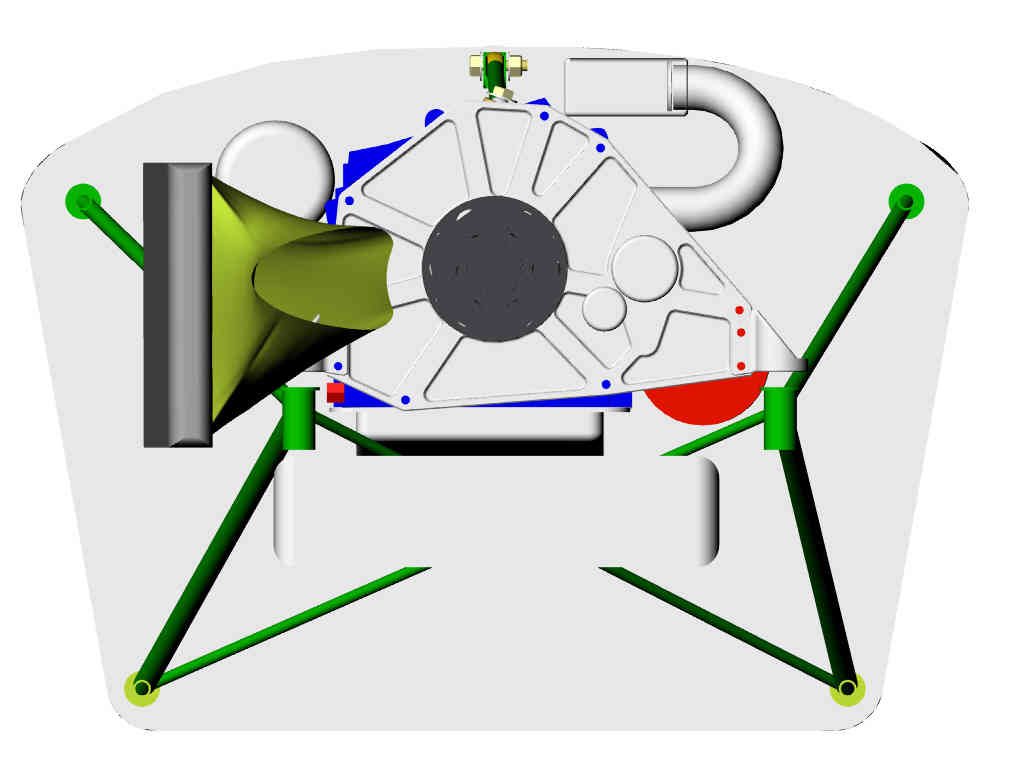
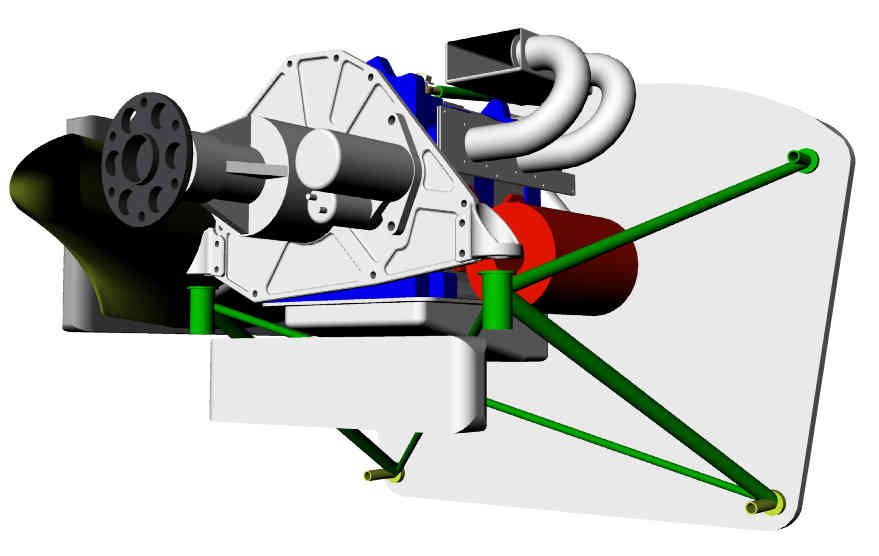
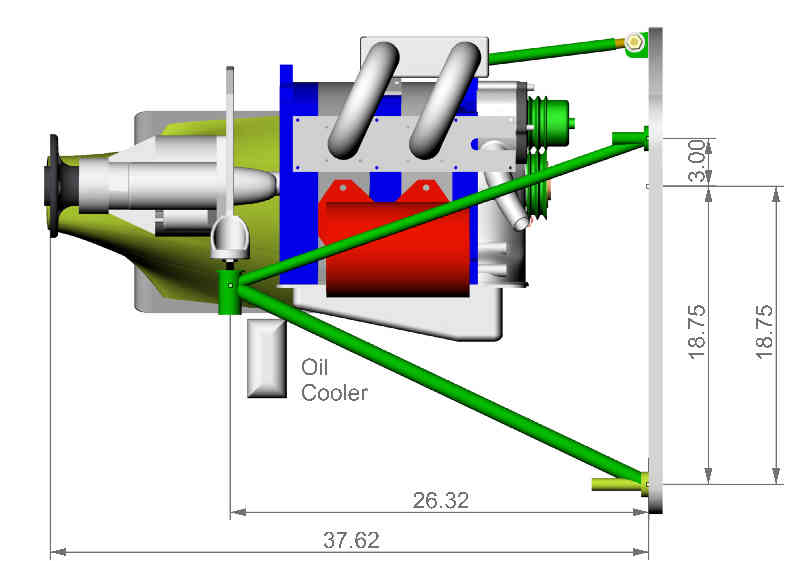
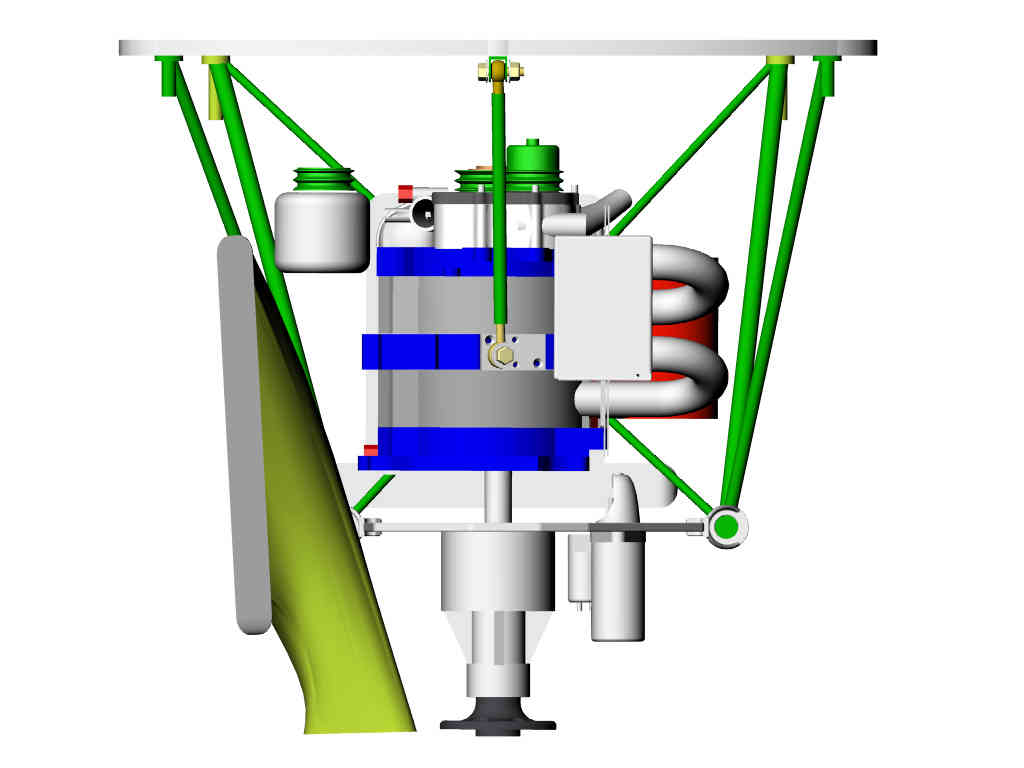
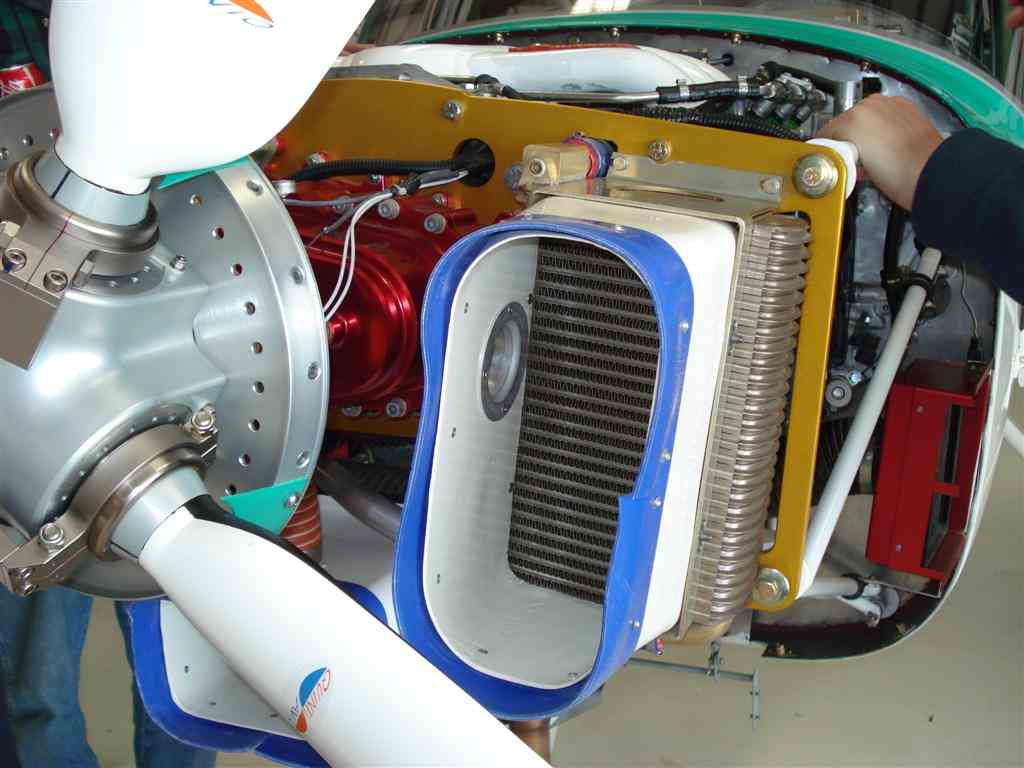
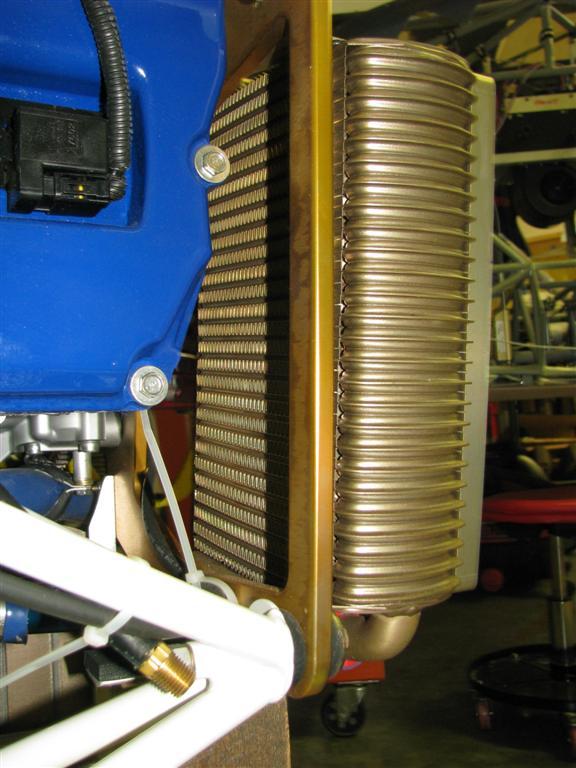
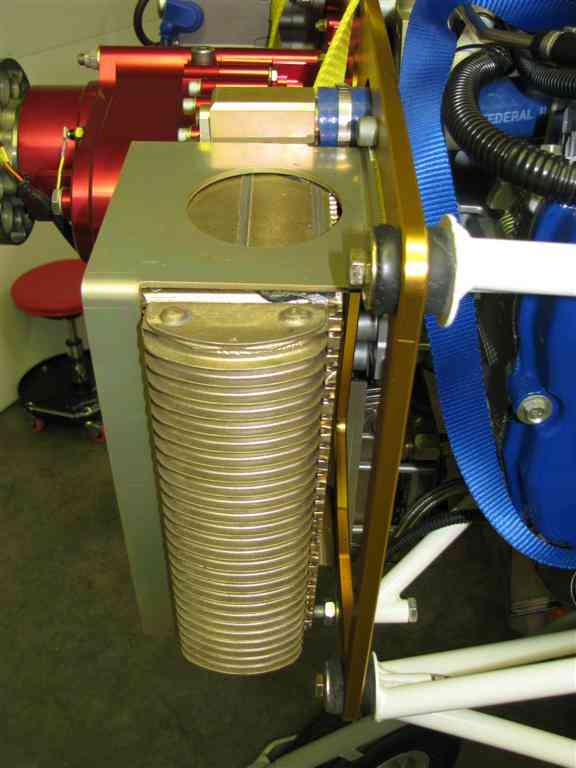
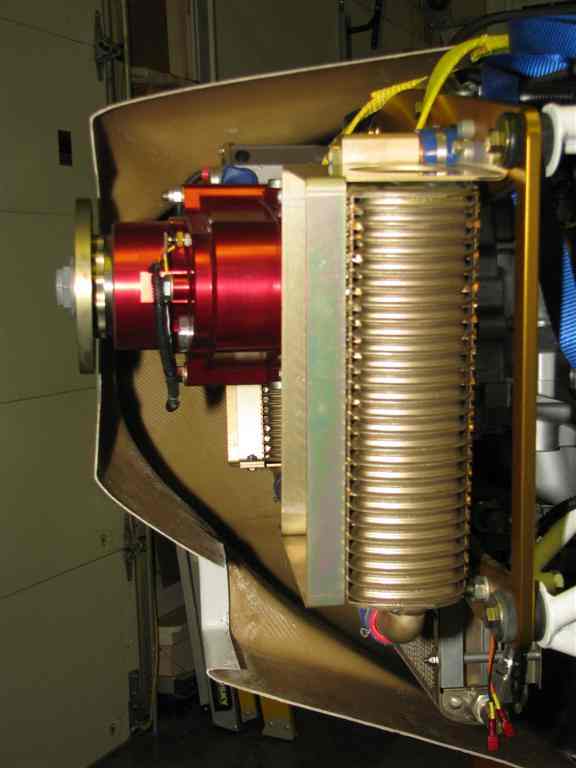
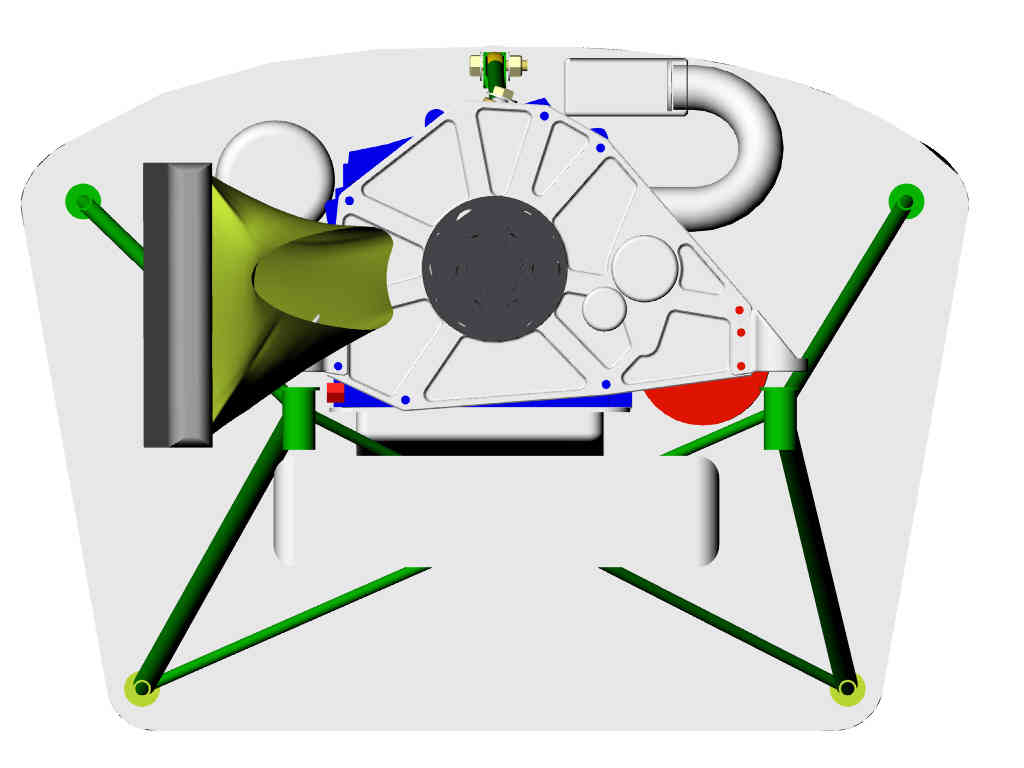
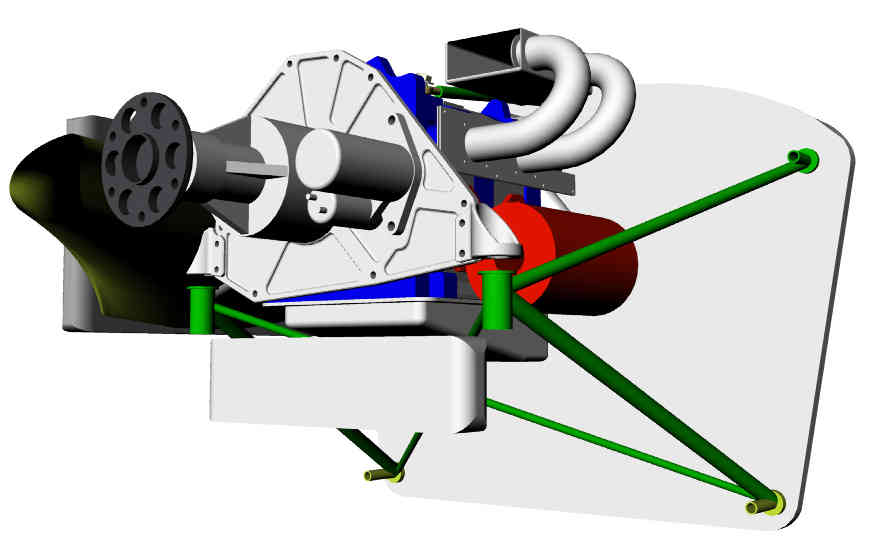
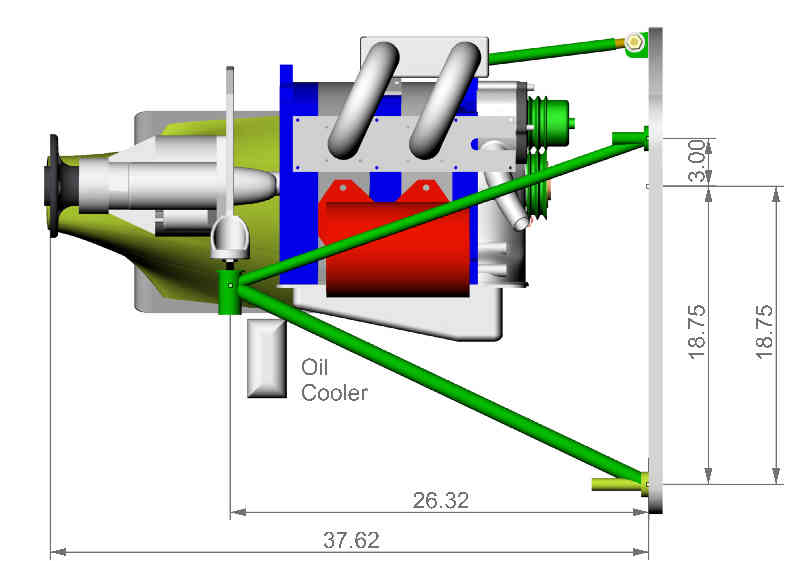
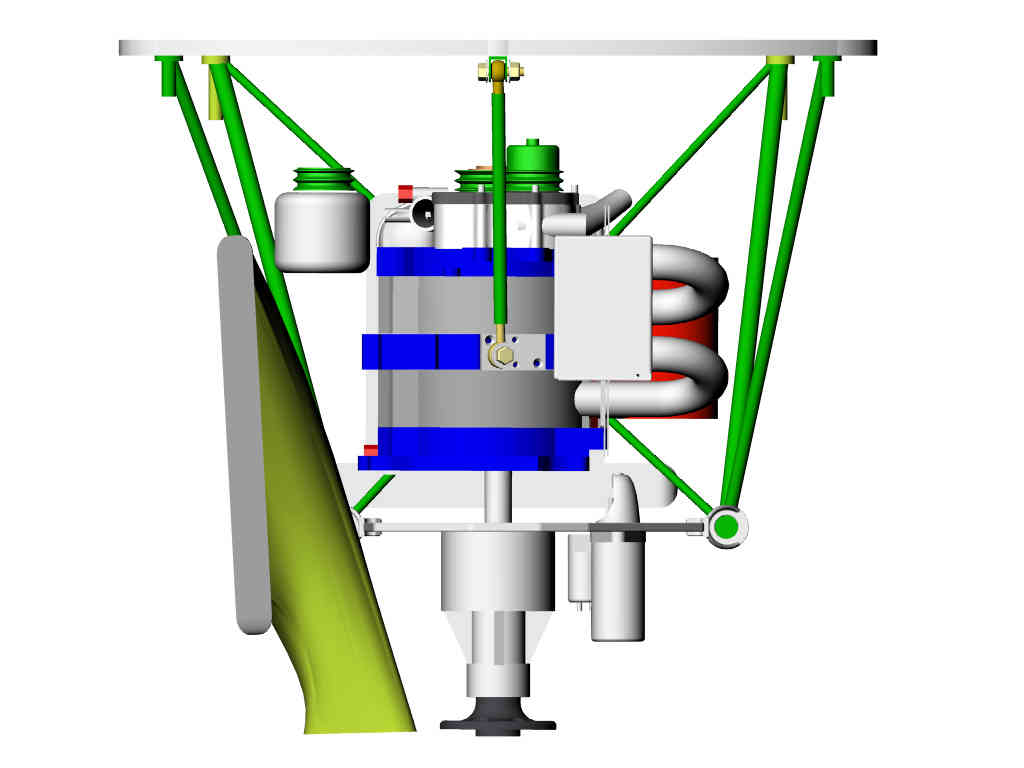
I'm attaching several photos which may help you visualize our situation.
1. We have built (see photos) mockups of significantly larger
radiators we'd like to have built hoping we can thereby increase the
cooling. The original "radiators" Jan used are actually Niagara oil
coolers. We've been told that a "true" radiator more efficiently
cools water than an oil cooler does.
2. We realize the larger radiators, which are wider and extend
farther downward, are going to present challenges to duct the intake
air over the entire face of the core.
3. Changing to a somewhat thinner core should enhance air flow
through core at climb speeds, so we are changing from 3 5/8 to 3 1/4
thick core.
4. If I read your book correctly, you indicate that will very short
fore and aft distances, the trumpet shaped intake air duct is not
advised unless we opened the inlet up and used a thicker core.
Do you think that changes such as this would have a hope of giving us
better cooling?
It appears that a more radical approach, ditching the original Egg
rads and engineering a belly-mounted radiator as you indicate on
pages 35 - 40 would cool better. I'm sure I and my partners would
prefer not to proceed on that route if the mods I've described would work.
Finally, it appears on page 69 you warn against using a coolant such
as Evans NPG+ because of its significantly lower heat transfer
properties compared to water/anti-freeze mixtures. As I mentioned
above, our friend flying the overheating Sportsman, is using NPG+. It
appears to me we could increase our radiator effectiveness by
switching to water/anti-freeze, but by how much I don't know.
Thanks for any suggestions you care to offer.
Dee Whittington
==========================================================
Soobs should not be that hard to cool. A lot depends on
one's gear box ratio. If it is say 2:1 and the engine
is rated at 200 HP at 6500 RPM you will not get 200
HP. If one's prop is about 70 inches in diameter
it is limited to about 2700 RPM which is far cry from
3250 prop RPM where max HP will occur. My guess on the
real HP is closer to 170. Heat rejected is directly
proportional to HP at the prop.
3.6 L times 61 is 219 cubes so it is not a really big
aircraft piston engine.
In addition I think they reject less heat to the cooling
system than a rotary. It also helps if you live in a northern
climate as a one percent F increase in ambient is a one
percent reduction in cooling for a liquid cooled airplane.
What you have does not look all that bad. I would fly what
you have first before ripping it all out and starting over.
Airplanes take a long time to build as it is.
So far Evans coolant has not hurt the rotary but the cylinder
head temperature of a piston engine is higher by about
100 F so you are taking a chance with Evans. The bottom line is
the metal temp between the intake valve and exhaust valve
within a mm of the combustion chamber. If it gets much above
500 F bad things start to happen. The critical place in the
rotary is just below the leading spark plug.
BTW we have a summer special on the book for $30 cash.
Paul Lamar
Paul & Dee,
I have seen several of the Egg/Sube installs including a good
friends RV-9. My comment is that all of these FWF installs
has one failing that I have noticed. The radiators are placed
such that there is very little clearance behind them. This
appears to be done to ease the packaging of the FWF package.
All of the liquid cooling NACA and war reports testing Paul
has published in the past has shown that the rear of the heat
exchanger is usually more important than the front. The wedge
diffuser info Paul has published shows the inlet can be fairly
restrictive IF there is about 4 [more] inches of clear air behind the
heat exchanger. All of the Egg FWFs violate this principle.
While this layout makes it easier to hang the radiator, it
seems that it would be a better idea to move or at least
angled to allow the air to exit freely.
Bill Jepson
Thanks so much for the replies, Paul and Bill.
Eggenfellner changed much about his latest designs. As far as I know
we have the latest version of the few 3.6L engines he sold. We
received it February, 2009. As you may know he has some 3.0L left,
but is focusing on a new 110hp Honda Fit engine now.
We are convinced we will have a cooling problem even though we
haven't flown yet. We have a friend in North Carolina (we are in hot
Richmond, Virginia) with the same Sportsman 2+2 kitplane and 3.6L
engine combo. He reports at 80F or higher his NPG+ coolant overheats
after the first take-off of the day, i.e., with a pre-heated engine.
He can keep the coolant temp down to about 220F if he lowers the nose
and gives up significant rate of climb. He installed the engine
exactly as supplied by Eggenfellner. He also reports no cooling
problems with the PSRU or the oil. So, although an engine of this
size may be easy to cool this particular installation is not
acceptable to either of us.
Data:
* 3.6L Eggenfellner Subaru engine has the G3 v4 PSRU: 2:01 gear ratio
* Quinti-Sensenich constant speed prop, 4 blades, 75" dia.
* Max engine rpm is 5400 since prop is redlined at 2700 rpm by Quinti
Yes, I suppose we could change to water/anti-freeze, with a 24#
pressure cap and try flying with the original Egg radiators. But, I
must say, with our friend's experience, it doesn't appear to be promising.
Therefore, our plan is to use water/anti-freeze, install larger,
"real" radiators. Jan uses oil coolers as radiators. We'll probably
widen and extend downward the two cowl inlet openings as well as
install a guide vane in each to help direct flow downward to the
extended radiators. We have gotten a quote of about $1000 for a
custom pair of genuine radiators which would be double the core area
(220 vs 121 sq in), but with somewhat thinner cores (3 1/4 vs 3 5/8 in.).
Bill, I'll attach a couple of photos of the clearances behind the
current Egg radiators as well as a shot of our engine with only the
right cowl half installed. And a fourth photo of the left inlet duct
of our friends Sportsman which is flyinig. With the thinner core we
are going to place them about 3/8" father forward). It appears our
rear clearances are definitely greater than those shown in the photos
you posted.
I really appreciate your input. We are trying to improve the cooling
so we have a plane which is flyable during the summer in Virginia. If
we lived in Alaska or southern Patagonia in Argentina, we'd probably
have few problems with cooling!
Paul, you are right about airplanes taking a long time to build. This
is our 7th year, but we are getting close. And, I now have three
partners in the project, so costs are divided by four.
Dee
I suspect it will be very difficult to improve the current
cooling system UNDER THE COWL. It appears the Soob is a much larger
engine in terms of volume compared to the rotary. It appears
to fill the cowl volume. It also has six exhaust pipes coming out of
the bottom. That almost precludes putting a large frontal area
heat exchanger flat under the engine.
The quick and simple system might be your best bet if you can think
of a way of running dual exhaust pipes around the sides.
Do you have any dwgs of the engine in terms of height width and
length? Also of the Sportsman cowl. Can you scan some of the
builders plans? If too big take them to Kinko's and have them
scan them to jpgs.
Lacking good 3 view dwgs take a hi rez picture from the side with
the lens perpendicular to the side of the airplane about
20 feet away. The height of the lens from the ground should
be about mid height of the cowl. If the wings are off
do the same thing with the fuse and engine rolled 90 degrees
for a top view. Same thing for a front view with the tail
up. We can then use those as a check on the dims.
Cowl on and off all pics with out moving the lens
for each view. Six total.
I'll do a quick 3D
How is the CG working out?
Paul Lamar
--
The Rotary Engine NewsLetter. Powered by Linux.
ACRE NL web site.
http://www.rotaryeng.net
Youtube key word PaulLamar2
Copyright 1998-2010 All world wide rights reserved.