I've obtained the airworthiness certificate for my RV-4,
I just need to get myself ready to fly it, if my volunteer
pilot can't make it out to do the first flight. I'm working
on my tail wheel endorsement and biennial flight review,
and have a line on getting some time in an RV-7.
It's a nice feeling having the plane sitting in the hangar
just waiting for me. It's only been 15 years in the making.
Brian Trubee
Congratulations Brian.
Paul lamar
Brian,
Congrats. You are going to love the RV-4!
I flew mine today for the first time in 4 months. I had a partial power
loss
back in March that really got my attention. A temporary loss in fuel
pressure. I've gone through the entire fuel system and haven't found an
explanation. So it was either time to sell the airplane or get back on
the
horse.
Been flying my glider quite a bit this summer. Forgot how sensitive
the -4
is! Little bit of PIO in both roll and pitch after takeoff. But it came
back
pretty quick. Before the -4 I had an RV-6A that I put about 150 hours on
so
felt like I was pretty well prepared for the -4 when I did my first
flight.
But the -4 is even lighter handling than the -6A was. Does take a little
getting used to such responsive handling.
I don't know what you are doing your tail wheel checkout in. Before
the -4
I
had a couple hundred hours in a Cessna 140 and about 20 hours in a
Citabria. The -4 tracks far better than either of those, but the
Citabria
sticks better. The RV springy gear can cause a bit of a bounce, though
no
worse than the C-140. It actually took a while to get used to the sight
picture in the landing flair because of the lack of a flat cowl against
the
horizon. Its definitely different flying without cowl cheeks!
Mike Wills
Mike, two pumps? Where are they mounted?
Brand of fuel pressure regulator used?
I assume you have fuel filters.
Has Dave Leonard looked it it with the cowl off?
Let me know when you will be in the hangar and I will
try to come down and have a look.
Paul Lamar
Paul,
Fuel system is I believe similar to what Ian Beadle in AUS had (is he
still
around?). Separate pump for each tank. Pumps mounted close as possible to
the tanks. Outputs T'eed together feed the fuel rail. Return through an
adjustable regulator (Aeromotive) and to an electric fuel selector so
return
fuel goes back to where it came from. Switching tanks also switches fuel
pumps.
Incident happened while in a 30 degree left turn (burning from the left
tank). The turn was coordinated. Tank was about half full (about 7
gallons).
Lost power and switched tanks immediately. Power was restored as the
engine
monitor triggered a low fuel pressure alarm. Flew back home (75 miles) on
the right tank with no problem.
I've checked everything over and done lots of ground testing without a
re-occurance. Needless to say the next few flight hours will happen right
over SDM.
Not sure when I'll be back out there to mess with it - it's the peak of
the
soaring season! Priorities.
Mike
Sounds like a slosh. It is amazing how fast a fuel injection engine
will quit with a momentary loss of fuel pressure. Probably best to
put a 1/2 gallon pressurized tank up on the firewall someplace. You
might climb up to 10,000 feet or so near an uncontrolled airport and
see if you can get it to do it again with a knife edge on the
half empty tank side.
I was flying a Mooney and the engine quit with a bang. It was so loud
I thought it was a mechanical catastrophic failure in the hand grenade
mode. Fortunately I was high IFR (I Follow Roads.) and near Lordsburg
Muni NM. Turned out the high pressure mechanical fuel pump failed. I
rented a C172 to get home and ironically the carb float sank around
Phoenix. Had to keep it running while pumping the leaning knob and
made an emergency landing. Bad day :) My now ex girlfriend (long
before Robin) never flew again :)
What kinds of pumps are you using? Make sure the built in one way
output valves are working. Probably a good idea to use external
one way valves as redundant back ups.
Paul Lamar
Mike,
I'll add my 2 cents worth if that's ok.
I was curious if you have fuel slosh doors built into your wing tanks?
My Lancair ES has those. Their purpose is to maintain an adequate fuel
supply in the first bay, even during uncoordinated turns.
They let the fuel into the bay, but shut if the flow tries to reverse and
flow outward. No fuel related issues in 3 years of flying. May be worth
considering.
Just a thought...
Mark S.
Mark, how is the EFI diagnostics coming?
What have we learned? :)
Paul Lamar
Mark,
Thanks for the input. My tanks are per Vans plans, i.e. no trap doors. The
ribs form the baffles with a 1" hole in the low corner to let fuel migrate
to the innermost bay. A temporary unporting of the pickup is the likely
cause, but I didn't want to believe it because this should have been a
pretty benign maneuver. A mild bank angle, coordinated turn in smooth air
with plenty of fuel in the tank. I'll have to think on the best (easiest)
way to engineer some sort of header tank that wont unport.
Mike
We have had some long discussions on this off and on for the past
12 years. A very important subject and the cause of many accidents.
A lot of EFI systems have rather large rubber lines. The rubber
lines expand under the 50 psi pressure and act as a small pressure
accumulator. That is assuming the one way valve built in to the out
let of the pump is working.
IMHO probably the reasons more low wing pilots don't
experience this is most A/C engines use carbs and the engine will run
momentarily with just the fuel in the float bowl. Might lean out
momentarily but that is about it. High wing pilots leave the fuel
selector on "both" most of the time. I slip the C182 in almost all of
the time in both directions and I have never had the engine stumble.
However I may never have had a completely empty tank on the high side.
If you are high enough to slip you are high enough to make
the runway with a dead engine anyway. Of course flight instructors
don't teach slips probably for this and other reasons.
Just a pressurized sump won't do it unless the pump feeding it can
suck and pump high pressure air. Some can and some can't. More on that
later. You will probably need a tiny vent line or needle valve to bleed
off the air back to a main tank.
If it is unpressurized the pumps have to go between the sump and the
engine of course. Then you will need low pressure pumps to keep it full.
It will have to be vented back to the main tanks.
Tracy's RV4 uses one tank to feed the high pressure pump and a low
pressure pump to transfer fuel from the aux tank to the main tank.
Not a bad idea but still will not address the slip
situation.
You could put a rubber bladder inside the 1/2 gallon
pressurized sump tank and fill it with 30 psi or so. The pump
will compress the bladder and increase the pressure. The other
way is make it a cylinder with O-rings and put a strong spring
on top of the piston. Something like four inches in diameter
eight inches high. 10 gallons an hour.. 1/2 gallon.. 1/20th of
an hour or 3 minutes.
Just an idea.
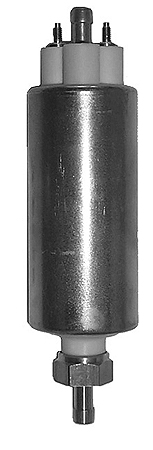
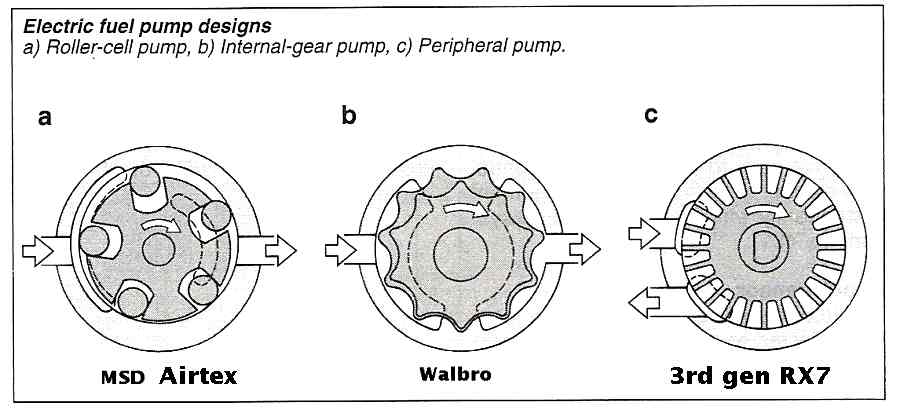
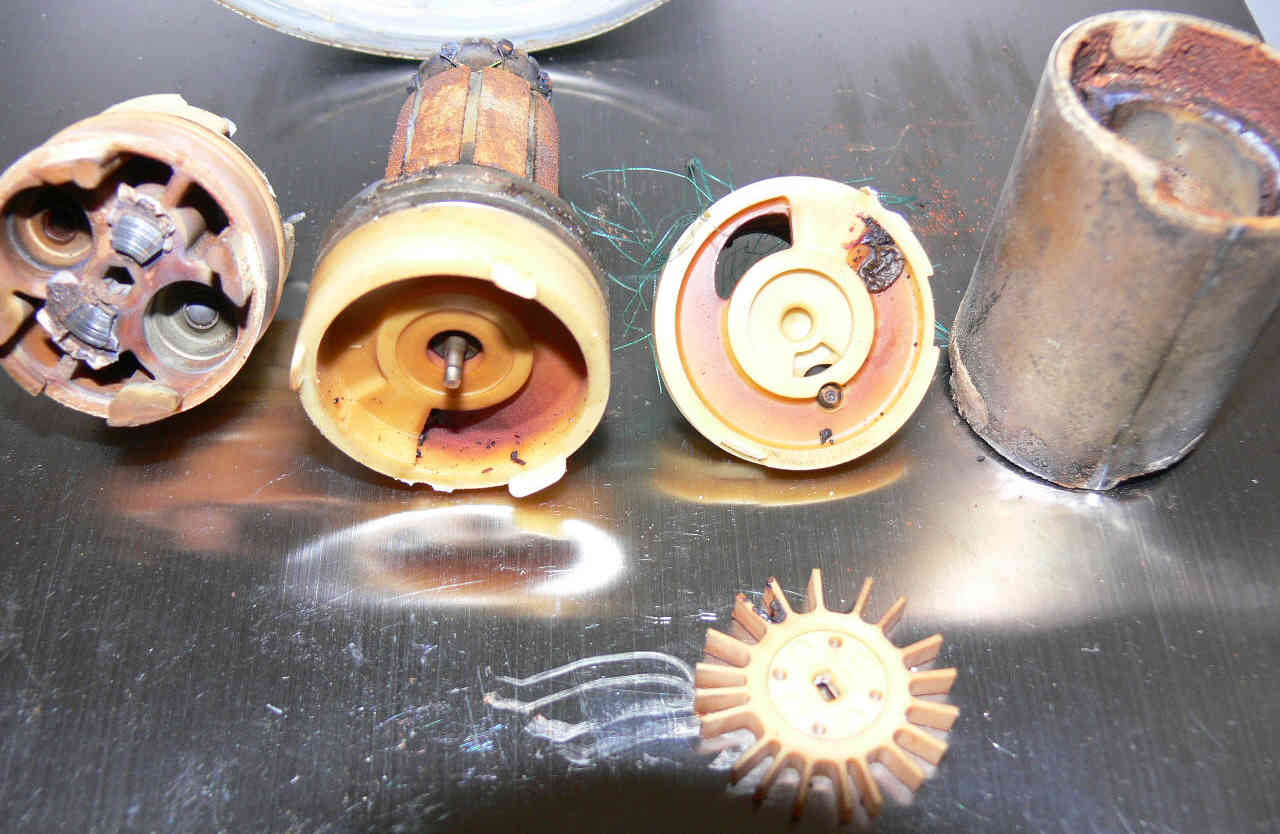
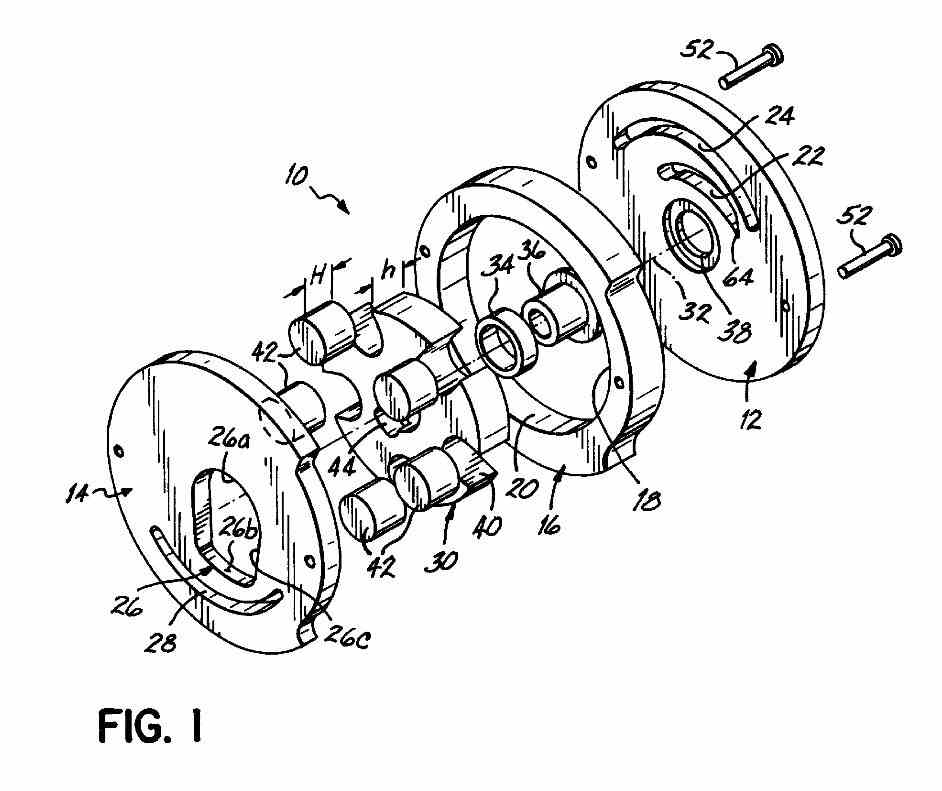
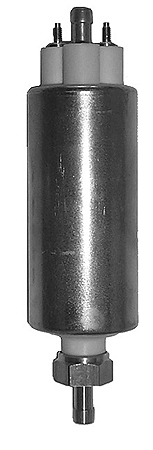
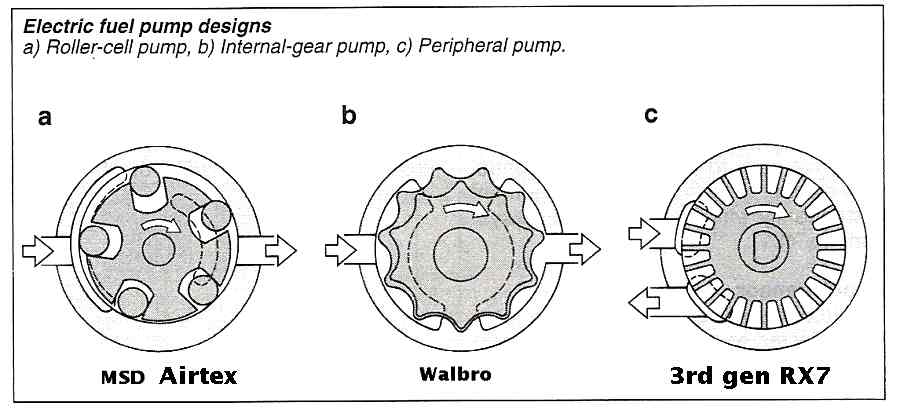
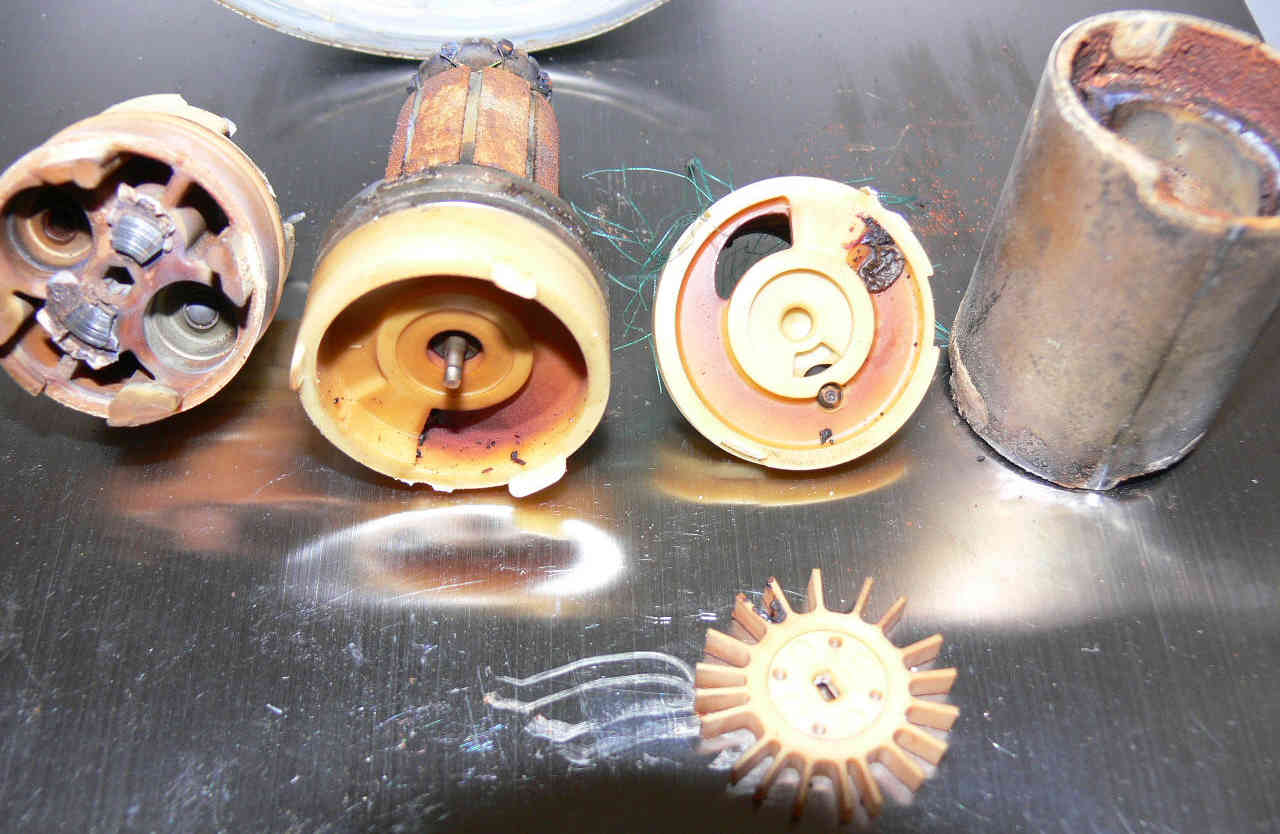
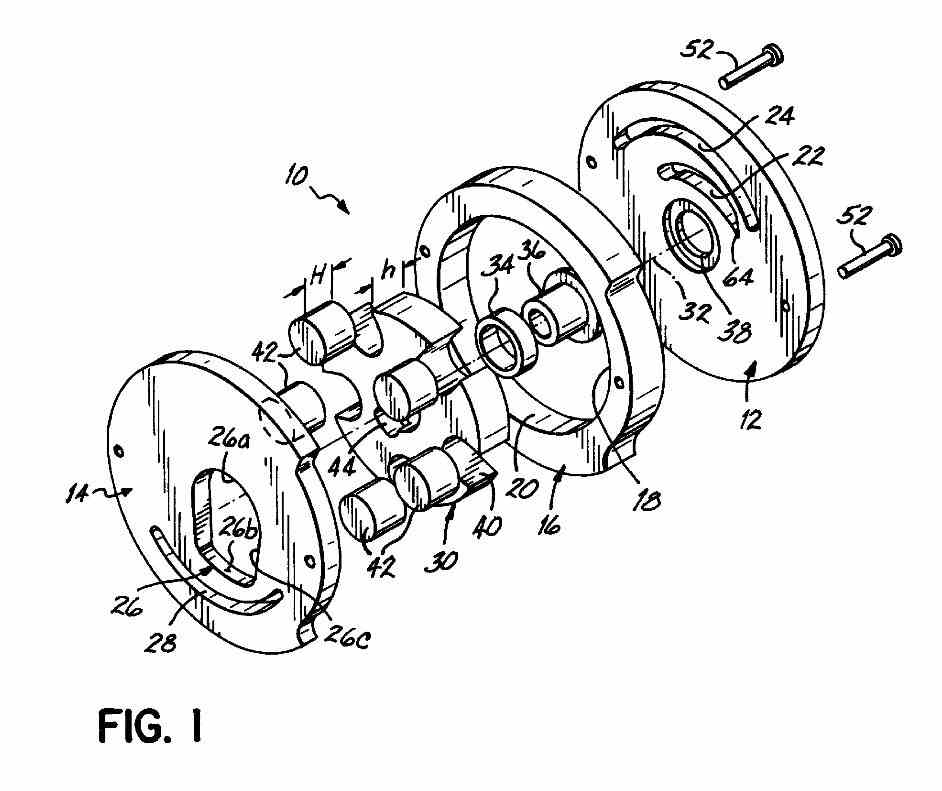
Here is some info on EFI pumps. I like the Airtex.
Surprisingly it is the cheapest of the three. The GM/Mazda
will not suck well and is designed to go into the tank and
be immersed in fuel.
Bottom line EFI systems will quit lickity split under a momentary
loss of fuel pressure with solid lines :)
Paul Lamar
--
The Rotary Engine NewsLetter. Powered by Linux.
ACRE NL web site.
http://www.rotaryeng.net
Youtube key word PaulLamar2
Copyright 1998-2010 All world wide rights reserved.