Seems like there are a lot of inductive coil
systems out there with the switching transistor
built in requiring a dwell time. LS1 is an example Timing
gets a little critical with a 5 ms dwell time at 7500
RPM and above. The RX8 coils are proven to handle
9,000 RPM so that would be my choice.
One definitely needs a computer to handle the situation.
ZBasic has a small, cheap single board computer that could
handle the job. The RX8 trigger wheel off loads the software
to a certain extent as it has both a missing tooth
at top dead center for rotor one and one at top dead
center for rotor 2 unlike the Ford EDIS system. However
that scheme puts a burden on the software to determine
which is which. In theory that job could be done in
hardware I guess. I don't envy Tracy doing it in software.
My choice would be to use two magnets rotating
in different parallel plains 180 degrees apart
and at least two Hall Effect sensors. One for
rotor 1 and another for rotor 2 TDCs. That greatly
simplifies the software situation and gives
the processor more time to deal with the dwell
problem. This is the approach Klaus has taken
for his CD ignition system.
At this point in time there appears no way
around knowing the engine RPM so the
computer can calculate when it is time
to fire the coils and give them enough
dwell so to speak.
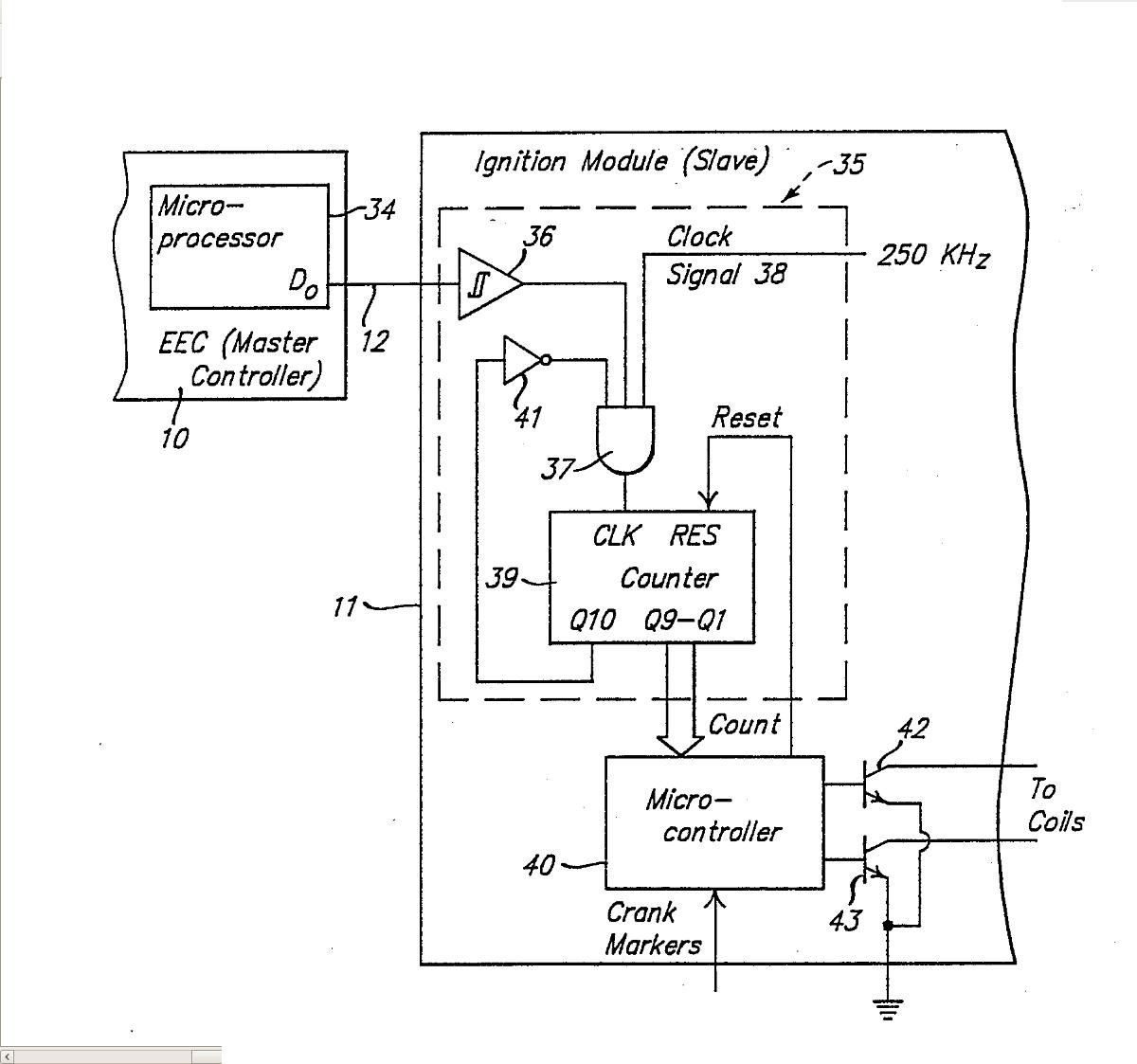
The early Ford EDIS system uses a fixed frequency 250KHz
oscillator to give a time count between the tooth
interrupts that come in every 10 degrees from
the 36 tooth trigger. Its a great idea and I see
why they patented it. The slower the RPM the greater
the count. The 250Khz clock pulse increments the
time counter every .000004 seconds or 4 usec if my
math is right. It is a nine bit counter so it
counts to 512 before rolling over. Times 4 usec or
2048 usec or about 2 msec. What a coincidence with
the required dwell time :)
Since 7500 RPM is 125 pps. That
works out to one rev in 8000 usecs or 8 msec
and each tooth goes by every 222 usec they
know when to start the dwell. The accuracy is
is one part in about 50 parts at 7500 RPM.
Beats trying to determine the RPM by counting
only 36 teeth in a given time period. Sort of sounds
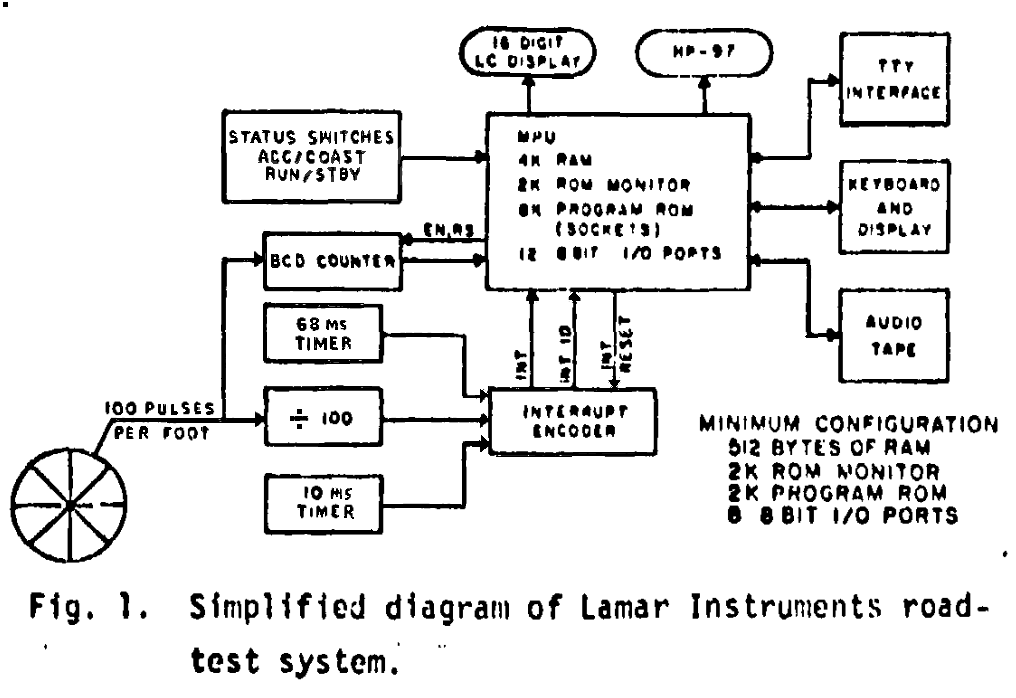
like my old road test system done in 1979.
http://www.rotaryeng.net/IEEE-road-test-sys.pdf
Since I published it in the IEEE transactions
maybe some one at Ford read it :)
Paul Lamar
--
The Rotary Engine NewsLetter. Powered by Linux.
ACRE NL web site.
http://www.rotaryeng.net
Youtube key word PaulLamar2
Copyright 1998-2010 All world wide rights reserved.