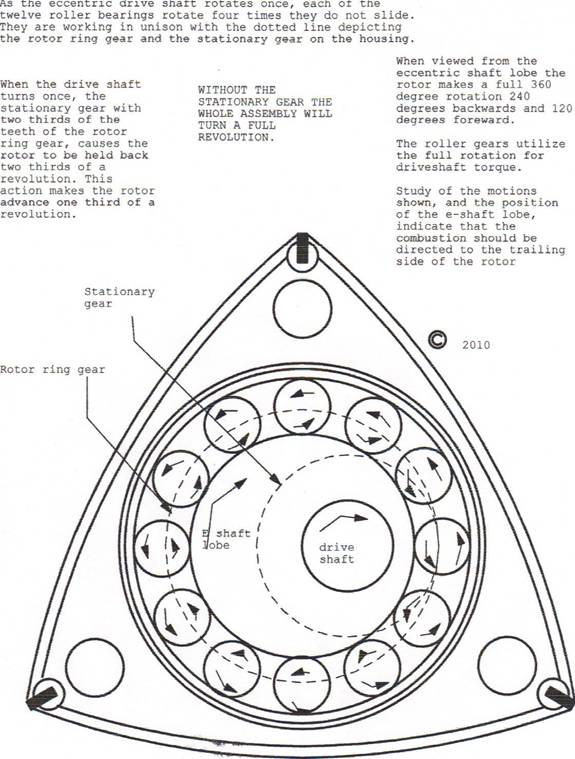
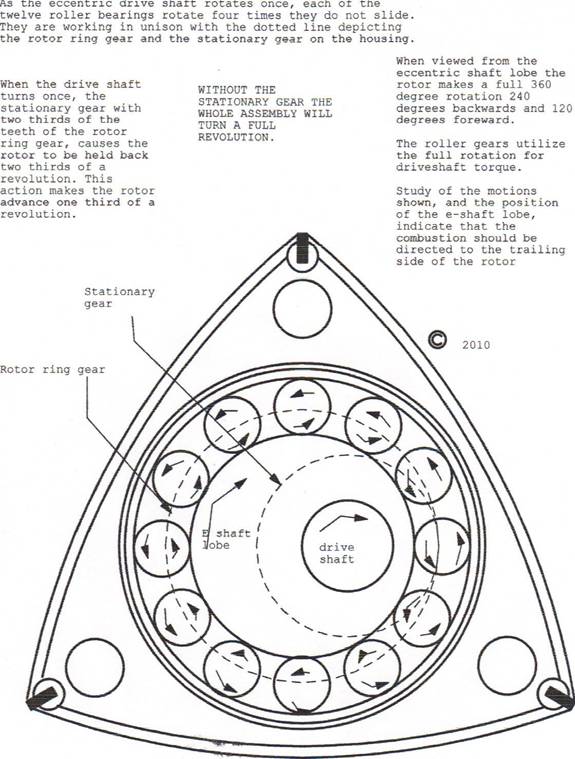
Please look at the following sketch.
NTSB Identification: CHI08LA274
14 CFR Part 91: General Aviation
Accident occurred Wednesday, September 03, 2008 in Findlay, OH
Probable Cause Approval Date: 3/23/2009
Aircraft: Sadler Vampire, registration: N333SV
Injuries: 1 Minor.
CHI08LA274
On September 3, 2008, at 1257 eastern daylight time, a Sadler
Vampire, N333SV, received substantial damage on impact with
terrain during a forced landing and a post crash fire. The
airplane experienced a total loss of engine power after takeoff
from Findlay Airport, Findlay, Ohio. Visual meteorological
conditions prevailed at the time of the accident. The 14 CFR
Part 91 flight test was not operating on a flight plan. The
pilot sustained minor injuries. The local flight was
originating at the time of the accident.
Post accident disassembly of the installed Rotamax 1300CG engine
and reduction drive assembly was conducted under the supervision
of the Federal Aviation Administration. During the disassembly
of the reduction drive assembly, multiple bearing failures were
noted. The reduction drive assembly was then shipped to the
National Transportation Safety Board Materials Laboratory for
metallurgical examination.
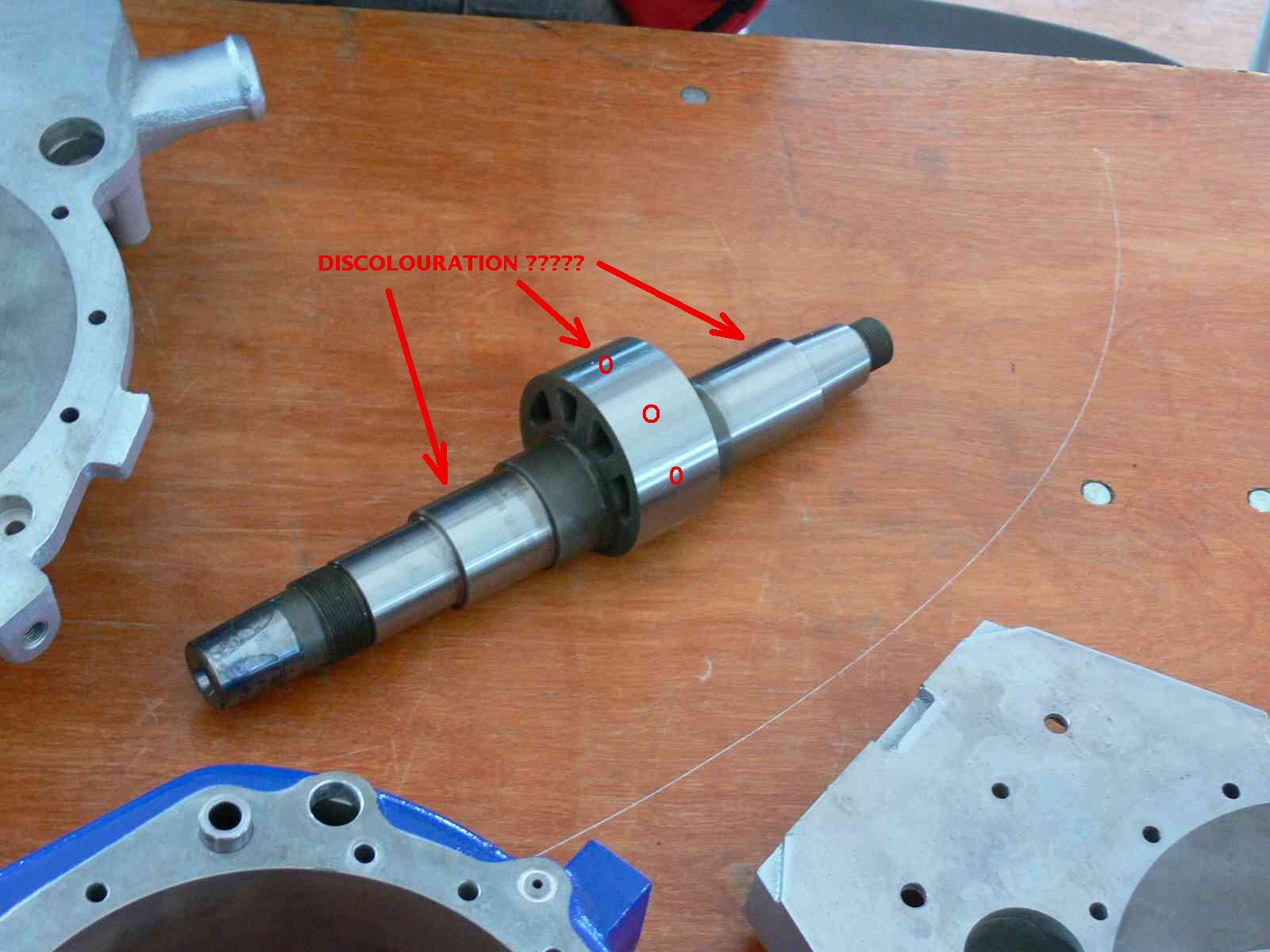
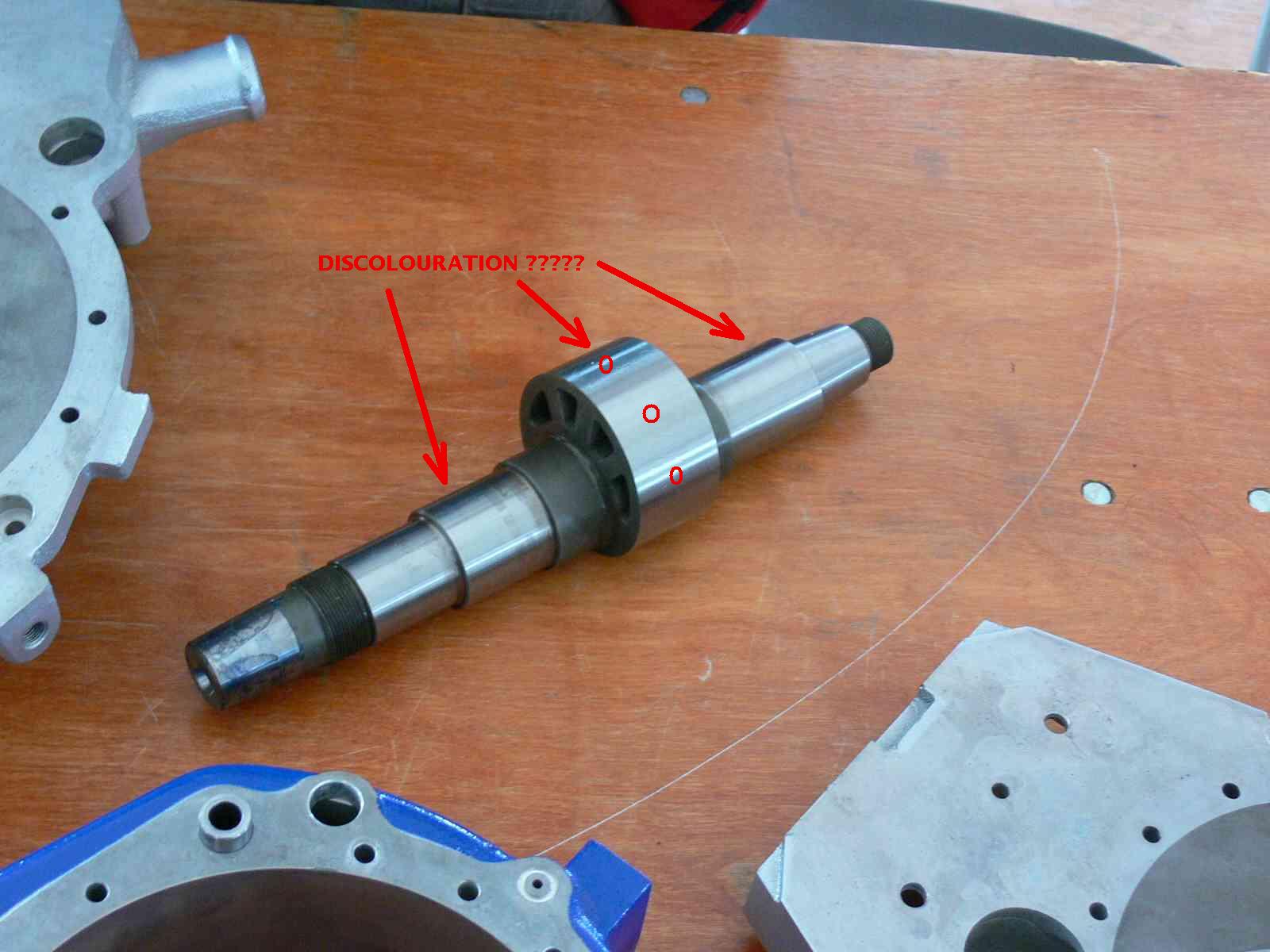
The metallurgical examination revealed one end of the rotor
bearing journal exhibited a dark and discolored surface relative
to the opposite rotor bearing journal on the shaft. Light
colored lines from the needle rollers were visible on the
surfaces of both rotor bearings. There were no indications of
deformation (brinnelling) by the rollers on the inner raceways.
Closer examination of the discolored rotor bearing journal
revealed metal transfer on the bearing surface and pitting on
one location. Similar light colored lines from roller bearings
were noted on the main bearing journals.
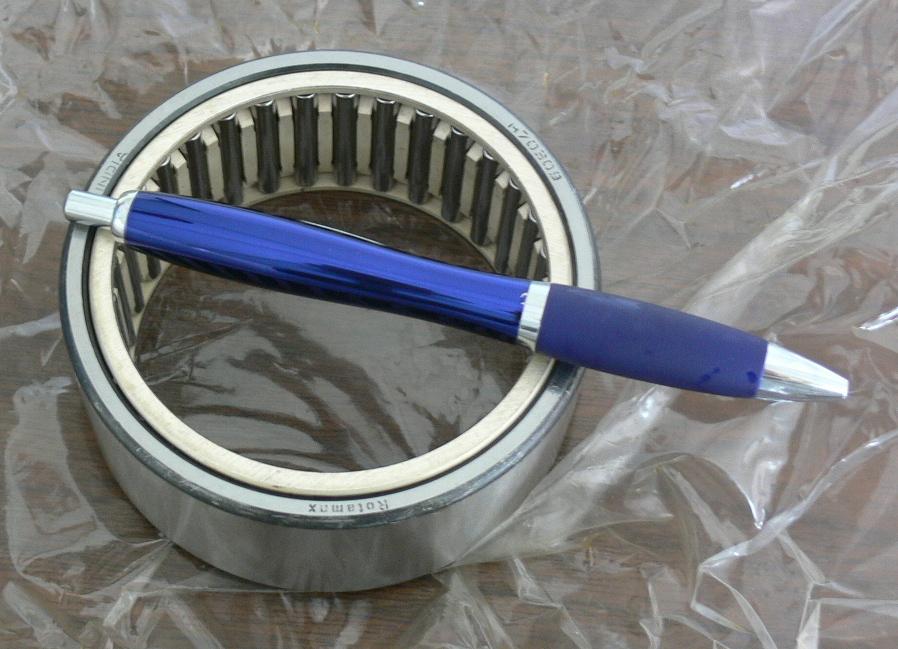
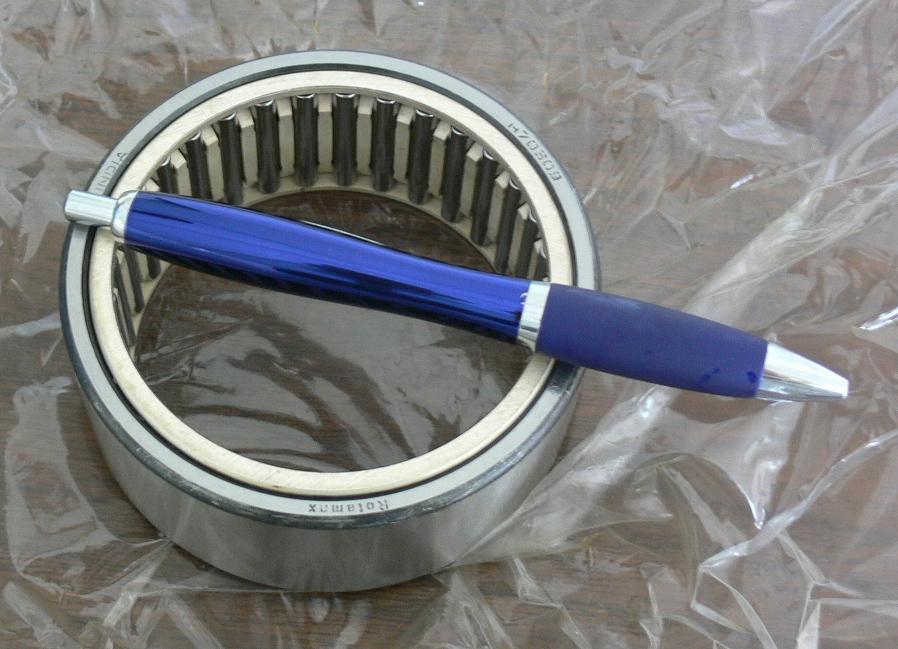
The complete circumference of one of the sidewalls had separated
from the rest of the needle bearing cage. Upon removal of the
sidewall, four needle rollers fell out of the cage due to damage
and plastic deformation to which the cage had been subjected.
It was not apparent whether this damage occurred before or after
the sidewall separated from the cage. Small shards of metal
were found on the rollers and the outer raceway. The outer
housing was discolored on the side with the fractured cage
sidewall and around the oil hole in the middle. A piece of
metal debris was found inside the oil hole.
The needle rollers showed signs of abrasive wear and damage to
the ends of the rollers. A typical needle roller exhibited
abrasive wear by third body particles at an end which was
adjacent to the fractured cage sidewall. The diameter of the
needle roller on this end is also reduced relative to its
opposite end. A random sampling of five rollers produced an
average reduction in diameter of 0.0064 inch +/- 0.0007 inch.
The ends of the rollers next to the fractured cage sidewall were
concave in profile with buildup of material around the edge.
The opposite end of the roller ends possessed rounded edges.
The fractured sidewall of the cage had concentric abrasion marks
coincident with the location of the needle rollers. In between
the rollers it appeared that two fractured ribs had been
plastically deformed and pressed against the cage sidewall. In
another location, there appeared to be buildup of metal debris
on the fracture cage sidewall.
Two ball bearings within the assembly had seized. The balls in
one raceway of the double row ball bearing were clustered
together creating an approximately 120 degree included angle of
raceway in which there were no balls. There was no readily
visible evidence that would explain the seizure of these
bearings. Most of the bearings, once wiped of residue showed, a
typical lightly scratched finish with some discoloration from
heat from post crash fire.
End of NTSB report.
Note that a random sampling from the of five roller bearings from the rotor
or rotors produced an average reduction of .0064 inch in their diameter.
THIS IS HUGE!
This is an obvious explanation of the prior heating problems. If the rollers
are .18" diameter they would be attempting to turn the rotor backwards eight
ninths of a revolution every e-shaft revolution. The friction caused the
bearings to heat up bind and jamb the engine causing the PSRU to
disintegrate.
I am concerned about others not surviving similar incidents.
The Mazda engine has an e-shaft lobe of 2.91 inches. Therefore a proper
bearing must have the inside of the outside race with a 4.365 diameter. The
rollers should be a .7275 inch diameter. This configuration makes the
rollers into roller gears that turn the rotor two thirds of a revolution
backwards, as it orbits around the center of the e-shaft once causing a one
third rotor advance.
Kenneth McKenzie
Mazda engines do not have roller rotor bearings.
They are pressure fed plain bearings. Rotor bearing
problems are unheard of below 10,000 RPM in Mazda
engines. Also cooled engine oil is circulated through the
reduction drive.
500 single rotor air cooled rotor bearing Austro engines have
been sold for motor gliders. They DO have roller bearings and
1000's of flight hours have been accumulated. Roller bearings
are selectively fitted in Austro engines. Max engine RPM is
held down to about 6500 RPM.
The NTSB report above is ambiguous. They talk about
sending the reduction drive out for analysis and then they
talk about the rotor roller bearings.
Where in the report above do they mention a complete failure
of the reduction drive?
Since the oil was mixed with the fuel to lube the rotor roller
bearings no provision for cooling the oil in the reduction
drive was provided. Therefore I am not surprised the bearings
in the reduction drive failed. Typically charge cooled rotary
aircraft engines use belt drives.
I am also not surprised the rotor roller bearings also failed
as a critical feature was missing in the Rotamax. Namely small
holes in the e-shaft eccentric necessary to get oil to the roller
rotor bearings.
Rotamax was not fourth coming with any problems
that they had. In fact they never admitted to any problems
at all. Perhaps we could have come up with solutions
to these problems if they were more open. They did not have a
competent engineer on staff. Rotary engines are harder to make
than they look.
However this is typical of the NTSB. I would take what ever they say
with a grain of salt. I consider them incompetent. Not the first
time we have had nonsense from them regarding rotary engine
crashes.
Paul Lamar
The Rotary Engine NewsLetter. Powered by Linux.
ACRE NL web site.
http://www.rotaryeng.net
Youtube key word PaulLamar2
Copyright 1998-2010 All world wide rights reserved.