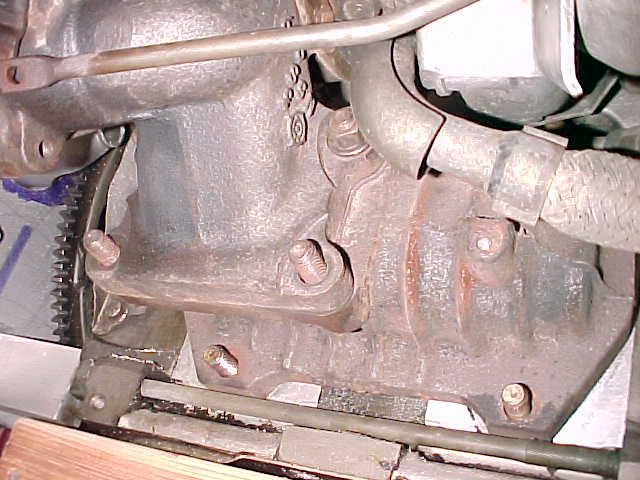
Well, I am pleased to report that my turbo, stock housing with TO4
wheel and 60-1 compressor with a fixed open waste gate has lasted
over 230 hrs without a single problem. The solution to good enough?
Make it better. I just finished my annual during which I upgraded
my turbo to a similar TO4 big shaft wheel, but now it has a TO4E 50-
trim compressor and the wastegate flapper and actuator are back in
place. Why the change? Either I am a glutton for punishment or I
am starting to pin down this turbo issue. For those of you not
familiar with my turbo history, here is a quick recap:
First turbo - the stock second generation with waste gate flapper
installed, ridden hard and put away wet... it was run at full
throttle at high altitudes, often at peak EGT. It lasted 70 hrs
before the turbine wheel fell apart and broke off. The thought at
the time was that the stock turbo was just too small for this heavy
duty abuse and was overspeeding at altitude.
Second turbo - small shaft TO4 wheel with 60-1 compressor and
removed waste gate flapper. It was also run mostly at peak EGT but
the power produced was somewhat lower because of the bypassed
exhaust. It lasted about 140 hrs until it suffered the same fate as
the first turbo while I was in a long full power decent (read extra
high RPM and EGT's). My thinking at this point is that the high
EGT's are primarily the problem.
Third Turbo - The one I just removed after 230 hrs. Same
configuration as the second but I kept the EGT's under 1600, mostly
as lean as I could while keeping the engine running not too rough.
It was also run at pretty low pressure ratios. It could only make
about 38" MAP on take off and about 40" at full bore down lot. At
16k altitude it was down to about 22". My curiosity now is weather
I can perhaps increase the boost and continue to have the turbo last,
as long as I keep the EGT's under 1600. I know, glutton for punishment...
Other issues..
Lean of Peak operation. During the turbo change I discovered that
my stock cast iron exhaust manifold had developed a number of
serious cracks and some advanced erosion. Much of the
erosion/oxidation was near the mating surface with the turbo and it
had started a small leak. My concern is that all those hours of LOP
operation allows too much oxygen into the exhaust to promote to
oxidation and accelerates the problem. The question is, should I
start running rich of peak to prevent rusting away the exhaust
system components? ROP operations also allow me to keep even lower
EGT's (for the turbo) and smoother engine running (for the wife).
Turbos and exhaust components that I get from cars usually have the
appearance of being run rich, rather than the dry orange color of
the inside of my components. The only obvious downside is the
obvious much increased fuel usage. I think that for the next couple
hundred hours I have going to have to bite the bullet and fly ROP
(while at higher power settings). Thoughts?
S.A.G. is really baffling. Spark plugs only seem to be lasting 20-
30 hrs before SAG starts kicking in. Noted by a distinct and marked
loss of power as I cross through about 1500' AGL after take off.
The problem is usually intermittent and mildish at first becoming
more consistent and remarkable as the hours accumulate on the spark
plugs. The problem is always solved by changing out the spark
plugs. I am switching to colder platinum plugs in order to try to
get them to last longer. Perhaps running ROP will help them last
long too?
Time for a new Prop? On a test flight yesterday, the engine was
running great. No SAG. At 7000' and 33"MAP I was at 6500 RPM,
about 1/3 throttle and doing 175 KTAS [201 MPH]. It is a 64
length x 77 pitch 3-blade Cato, but that is more like an
effective pitch of closer to 71". I seem to remember being able
to get closer to 185 KTAS [213 MPH] at 6500 RPM in the past on
the same prop but I did have a little taken off because of the
low output of the previous turbo. After some more experience I
may discover that it is time for another new prop. Might soon
contact Paul Lipps, I liked his article in the last issue of
Contact! mag. If that is my worst problem, I am going to be
pretty happy.
Doing some formation flying with the guys next week that may make
its way into a movie...
Keep building!
--
David Leonard
Turbo Rotary RV-6 N4VY
http://N4VY.RotaryRoster.net <
http://n4vy.rotaryroster.net/
http://RotaryRoster.net <
http://rotaryroster.net/
I really appreciate Dave's persistence on exploring
turbo charged rotaries in aircraft use.
The turbo life issue is not only the EGT it is the turbo RPM as well.
If the RPM is high enough the blades will disintegrate regardless
of the turbine inlet temp. The load on the blades is M times V
squared divided by R. V is the the tangential velocity of the blade
CG. M is the mass of the blade. R is the radius of the blade CG. All
rotating device suffer from this problem. As the temp goes up the
strength of the blade material is reduced. At 1600 F strength of
exhaust valve steel is down to 5000 psi which is next to nothing.
See the attached chart. Epoxy resin is 3000 psi :)
Here is a chart from Caterpillar on the situation. The turbine
MUST be kept within the limit lines of both temperature AND rpm.
I have repeatably tried to get Dave to install a Garret turbine
RPM kit. In fact I will buy it and send it to him. No luck
so far. If you send me the compressor Dave I will install
the RPM sensor for you and send it back as well. Perhaps Zack can
convince him :) We need to know the turbine RPM!!!!!
Somebody needs to try a Capacitor Discharge ignition system
to further investigate the spark plug "sag" problem.
Inconel is probably the only answer to high temp corrosion
of ferrous materials. I have seen many cracked cast iron
turbo exhaust manifolds.
Paul Lamar
Hi Dave,
Auto OEM "wisdom" dictates running rich while boosted to prevent
detonation.
Also autos are regularly being accelerated off lights etc, which will give
the
black soot.
How would ceramic coating the turbine housing work to keep heat out of the
metal? You would have to compensate for the thickness of the ceramic at
the
mating surfaces or have them masked off so you do not coat those areas.
Dale Davies
Dave,
What is your new turbo make, number and trim? Same as the Cozy
Girls but with a built in waste gate? I have a similar cast
iron manifold as yours and you are welcome to have it. That
will get you in air fast. A better long term solution would be
if I donate a custom fabricated exhaust manifold to your
cause. I can with your dimensional assistance design and
manufacture a stainless 316L with altered pipe ells, It would
have a tangential junction connecting both runners so that an
external wastegate could divert the exhaust flow BEFORE it hit
the turbine. It will be more robust and lighter than the Mazda
cast iron manifold you are now using. Paul can attest to the
quality of the welds at the shop near me. Most of their works
is fabricating exotic alloys and they can guarantee fitting by
using my 13B assembled engine.
In return I as well as others need flight data. If you can fly
to at least 18k, and cruise rpms near or over 6K engine rpm
then the data you collect will be invaluable for not only my
project but scores of turbo rotary want- to-be's. Paul will
lend you a turbo tach and I believe a few of us could cobble up
a ten channel flight recorder so you don't have to take notes.
What do you say?
Doug in Japan.
Now that is an offer you should not refuse Dave.
Doug's shop is second to none.
3/16th inch thick 316 SS plate is ten times better than cast iron.
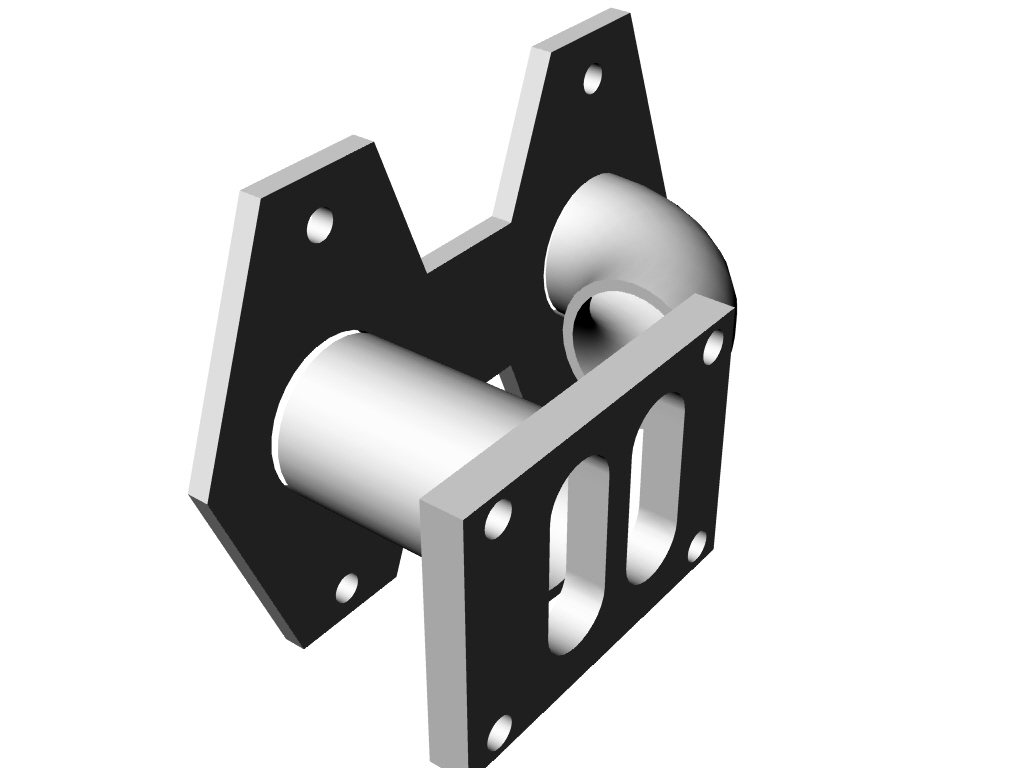
Here is a simple design that will divert the exhaust
gas before it reaches the turbine. The is the ultimate waste
gate. Zero to 100%. This 3D could be dimensionally interchangeably with
the stock cast iron 1990 manifold Dave is using now. Same
dimensions.
Paul Lamar
HI Doug,
Wow, that is quite an offer and I am inclined to take you up on it if you
really want the data that badly, but I don't really need anything for the
time being (and IMHO, turbo tach data will not be particularly useful to you
either). But first to answer your questions.
I am using the stock series 5 housing and That is the ONLY thing that will
fit. Really, I have tried everything. My clearances are very tight and
changing one little thing cause a ripple effect that could keep me grounded
for a year or more. Simply nothing else will fit. Not even Pauls manifold
and wastegate above - the exhaust pipe from it would pass through my
radiator...
So given that I am stuck with the stock series 5 manifold and housing, it is
ported larger to fit a big shaft turbine with and aggressive trim (not sure
which one) Compressor and housing can be changed out to almost any of the
TO4 compressors. I had some nice pictures showing my mods to the turbo, but
just accidentally deleted them trying to move them to my computer.
Anyway, the manifold cracks are not a big deal. I had a couple of spare
ones sitting around for just this occasion, and it could still probably be
used for many more hours. Though someday I may change it out for a SS
manifold of the exact same dimensions. In fact, if you think your shop
could make me an essential copy of the stock series 5 turbo exhaust manifold
(89-91) then I would be glad to install Pauls turbo tach and get you all the
data you want. But I think it needs to be smooth flow, not a box type. Box
is likely to cause unacceptable back pressure. Internal pipes would
probably need to be supported by some sort of box, as the turbo has no other
support. No need for a wastegate, as there is no place for me to send the
exhaust. I am stuck using the stock (but ported) internal wastegate.
That is a pretty big and difficult project (would cost me a pretty penny for
such a custom manifold) and I don't think it is worth your while. Let me
explain. We have turbo maps that give us a very good approximation of the
turbo speed for given conditions. Paul argues that there are too many
unknown factors in the mass flow so the maps are not that accurate. Ok
fine. But suppose the map predicts that the turbo is turning 90k RPM and
the tach shows it turning 100k. (the difference is unlikely to be
particularly large) What now? We don't really know where we should be
drawing the line for continuous operation because it is a gray area trade
off between performance and durability. Maybe you could fine tune your
compressor selection a little, but I am already running the biggest (slowest
turning) compressor that matches the mass flow that I can find. There are
bigger compressors, but they require much higher mass flows.
And if we do collect data, it really tells us more about the unknowns of my
system (like volumectric efficiency and intercooler pressure drop. etc) than
helping you design your system. And those unknowns are going to change
between particular installations.
None the less, if you are still interested, I would love to have a nice
custom SS manifold and as soon as it is done will fly up and "let" Paul help
me install the turbo tach and come along to collect data if he wants. (or I
can do it myself, it is not hard to collect data). One thing, since I cant
really run WOT with this turbo anywhere close to the ground (if at all) (it
would over boost the engine), we really need to also measure the pressure
upstream of the throttle body which will require the borrowing and
installing of a manifold pressure sensor as well. (not a huge issue)
--
David Leonard
Turbo Rotary RV-6 N4VY
http://N4VY.RotaryRoster.net <
http://n4vy.rotaryroster.net/
http://RotaryRoster.net <
http://rotaryroster.net/
The turbo tach is NOT about turbo performance.
The turbo tach is NOT about boost level.
IT IS ABOUT STRESS ON THE BLADES.
Stress = M X V squared over R.
R is one M is one. 90K RPM squared is 8,100K.
100K RPM squared is 10,000K RPM .
10,000 divided by 8,100 is 24% more stress on the blades!!!!!!!
Small increases in RPM makes a huge difference in stress!!!!!
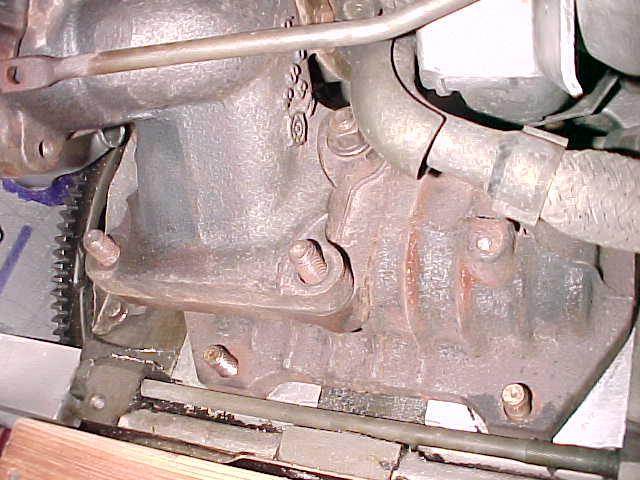
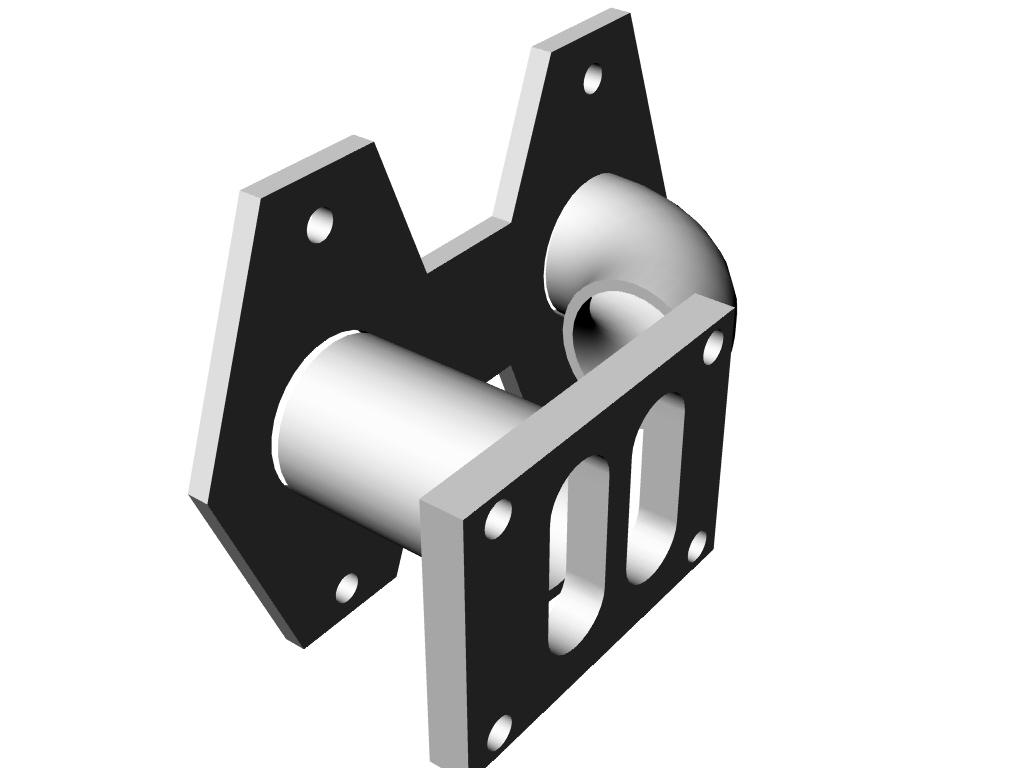
The stock 91 manifold has the turbo located in a asymmetric
location and just about 4 inches from the face of the rotor
housings. The diameter of the exhaust ports is 2 inches ID.
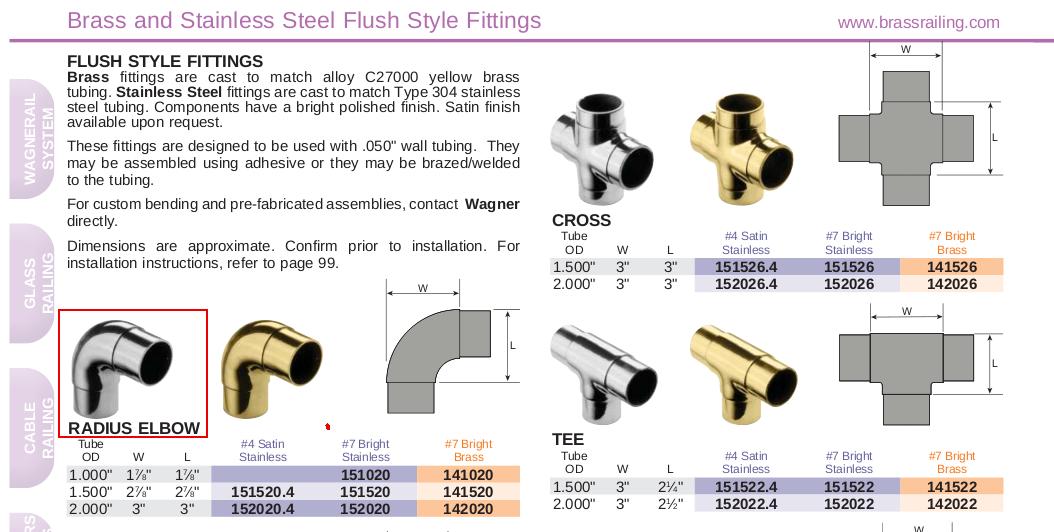
Assume for the moment we used the tightest tubing bend
we can find. That would be a 304 stainless railing casting
From RB Wagner. The center line radius is 2 inches.
As you can see from this to-scale-3D it is just not practical.
What ever you build it will turn into a box like
chamber and that is the reason Mazda did it that
way. There is just no room for a streamlined turbo
manifold that fits the stock turbo position.
Perhaps it could be done with a SS casting but the pattern
alone would cost thousands and the length of the runners
would be drastically different.
Perhaps it could be NC machined in two pieces of billet SS
and welded together but that would also be rather expensive
and the runner length would still differ.
Paul Lamar
--
The Rotary Engine NewsLetter. Powered by Linux.
ACRE NL web site.
http://www.rotaryeng.net
Youtube key word PaulLamar2
Copyright 1998-2010 All world wide rights reserved.