RV-4 #2366, tail # N52BT made it's first flight today. It didn't make
enough power , so only one lap of the traffic pattern was made before the
pilot
landed it. From a standpoint of flying qualities, it was just like any
other RV-4s- no out of trim conditions or other bad habits. No note was
made of
MP at WOT, either on the ground or in the air, that's first on the agenda
tomorrow.
But-- I only revved up to 4800 rpm on the downwind, so th
e flight was
terminated. I have gotten 5500 on the ground with the cowl removed, which
means
the air cleaner was not in use. I am using a Fram paper filter, 6 inches by
14 inches. I think I am getting a big restriction from it, so I will
remove it and try some ground runs. I also think I'm running way too rich,
about
34- 7/8s up the scale on my EM2.
Brian,
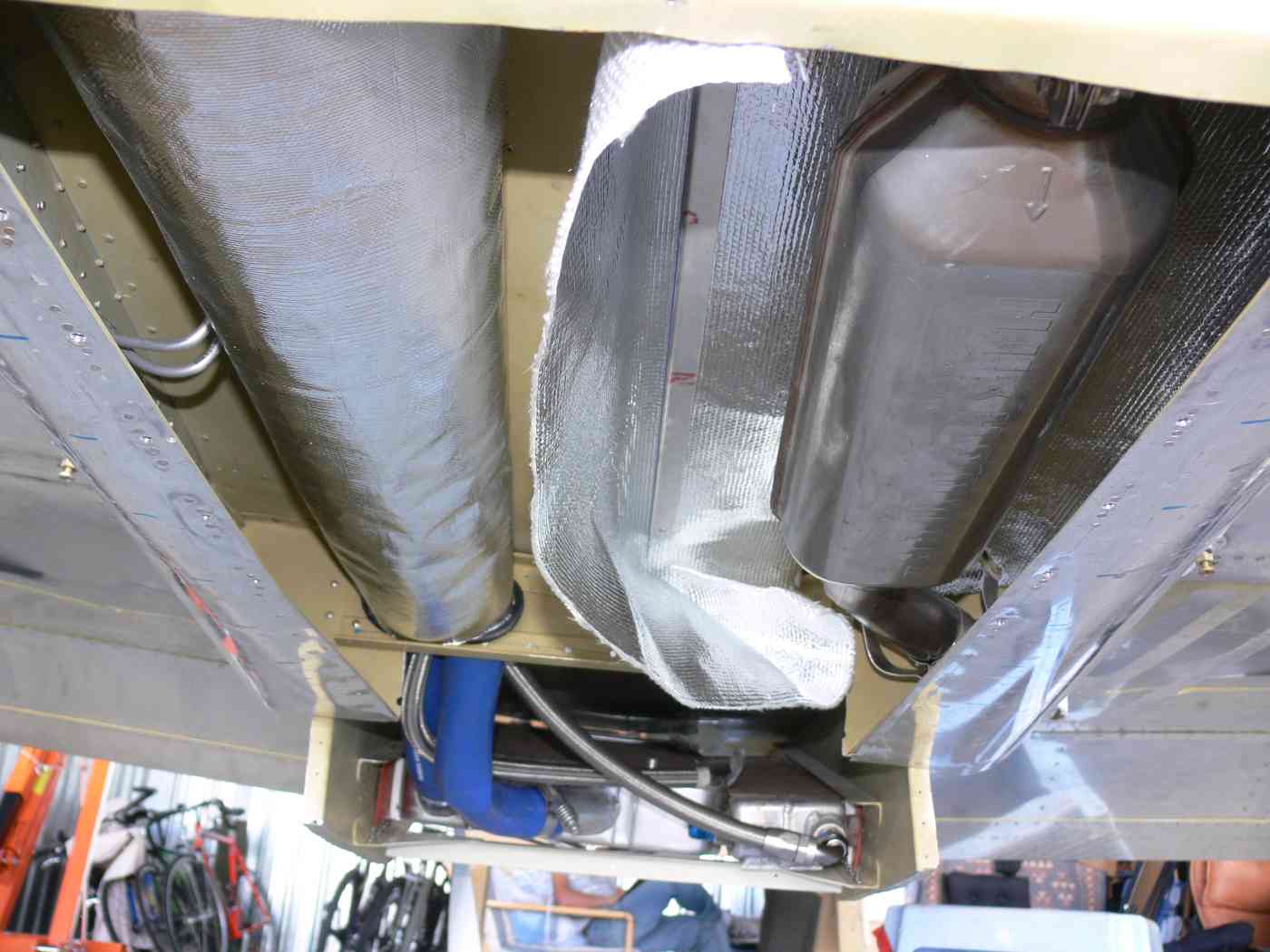
I'm trying to figure out an exhaust for my RV6 and was wondering what you
have under that heat shield.
Thanks
BrianG
Iowa
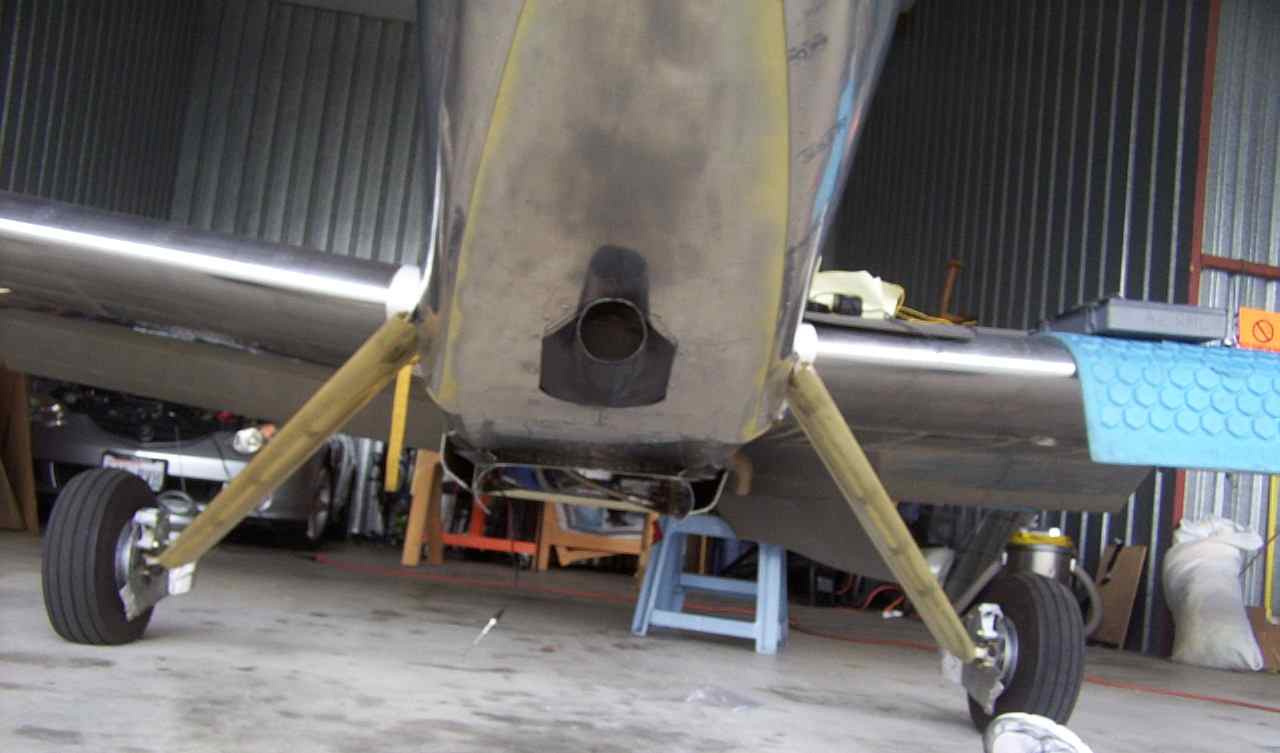
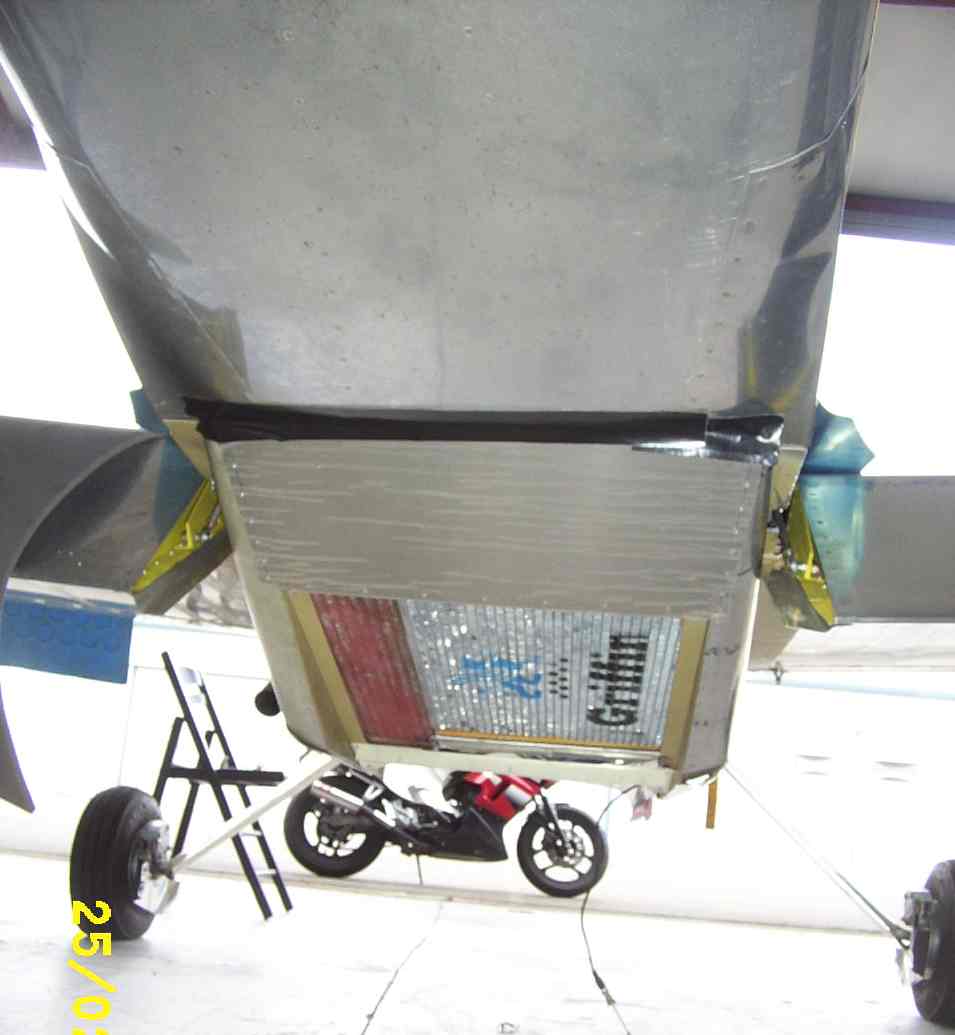
Here are some recent pictures I have.
Looks like a Hush Power formed stainless steel.
These are turning out to be more durable than your average
muffler used on rotary engines. I think it is due to
a more uniform temperature gradient around the front
of the muffler. Less likely to crack in this area.
They are also a bit better streamlined when mounted under
the fuse. I suggest using ther 2.5 inch version as it
cuts the exhaust temperature and the exhaust gas velocity.
http://www.hushpower.com/product/30/HP-2+Series+Muffler+-+304S.html
Thirty two inch 2" diameter down pipes into one 2" dia. collector
about 12 inches long might give the best power. The 12 " section
puts a vacuum on the other pipe 180 degrees out of phase.
A time tested design for rotary engine headers.
I would then add another section after that that expands the pipe
from 2" to 2.5" into the muffler. Every time you expand the pipe
diameter is slows the exhaust gases and reduces the exhaust gas
temperature.
P1V1/T1 = P2V2/T2 where P = press. V = Volume and T = temperature.
Paul Lamar
--
The Rotary Engine NewsLetter. Powered by Linux.
ACRE NL web site.
http://www.rotaryeng.net
Youtube key word PaulLamar2
Copyright 1998-2010 All world wide rights reserved.