Paul,
Thanks for the coolant flow rationale.
Currently the Mazda pump pulls coolant from the rad and pushes it into
the
driver's side water passage per the info that you stated. The coolant
comes
out of the block on the passengers' side and goes to the radiator.
Would it be possible to place a stand alone pump inlet at the outlet of
the
block on the passengers's side and push the water through the radiator
then
back into the block inlet on the driver's side? The flow would be the
same.
The down side would be that the pump would see the hotest coolant. Are
there other issues? Thanks for any help.
Joe Berki
Limo EZ
You might get just steam from time to time.
If you are mounting the remote pump down low that
is the best place. If the water level is down the water input
to the pump will still work.
Paul Lamar
Paul
I believe you mean 'low' as in lower than the water reservoir tank
level.
Right? That makes sense.
Joe, The issues of increasing the flow rate are mostly related to
plumbing
restrictions and water density. Pumping the off gassed cooler water that
is
taken from the bottom of the vertical reservoir tank after exiting the
heat exchanger will be the coolest and hence most dense water. Pumping
higher density fluid will result in the best flow rate. Decreasing flow
restrictions in the externals will increase flow.
Pumping into the engine block first (like Mazda designed it) will
subject
the heat exchanger to less internal pressure then the vice versa route.
Gentle angled curves entering the inlet and outlet of all devices will
raise flow rate.One sharp elbow can cut the water flow almost 5%.
Other
than cutting the cooling grooves in the rotor housings ala Racing Beat,
we
can't do much to improve flow characteristics of the engine, though I
wish
the cool water inlet was less turbulent.A 'once through' heat exchanger
will flow much better than a dual pass heat exchanger and subject the heat
exchanger to less pressure.
Here is a good blurb about water heat exchangers.
http://www.stewartcomponents.com/tech_tips/Tech_Tips_5.htm
Doug in Japan.
Doug,
Thanks for the info. I believe I can mount the remote pump low on the left
side and move the alternator to the right side. The problem with the Toyota
pump and most of the scenarios that I can come up with involve elbows and
restrictions such as the pump out let being smaller diameter creating more
restriction. The ironical thing about the block that I found to permit
remote mounting is that it was used for a Stewart EWP in a car.
Joe Berki
Limo EZ
http://www.stewartcomponents.net/Merchant2/
merchant.mvc?Screen=PROD&Product_Code=E389A&Category_Code=ElectPump
Stewart is a high integrity company so they make no ridicules claims
about the suitability of their electric water pumps. To do so would
ruin their reputation among major car manufactures in the world.
Their electric pumps are designed to supplement the mechanical
pumps rather than replace them. Do not use them stand alone.
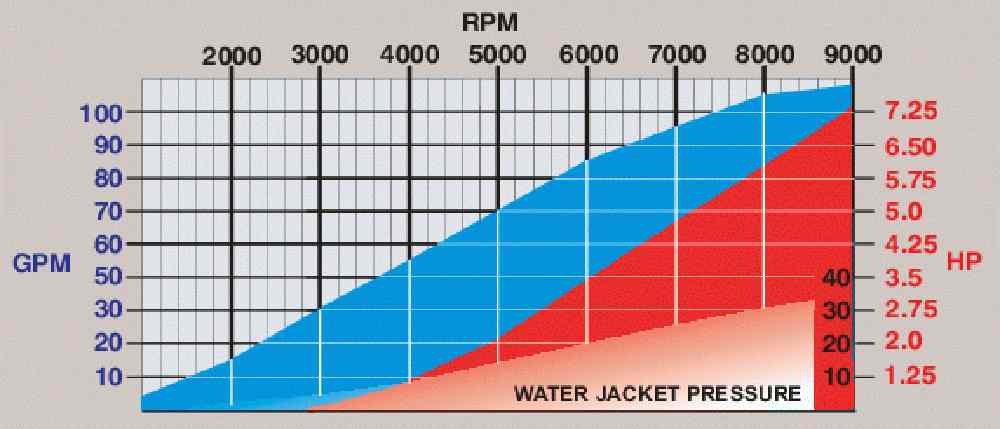
It takes about 3 HP to pump enough flow through the Mazda engine
to cool the metal in the rotor housing at sustained full power.
Electric pumps are far lower in HP.
It works in drag racing as the engine only runs at full power
for just a few seconds. Some drag engine do not even use cooling
systems for that reason.
Each HP requires 60 amps out of the alternator.
To my knowledge no electric pumps come even close. There are no
breakthrough impeller designs that would change this situation.
In fact on the contrary some electric pumps have a less
than optimum impeller design.
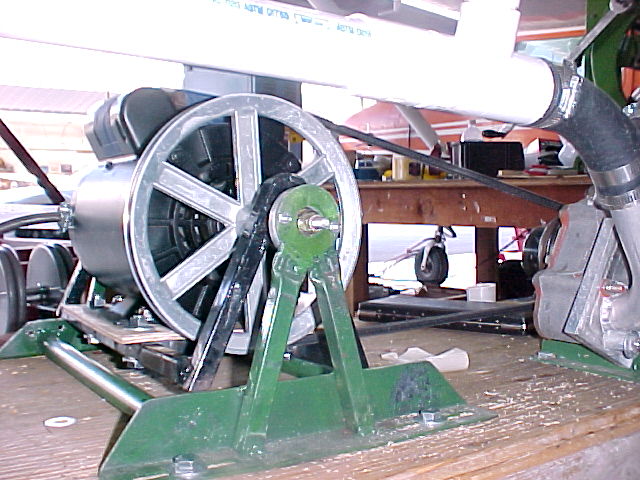
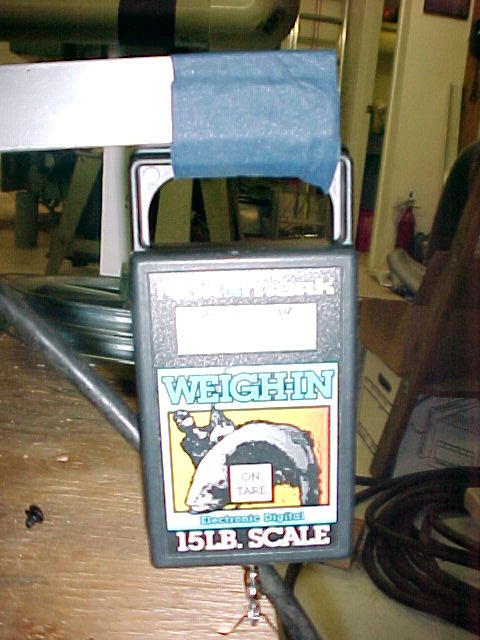
My late rocket scientist friend Vance Jaqua built a 5 HP
electric motor dyno to test water pumps.
The physics has not changed.
Paul Lamar
--
The Rotary Engine NewsLetter. Powered by Linux.
ACRE NL web site.
http://www.rotaryeng.net
Youtube key word PaulLamar2
Copyright 1998-2010 All world wide rights reserved.