Paul,
I ran across this article today. (I had to Google "Chery Automobiles" to
find out what they're talking about.) Chery is the largest privately owned
auto maker in China.
In a few years, this could turn out to be a good source for small, cheap
800cc, 1-rotor engines. "C-Spec" rotary engines coming soon!
http://www.chinacartimes.com/2010/10/18/chery-working-on-wankel-engines-for-
new-energy-vehicles/comment-page-1/
Mark
That looks like an AIXRO engine. Several car companies have been
experimenting along those lines.
My prediction is range extender cars will flop in the market place because
they are being pushed by ignorant wacko environmentalist and politicians
that do not understand how cars work. Try climbing a hill with dead
batteries in a 3500 pound car pushed by a Wankel engine the size of a go
kart engine. How stupid can one be? Of course one could stop at the bottom
of the hill for a couple of hours and let the Wankel charge the batteries :)
Paul Lamar
Hi Paul,
Yes, that's our Aixro karting engine. I would be curious to know where that
picture and info comes from.
It still has the karting engine mounts, so if this is as far as they have
come with their R&D, it will take a little while until they have an engine
ready. But who knows? If they can learn from others' designs when it comes
to cars, they will eventually do the same when it comes to engines (and then
figure out that our engines are not suitable for automotive applications:-)
http://en.wikipedia.org/wiki/Chery_QQ
Poul
Paul,
In range-extending cars like the Volt, the battery is never allowed to run
down all the way. This is both to preserve battery life and to provide an
energy buffer so that the motor can make full power--for a short period of
time--even when in range extending mode.
Obviously, sizing the range-extending IC engine requires some thought. You
probably want an engine that can make at least twice as much power as the
average power need during normal driving. This would allow maintaining the
buffer at a reasonable level.
Csaba
P.S. The onboard generator typically does not charge the battery beyond
maintaining the battery buffer. You can leave the Volt stationary and
running forever, and it won't charge the battery.
----------------------------------------------------------------
Suppose the battery is down to the lower limit after climbing a hill.
Won't the engine charge the battery when the car becomes stationary?
Suppose there is another hill ahead?
Do you have any statistical data on car HP usage profiles in different
parts of the country?
The way I see it, in mountainous area like the western states
and areas where driving on two lane roads is the norm, the situation
is critical. If you attempt to repeatedly pass cars requiring full
power the battery could be depleted to the lower limit. Does a red
light come on telling you now have no excess power to pass or does
it allow you to be crushed to a pulp by the on coming tractor trailer?
I assume under no circumstances can one draw current
from the battery when it is at it's lower limit.
Average required power on a flat road for a 3500 pound car at 80 MPH is
about 40 HP. By the twice the HP rule of thumb the ICE charging engine would
then be 80 HP. Assume for the moment the computer is smart enough not to
attempt to charge the now depleted battery when the driver floors it to
pass, he now has a 3500 pound car powered by only 80 HP. I maintain no
driver in his right mind is going to put up with that situation.
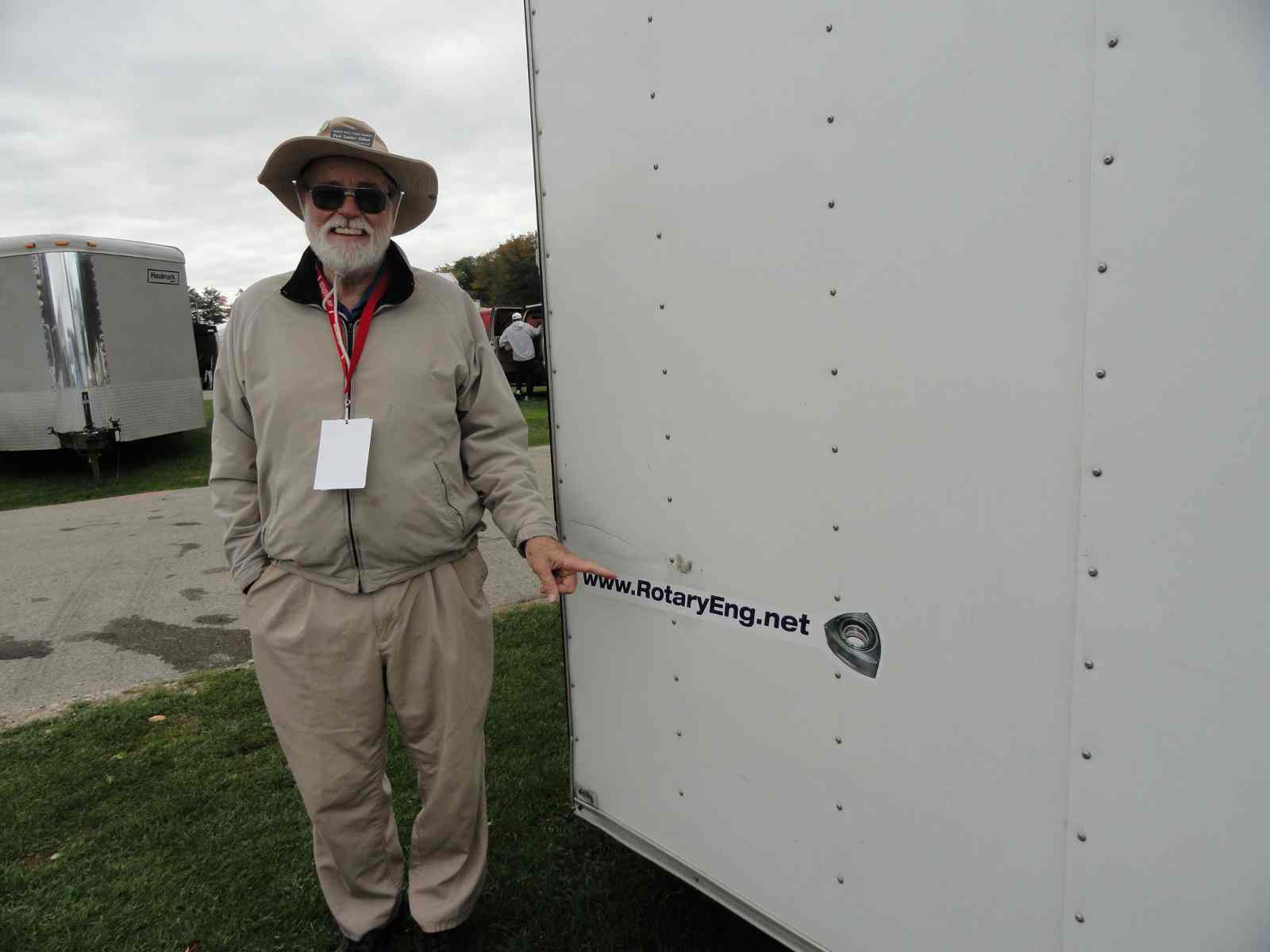
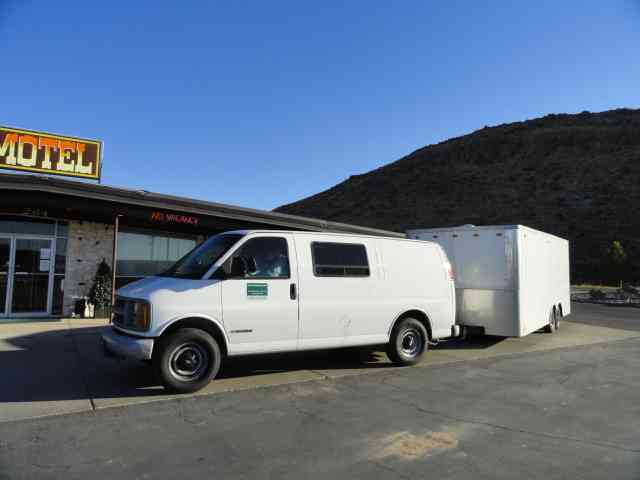
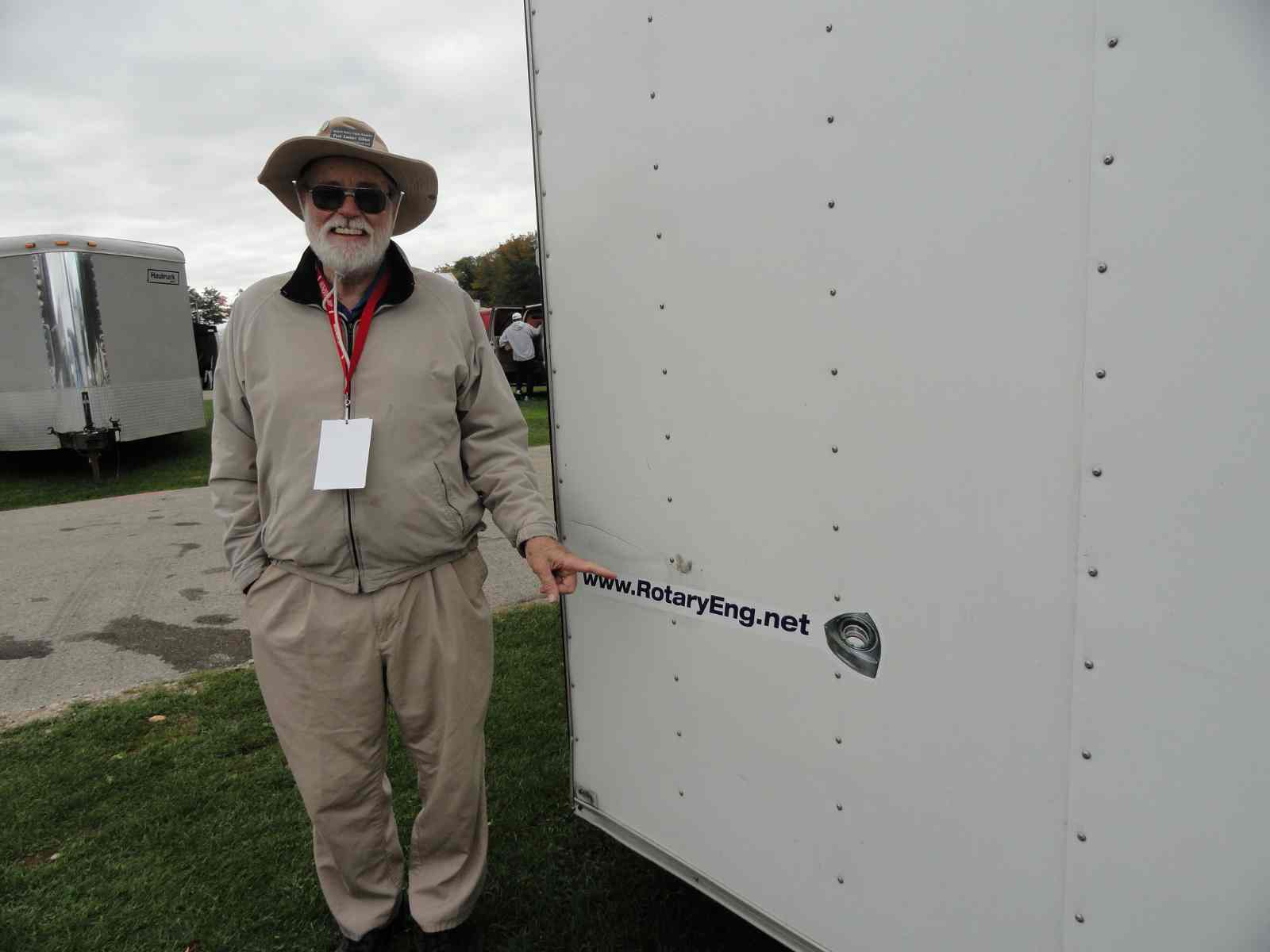
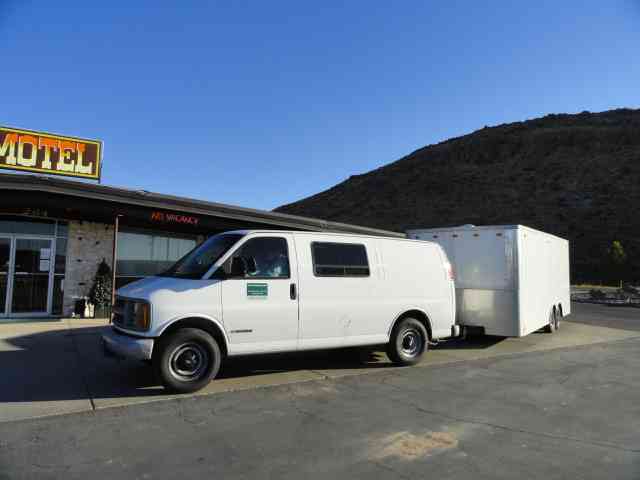
I just helped drive a small block V8 GM truck/van and 4000 pound race car
and trailer from Cal to Elkhart lake over hwy 70 through Colorado and we got down
to 20 MPH at the higher altitudes. Total weight was close to 8000 pounds.
There is a reason why 300 and 400 HP light weight cars are popular. That amount
of HP is available for passing and climbing hills. These cars do not have
to carry around 500 extra pounds of batteries that subtract from
the handling. The actually weight penalty is much higher than 500 pounds,
as I am sure you already know, due to additional structure and larger brakes.
IMHO the automotive world would be much better served investing the
hybrid and range extender R&D money to recovering some of the 50%
waste energy in the ICE exhaust. AKA turbo compound. IMHO the additional cost
of the hybrid and range extender vehicle is better spent on higher
strength to weight ratio materials such as carbon fiber and aluminum.
I also might add higher power to weight ratio engines like the Wankel
turbo compound.
If one examines the Toyota Pris (:)) carefully one will find only
part of the good gas mileage comes from the hybrid feature.
The rest comes from better aerodynamics, higher cost materials and
harder tires with lower rolling resistance. Features that could and
should be applied to any car.
BTW All this stuff is based on the false premise that CO2 is bad.
As far as running out of crude oil the Water Melons are mentally
unable to grasp the concept of negative feed back. About
the only mathematical function they seem to be capable of
understanding is a linear extrapolation.
We will NEVER run out of crude as long as price and demand
has anything to do with it. Of course the Water Melons assume
they will control the price of fuel so they will also be able to
tell you what you can and can not buy. In other words, hybrid
Trabants or range extender Trabants... take your pick as long
as it is some puke shade of pastel green :)
Here is a picture of part of the ex Trabant factory now owned
by my friend Mario Haeberer current owner of the Wankel
trade mark and assets. Notice it is empty. Mario plans to
build Wankels in it in the future.
Paul Lamar
--
The Rotary Engine NewsLetter. Powered by Linux.
ACRE NL web site.
http://www.rotaryeng.net
Youtube key word PaulLamar2
Copyright 1998-2010 All world wide rights reserved.