Hi Paul,
Happy birthday for next weekend! would love to come but
Australia is a bit far away, I was in the US in June 2002 was to leave
end of September 2001, but thought it prudent to put it off for a year,
my eldest son was in the UK and trying to get back to Australia in
September 2001, was a worry for a time.
On a lighter note, what is your thoughts on coupling
a exhaust turbine to the crankshaft, via cog belt or micro v belts? My
thoughts are to stop the vibrations of the crankshafts getting thru to
the turbine, while extracting the energy from the exhaust.
I also have not been able to locate the suppliers of
alloy end bits for the rotary engines.
Thanks John Burey.
That is exactly how I planed to get the power into the e-shaft
for the same reason. My new years resolution (starting soon ) is
to get my dyno working so I can test some of this stuff.
http://www.rotaryeng.net/turbo-compound.html
Paul Lamar
Hi Paul, If you start soon on your new years resolution soon you
will beat everybody else with their next years resolution. ;-)
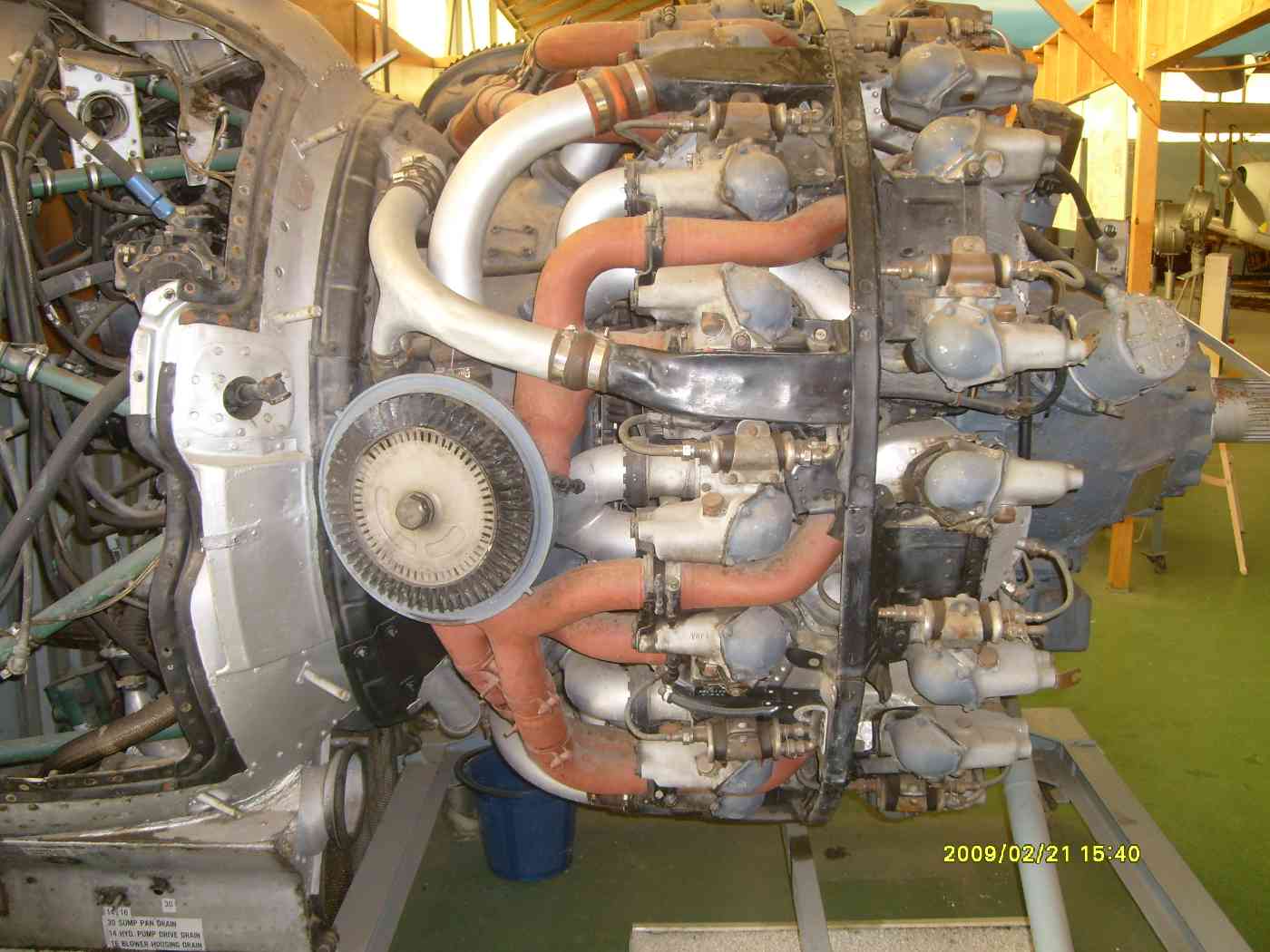
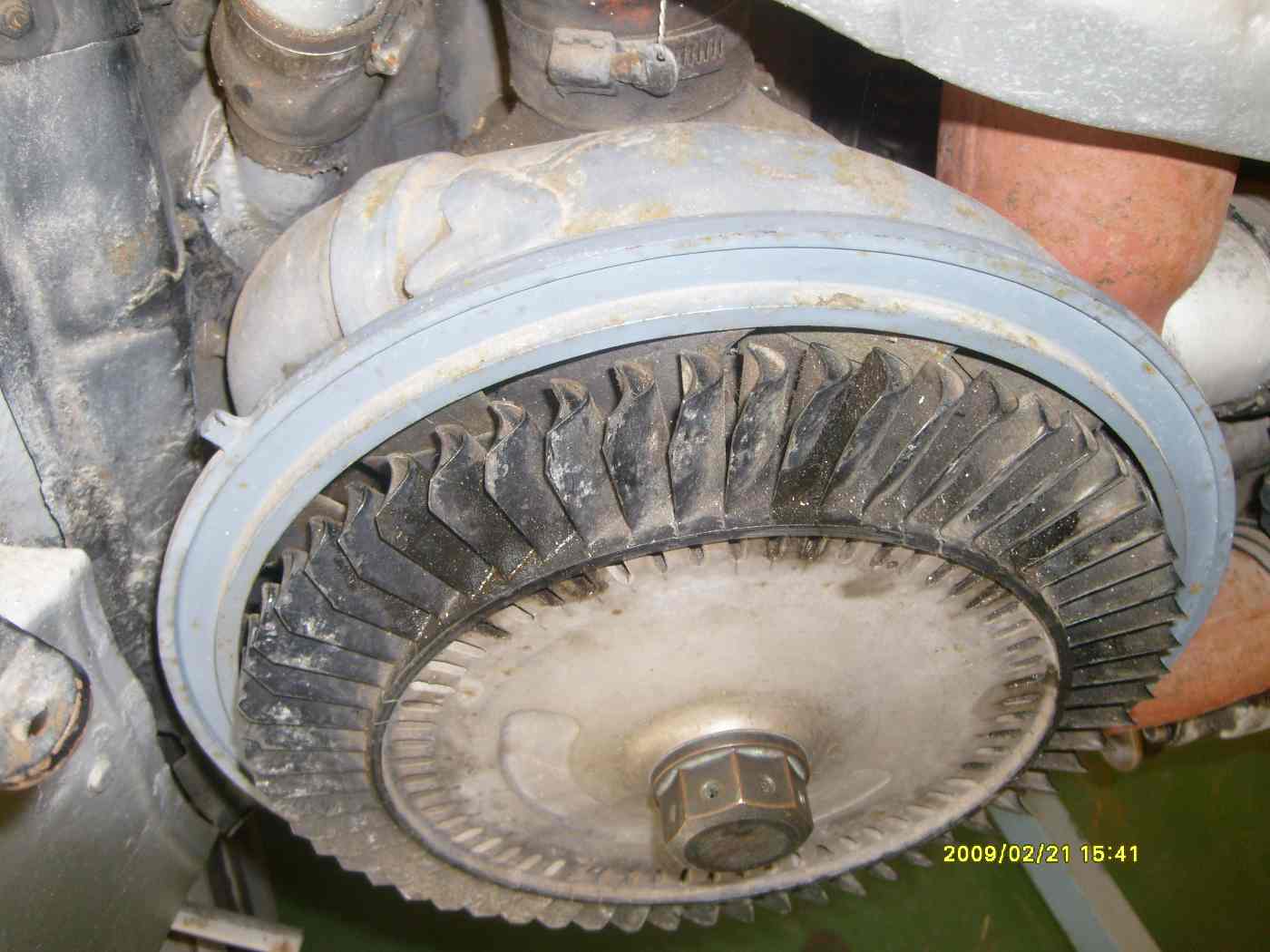
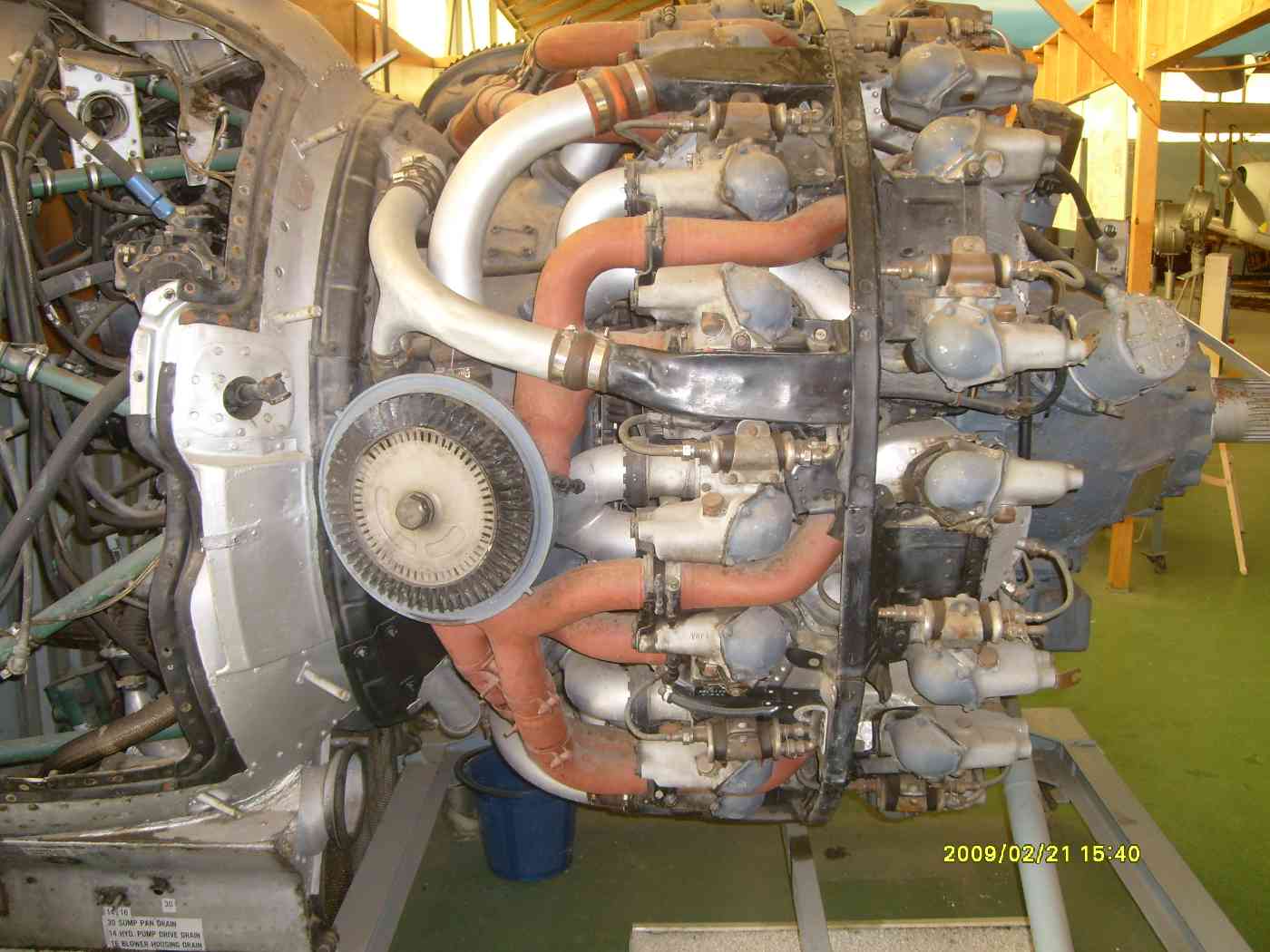
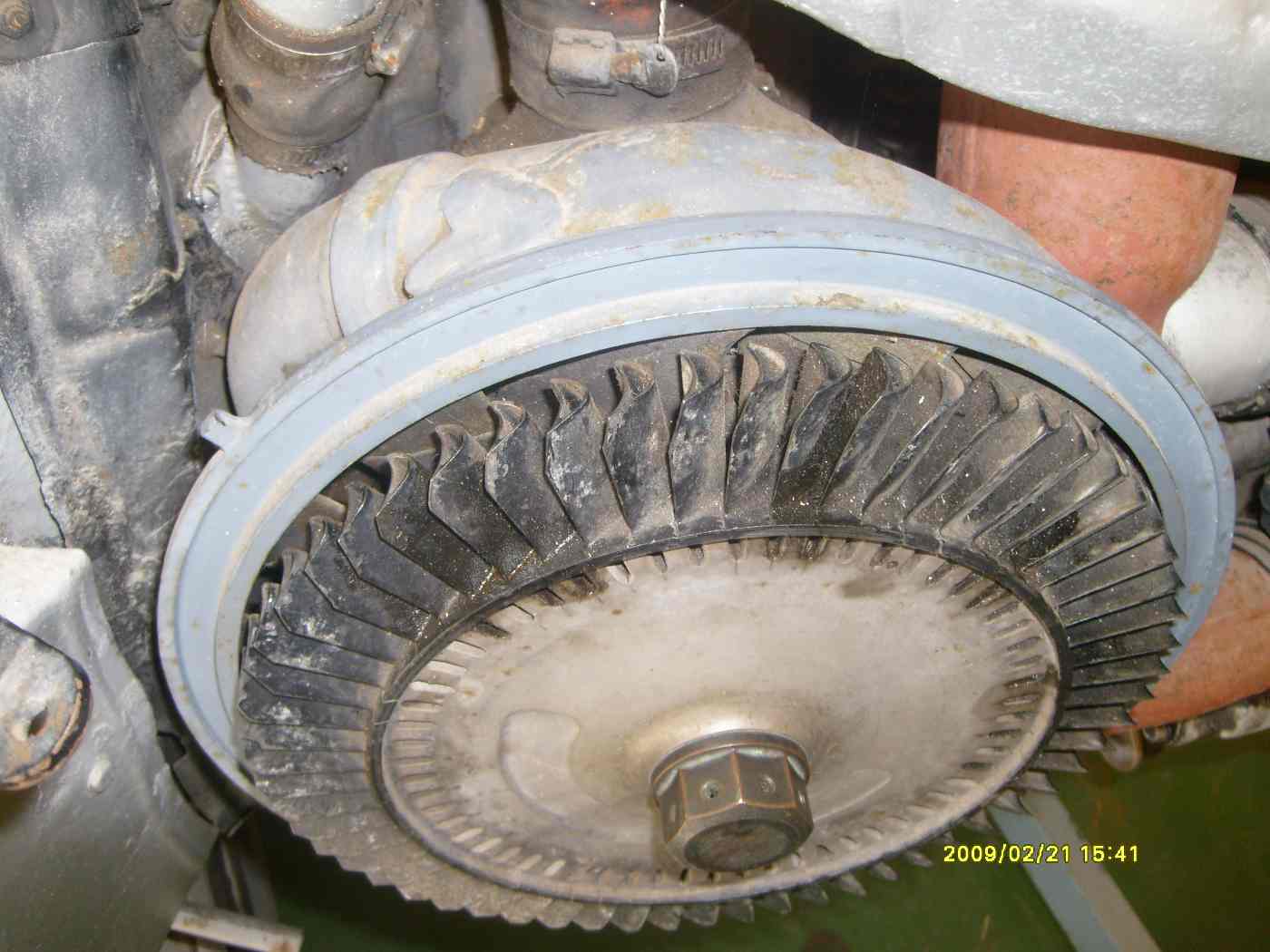
On your first picture it appears that you have a
normal turbocharger ie a turbine and a compressor, is not the idea to
couple the turbine extract the energy from the exhaust and drive the
crankshaft? Or have I got it all screwed-up?
Regards, John Burey.
The turbine extracts enough power from the exhaust to both
turbo charge the engine and feed additional power into the
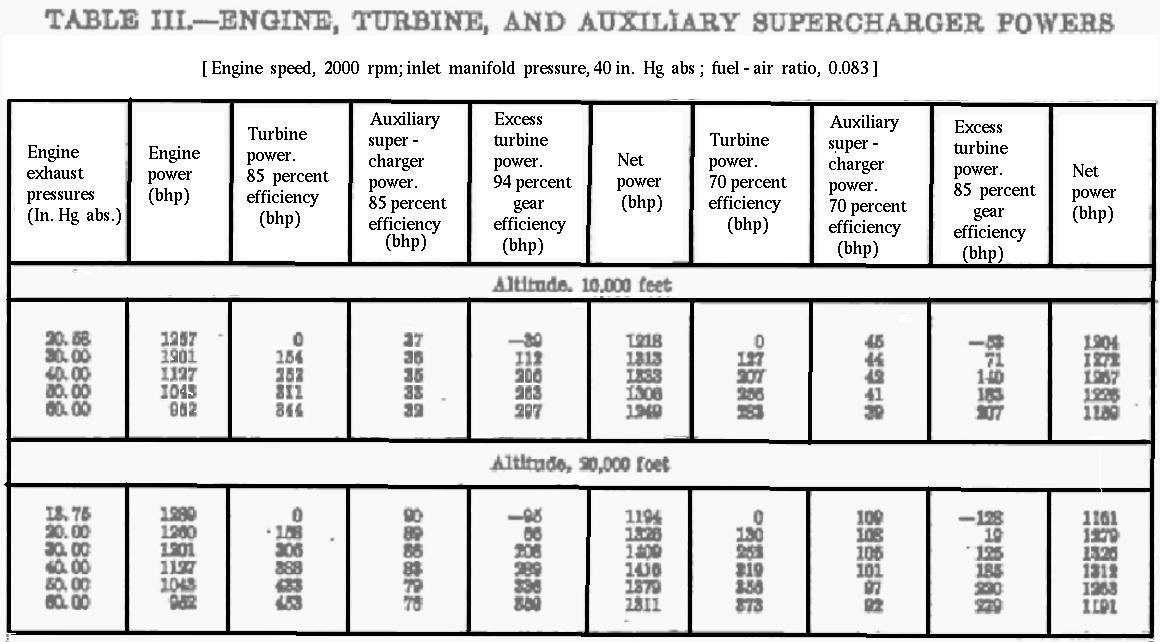
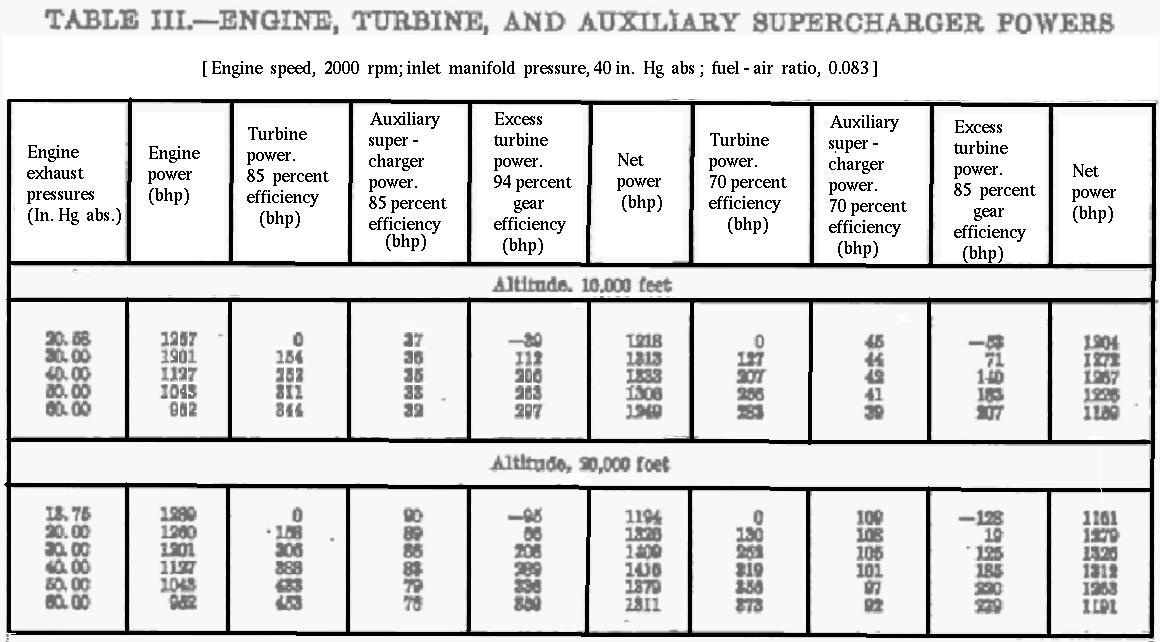
e-shaft. Here is an old table and OCR text from a war time secret
report on the amount of power allocated to the various uses done by
NACA in 1944 on an 18 cylinder radial aircraft engine.
In this case it was a mechanical supercharger. It is only necessary
to replace the mechanical super charger with a larger turbine as the
mechanical HP necessary to drive the compressor is subtracted from
the net power out.
Recent turbo compound truck engines use two turbines. One to drive
the turbo charger and one for additional power into the crankshaft.
That decouples the two turbines RPM's so more torque is available
at low RPM's provided by the turbo charger. Critical for truck use.
You may find some turbo compound truck engines in Australia.
Look for Detroit Diesel or Daimler DD15 or DD16 six cyl. engines.
The DD16 650 HP engine may be used in road train tractors.
For aircraft use, where the engine
is running at one RPM and power level 99% of the time, a single turbine
will work. In fact it is potentially more efficient as there is less
heat loss.
One of the fine points of the TC engine is it also generates
more take off power for the same engine weight so a heavier payload
can be handled. That can mean more fuel for longer range.
-------------------------------------------------
NACA REPORT No. 822
CALCULATIONS OF ECONOMY OF 18-CYLINDER RADIAL AIRCRAFT ENGINE
WITH EXHAUST-GAS TURBINE GEARED TO THE CRANKSHAFT
By RICHARD W. HANNUM and RICARD H. ZIMMERMAN
SUMMARY
Calculations based on dynamometer test-stand data obtained on an
18-cylinder radial engine were made to determine the improvement
in fuel consumption that can be obtained at various altitudes by
gearing an exhaust gas turbine to the engine crankshaft in order
to increase the engine-shaft work. The calculations indicted
that, for turbine and auxiliary supercharger efficiencies of 85
percent minimum net brake specific fuel consumption improvements
of 0.367 pound per brake horse hour at an altitude of 10,000
feet and of 0.323 pound per brake horsepower hour at 30,000 feet
can be obtained by gearing the exhaust-gas turbine to the engine
crankshaft and operating that engine at a speed of 2000 rpm, an
inlet-manifold pressure of 40 inches [5 psi boost] of mercury
absolute, and a fuel-air ratio of 0.063 [12:1].
The reduction in net brake specific fuel consumption that can be
obtained if the exhaust-gas turbine supplies all the auxiliary
supercharger power and if its residual power is transmitted
through gears to the engine crankshaft as compared with
auxiliary turbo supercharging, is approximately 14 percent at an
altitude of 10,000 feet and 21 percent at 30,000 feet.
The net brake specific fuel consumption is a minimum is for
engine exhaust gas pressure approximately 25 percent above
inlet-manifold pressure and varies only slightly from that
minimum for a range of exhaust gas pressure from 6 to 45
percent above inlet-manifold pressure.
INTRODUCTION
The use of an exhaust-gas turbine to drive a supercharger. at
high altitudes is an effective method of maintaining sea level
engine power at altitude. Analysis has shown, however, that the
waste energy of exhaust gases is recovered more effectively by
maintaining an engine exhaust pressure higher than the minimum
required for turbo supercharging and thus increasing the 'Work
output of the exhaust-gas turbine. The extra turbine power
beyond that required for supercharging Can be supplied to the
engine crankshaft through suitable gearing (compound operation).
The purpose of the analysis reported is to determine th~
improvement in net brake specific fuel consumption that can be
obtained if an engine is equipped with a geared turbine and
supercharger as compared with the engine using a standard turbo
supercharger. The calculated values specific fuel consumption
presented for an engine-turbine combination were based on NACA
test data obtained on an 18-cylinder radial engine. Operating
conditions for which the brake specific fuel consumption of the
combination is a minimum are given. The required turbine-nozzle
area is also calculated to indicate the size of turbine suitable
for geared operation.
Because the engine, the turbine, and the supercharger have
different characteristics, elements designed to give maximum
efficiency at some operating conditions are incorrectly matched
at other conditions. Provision must therefore be made to obtain
satisfactory performance over the entire operating range. The
problem of obtaining a wide operating range is briefly
discussed.
The investigation reported was conducted at the NACA Cleveland
Laboratory in the fall of 1944.
-----------------------------------------------------------
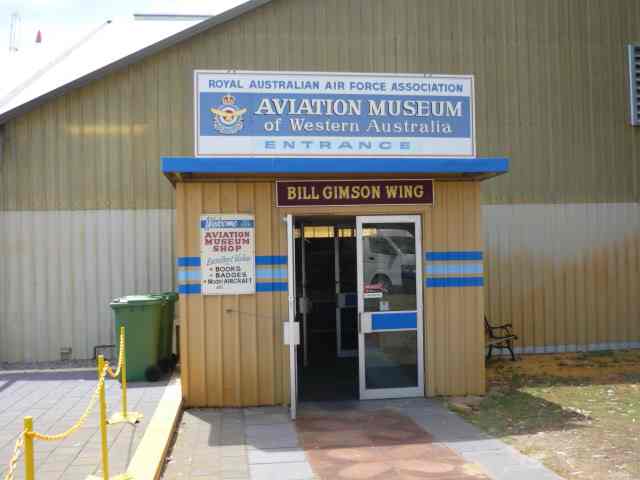
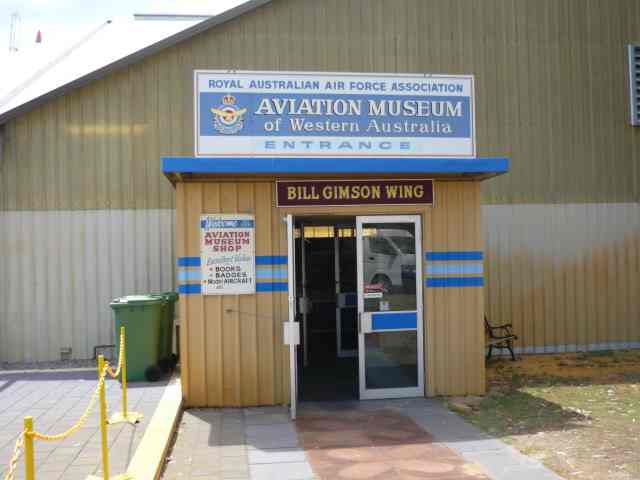
If you get over to Perth they have a CW turbo compound
R3350 in the RAAF museum there.
Paul LamaR
--
The Rotary Engine NewsLetter. Powered by Linux.
ACRE NL web site.
http://www.rotaryeng.net
Youtube key word PaulLamar2
Copyright 1998-2010 All world wide rights reserved.