Paul,
I just got this reply back from the people in England
selling the billet aluminum rotors.
As you can see one weighs 8.25 lbs.
[2.2.bs x 3.75 kgs = 8.25lbs.]
Hi
I've just put one on a scale at 3.75kg
Regards
Gary
RotaryArt team
Unit 4 Lambwood Hill Ind Est
Grazely
RG7 1JN
+ 44 (0)1189 888555
+ 44 (0)7973 111555
www.rotaryart.uk.com
Compare this to the machine lightened Renesis rotors at 9 lbs.,
or 9.2 lbs stock, and for aircraft operations the 3/4 lb weight
savings wouldn't be worth it. Mainly because of the same issues
homebuilders face today. That is: To capture the horsepower
POTENTIAL of the engine, we pretty much have to enhance, alter,
or improve every component that goes into the engine.
Some issues to consider with the Al. rotors are expansion
coefficients of aluminum verses iron, rotor heat retention
characteristics and hence cooling, apex seal encapsulation
strength and bearing lubrication. In reality the bigger
challenge might be PSRU design and matching propellers to it.
Doug in Japan
They are made in Florida. With solid aluminum rotors one would
not expect much else. The cast iron rotors are at least hollow.
I don't agree with "we pretty much have to enhance, alter,
or improve every component that goes into the engine."
The stock Mazda rotary is ten times as robust as your average
automotive piston engine. It is as long lasting as
a much more expensive aircraft piston engine made from
far higher strength and costly materials and more costly
manufacturing processes.
Other than a couple of holes in the stock rotor
housing that is about it. Yes the stock intake manifold is
near useless. This slightly modified rotary engine will put out
250 HP which is equivalent to a 100 pound heavier six cylinder
aircraft engine.
I know you know all this Doug.
Paul Lamar
G'Day Paul.
Perhaps I have it wrong, I thought one of the ways to improve the
fuel economy of the rotary was to run it lean. Would this not
potentially expose aluminum rotors to the risk of getting
burnt as happens with stroke pistons when they run lean?
John Evans
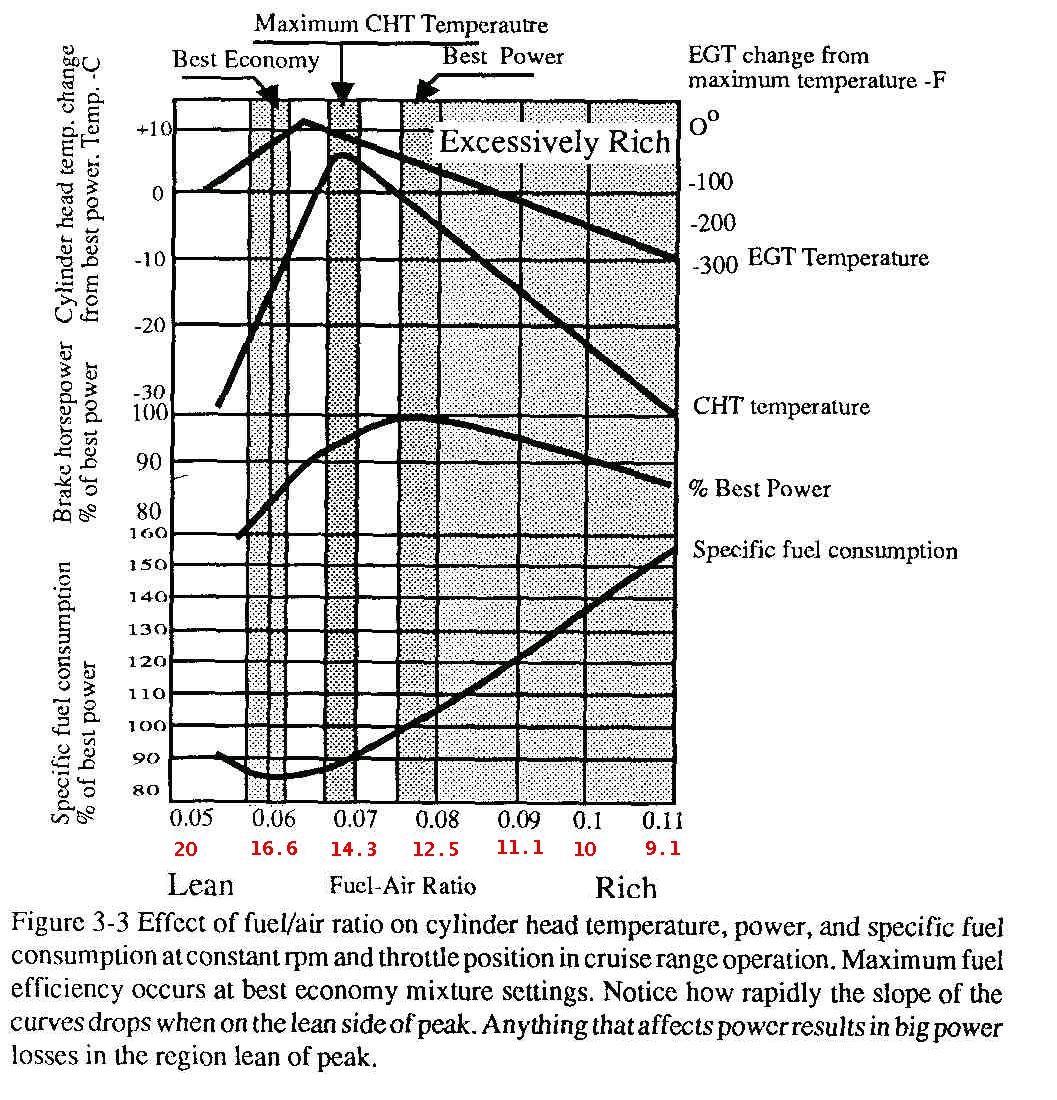
The EGT actually goes down when you run the engine lean.
You are more likely to damage the alloy rotors under full power.
The rotary is unique as it has a rotating combustion chamber
so the fuel molecules are thrown outwards towards the spark
plugs. Sort of naturally stratified charged. Unlike a piston
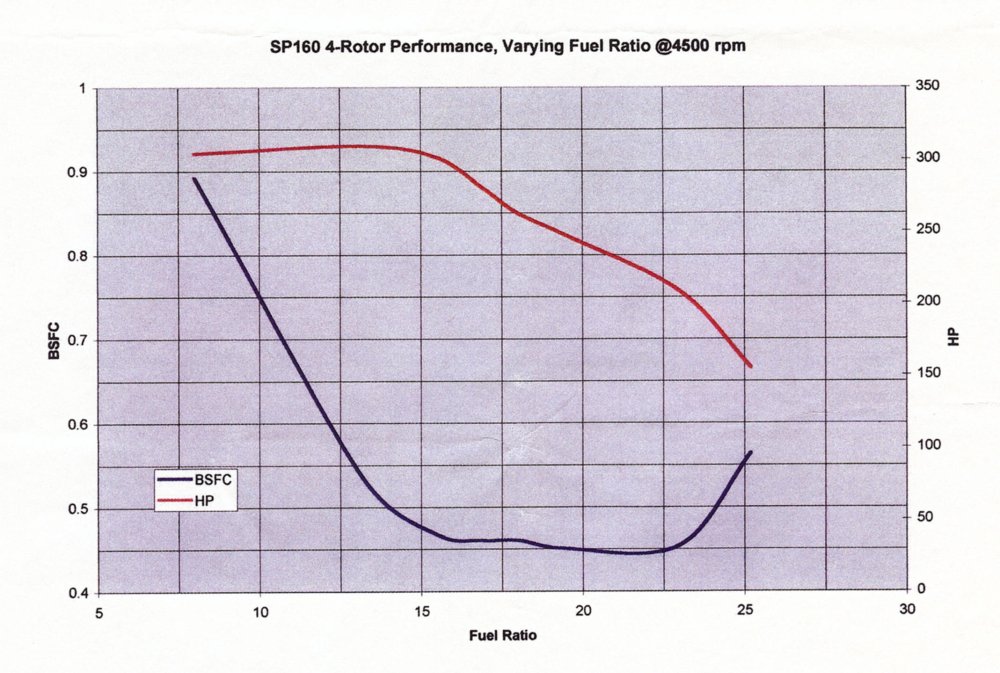
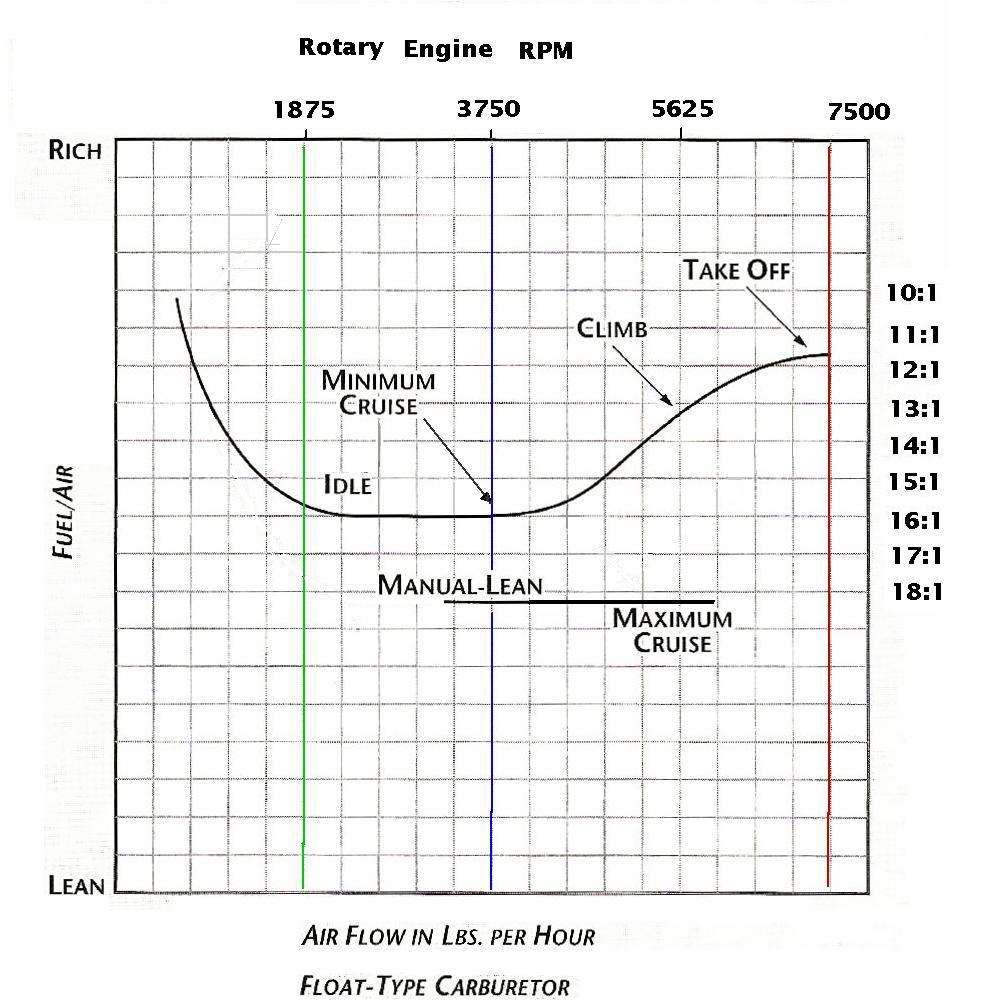
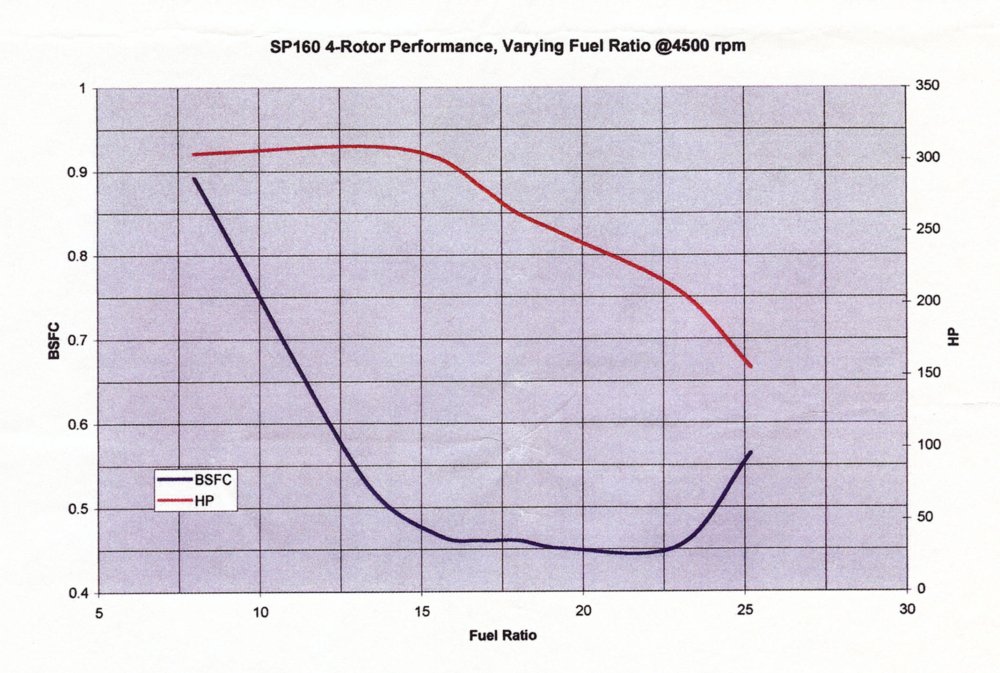
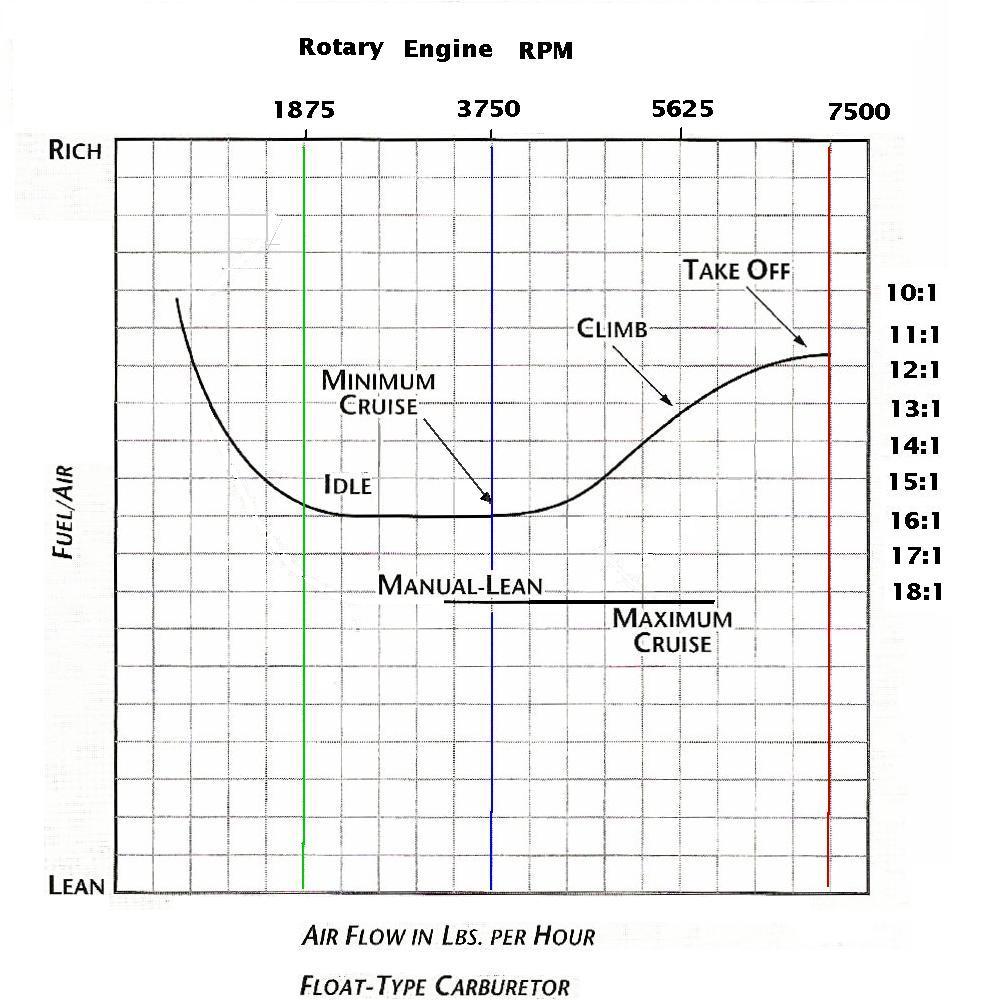
engine it will run fine at 17:1 to 18:1 or leaner. Power will be down but
BSFC or fuel burn per HP will also be down. So too EGT's. In other
words the engine gets much more efficient in the lean burn area.
Paul Lamar
--
The Rotary Engine NewsLetter. Powered by Linux.
ACRE NL web site.
http://www.rotaryeng.net
Youtube key word PaulLamar2
Copyright 1998-2010 All world wide rights reserved.