I have always been fascinated with the idea of building
a cheap airplane out of the lowest cost composite materials
possible. Back in 1965 when I worked for chaparral cars I did a
study on the lightest material to use for a race car body.
I settled on 1/4 inch PVC foam with one layer of 4 oz glass
cloth on either side. It was much lighter and stiffer per
square foot than .032 aluminum.
http://www.jmsonline.net/glass-fabric-4oz50-x-10.htm?source=googleps
We built the body of the chaparral 2F
out of that in a vacuum bagged female mold. The body was very
strong and so light the paint shop doubled the weight.
The car was capable of well over 200 MPH at some tracks like
LeMans so the body was plenty strong enough.
Race car bodies and airplanes have at least one unique thing in
common. The body panels and wing panels are subject to high pressures
distributed over the surface. The structure must be strong enough
to resists these kinds of loads. Sandwich panels are ideal.
At 200 MPH the worst case scenario on a wing is dynamic pressure or
about 100 pounds per square foot.
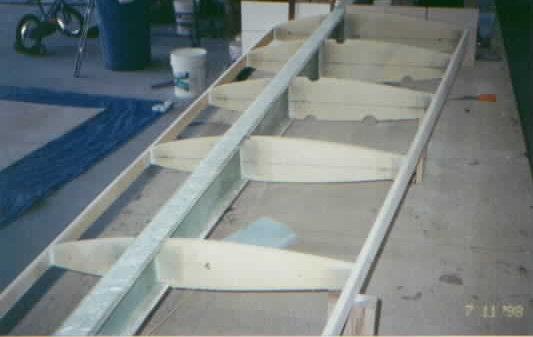
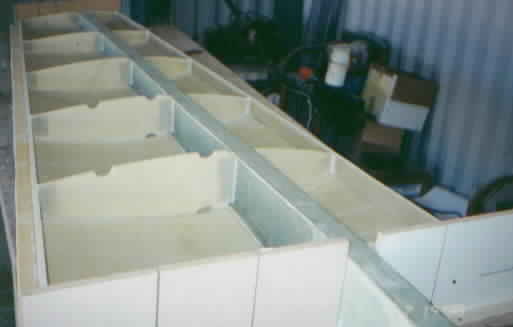
In other words the lift coefficient is one. If the ribs are one foot
apart the center of the panel should not deflect excessively or fail
with a distributed load of 8.33 pounds every inch. This is easy
to set up a test panel and check for failure and deflection.
It may be that rib spacing of two feet or more is acceptable depending
the core thickness. Thicker foam cores add little weight while
allowing greater rib spacing. In other words fewer ribs with less
fabrication work.
Female compound curve molds are very expensive and time consuming
but fast airplanes can be built out of flat panels and simple curve
parts. The Vans RV series are good examples.
A cured sandwich panel is very strong and stiff but it is difficult at
best to curve it to fit the top of a wing for example.
The question is: how do we build a wing out of pre-curred flat panels?
I think I have the answer. What we need is foam screws to screw
the flat panels to the curved wing rib edges until the epoxy sets
up. Here is a cheap, super light weight foam screw called a dry
wall anchor obtainable in any hardware store. It is used to hang
rather heavy objects on a dry wall.
The next trick to to lay up half the sandwich panel on a flat
surface so only one side is curred. The other side is raw foam.
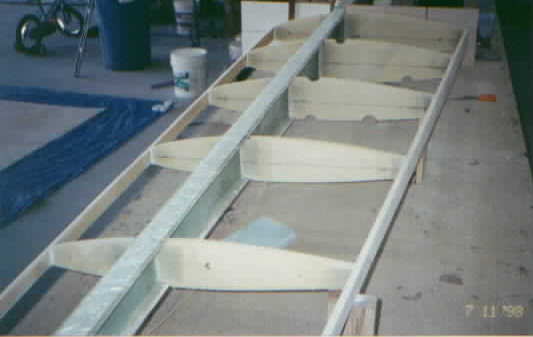
This then can be bent, raw foam up, to cover the top of the ribs
and screwed to the one inch thick foam ribs with foam screws while
the epoxy glue cures.
We then lay up a single layer sheet of glass fiber on a smooth
flat surface and let it cure. It will be very flexible when
it is curred so we can bend it to fit over the raw foam
already bonded to the ribs shiny side up. Weights placed
over the rib areas can be used to hold it down while it
cures. These weights can be made from long skinny sand
filled cloth bags. In some cases bungee cord can be used
to make the leading edges conform. In certain extreme cases
one could use foam screws.
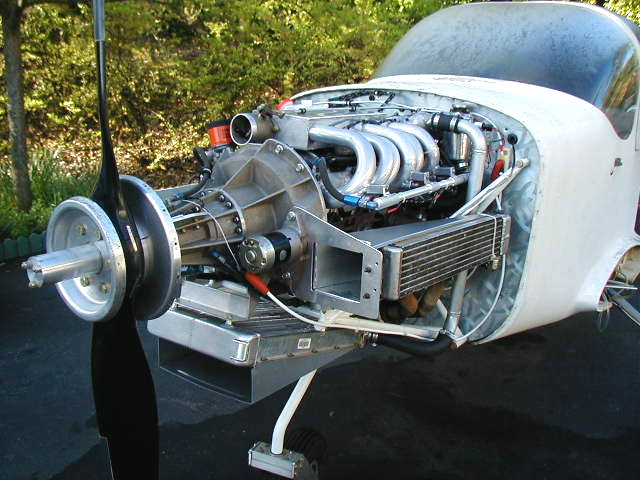
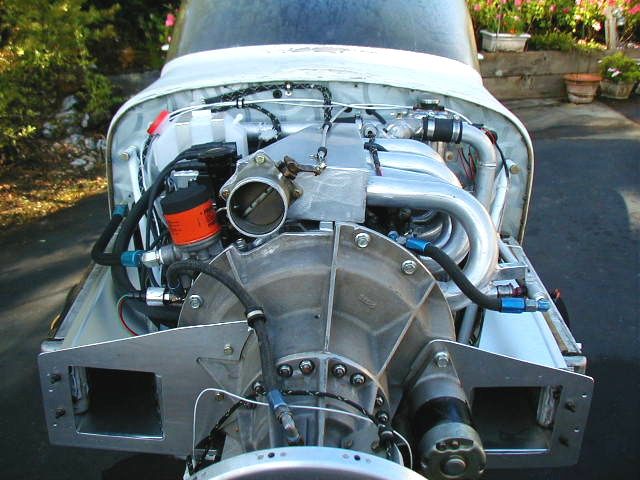
The whole idea here is to cut the cost and time needed
to build an airplane and take advantage of the low cost
rotary engine.
What do you guys think of this idea?
Paul Lamar
Hi Paul,
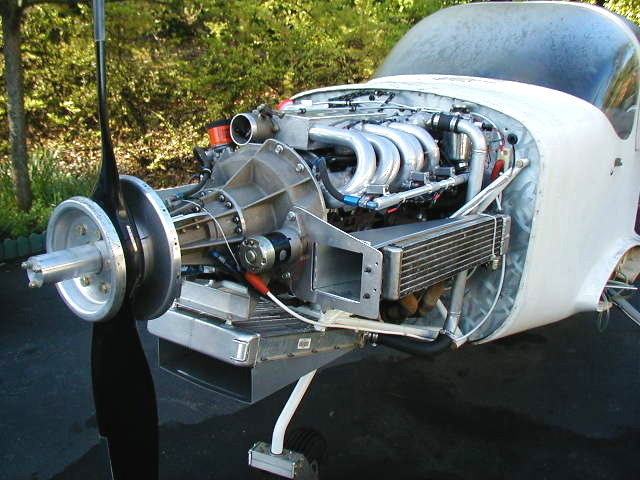
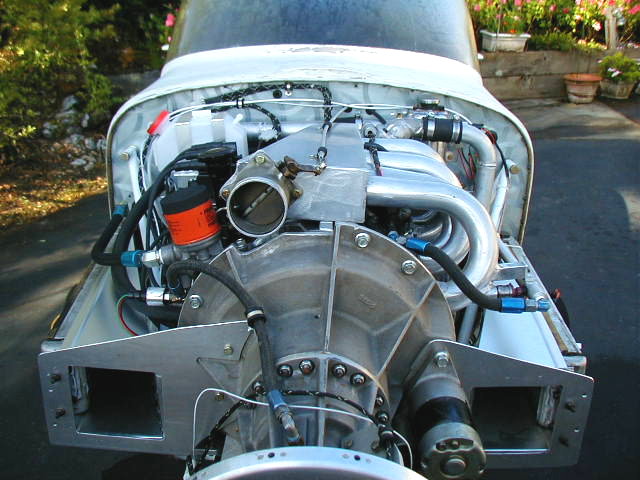
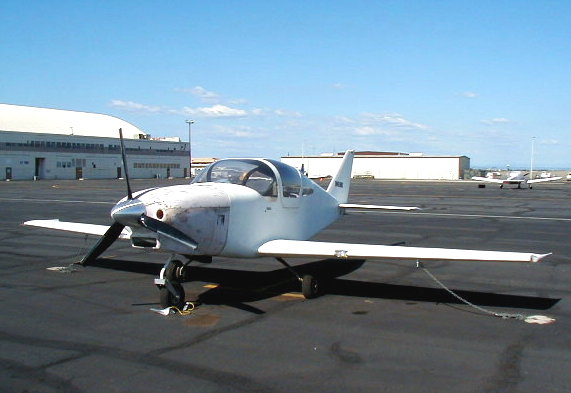
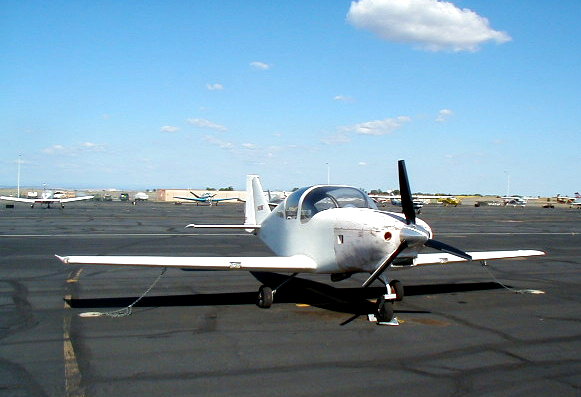
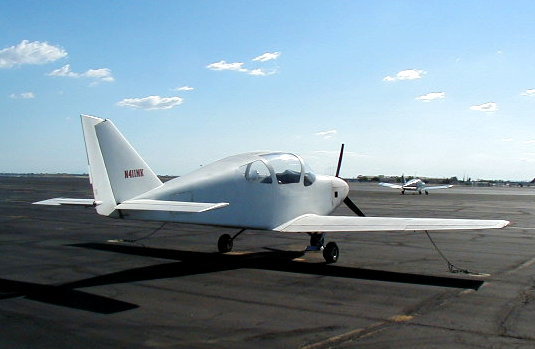
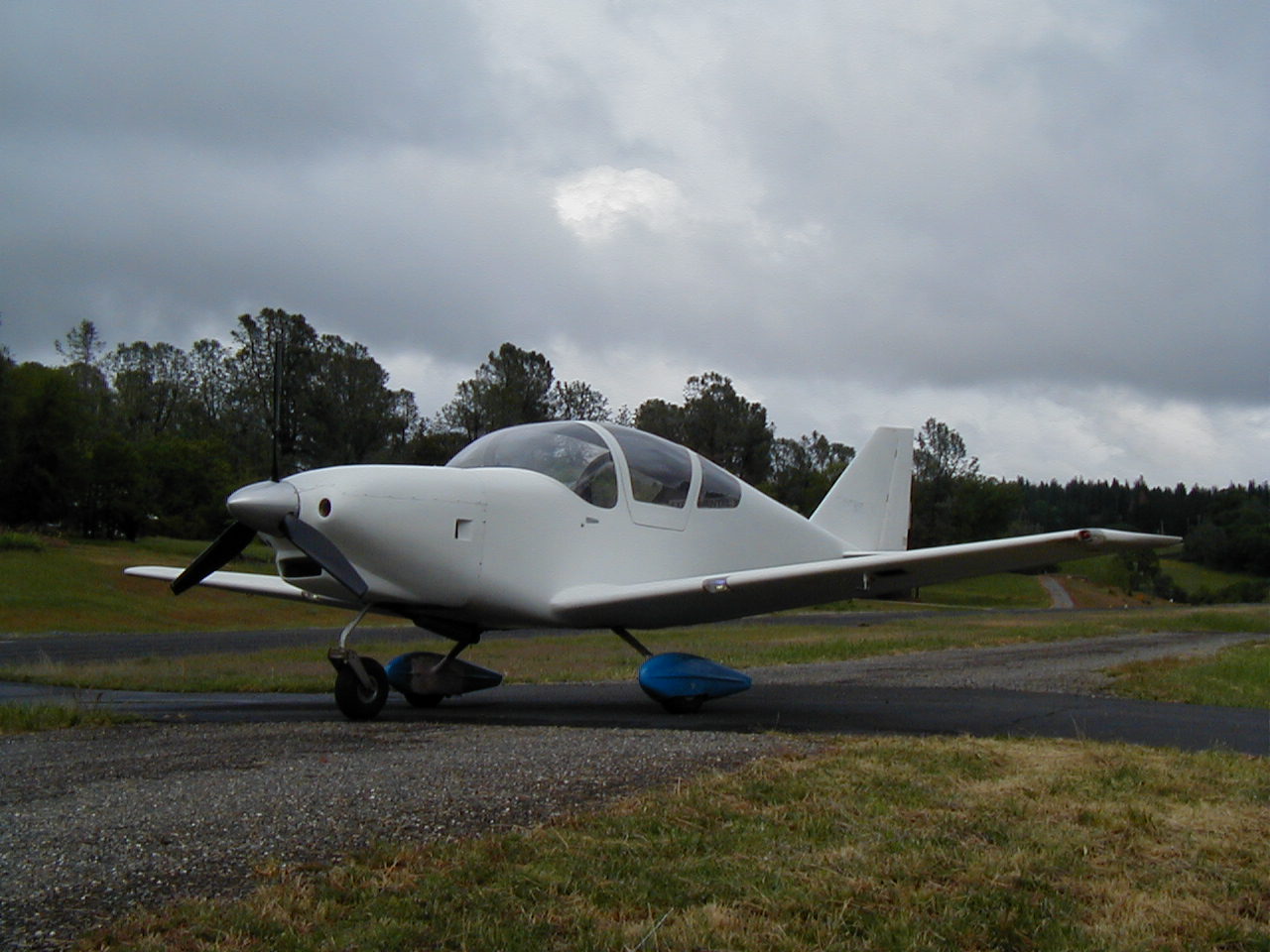
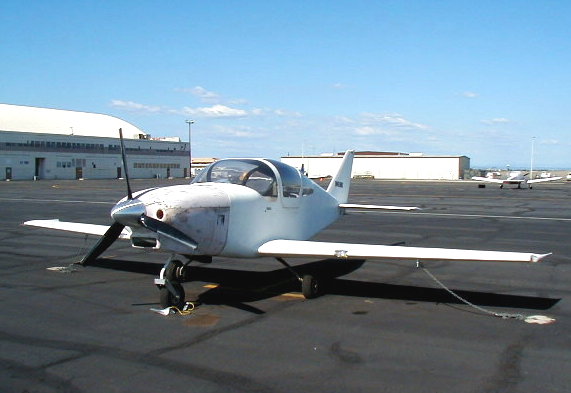
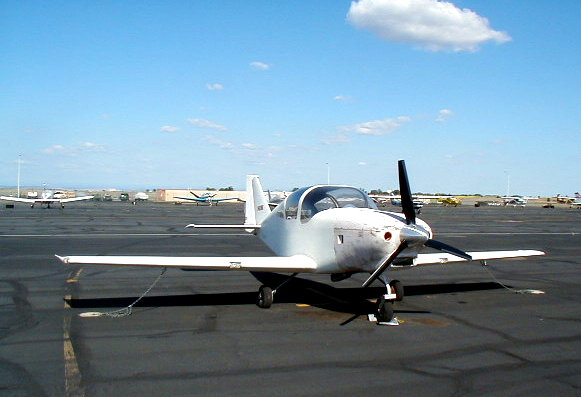
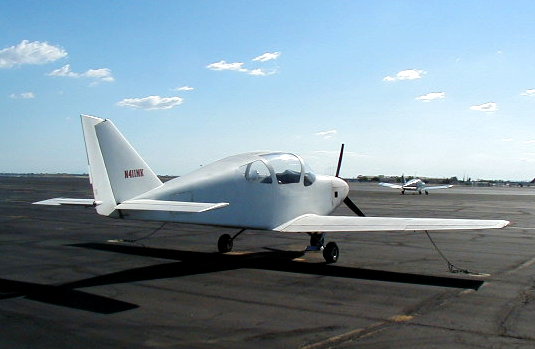
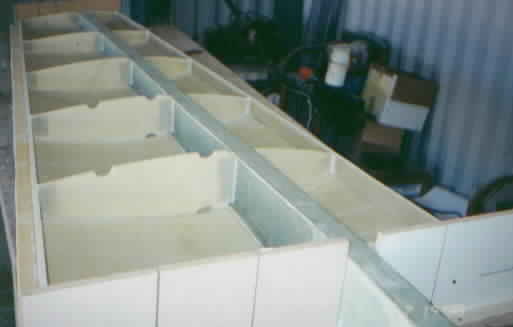
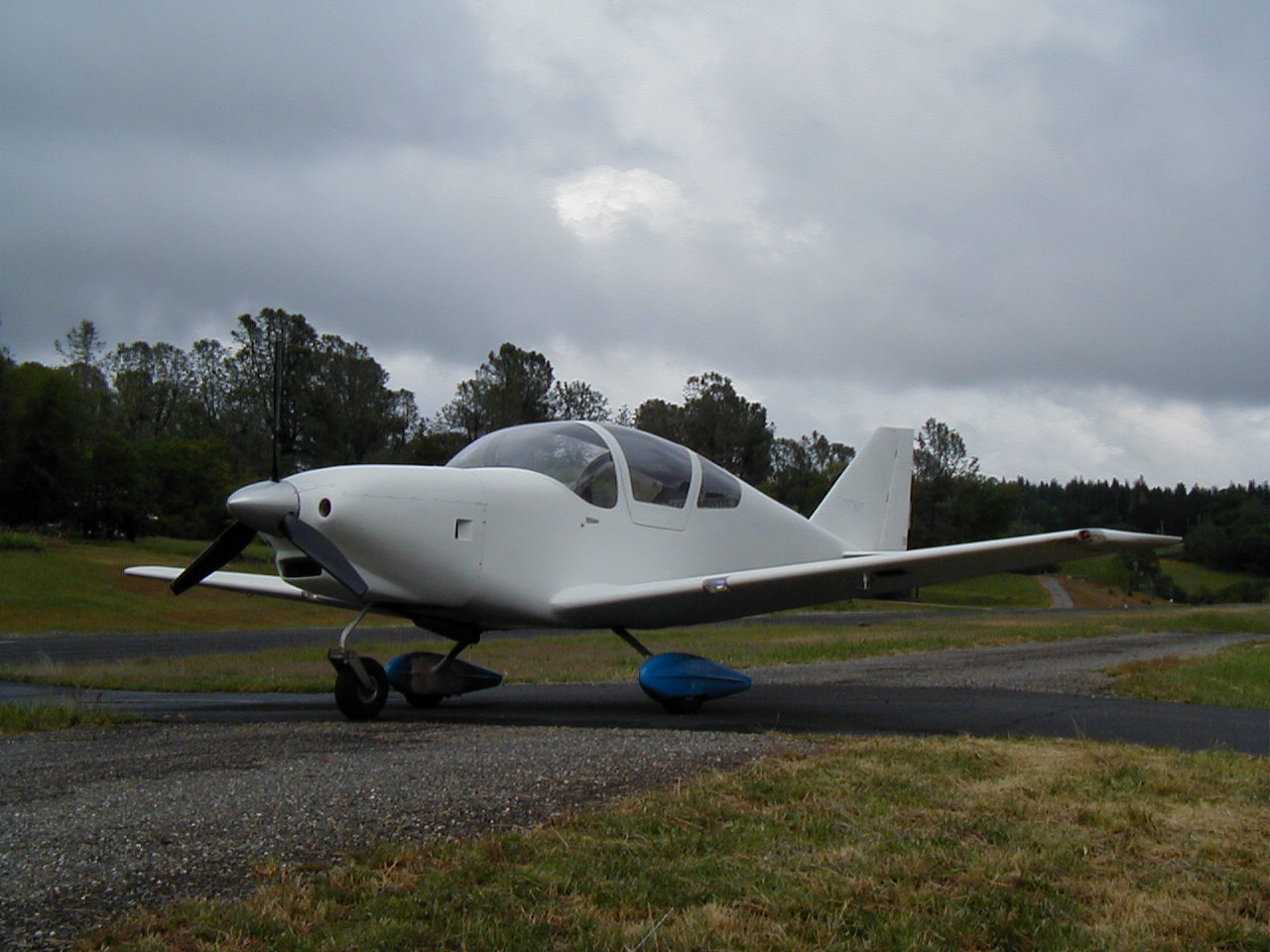
That's pretty close to how I built the MSK6. I started by
glassing one side, the inside of the panel, wing fuse ect and
bonding them to the ribs or bulkhead. Then lightly block sanded
the outsides and glassed the outside. In retrospect I think I
would try and do it the other way around like you said and layup
the outside of the panel on a smooth surface and then glass as
much as possible of the inside structure. That might save a lot
of finishing time. Glassing just one side worked well for me.
The panels formed over the ribs and stayed fairly straight and
flat.
Mark Kirkpatrick MSK6 20B
You did a beautiful job Mark.
That is significantly different because glassing the out side
of the raw foam means you spend a year sanding it :) The second
trick step is lay up the outer skin on a smooth surface and then
turn it over and bond it on after it is curred. No sanding.
How fast do you cruise that 3 rotor puppy?
Paul Lamar
--
The Rotary Engine NewsLetter. Powered by Linux.
ACRE NL web site.
http://www.rotaryeng.net
Youtube key word PaulLamar2
Copyright 1998-2010 All world wide rights reserved.