I have always been fascinated with the idea of building
a cheap airplane out of the lowest cost composite materials
possible. Back in 1965 when I worked for chaparral cars I did a
study on the lightest material to use for a race car body.
I settled on 1/4 inch PVC foam with one layer of 4 oz glass
cloth on either side. It was much lighter and stiffer per
square foot than .032 aluminum.
http://www.jmsonline.net/glass-fabric-4oz50-x-10.htm?source=googleps
We built the body of the chaparral 2F
out of that in a vacuum bagged female mold. The body was very
strong and so light the paint shop doubled the weight.
The car was capable of well over 200 MPH at some tracks like
LeMans so the body was plenty strong enough.
Race car bodies and airplanes have at least one unique thing in
common. The body panels and wing panels are subject to high
pressures
distributed over the surface. The structure must be strong enough
to resists these kinds of loads. Sandwich panels are ideal.
At 200 MPH the worst case scenario on a wing is dynamic
pressure or
about 100 pounds per square foot.
In other words the lift coefficient is one. If the ribs are one
foot apart the center of the panel should not deflect excessively
or fail with a distributed load of 8.33 pounds every inch.
This is easy
to set up a test panel and check for failure and deflection.
It may be that rib spacing of two feet or more is acceptable
depending the core thickness. Thicker foam cores add little
weight while
allowing greater rib spacing. In other words fewer ribs with less
fabrication work.
Female compound curve molds are very expensive and time consuming
but fast airplanes can be built out of flat panels and simple
curve
parts. The Vans RV series are good examples.
A cured sandwich panel is very strong and stiff but it is
difficult at best to curve it to fit the top of a wing for
example.
The question is: how do we build a wing out of pre-curred flat
panels?
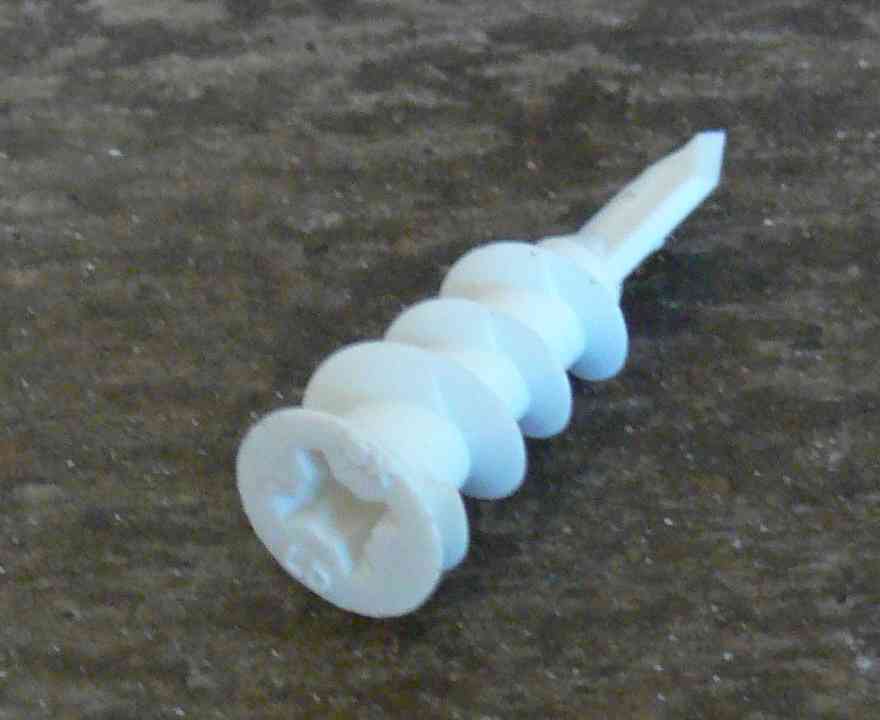
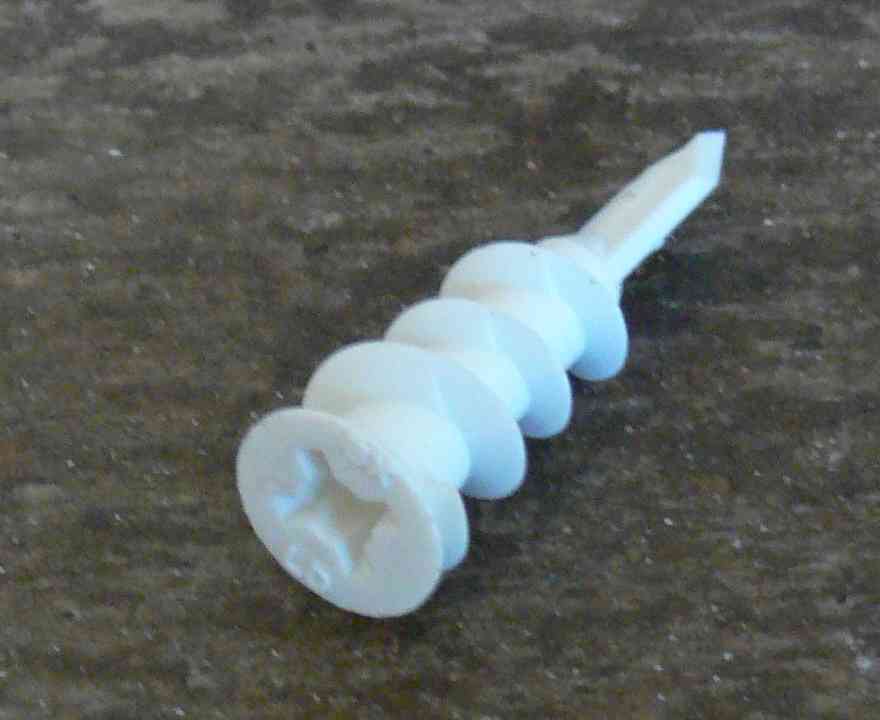
I think I have the answer. What we need is foam screws to screw
the flat panels to the curved wing rib edges until the epoxy sets
up. Here is a cheap, super light weight foam screw called a dry
wall anchor obtainable in any hardware store. It is used to hang
rather heavy objects on a dry wall.
The next trick to to lay up half the sandwich panel on a flat
surface so only one side is curred. The other side is raw foam.
This then can be bent, raw foam up, to cover the top of the ribs
and screwed to the one inch thick foam ribs with foam screws while
the epoxy glue cures.
We then lay up a single layer sheet of glass fiber on a smooth
flat surface and let it cure. It will be very flexible when
it is curred so we can bend it to fit over the raw foam
already bonded to the ribs shiny side up. Weights placed
over the rib areas can be used to hold it down while it
cures. These weights can be made from long skinny sand
filled cloth bags. In some cases bungee cord can be used
to make the leading edges conform. In certain extreme cases
one could use foam screws.
The whole idea here is to cut the cost and time needed
to build an airplane and take advantage of the low cost
rotary engine.
What do you guys think of this idea?
Paul Lamar
Paul,
That is the way I did the nose on the Limo EZ. I made a male
buck,
glassed one side of the divinicell foam and bent it over the buck
and held it in place with screws, then glassed the outside.
Remove
the screws and repair the holes. I also found that the foam goes
plastic at 240 degrees so I made a female mold out of plywood
screen and plaster, place it into a home made oven. The
mold, raw foam
sheet were inside of a heat resistant vacuum bag. After baking to
240 switch on the vacuum pump and the foam was pushed down in the
mold. after it cools glass it like the plans. You can get
compound curves. I did this for the fuselage bottom.
Joe Berki
Limo EZ
Paul,
This concept sounds surprisingly like the Fold-a-plane method
that
has been around for a while. The company used to be called Vision
Aircraft and their aircraft is the personal cruiser. It appears
they have had a funding and expertise infusion and are now called
Pro- Composites. Check out the building method on their site:
http://pro-composites.com/building.htm
Regards,
Jack Hilditch
Not the same wing contruction Jack. This is the old mold less
construction
invented
by Burt Rutan. Glass over hot wire cut solid foam cores. As
anybody that has built a LongEZ can tell you there are
hundreds of
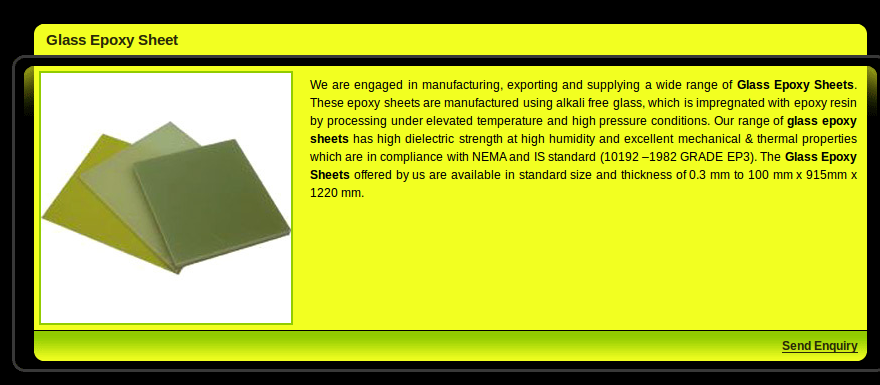
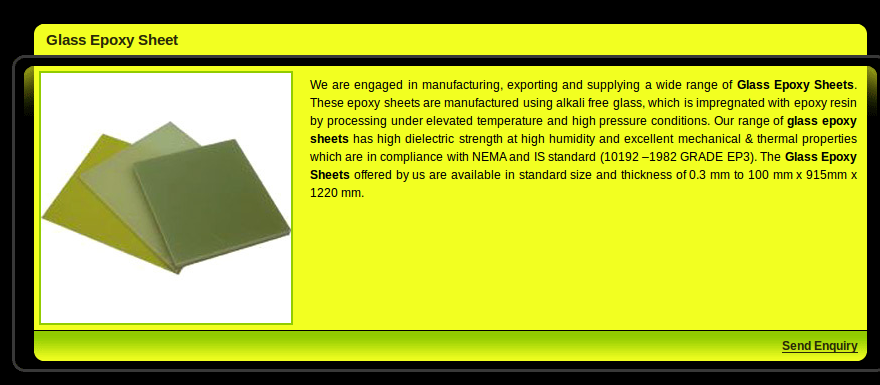
not thousands of hours of sanding needed. Here is a screen
capture
from their web site. Another draw back is it is heavier as it is
hard to control the resin content when glassing the foam.
Also the
wing is solid foam so anything, such as wing tanks or landing
gear,
placed inside needs extra work to hollow out the solid foam core.
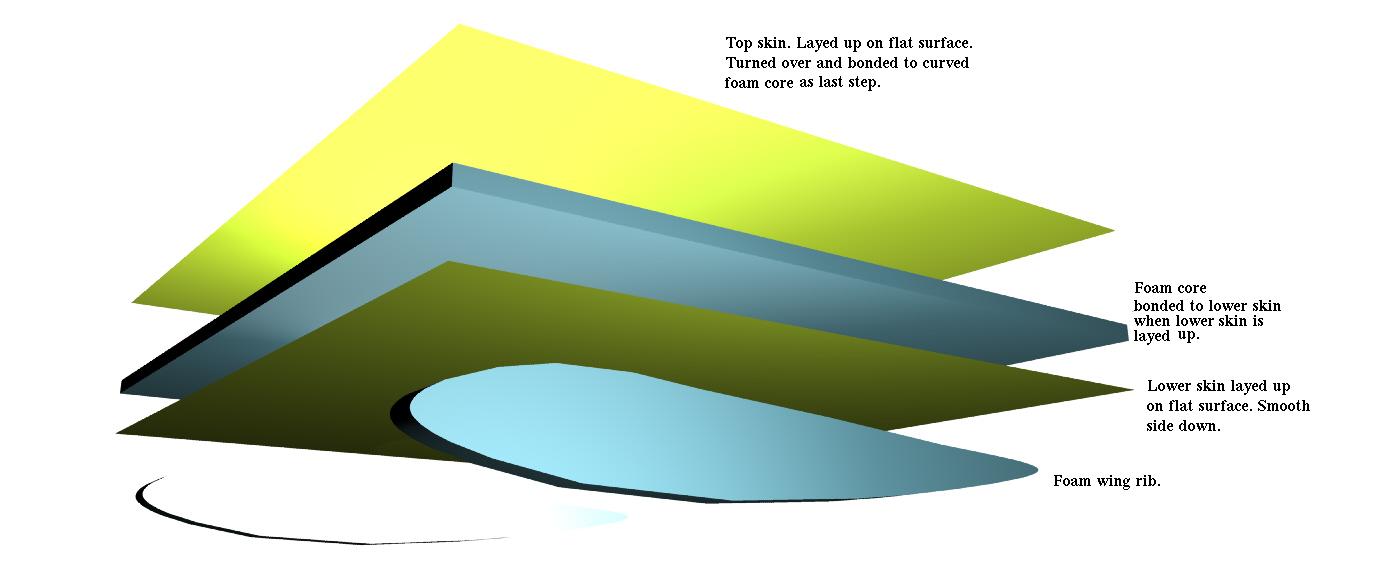
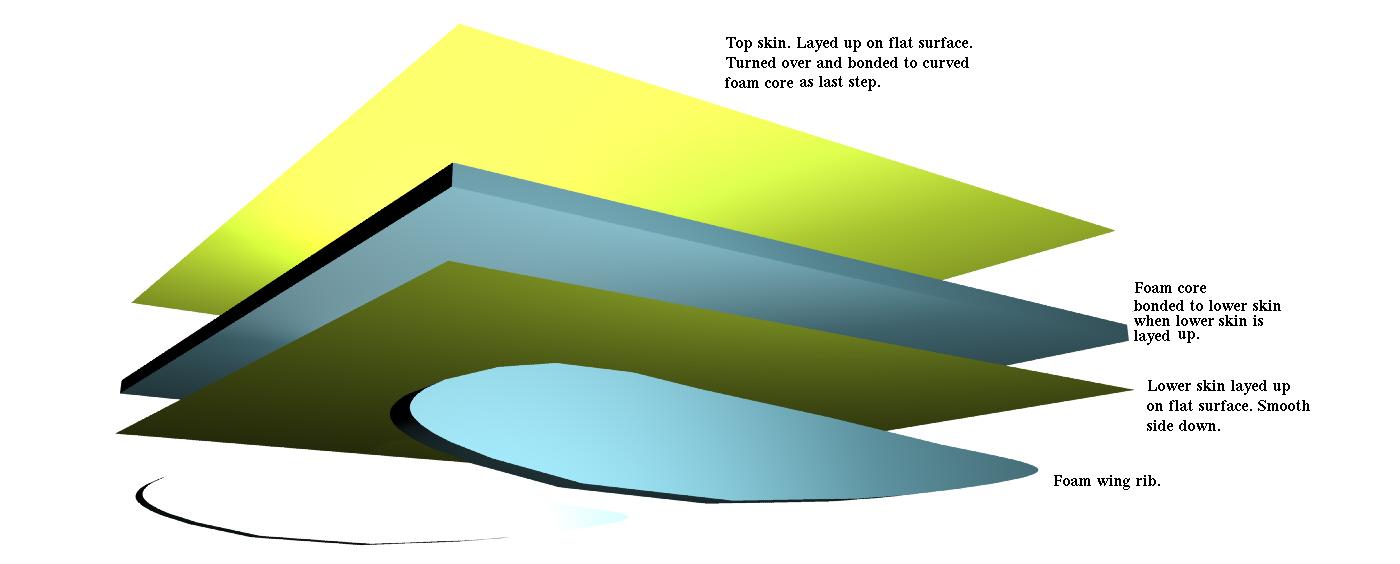
The new method described above eliminates the sanding and
automatically forms a light weight sandwich skin hollow wing.
The layups are done on a large flat smooth surface so excess
resin
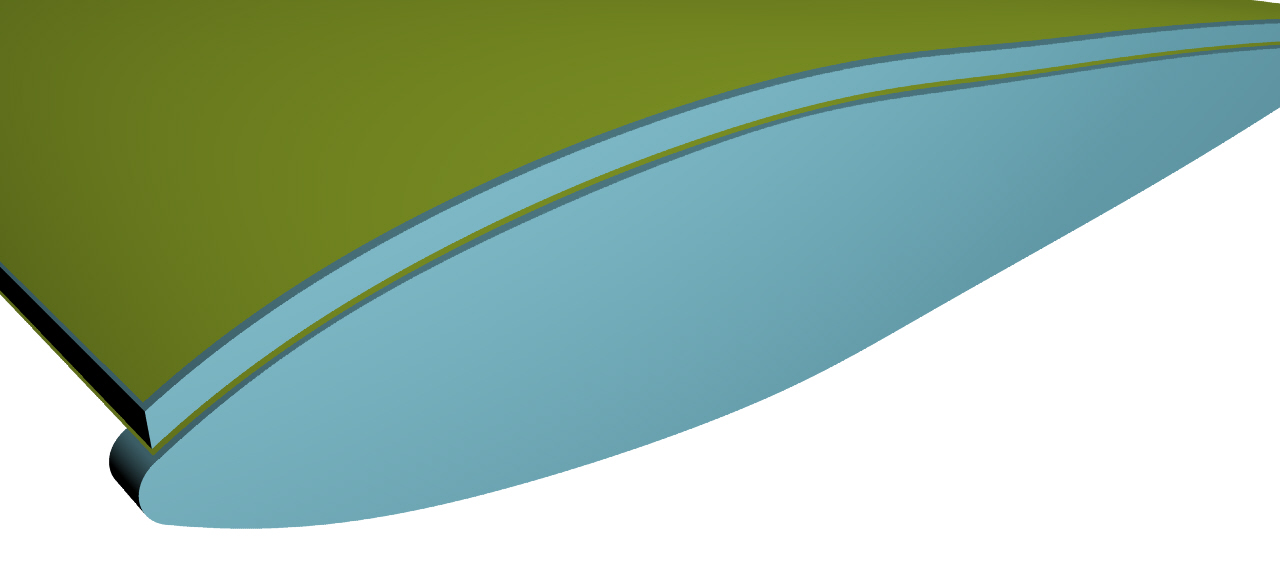
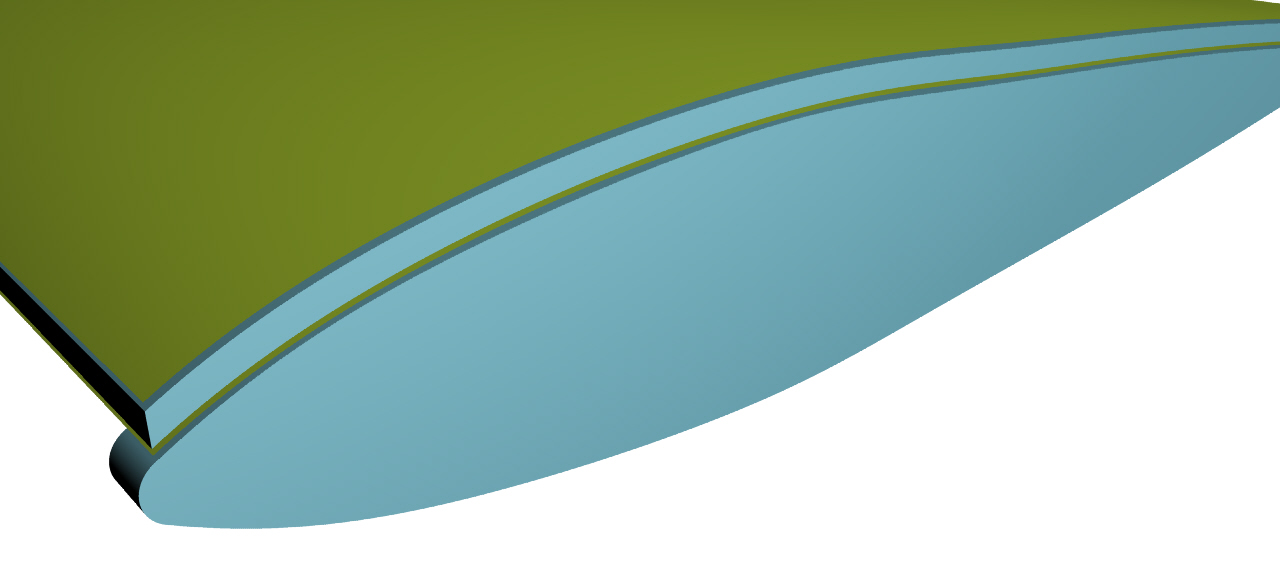
can be squeegeed out. It is a multi step process. First the lower
skin of the top cover is laid up with the thin foam core
bonded to it. Then it is attached to the ribs causing it to
conform
to the rib curve. Then the top skin is laid up on a large flat
surface and turned over. It is then curved and bonded to the
now curved
and thin foam sandwich core.
The ribs can be made the same way to add strength and seal them
from gasoline.
Paul Lamar
Paul, Core-cell foam sold at boat fiberglass supply houses has a
nice line of pre scored PVC foams in a variety of densities.
There
are lengthwise scored sheats for fitting planar curves and grid
scored for compound curves. It is absolutely manditory that
there
is a fully bonded surface between the wing skin and the foam
shear
web coring. This will require carefully sanded cores after the
single surface glassed core is applied to the ribs. The finished
top surface can be no smoother than the core if there is a
complete bond, otherwise the epoxie adhesive will be very
thick and
heavy.If there any areas of air there will be delamination at
altitude andwith changing temperatures since the air is
trapped in a
closed area with the closed cell foam.I would suggest
laying the
cloth out between two sheats of clear polyethalene on the flat
surface and wetting out/ squeege the surface as suggested.
There
will be several layers of S2 glass at different orentations
with
each layer 1" larger than the one below so that the thickness at
the edges is tapered. Then peel off the plastic from the
side you
need to bondto the foam and lay it on the freshly microed core
after squeeging on a little additional resin over the
micro. Then
continue to squeege the top plastic sheat to remove excess
resin
to the front and back edges. Using the plastic gives a smooth
final surface and prevents getting the cloth streached out of
alignment/orentation.
The upper plastic is initially wrapped over the core and marked
with a sharpie to use as a guide in cutting the cloth. The
bottom
of the wing would be skinned first so that the upper skin
will lap
over it at the leading edge to be below the chord line at the
seam. Getting the wet out skin in place is like applying a
large
vinylsign.
Leave both plastic sheats in place and drop it all on the
core. move it around to alignon with the dry core. then fold it
back on it's self and peel and cutaway the half of the bottom
sheat that is up. Do the micro and roll the glass over the fold
into place. Flip the second half over the now stuck first
half, remove
that lower plastic and micro the second half. Roll the rest
of the
glass and plastic back over the fold and squeege everything.
Pro-set has a hardener with more than three hours open time
and the
vacuum infusion hardener is usable and even longer with the
regular epoxie. Eatsern burlap.com in norfolk virginia has a
good
price. Any type of fiberglass cloth and weave is available
in 73"
wide rools or by the yard from Thayercraft.com in High Point NC
and they have free shipping with very good pricing.Ask for
Steve
if you E-mail them. He is building a Cozy in the warehouse
there.
george grimes
For a 1/4 inch thick wing top skin you don't need pre scored foam.
That is primarily for small radius compound or simple curves.
"The finished top surface can be no smoother than the core if
there
is a complete bond, otherwise the epoxie adhesive will be very
thick and heavy."
I disagree with this statement as the pre curred top skin is
as stiff
as heavy paper so it will be a smooth surface. The epoxy glue is
mixed with milled fibers which reduces the weight and makes it
more
viscous. Less likely to get voids. Standard Rutan procedure.
In any event it is far easier and quicker to sand foam than
fiberglass.
If air bubbles were a problem at altitude we would have long since
heard about it based on the number or Rutan aircraft out there.
There is no wet out skin. We are only dealing with pre curred
skins
that have become somewhat stiff. One layer of 4 oz glass cloth
or carbon is not hard to wet out on a flat surface. You can
also spray on a gel coat and then the epoxy glue. A Teflon roller
might be ideal. It is even possible to buy pre curred thin
fiberglass
flexible panels.
Paul Lamar
--
No, apparently there is some confusion. The Fold-a-plane
construction technique (used on the Personal Cruiser ans also
the Vision) uses no hot-wired foam. It results in a lightweight
sandwich construction. One side of the foam is glassed, then
the panel is formed in the desired shape and the other side is
glassed to lock in the shape. On very tight radius curves some
foam is removed to alow a tight bend, but on gentle curves this
isn't required. Some folks have vacuum-bagged the outer skin
during the first layup, placing the epoxy and glass down on a
very smooth surface and allowing the extra resin to come up
through holes in the foam and to be captured in a blotter layer.
The outer surface is very smooth (very little sanding needed)
and the pressure assures the fiberglass is fully wet out and all
the extra epoxy is removed. Light and strong. Steve Rahm
published the method, but I don't think he ever claimed to have
invented it.
While some folks have trouble bending "naked" foam without
snapping it, glassing and curing one side makes things a lot
easier. One famous quote "Heck, I could bend a cracker in half
if one side was glassed".
Mark W.
Sounds like you are talking about the fuselage.
The wing is what I am concerned about.
I got this screen capture right off the ex Vision now
pro-composites web site.
http://pro-composites.com/building.htmIt
clearly states hot wired foam cores are bonded to the
spar and then glassed. Scroll down the front page.
Please log on to the web site above and check it yourself.
The response to this idea I have had so far from the readers
of this newsletter speaks to the uniqueness of this type of
construction :)
If I did not already have a KISS cruiser 90% done 90% to go
kit I would build some test panels.
Paul Lamar
At AirVenture 2010 I attended several workshops by Scott
VanderVeen from
Pro Composites. This is a very interesting process that
results in a
fairly
smooth surface. Pro Comp has a video for those of us whom are
newbies at
composites. I like Pauls' idea of vacuum bagging on a flat
surface. How
about hinging two large honeycomb panels on the long side to
make the
buildup, then flip and bag for this flat surface?
For least weight Scott recommends a glass bead/resin layer
squeegeed on
the
foam and then peel ply over the glass to soak up excess resin.
Would this
work on 4 oz cloth?
Could plywood stations (essentially exterior ribs) work to
form the wing
exterior panel and then glass the interior side to hold the
shape? I have
been pondering this method to form our leading edge, which
then attaches
to
the ribs using adhesives and additional pull rivets at the spar.
Dan F
Paul, Air filled voild in wings have been a problem with solid
skins over a
foam core. Alan Shaw had a business building wings for Velocity
aircraft
after he stopped working for Velocity. He used a closed
pressure mold with
precured skins over featherlite cores. There were cases of 30%
voids during
production. Some were salvaged by injecting resin through a
hole at the end
of a void until it came out a hole at the other end. Several of the
resulting wings delaminated at altitude and were scrapped. The
statement
that if this was a problem the many Rutan designed moldless
composite wings
would exhibit this failure mode may not be accurate. The Rutan
aircraft are
ALL wet layup over the cores with shear webs and spar caps also
laid up wet
over the cores. With reasonable workmanship full contact with
the microed
cores is relatively easy.There have also been some delamination
problems
associated with hardshelling foam cores. This method arguably
passes tests
of peel strength, however some delamination has occured at the
junction of
the skin and micro surface.
One other point is the single layer of 4 Oz glass. At a
minimum one
layer of 8 harness satin with spanwise orientation and one at +
or - 45
degrees for torsional loads is required. The cloth could be uni
directional
if minimum weight is a concern. Of secondary concern is
puncture damage from
spectators at airshow parking areas or dropped tools by the
builder. Often
this determines the plies necessary more than the tensile
strength of the
materials.
I saw the refrence to "I" beam manufactured spars. If the
spar is fit
through the ribs to leave the rib perimiter continuous it might
be easier to
use a tubular spar particularly if wing twist has to be built
in.The inboard
portion of the spar could have cloth laid up to progressivly
increase
thickness and perhaps some phenolic blocks incorporated for the
attach pins
to the fusalogue. Just a thought.
Also you might consider tapering off the foam before the inner
skin as
applied on the flat work table so that the inner and outer
skin would be
bonded at the leading edge and somewhere at the rear.
george grimes
Hey I am not responsible for some ones lousy workmanship :)
One must be doing bad work indeed to get a 30% void. It is a simple
matter to check the foam for flatness with a straight edge.
Sand the foam with a long straight 2 by 4 with sand paper
on one side. Deal with the problem instead of throwing the baby
out with the bath water. Just be careful.
Use the coin tap test to detect voids. Robin does that on
air buses. SOP on airliner composites.
The first layup that controls the torsional stiffness can be
anything
you want in the way of fiber orientation. The outer skin does
nothing
but protect the foam from damage and adds panel stiffness.
The leading edge can be solid foam with a wet layup. That will
cut down
enormously on the sanding.
Time is money. This is a way to cut the time and cost needed to
build
the airplane. It does not make sense to use a construction
technique that
takes a year to sand smooth. Not to mention the mess and
several coats
of paint.
Paul Lamar.
A couple of thoughts on the "year to sand smooth"
- Much of that "year to sand smooth" comes from inaccurately formed
cores. If the core is formed accurately, the finishing process is
obviously much easier to accomplish. There are readily
available CNC
cut cores for many of the Rutan type airplanes. One of the people
that makes these cores says that if there's adequate intere$t, he
might be willing to make cores for other types.
- Much of that "year to sand smooth" comes from people using
ineffective techniques for applying and forming filler. And
the wrong
materials. A method similar to what Cory Bird used on his
"Symmetry"
is a good one. He was particularly fastidious in the completion of
that airplane..
- Leading to my final comment about "year to sand smooth". Some
people think it's terrible if you are able to see any evidence
of the
underlying structure of a composite airplane. The same people
think
it's terrible if you can see the grain, tape, or stitching on a
fabric
covered airplane, or any of the rivets on a metal structure. I
think
that's only one (inefficient) mentality towards aircraft
finish. When
you look at many of the composite parts of commercial
airplanes, there
is obvious print-through on layups, and in many cases, you can
see the
transition from one layup schedule to another. I actually
prefer this
as it makes me feel more confident in the structure and
workmanship of
a particular piece. If everything is covered in frosting, I
only know
the skill level of the person doing the finishing, not of the
builder.
Plus, filler added is weight added. And in most areas of the
airframe, filler doesn't contribute aerodynamically.
So, as you say, don't throw the baby out with the bath water.. The
construction methods popularized on Rutan designs is quite
efficient
when taken in the context of one-off custom built airplanes.
Matt-
I have never built a Rutan type composite airplane but
I wonder why one cannot sand the foam before applying the
wet layup to insure an accurate surface.?
Paul Lamar
One can absolutely sand the core before applying the wet layup.
I understand that Berkuts were built starting with cores that
were hot wired oversize and which were then sanded to precise
dimensions.
Matt-
Well then what about bonding on pre curred skins with
a finished smooth surface? The spar handles all the bending
loads.
One advantage of the sandwich skin idea above compared to a solid
foam core is you get more internal volume in the wing for fuel,
control linkages and perhaps landing gear.
No need to make separate hollow strakes.
Paul Lamar
--
The Rotary Engine NewsLetter. Powered by Linux.
ACRE NL web site.
http://www.rotaryeng.net
Youtube key word PaulLamar2
Copyright 1998-2010 All world wide rights reserved.