My starter drive gear thrust forward and engages the
flywheel but
fails to
turn over the engine. Any of you more mechanically
inclined guys have a
guess as to what my problem may be? (It's a rebuilt
starter)
Jay
Can you turn the engine over by hands on the ring
gear?
One rotor could be one tooth off on the phasing
gear.
Make sure the right spark plugs are in there.
Put a voltmeter on the brush connections.
If the starter wire is too small too much voltage
will drop across the wire.
Send a sketch of the wire sizes and a schematic on
how
it is wired.
Paul Lamar
Hi Jay, Make sure that the starter Bendix drive is
correct and not
running out of travel before the solenoid contacts meet.
(remove
starter, clamp starter and put a piece of pine packing
crate onto gear
and engage starter should smoke the wood on the gear), no
matter how
hard you try to stop it, ie you will not stop the gear, all
the above
assumes that the engine will turn over.
John Burey
Thanks for all the responses gentlemen. I attached a
diagram representative
of how I have mine wired. So far I tried putting a volt
meter on the
solenoid terminals. With the battery on there is 12+ volts
but with the
starter button pushed there is less than one volt at the
solenoid. I'm using
8 gauge wires and they're getting hot rather quickly.
...Oh and I can turn the engine by hand.
Jay
What is the current rating on the solenoids? As much as 300
amps
can flow through a main starter cable. Starter motors are
around
3 HP (for a short while). 3 HP is 2.300 KW. 2300/12 V
= 190 amps.
Paul Lamar
With that much voltage drop with the starter actuated, you
have a DEAD SHORT in the starter.
Joel
Jay,
Are you saying the cables from the bus to the solenoid and from the solenoid
to the starter are 8ga. wire? The control wire through the staarter switch
can
be light gauge wire, 16ga or 14ga as it only powers the pull in winding. The
power wires that supply the main current to the starter should be regular
battery cable. If the starter circuit is longer than 3 feet, you should go
to
a heavier wire. The longer the distance, the larger the wire diameter to
reduce voltage drop in the wiring.
I would recommend doing a voltage drop test in the wires. Connect the
positive
meter lead at the battery (buss) end of the wire to the solenoid, and the
negative end at the solenoid connection. Engage the starter just long enough
to get your voltage reading. Then do the same between the solenoid and the
starter. Note that battery voltage will drop to 8 to 9 volts during cranking
on a system that is operating normally due to the high current draw.
If the voltage drops are high in the wires, there is not enough left to turn
the engine.
Dale Davies
Check for the stator winding shorted to the housing. That happened to me.
Lots
of current pull and little torque. Your torque will depend on exactly where
the
short is. An insulated stator wire rubbing on the pole piece(s) is a likely
failure point. Look for one of the stator coils that will move when you
push it
about. Movement means friction and possible failure.
You can use a strip of thin sheet insulating material inserted at the
contact
point to break the electrical contact and then add a drop of high temp epoxy
to
keep things together. Silicone RTV rubber will fill a gap and prevent coil
movement while allowing later coil removal if necessary.
Craig Taylor
Again, thanks to everyone taking the time to offer suggestions.
I upgraded the 8 ga. Wire to 2 ga. But there was no change. I took the
solenoid off and made the ground (as if the starter button were engaged)
And measured across the terminals. The resistance went near zero, I
interpreted that as the solenoid is closing and getting power to the
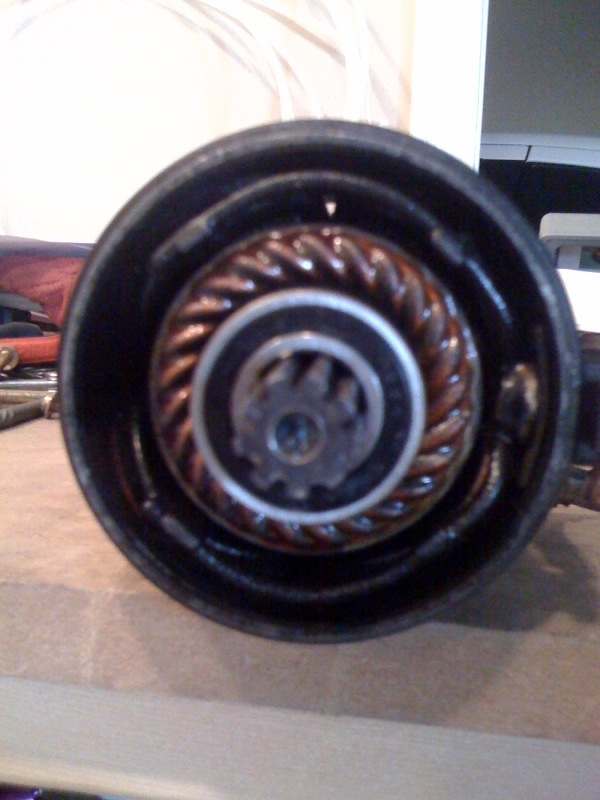
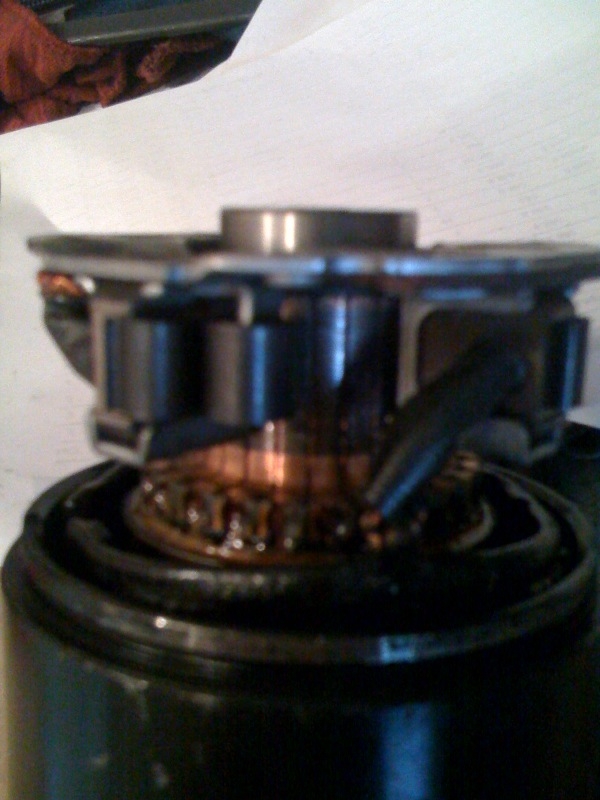
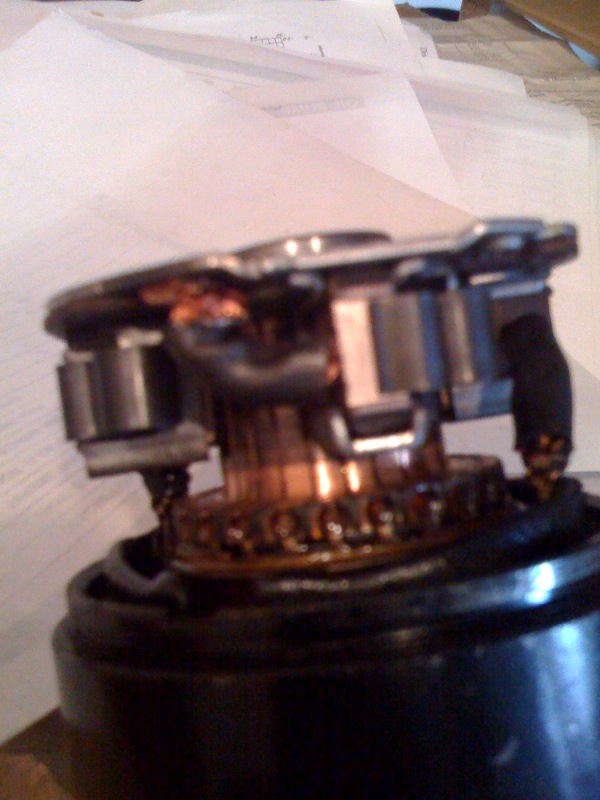
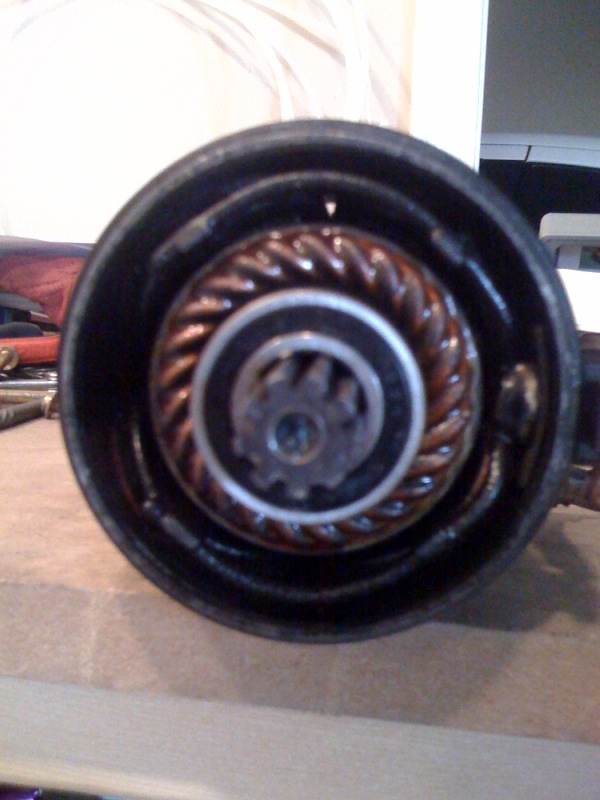
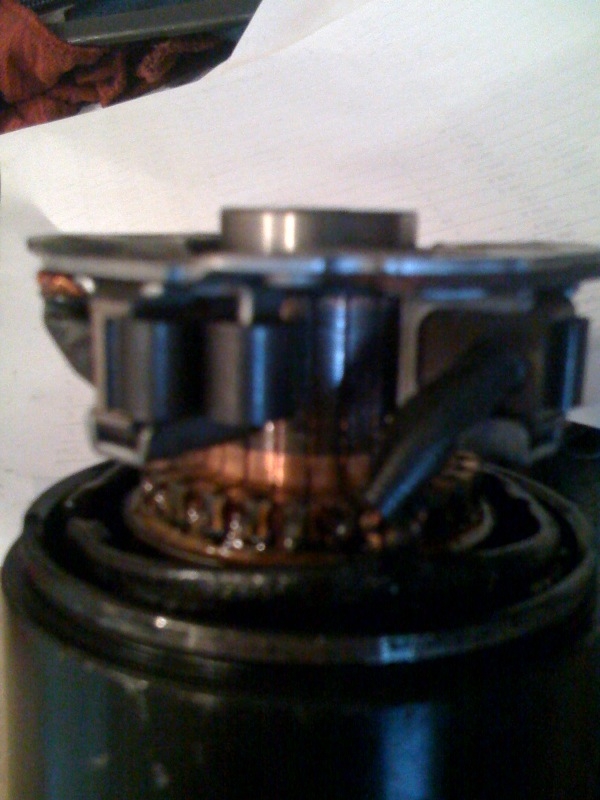
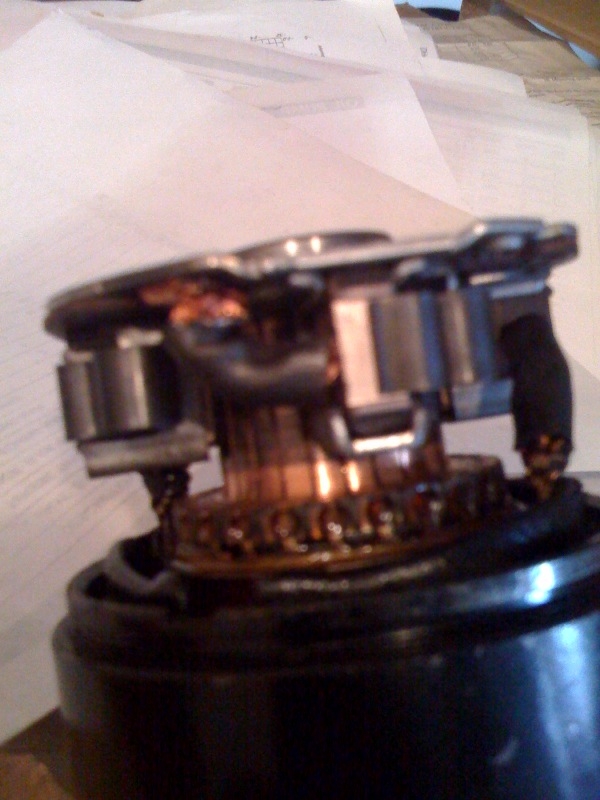
starter. I have since taken the starter apart. I enclosed some pics.
I don't see anything touching but then I'm not certain of what's not
supposed to be touching. Any further thoughts much appreciated.
Jay
--
The Rotary Engine NewsLetter. Powered by Linux.
ACRE NL web site.
http://www.rotaryeng.net
Youtube key word PaulLamar2
Copyright 1998-2010 All world wide rights reserved.