Paul,
Thought you would enjoy viewing a video of my P-Port 20B taken last
weekend
(11/28/10). I was preparing for takeoff. The video of my departure
didn't
turn out too well.
http://www.youtube.com/watch?v=1Zsy-cgWvj4
Mark S.
What idle speed was that Mark?
Paul Lamar
What a very happy looking airplane :)
I gave it a thumb up.
John
Paul,
Idle was up and down between 1600 & 2100 rpm. It will idle slower, but
there is no reason for it. It needs a bit more tuning, but it is running
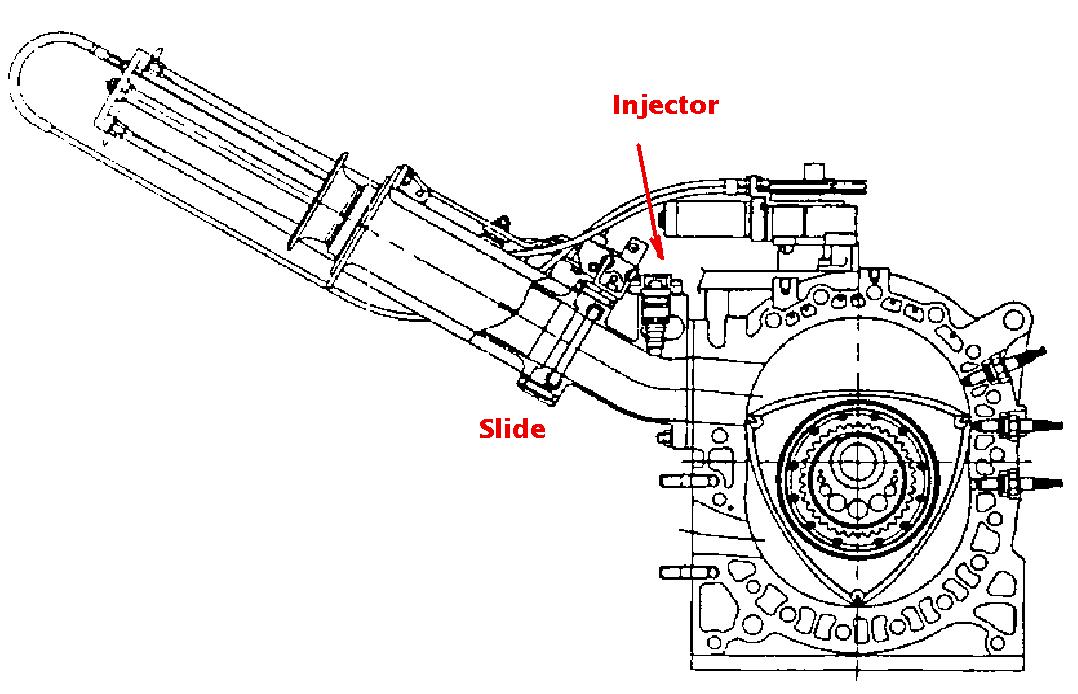
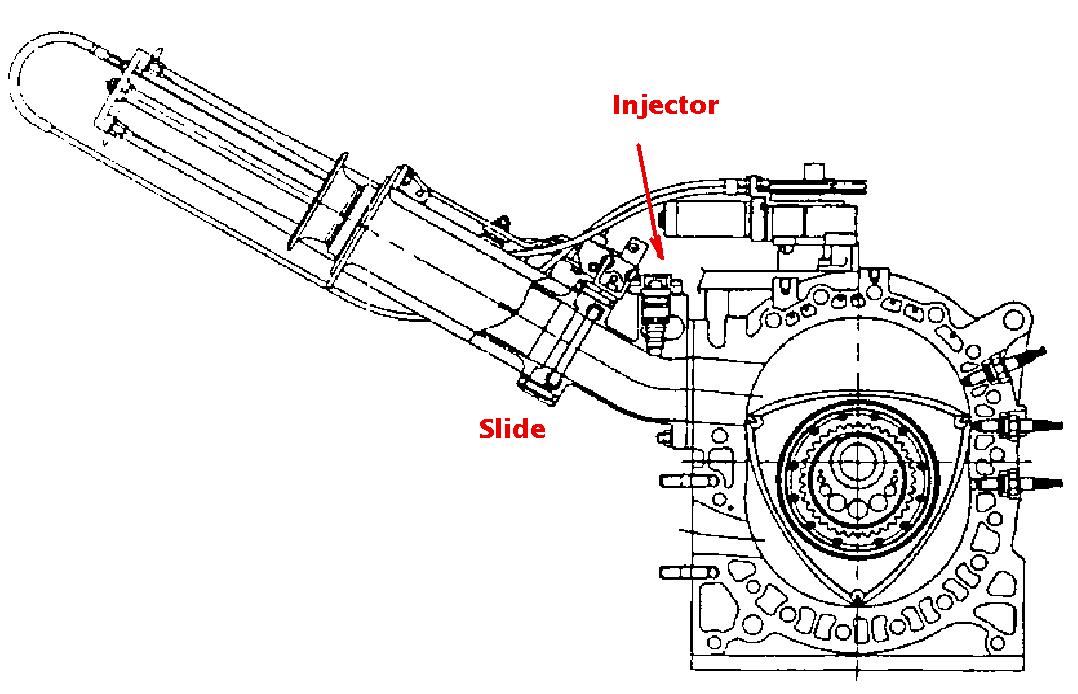
much better than before the recent EC-2 upgrade. I'm curious if it would
idle smoother if the primary injector was downstream of the slide
throttle.
What do you think?
By the way, I recently removed the tangential muffler and replaced it with
my original 3-into-1 exhaust with DNA muffler and picked up gobs of hidden
power. This one is louder, but the power gain was unbelievable! Now I
have
to really have to press hard on the right rudder to keep it on the
centerline during the takeoff roll. Ya gotta love it!!!
Mark S.
I don't think the idle will improve by moving the injector
but I could be wrong. Getting a P-port to idle at 1600 engine RPM is a
major improvement in P-ports. Prop RPM is 560 which is far lower than my
C182 will idle. That is due to the slide throttle
being close to the rotor housing. A P-port side exhaust RX8
engine idles even better. NSU and the old Power Sport guys
put the butterfly near or in the rotor housing. The NSU RO80 idle
was great. The Spider had 2 p-ports. One small one for idle and
a larger one for full power. I drove an RO80 in Germany back about 2000.
It is hard to judge the sound on the video. I have a standard
position and that is 30 feet off the wing tip. Noise should
be in the range of 100 db to 106 DB. 100 being relatively quiet
and 106 rather loud. The SCCA have a 103 DB limit. Noise
pressure double every 3 DB. 60 DB is near silence.
Here is a video of Al Gietzen's side port 3 rotor with probably
100 HP less than yours. No db reading
http://www.rotaryeng.net/Velocity_Vignette.wmv
This one is of Ian's RX8 side port engine of unknown HP in WA.
It is very quiet indeed. Again no db reading
as I forgot to pack the Radio Shack sound level
meter.
http://www.youtube.com/watch?v=XgLw3a8DZgM
Sometimes you get more wind noise in the mike.
It is also hard to separate prop noise from engine
noise.
Here is Dave Leonard's turbo 13B. No db reading on that
either.
http://www.youtube.com/watch?v=o6iz7mgO4UQ
http://www.youtube.com/watch?v=kjXEM2D_4-Q
Paul Lamar
Paul,
I remember viewing those YouTube videos a while ago. While difficult to
tell for sure, to me they all sound quieter than my engine. I have a db
meter and will take some readings so we have a hard number. My motor has
the stock 20b exhaust inserts. In my video the wind was blowing pretty
good, so yes, some of the sound was wind noise.
Mark
Mark-great to hear that confirmation regarding exhaust.
Regarding your question regarding idle speed and factors related....we
found
a lot of different variables, but generally if mixture and other factors
are
squared away, throttle location and not injector location was primary
factor
regarding idle speed--the closer to the port the lower the idle speed and
responsiveness to throttle settings, rather than placement of injectors.
That is why we put the throttle plates in the wall of the rotor housing.
But with injectors we found placing them closer to the ports increased
throttle responsiveness as opposed to them being way upstream. For years
we
used direct injection right in the rotor housing, spraying against the
rotor. But we found the most tractable configuration was having injectors
just at the end of the induction tube. Moving the injectors further
upstream on the induction tubes increased power by lowering charge temp and
increasing density. But even that relationship is affected by
configuration...such as running a wet induction charge around an induction
tube bend vs. straight with no bends, etc. But that was not generally
practical s to package everything in a compact manner in aircraft .
Steve Beckham
Steve,
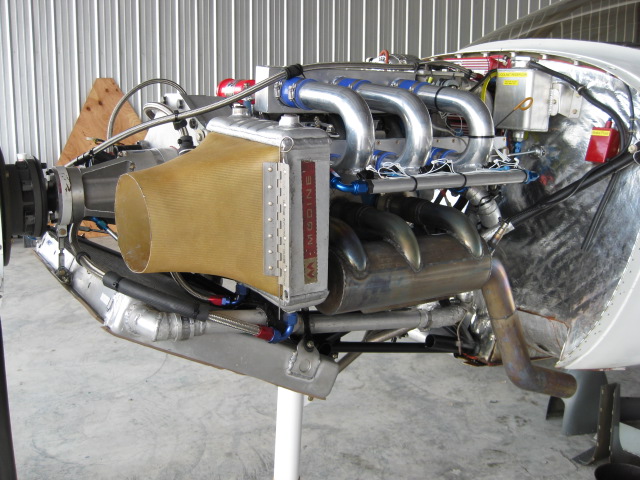
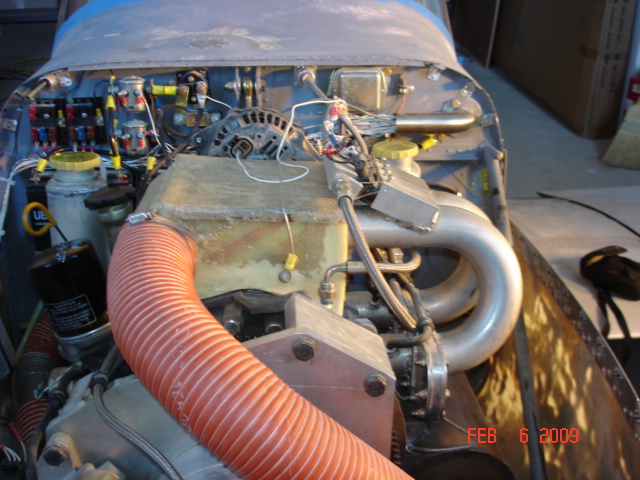
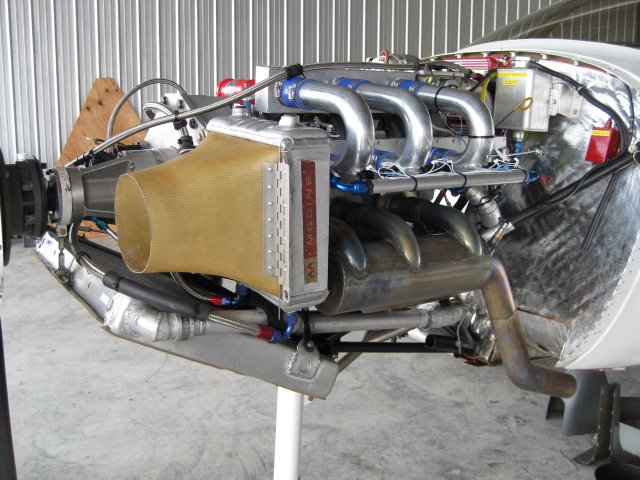
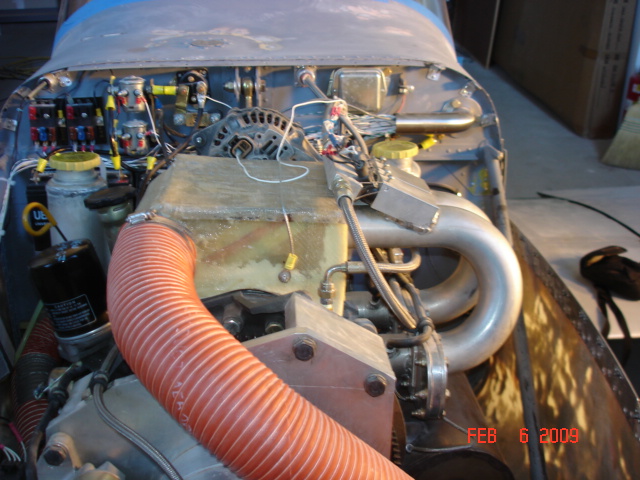
Thanks for the information on p-port intakes. I located my injectors at the
bottom end of the 180. This allows them to look straight into the port, but
only at WOT. If I run at less than WOT, which I do quite often, there is a
wall part way across the intake. I was curious if it would it be better to
locate the injectors downstream of the throttle plate? Or, maybe I should
leave well enough alone.
Mark
That puts a different light on it. I did not think of about it
despite the fact I knew about it.
We put the injectors up high on Mark Suspinski p-port engine
and it idled OK. The fuel and air had plenty of time to mix
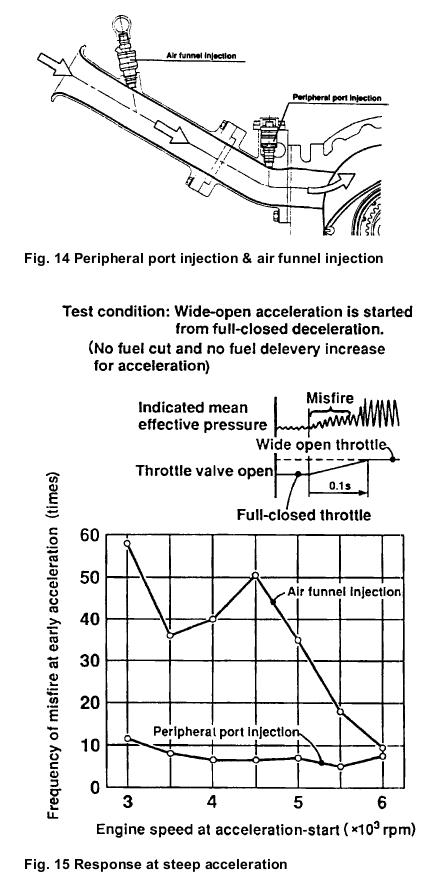
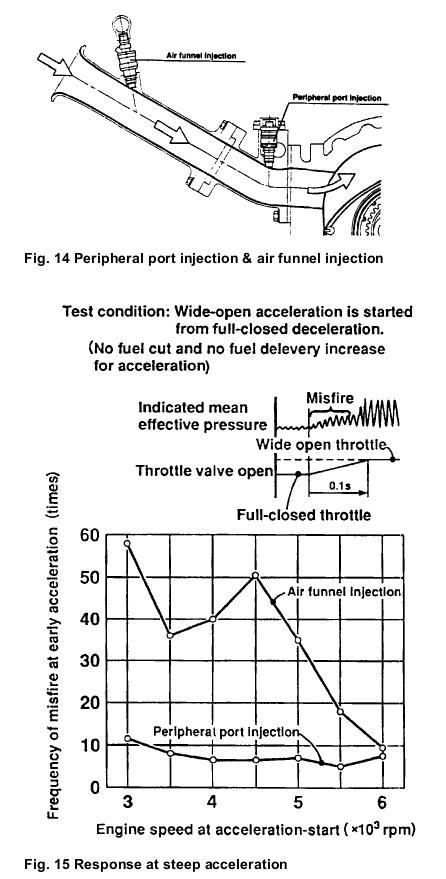
or evaporate. I did that because Racing Beat said it gave
slightly better BSFC. Mazda found the same results in the
P-port Le Mans 4 rotor but they moved them closer to the
port for throttle response reasons which is everything
in a road racing engine.
http://www.rotaryeng.net/Mazda_R26B_US.pdf
Since you are staging the injectors it might be worth a try to
put the primaries on the other side of the throttle
plate. It would be an interesting experiment as so far as we have
tried them in two different positions.
I would not worry about raw fuel on the bend wall. It is not going
anywhere other than in the engine. It probably evaporates
anyway due to heat rising from the exhaust.
Paul Lamar
--
The Rotary Engine NewsLetter. Powered by Linux.
ACRE NL web site.
http://www.rotaryeng.net
Youtube key word PaulLamar2
Copyright 1998-2010 All world wide rights reserved.