Brian,
What kind of hose did you plumb the radiator with? Where did you get
it?
Joe Berki
Limo EZ
I used silicone (silicon?) hose from Mcmaster Carr. It likes to kink
if you try to put too much of a bend in it, so using an
anti-collapse spring or aluminum flex tube inside it to prevent a
kink is a good idea if you have any small radius bends in it.
Brian Trubee
I mentioned this hose and special clamps in my book "How to Cool
Your Wankel."
We have a Christmas special for $30 cash green backs direct U.S. only.
Plus $5 cash for mailing in the U.S. No checks no CC's no money
orders. Overseas $15 mailing. Extra paper work involved. 1/10th of
an oz Krugerrand gold coins accepted for an order of four books :)
This month only.
Paul Lamar
Do you have a book titled" How to Keep your Wankel Warm"? Because
I climbed up to fly the pattern around 2500 feet above the field and my
oil and coolant temps never got above 135 degrees f. It was about 50
degrees out at the time.
If you did, I'm sure that someone would find the title too suggestive.
Brian Trubee
I am having enough trouble with the title as it is.
The EAA book store does not like it. AC Spruce has no problem
with the title.
You need cowl flaps Brian. You are the first rotary engine
aircraft builder that has complained about your cooling
working TOO WELL in the entire 12 year history of the Newsletter :)
That indicates to me we have made tremendous progress on
rotary engine cooling system design as 12 years ago it was common
for rotary engine builders to give up because of cooling problems.
Even Dave Garber, probably one of the first rotary engine builders
back in the early 1970's, emailed me in the late 90's and
asked my advice on cooling system design.
Now remember, for every one degree F reduction in the outside air
temperature your cooling system will work one percent better.
In other words at this outside air temp your cooling system is
50% better than it needs to be.
Just wait until 100 F summer arrives :)
In the mean time add cowl flaps as closing them will reduced the
aero drag when you don't need all that cooling. Cowl flaps are more
important on liquid cooled engines because of the liquid cooled engine's
one degree rule.
The same rule does not apply to air cooled engines.
Paul Lamar
Paul,
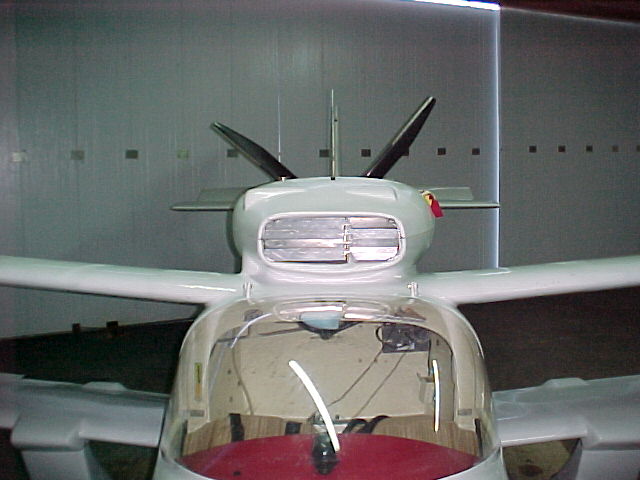
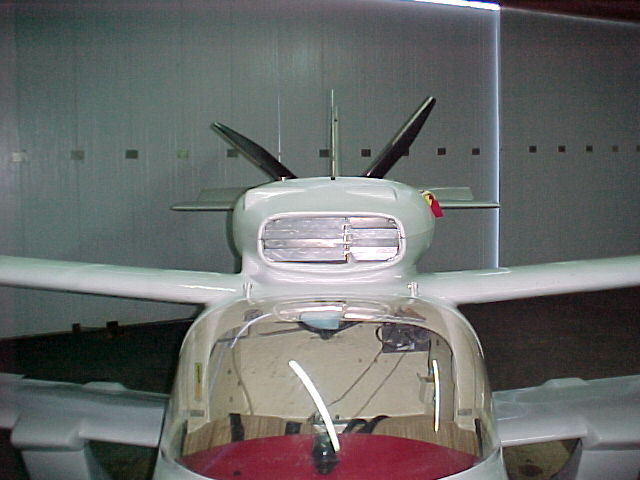
Trubee's radiator is mounted the same as the test stand except under the
engine. We have another feature you may be interested in, the radiator is
hinged at the aft end so that it may be pivoted to increase or decrease
frontal area for testing and perhaps take the place of cowl plaps. It also
has an electric fan behind it. milo
Here is another motor that needs cowl flaps. At about 0 deg. C. or less it
gets too cold in the cockpit, I can actually control the cockpit temp. by
adjusting the cowl flaps. The cockpit is heated by the cooling water.
Rino Lacombe
Renesis powered Glass Goose
--
The Rotary Engine NewsLetter. Powered by Linux.
ACRE NL web site.
http://www.rotaryeng.net
Youtube key word PaulLamar2
Copyright 1998-2010 All world wide rights reserved.