Greetings Paul,
I received the taps today, thank you.
I do have some questions about the mounting of the water block for the
RX8, most of which I think I know the answer to.
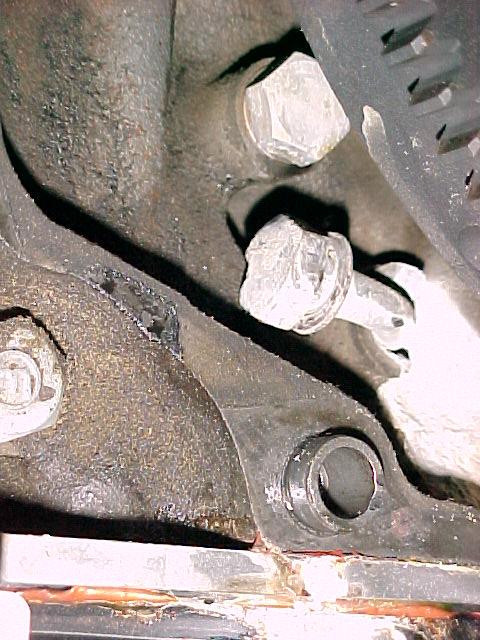
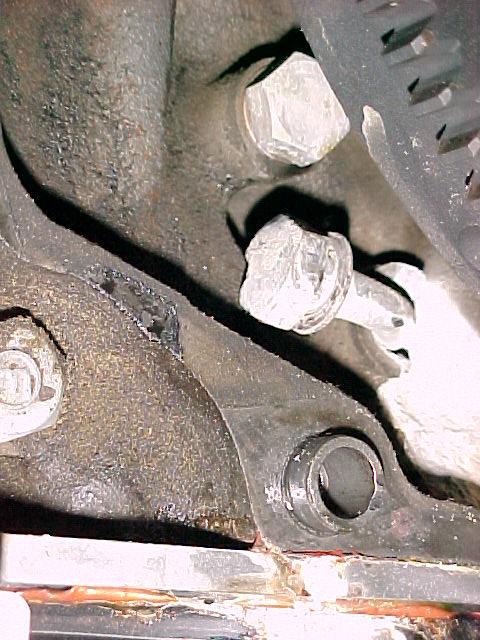
I assume that I am to extract the studs holding the original
housing and
replace them with bolts. Any idea of the thread in the case that is
used? Can I just double nut the studs and extract them, or do I need
heat or other methods?
Since two of the bolts will go through the water passages, will the
gasket be sufficient to prevent leakage around them. Should I use
locktite or other thread sealant with them?
Should I use lock washers under the heads (I assume that they will be
Allen bolts.)?
Any idea of the torque values for these bolts?
I assume that I will use the sealing washer that was under the banjo
bolt for sealing the taps.
Is any of this correct.
Happy holidays,
Rich
No on the threads. Here is the drill. Remove the studs and find
a metric nut that fits. Then take the nut with you to the hardware
store to find an internal hex head screw that fits. Metric screws
are a problem as there are three common threads for each diameter.
It is hard for me to tell them apart by just looking at them.
The gasket should be sufficient but Mark S can fill us in
as his is working I think.
I would use lock tite on the threads. I don't know the torque
rating but it should be not be hard to find that on google.
The screw diameter is 8 mm.
Double the nuts and they will come out no problem.
Paul Lamar
Paul,
I tried making a gasket from gasket material... and it leaked. I made
another one... and it leaked too. So, I purchased a metal gasket from
the local Mazda dealership and it worked.
As for the bolts, one is outside the water passages, and the other two
bolts fit inside the water passages and are covered by plugs (which need
sealant).
Mark
Thanks Mark,
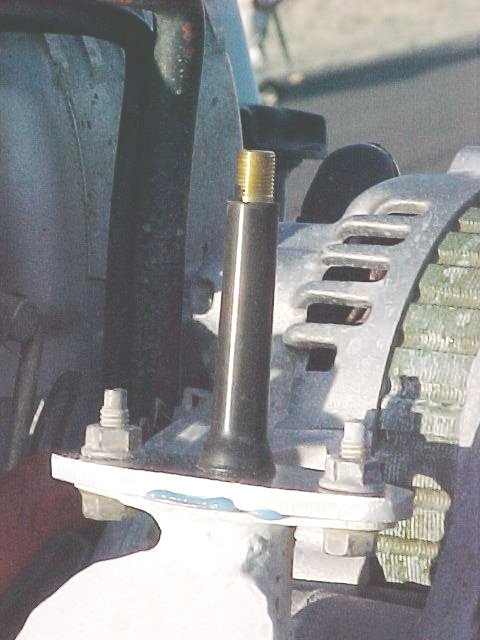
I thought I would use those threaded holes for temperature senders
(inlet temp and outlet temps) instead of plugs.
Rich
Good idea Rich.
Paul Lamar
I put the engine coolant temp sender in the upper hole. The lower hole
was too close to the slide throttle to use anything but a plug.
Besides, the lower hole is the coolant return. I don't really care
what the return coolant temp is.
Mark
I care :) If one knows the temperature drop across the heat exchanger
one knows how well it is working. One could drill a hole in the
bottom of the block for a sensor there. Also it is very very good
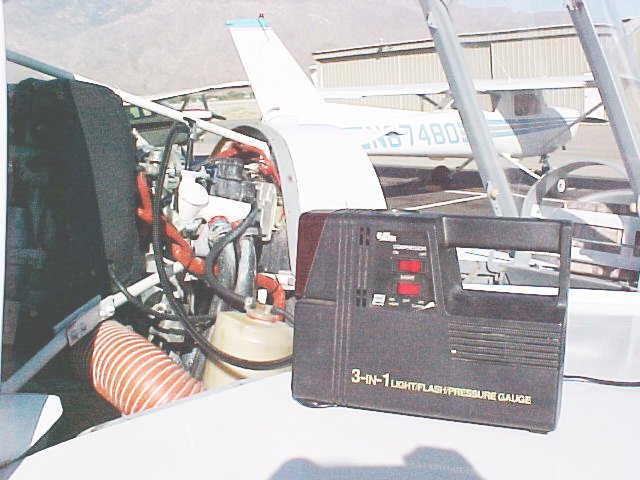
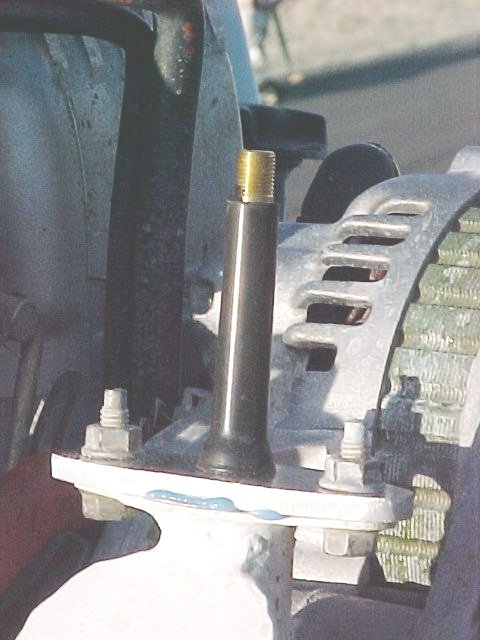
to know the pressure in the cooling system. The preflight for
the cooling system is; pressurize it with a hand pump and watch
the pressure gage. If the pressure gage reading slowly drops you have an
internal or external slow leak. We did this with Perry's rotary
in his Long EZ out in Palm Springs and finally, after a couple of days of
screwing around, discovered a tension bolt that failed allowing the cooling
system to leak internally. The bent bolt was hiding behind the flywheel.
I mentioned the pressurization trick in my book.
I got the idea from Ken Welter used in his rotary powered
coot. His gage reads positive and negative coolant pressure
so as you watch the engine cool off the pressure will
go negative sucking the coolant back out of the over flow
tank. A real education on how cooling systems really work.
There is also room on the front side of the block for more sensors.
Paul Lamar
--
The Rotary Engine NewsLetter. Powered by Linux.
ACRE NL web site.
http://www.rotaryeng.net
Youtube key word PaulLamar2
Copyright 1998-2010 All world wide rights reserved.