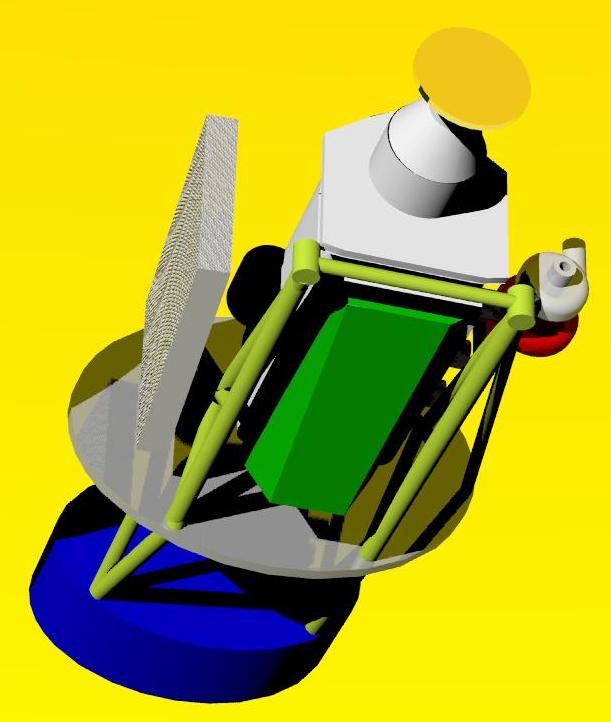
Paul, while we are thinking about CCF radiators, what thickness
aluminum would you suggest for the end tanks and pressure bottle.
Looks like a good winter project.
C. Smith
0.049" if you have a good tig welder.
BTW Randy I found that picture of the Scirroco two pass rad.
Here it is.
Paul Lamar
Hi group,
Speedway motors has them on for $189.99.
Dale Davies
Link please.
C. Smith
I think I may have created a bit of confusion here.
The Scirroco two pass is not the one I recommend
for fabricating a cross counter flow.
It is a Dodge Neon core with plastic end tanks you can
order from any rad shop. I removed the plastic end tanks.
A two pass rad with inlets and outlets on the same end
like the Scirroco are good for quick and simple mounting
on the bottom of the fuse. The main reason to use a two
pass rad is to simplify the plumbing :) Randy has a one
rotor so the Scirroco is large enough by itself.
For two rotor quick and simple use I recommend a larger
frontal area double pass rad the thinner the better.
This one is 28 inches high.
http://tinyurl.com/3xh7avn
Of course it is not mounted vertically... face on to the air stream.
It is mounted under the fuse near horizontal with a Kays & London
wedge shaped diffuser.
It can also be mounted horizontal or near horizontal
under the engine with a Kays & London wedge shaped
diffuser.
It can be mounted vertically on the cool side of the
engine as well with a Kays & London wedge shaped
diffuser. Here is my Sea Wind recommendation for Doug
using a stock cowl.
The theory here is; the larger the frontal area AND the thinner
the core the lower the aerodynamic drag for a given core volume.
Paul Lamar
Paul and others.
Good points all, except the Sea Wind installation is butt ugly and requires a
larger cowl:) Under the engine is fine. Say all the theory about water flow
resistance is fine do any racers actually use the Cross reverse flow unit like
you illustrated. I would think if it was the most compact and efficient they
would be all over it.
Doug in Japan
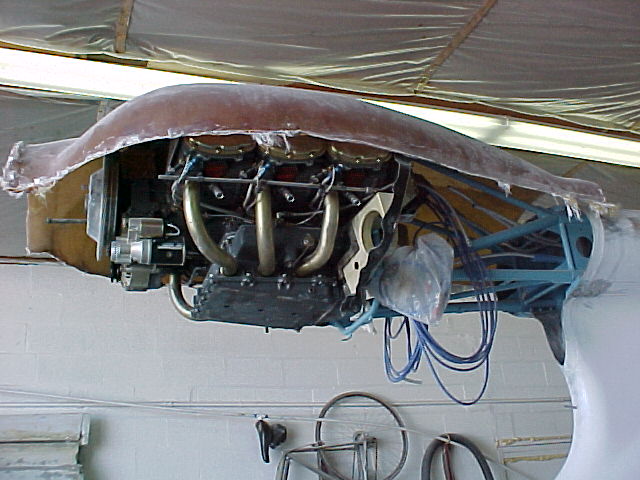
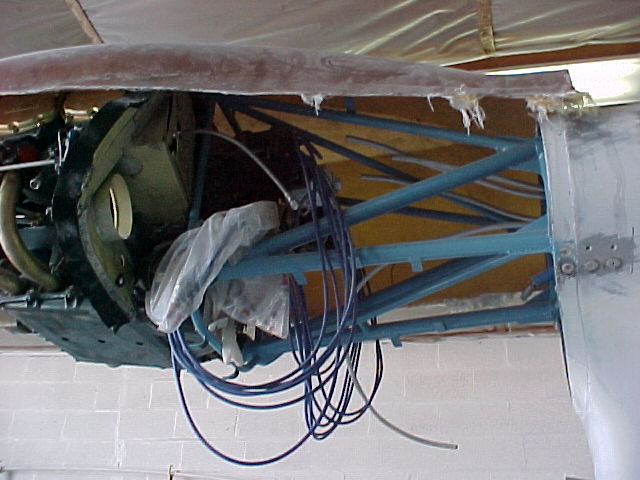
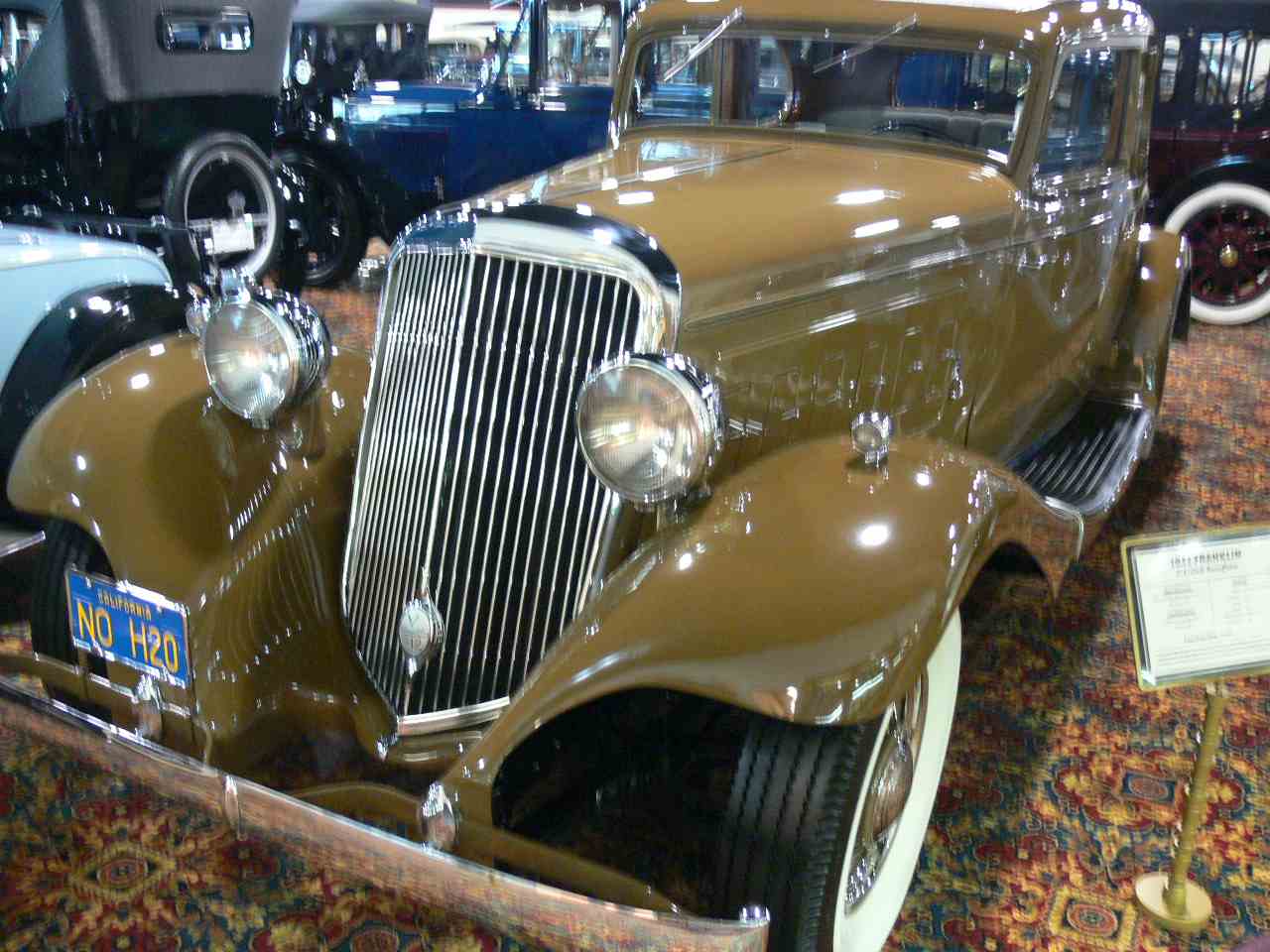
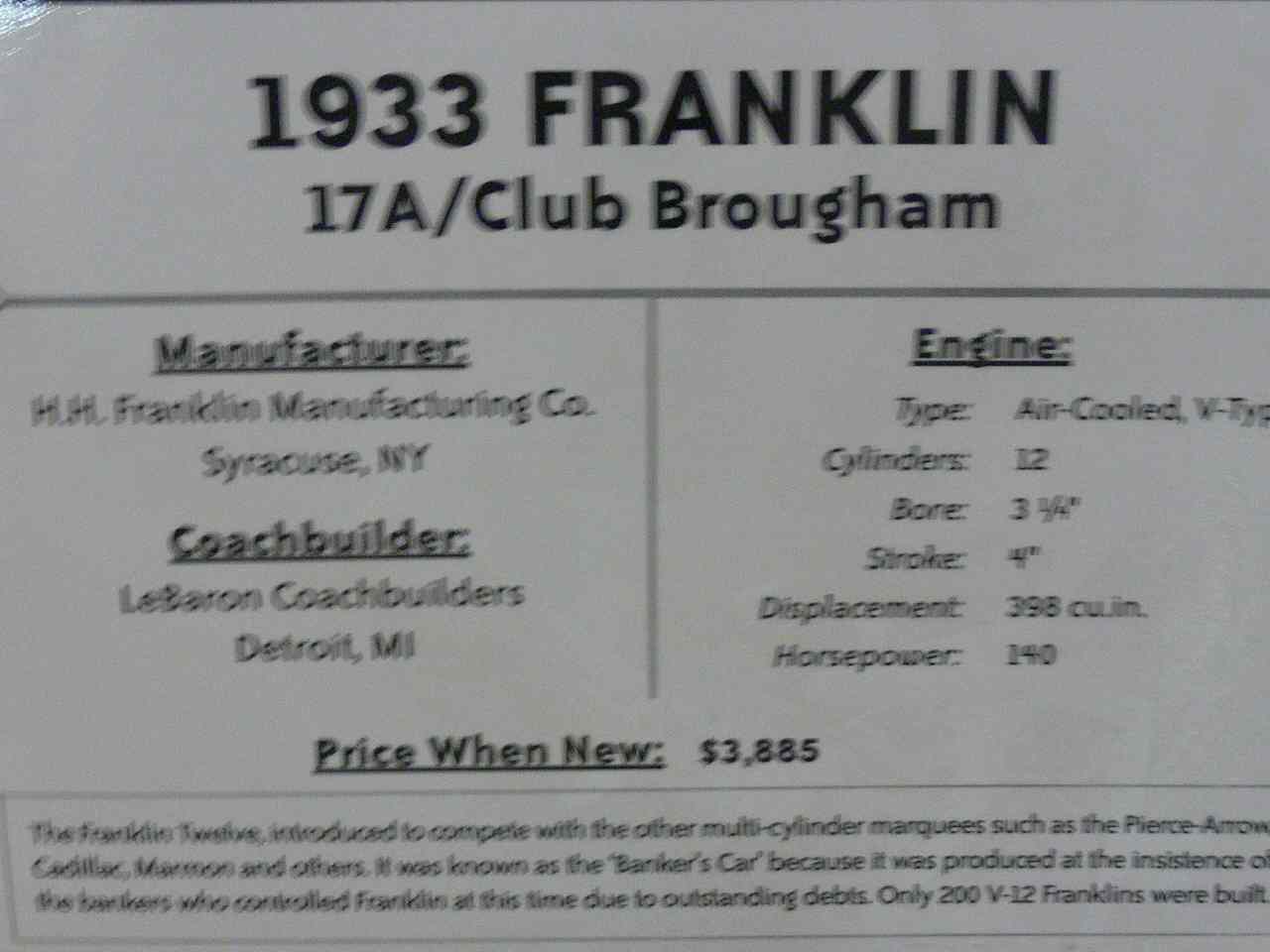
Cross counter flow. Cross counter flow was discovered in the early
1930's by Franklin on their air cooled engines. Both cars and
aircraft engines.
Cross counter flow is used on 99% of air cooled air craft engines.
Intuitively one would think to bring the cooling air in from
the bottom of the engine and allow it to exit on the top as everybody
knows heat rises.
The reality is the cool intake is on the top and the hot exhaust is on the
bottom. Due to the cross counter flow principle air is taken in at the
cool top of the air cooled engine and forced to flow down through the fins and
out the hot bottom.
There are exceptions and those engines have the reverse flow
with the exhaust on top. The Sea Wind engine was one of them.
Those ass backward engines were also found in some dual flat engined
high wing aircraft.
I was just trying to save you a lot of work and allow you
to use the stock Sea Wind cowl. Putting the rad on top
is out of the question as that leaves no room for
the intake. Beauty is in the eye of the beholder.
To my mind something that is easy to build and is efficient
is beautiful :)
What makes you think racers are smart? If they were smart they would
not use narrow span wings :) Also how do you know the Formula 1 guys do
not use cross counter flow? Have you ever seen a photo of a naked
Formula 1 race car?
Paul Lamar
--
The Rotary Engine NewsLetter. Powered by Linux.
ACRE NL web site.
http://www.rotaryeng.net
Youtube key word PaulLamar2
Copyright 1998-2010 All world wide rights reserved.