Dear Sir,
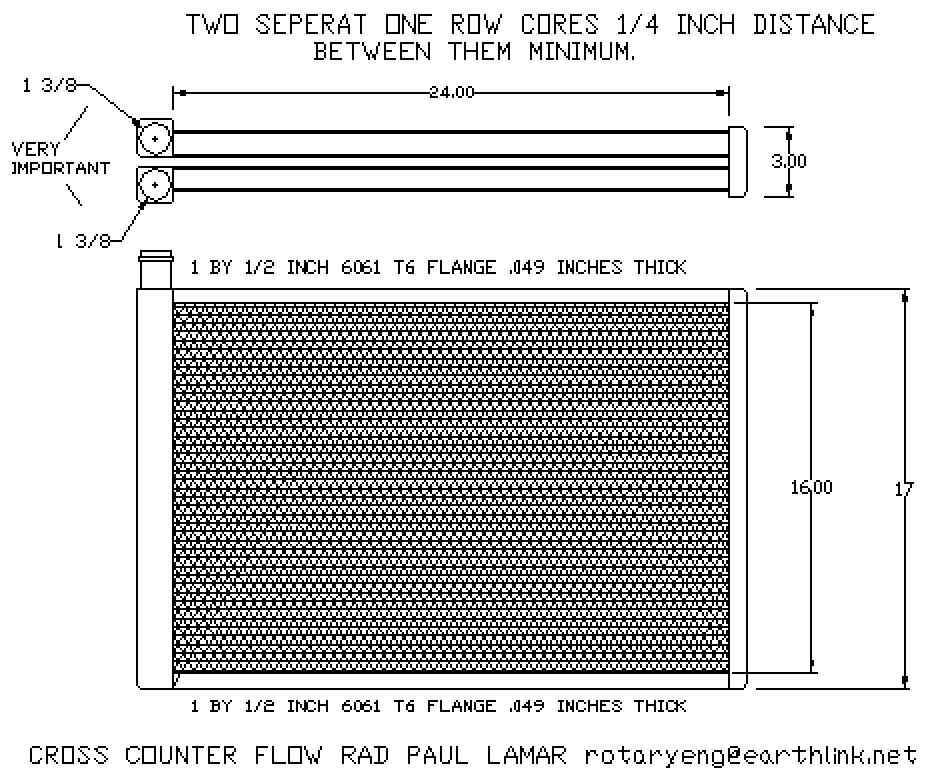
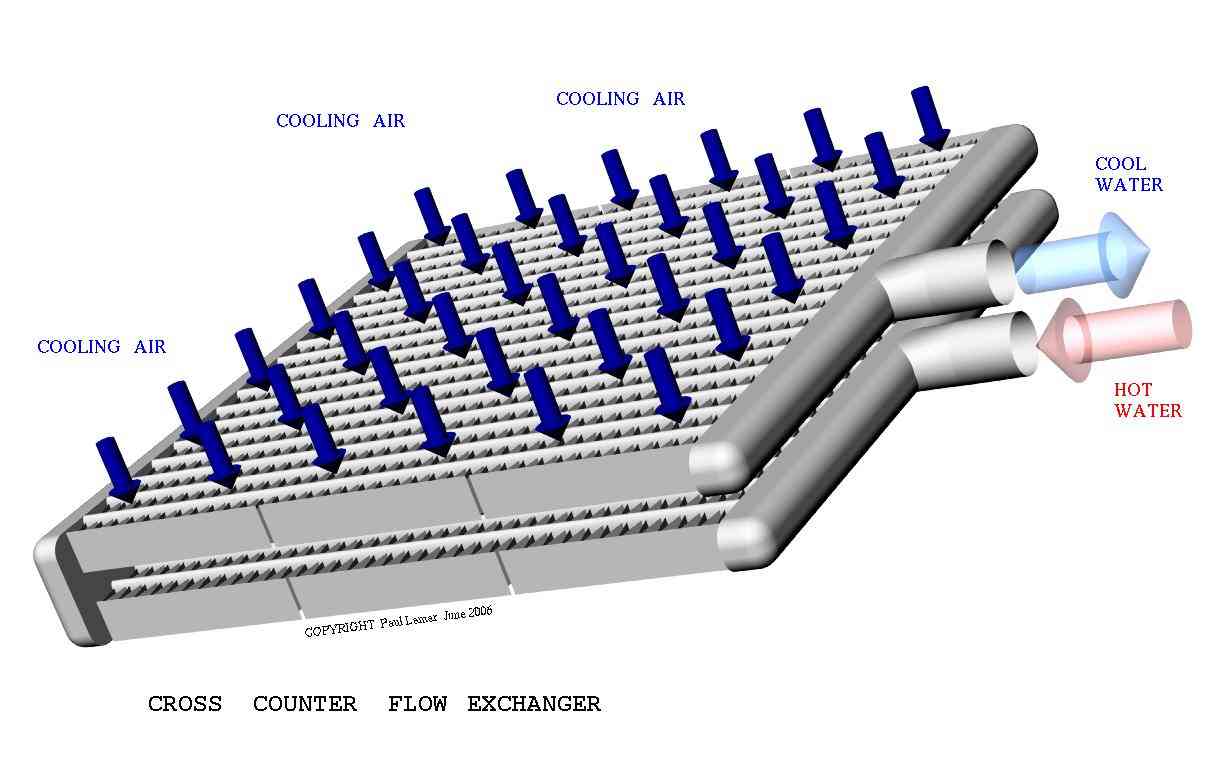
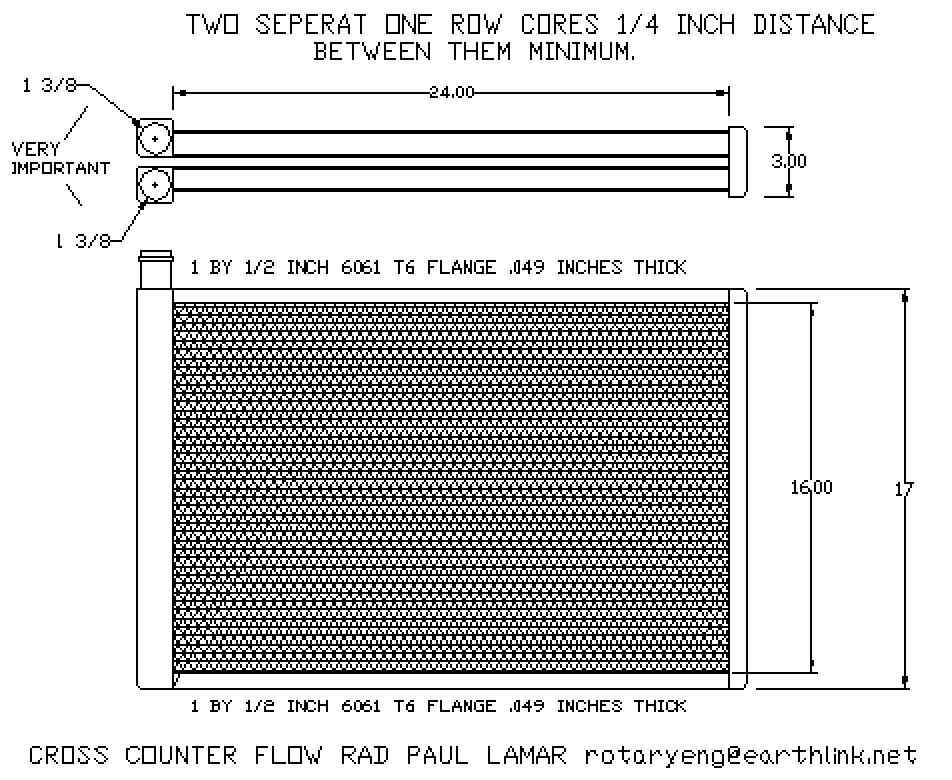
Can you gentlemen fabricate cross counter flow heat
exchangers for internal combustion engines?
Thank you for your time.
Paul Lamar
Editor
Dear Paul
We have the ability to produce a wide range of coolers to specific size
and design, do you have a drawing of the cooler you require?
Please find attached a photograph oh the Mistral engine with our water
and oil coolers.
Kind regards Mel Johnson
Engineering Director
Docking Engineering.
mel.johnson@dockingengineering.com
<
mailto:mel.johnson@dockingengineering.com
Paul,
Wow,! Did it cool well? This is the identical mounting config. I was
going to use but only for the water heat exchanger. That picture
contradicts a lot of assumptions I have had about cooling. Why warm up
the air with the oil cooler before sending it into the water cooler?
Notice both heat exchangers are one pass side to side.
Doug in Japan
That picture was taken at Aero in 2009.
They never got a chance to fly it.
Here is the last configuration that flew in 2010. It did not cool
because the air was coming in from the bottom and the back exit side of
the oil rad was blocked by the oil pan. Page 46 and 47 in my book.
I was helping them with a fix when the lights went out.
On this flight configuration the oil cooler got the hot air from the
rad. In other words the oil cooler was on the top and not the
bottom while the Aero non flown configuration was the opposite and
would have worked better if the air was brought in from the
top of the cores and allowed to exit straight down through
the oil cooler.
The mistake was based on the erroneous assumption that pointy
cowls are significantly better than blunt cowls.
Question for you. Why is the oil cooler the same size as the water
rad?
Paul Lamar
Hi Paul,
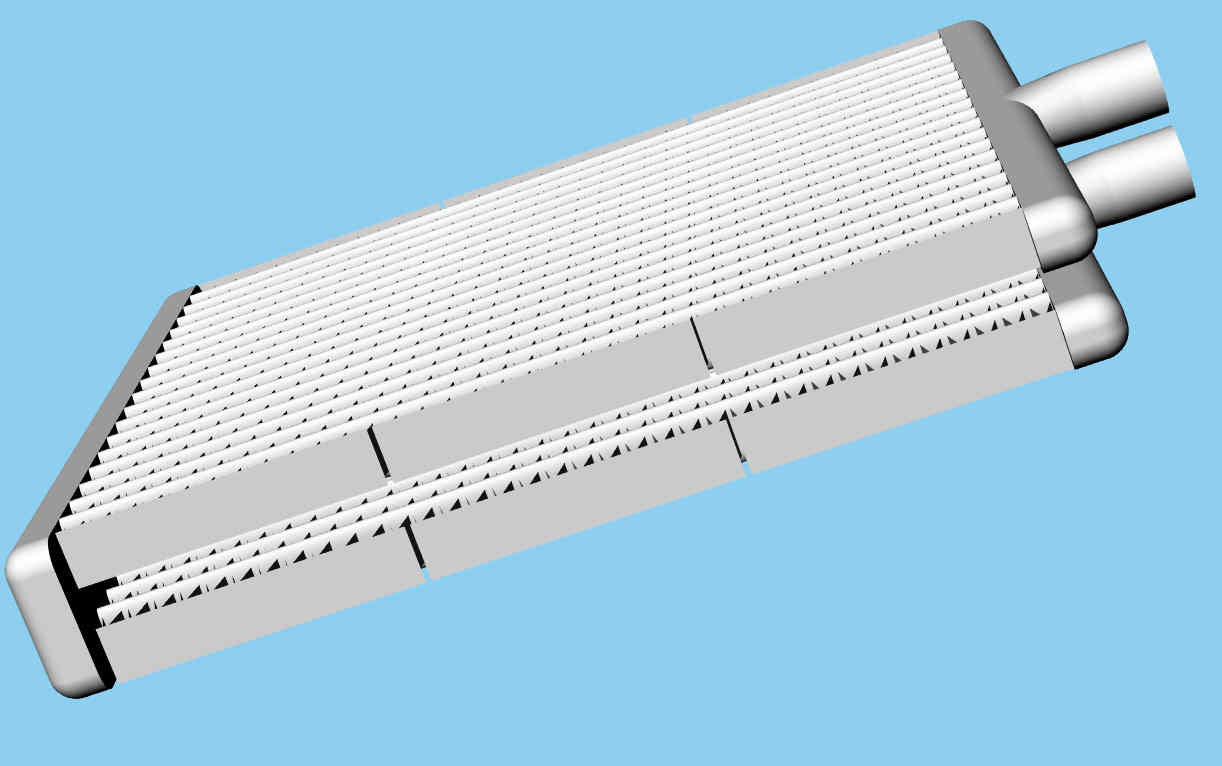
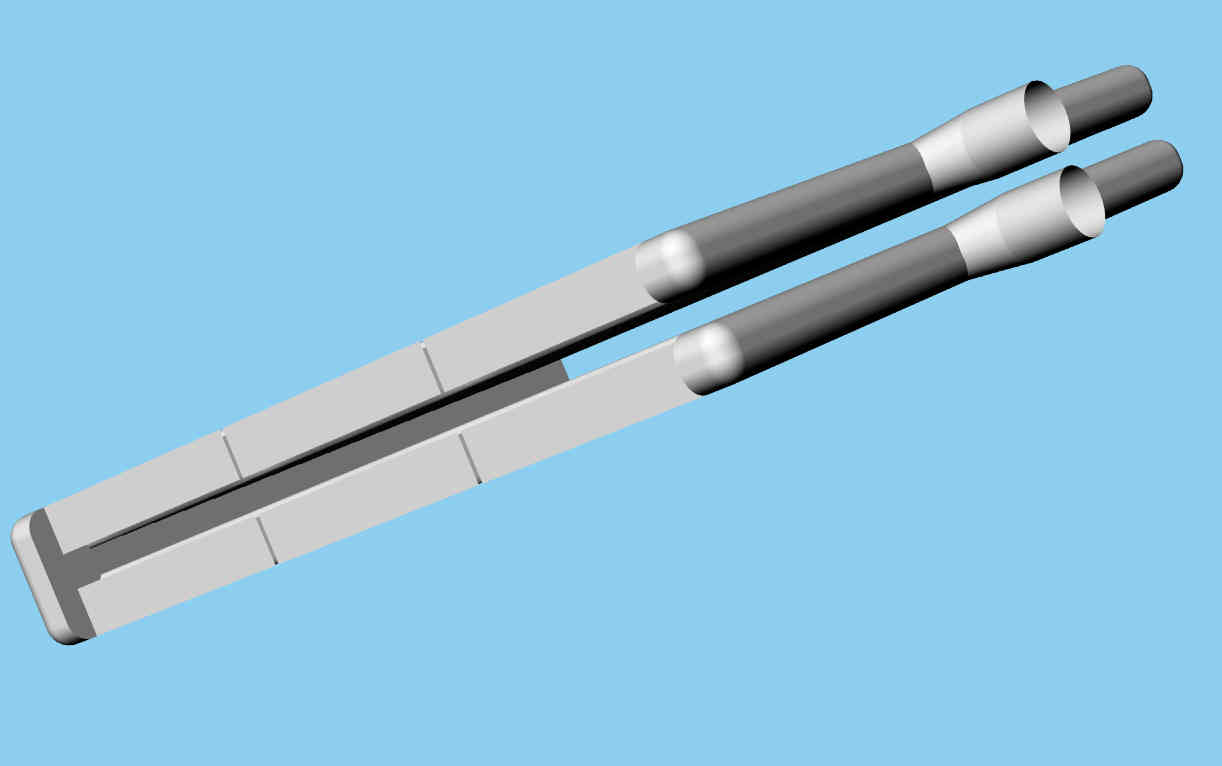
Instead of having two thin radiators one on top of the other, what about
having 2 thicker ones side by side..
For example if the 2 radiators were 12" x 18" x 2" thick mounted one on
top of the other,
Why not Coolant 8" x 18" x 4" and Oil 4" X 18" X 4"
(At least this way they both face the cool air... and you can tweak the
sizes)
Just a thought..
Regards Keith
First one must separate the oil cooler from the water radiators.
Lets assume it is just the water radiator portion to focus on the real
problem. That is getting the most cooling for a fixed rad frontal
area. It is always better to increase the frontal area and reduce
the thickness keeping the volume the same assuming a Kays and London
wedge type diffuser is used. Making the rad thicker can improve the
cooling at the expense of higher cooling aerodynamic drag. Keep in
mind here the bottom line is to reduce the cooling drag as that
can be up to 30% of the total aerodynamic drag on an aircraft.
One would like to reduce the fuel consumption at a constant
cruise speed would one not?
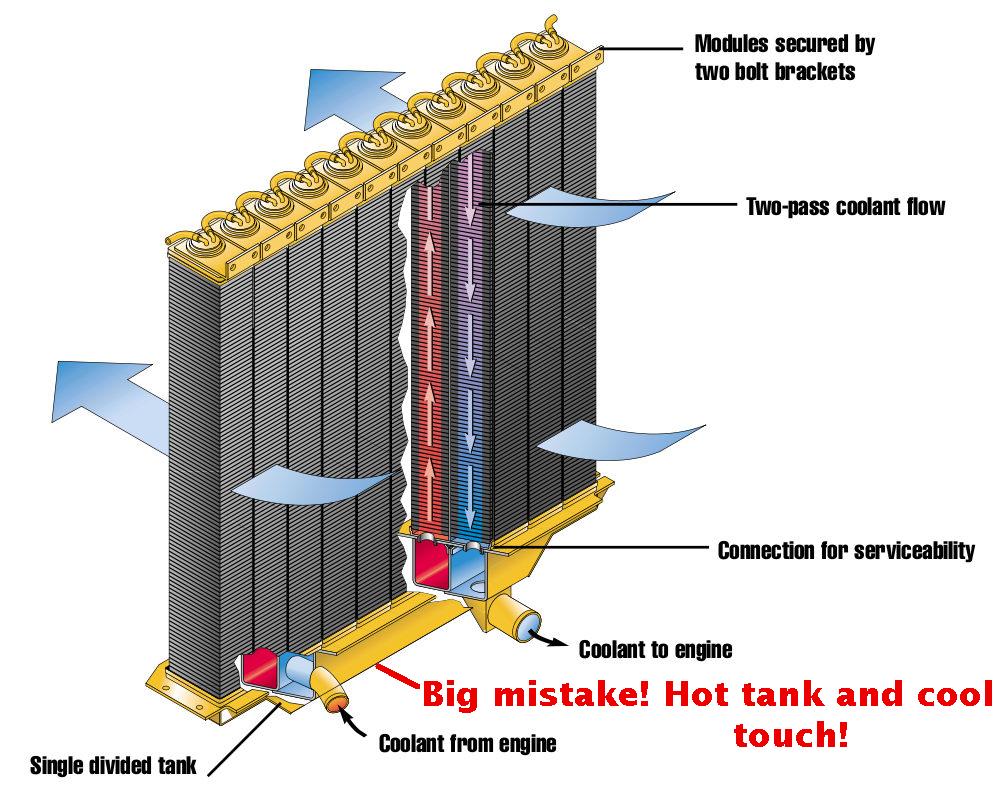
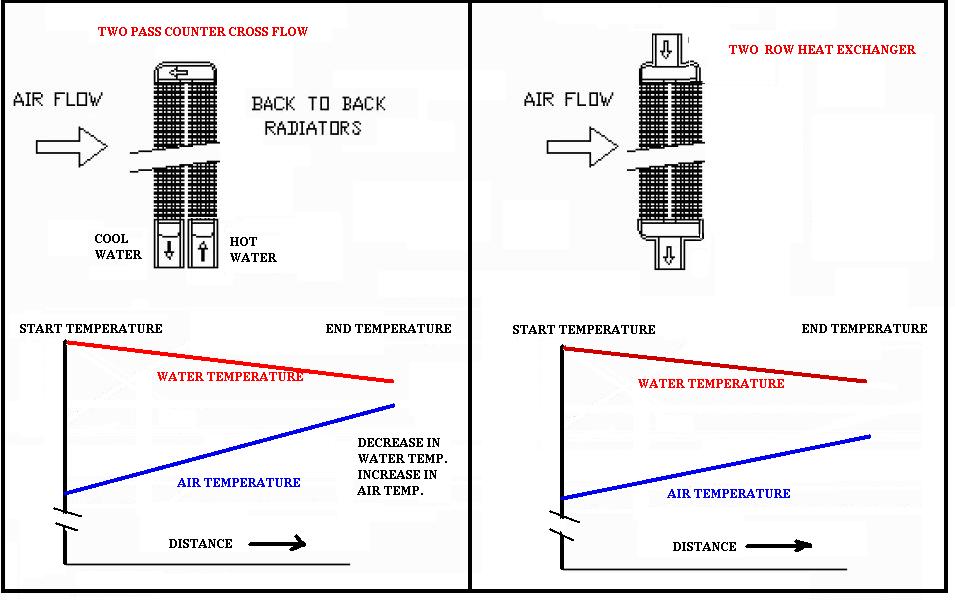
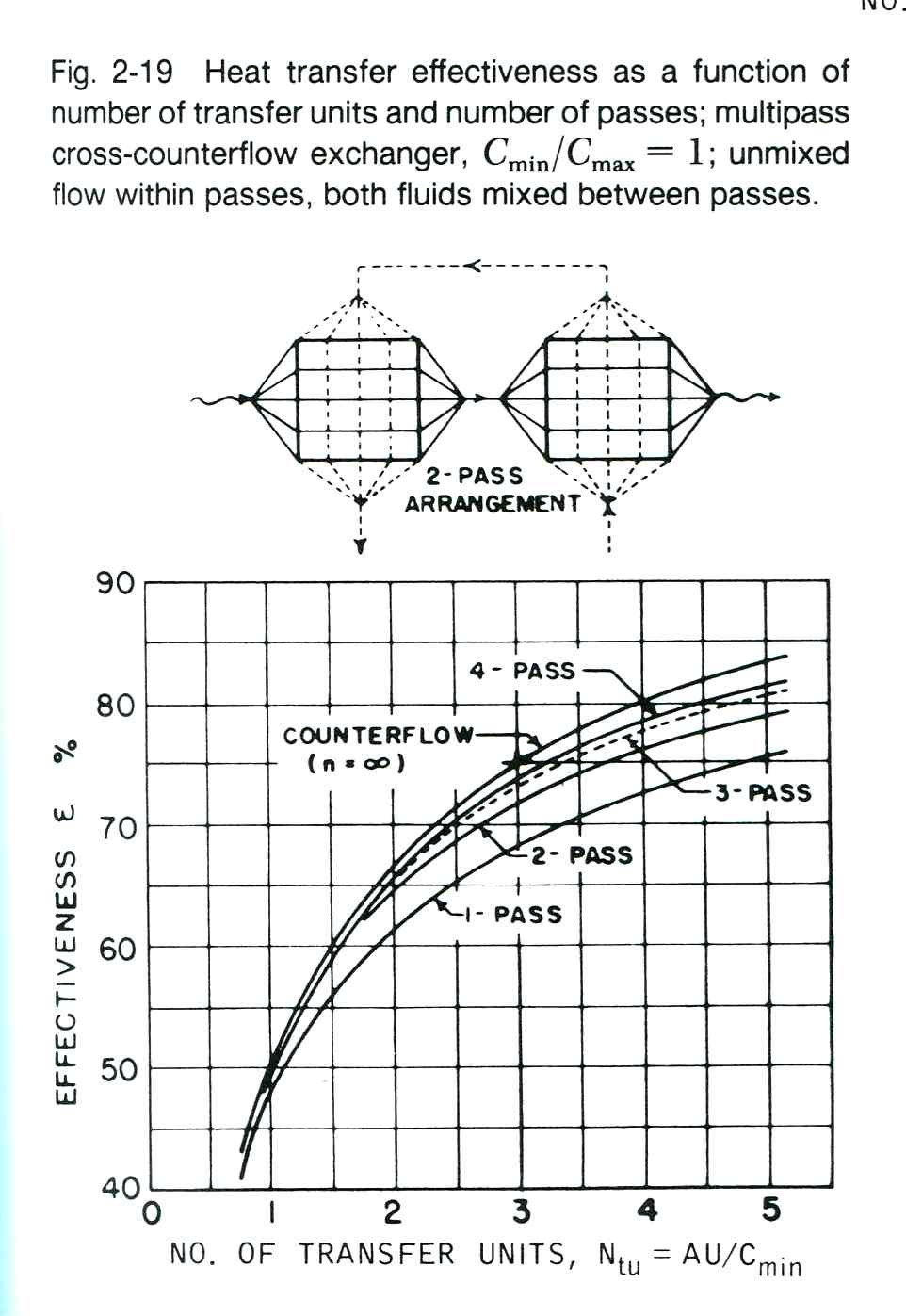
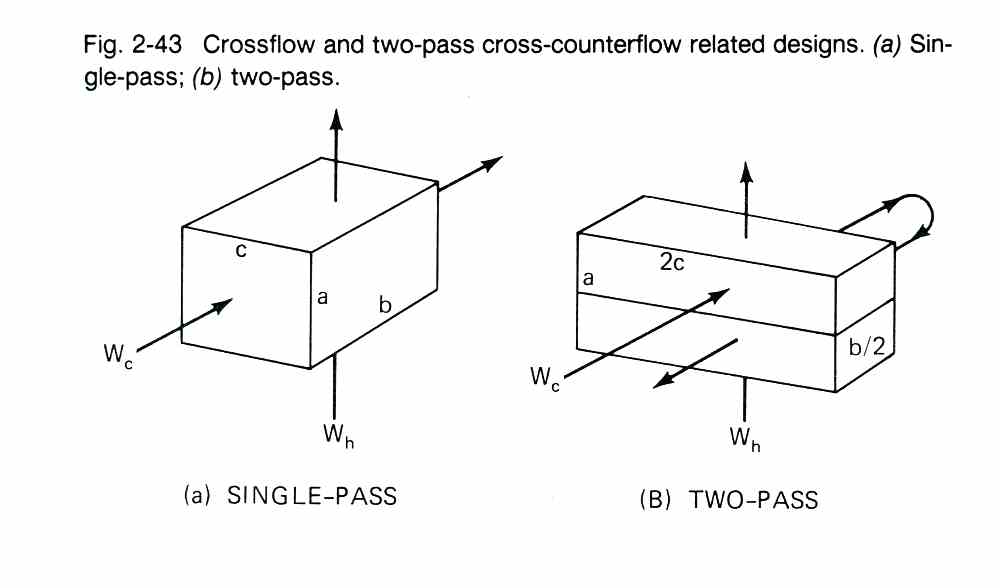
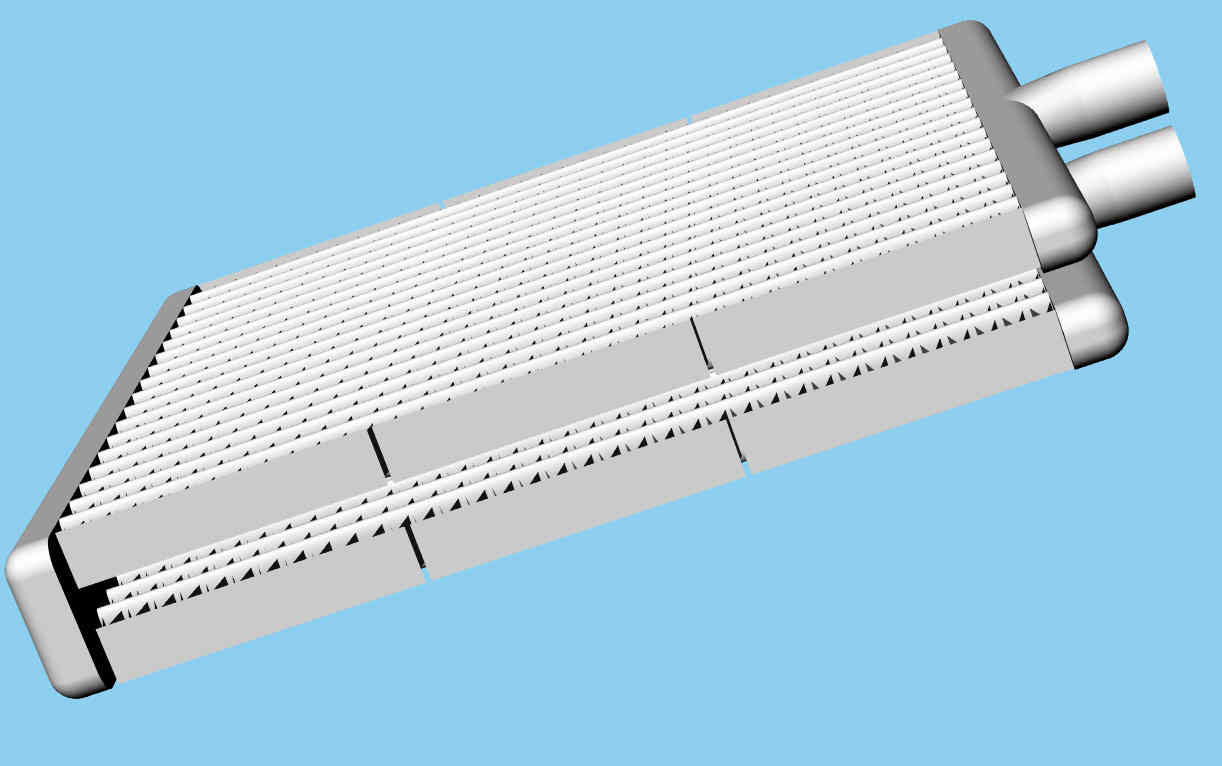
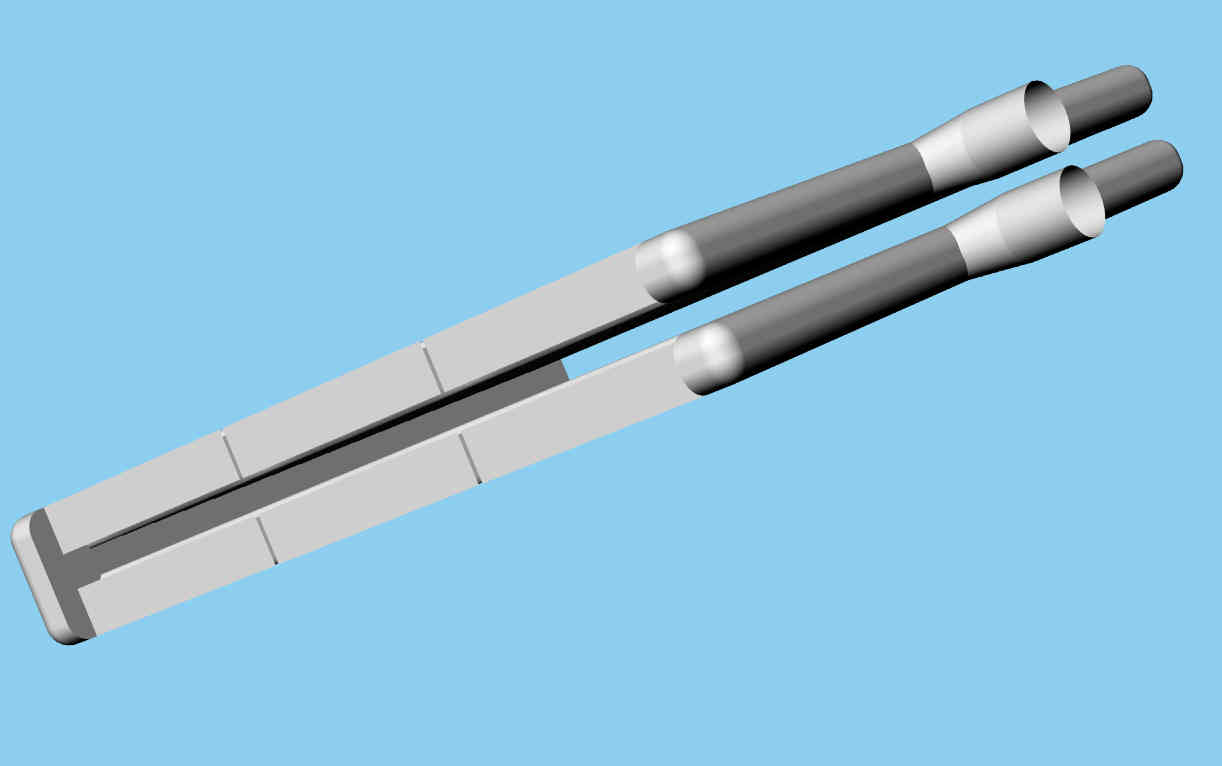
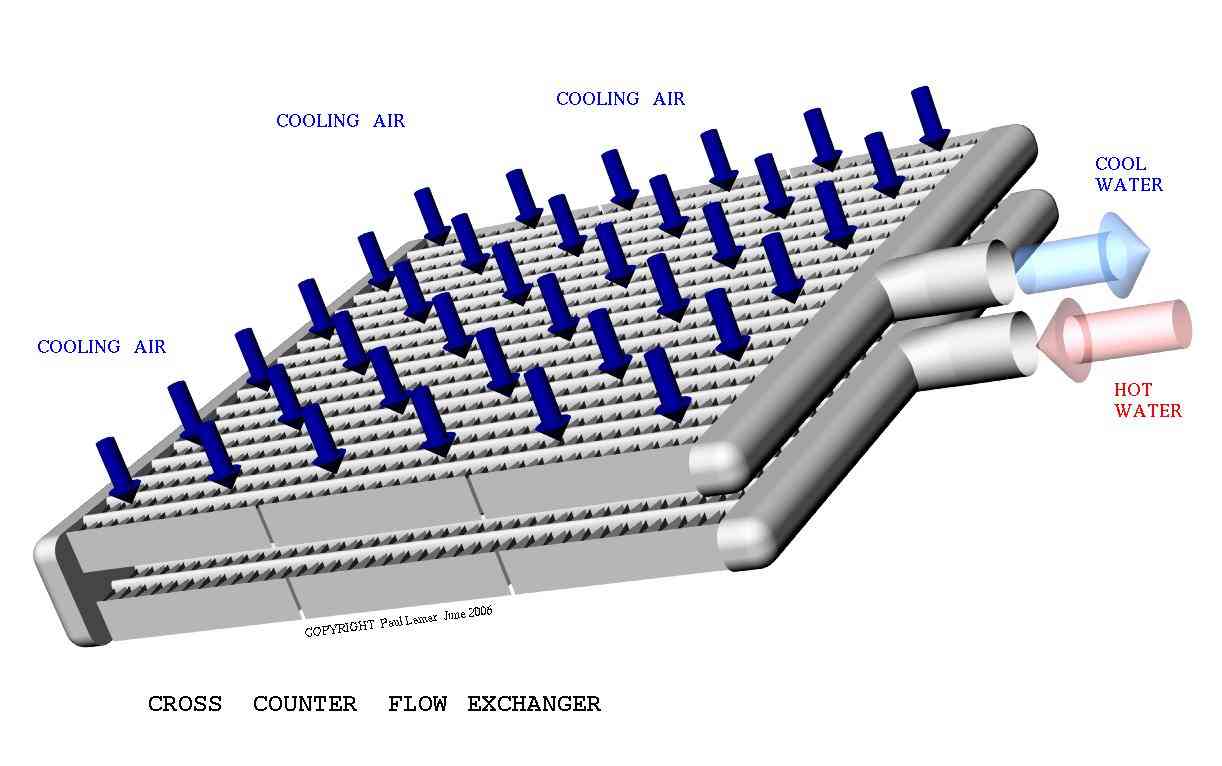
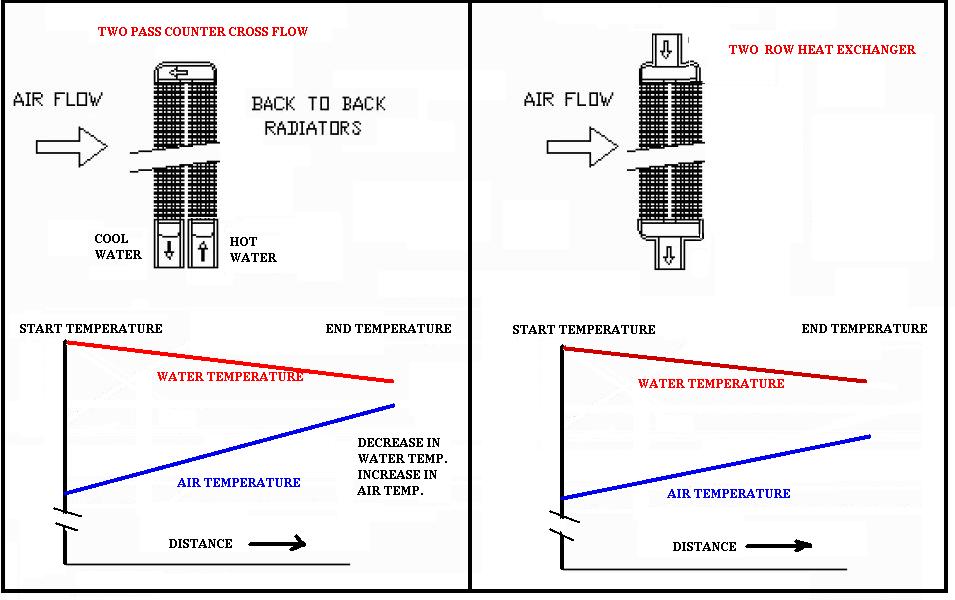
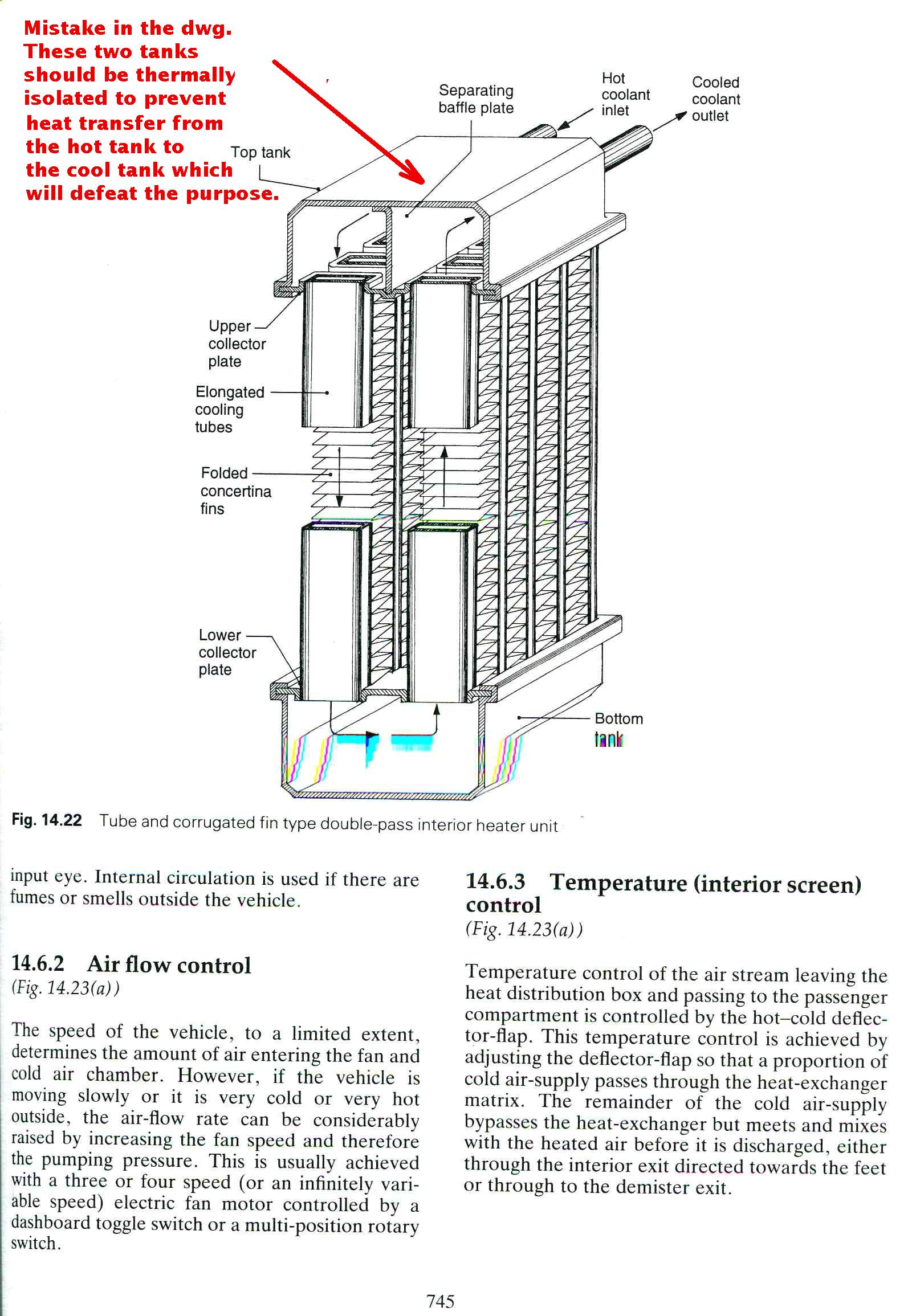
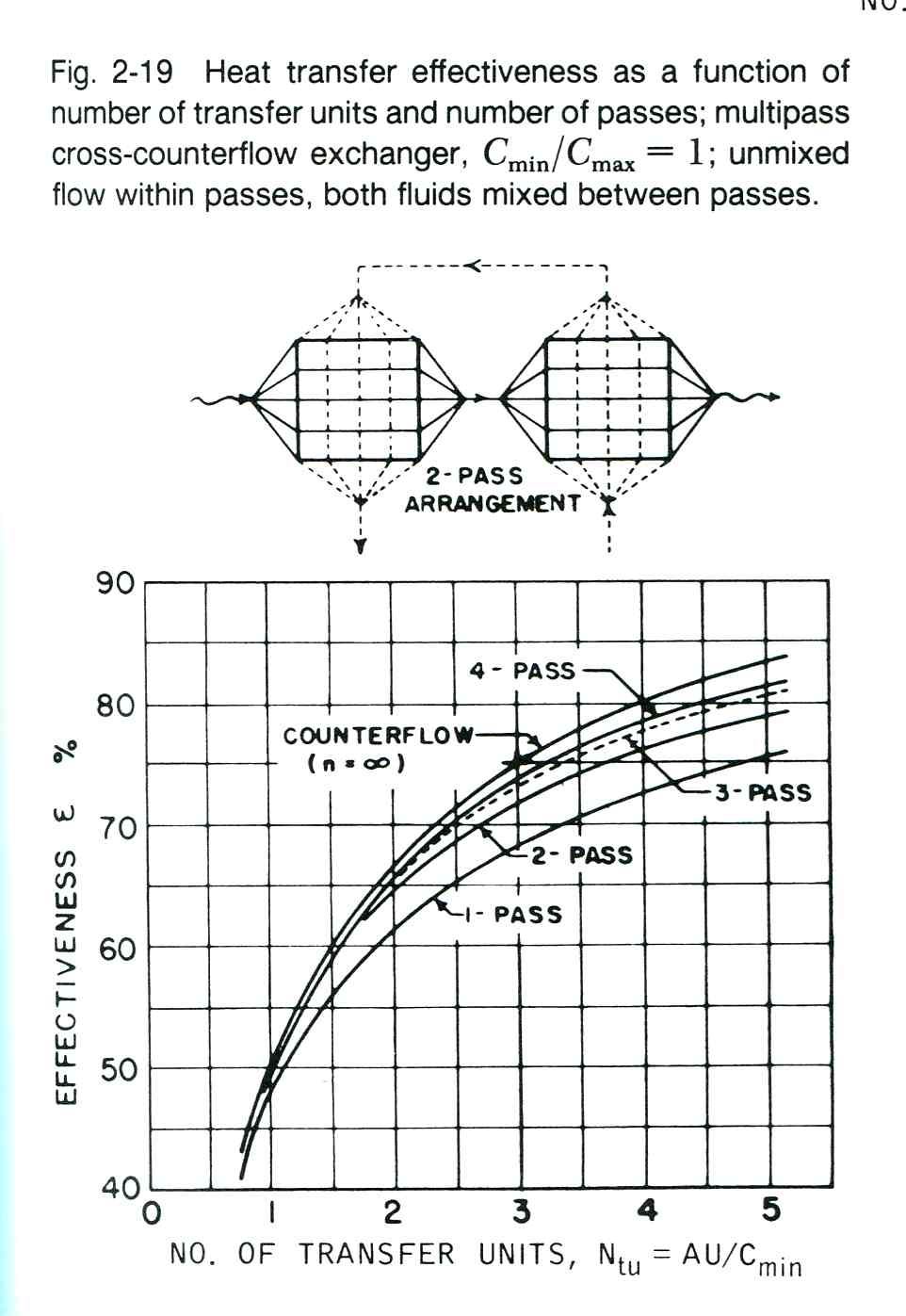
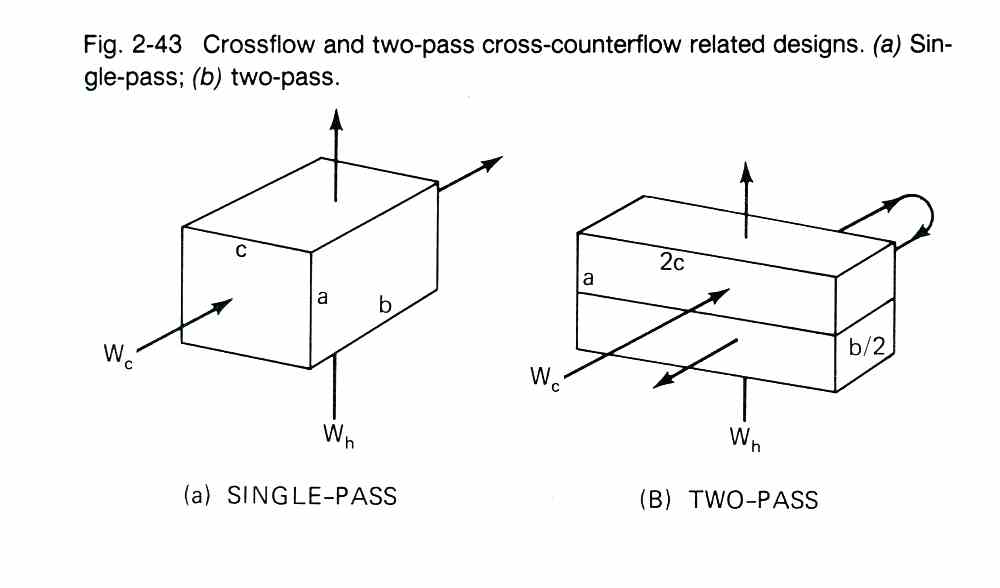
Lets assume we have only a frontal area of 12 by 18 allocated
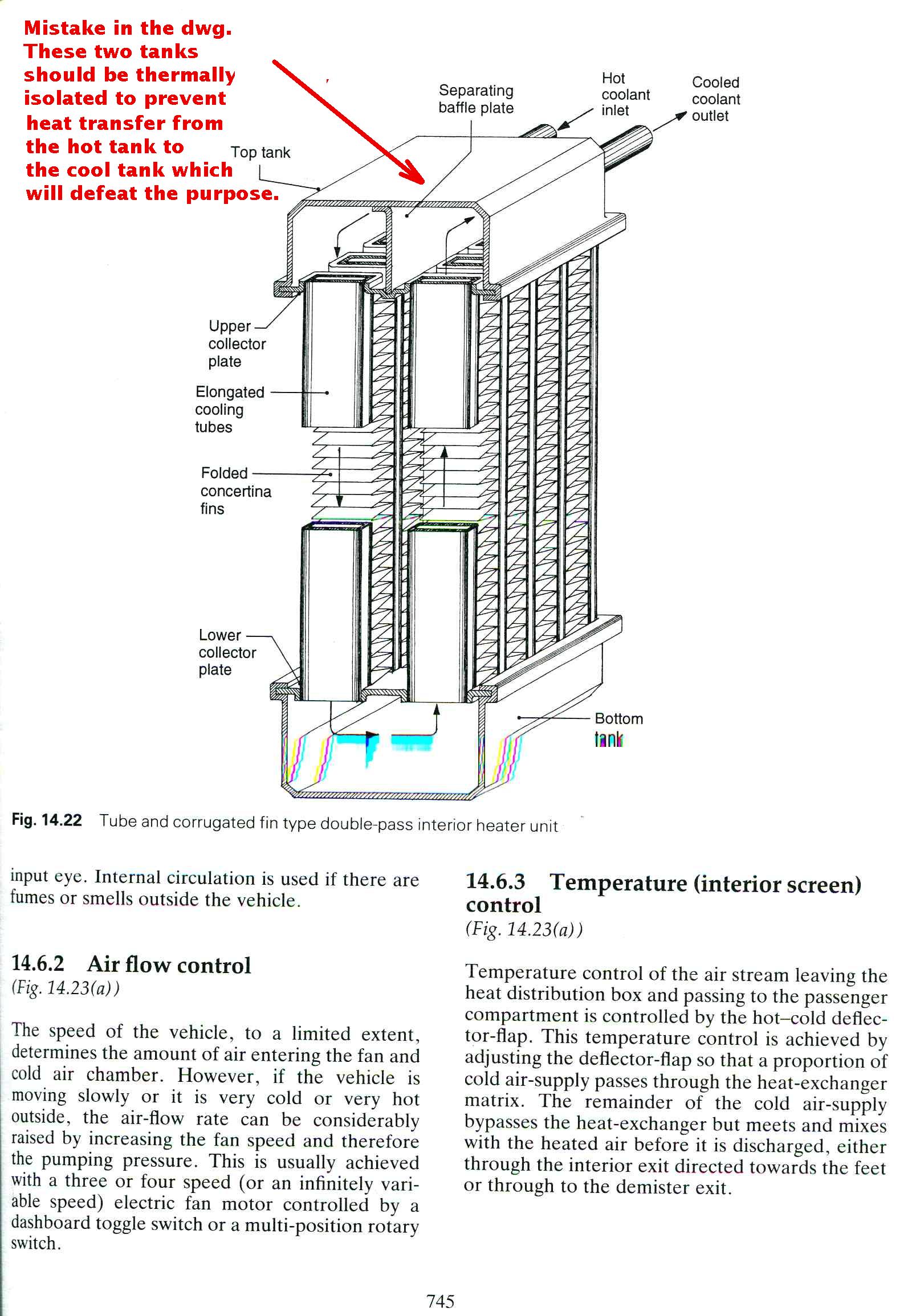
to water. The choice then becomes one single pass rad 4 inches thick
or a two pass counter cross flow rad occupying the same volume
and frontal area. Namely 864 cubic inches.
I'll let the articulate Mark LaPierre answer that because his
is the clearest explanation of the subject I have ever had
the pleasure to read.
Paul Lamar
Quote: Mark LaPierre
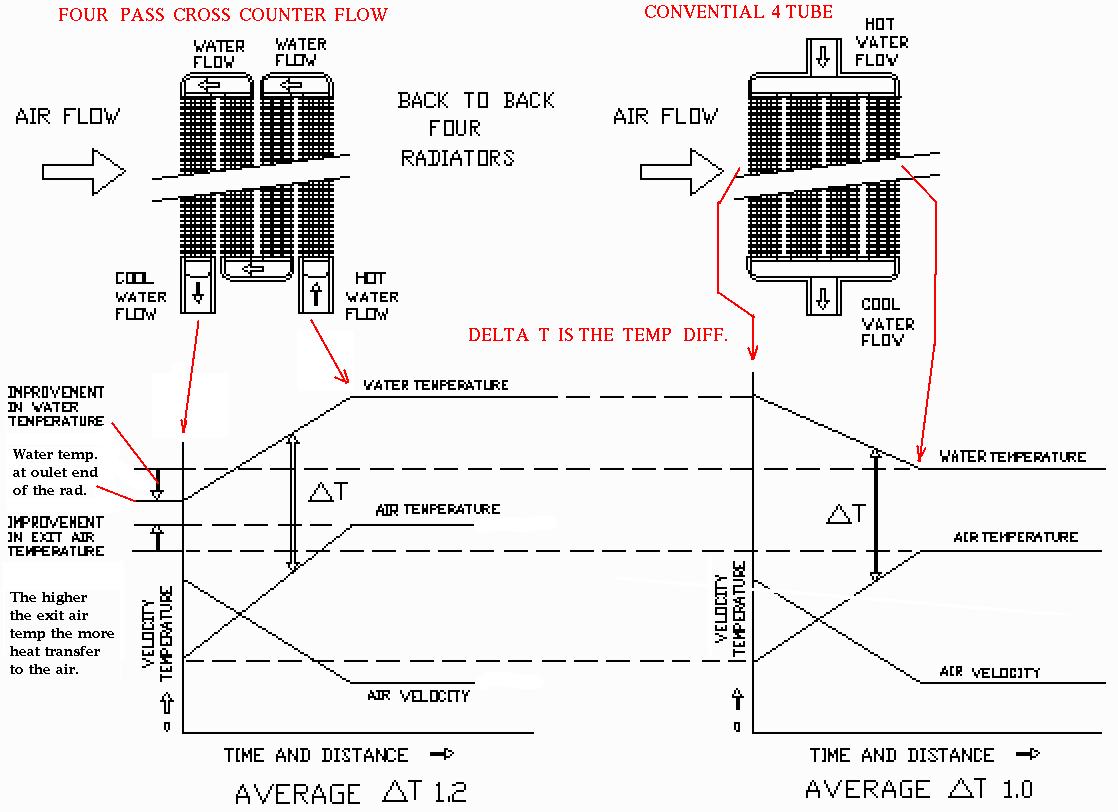
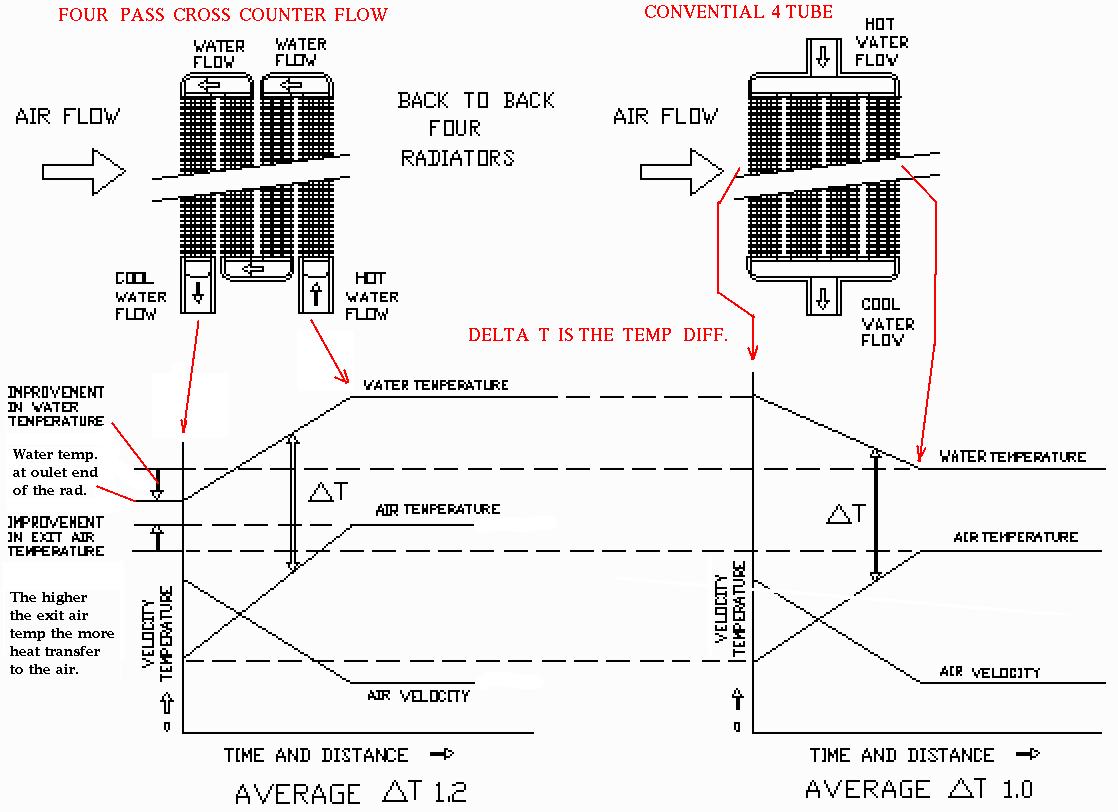
"The cooling efficiency of any heat exchanger device depends on the
temperature differential between the two fluids. That difference in
temperature is called delta T. With an increased core depth the air is
heated as it flows through the radiator. The delta T at the back of the
radiator core is less than the delta T at the front causing the front
tubes to be cooled much more than the back tubes. The same is true with
a double or triple flow radiator because there is no way to cause the
air to flow counter to the flow direction of the fluid inside the
radiator. The first pass of the muti-flow radiator is much more
efficient than the subsequent passes because the delta T is decreased
with each additional pass. The water is cooler with each pass but the
air temperature supplied to the different sections of the radiator is
the same."
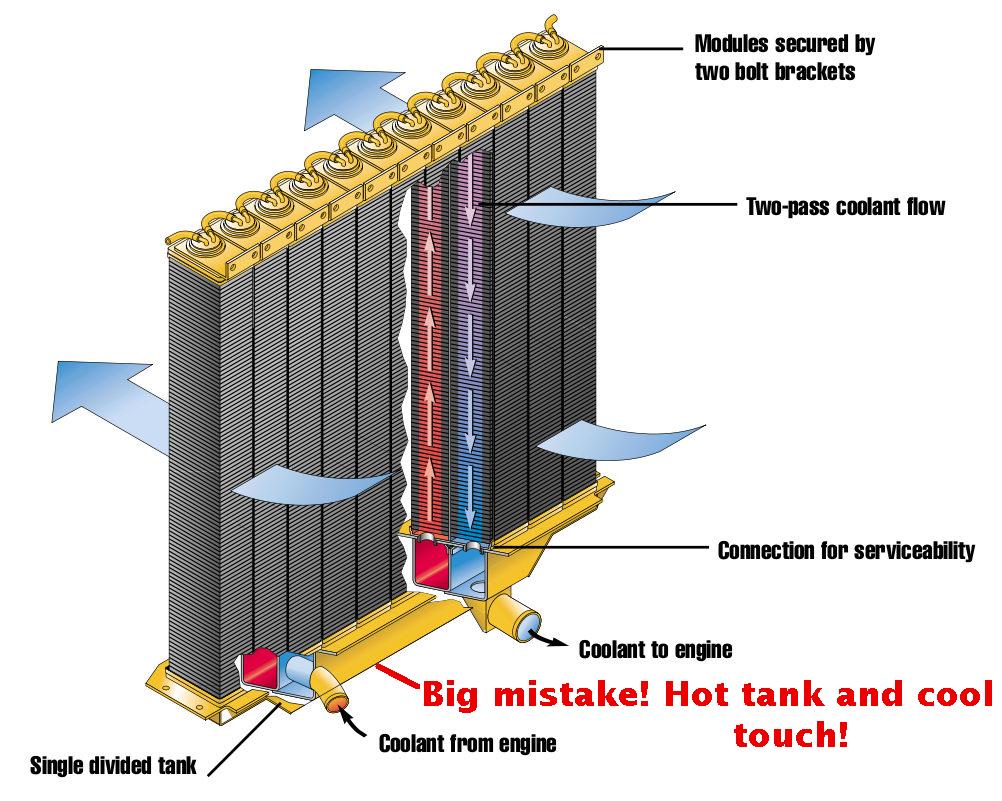
"With counter flow the delta T is maximized across the entire radiator
assembly. The coolest part of the air flow is exposed to the coolest
part of the water flow. The same air that just cooled the cooler part
of the water flow will now cool the hottest part of the water flow.
There will be a slight decrease in delta T between the air that cooled
the cooler water in the front of the radiator and the hotter water in
the back of the radiator in the counter flow radiator but that is much
less of a loss than that experienced by the tubes in the back of a
thicker core radiator that are now filled with hot water and are being
cooled by air that was just used to cool water just as hot in front of them."
"Mark LaPierre "
End quote.
--
The Rotary Engine NewsLetter. Powered by Linux.
ACRE NL web site.
http://www.rotaryeng.net
Youtube key word PaulLamar2
Copyright 1998-2010 All world wide rights reserved.