Hello Paul
Hi Paul
I think that there are some benefits to the system you describe but care
should be taken to ensure that the air movement through the core is as
efficient as possible. We have the ability to change the fin density of
our cores will offer an increase in cooling but have a negative effect
on the air pressure drop. Having said that two core blocks with miss
aligned fins and a gap between the cores is not ideal from an airflow
point of view.
I do agree with the general content of the statement below which is why
our cores tend to be as thin as possible with a high fin density, the
thickest core we produce is 66mm but the most popular is our 42mm core.
If your readers do require the counter flow coolers you describe we can
produce them.
Kind regards Mel
That is good news Mel and Docking can become our fabricator of choice
if you can provide us with pressure drop data on various tube and fin
configurations. That information is usually unavailable from
the supplier we have used in the past. We could also use
tubes mounted in the headers at a 45 degree angle.
A 2 pass cross counter flow HE's are not always needed. The
small improvement is not always important relative to the price.
A simple two pass meets most of our needs as the inlet
and outlet are on the same end which eases the plumbing.
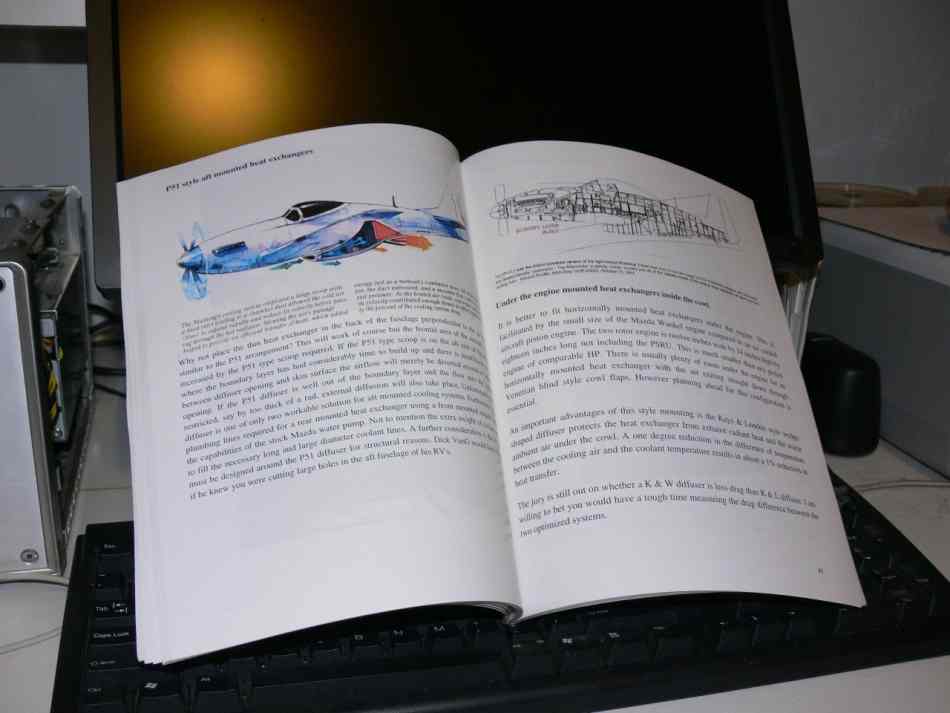
A vehicle with a Kays and London wedge shaped diffuser mounted
on top is an acceptable way of measuring the air pressure drop
across the core using a water manometer. The Kays and London wedge
shaped diffuser is about the only practical diffuser that fits.
Measuring the water pressure drop is trivial. We generally
need about 30 US gallons a minute.
Air velocity through the core is about 1/5th of the
forward velocity of the aircraft. A typical diffuser
opening is 72 square inches with inlet air velocity
up to 150 feet per second. That is 4500 cubic feet per minute.
Above that speed increased flow is blocked by cowl flaps
to control engine temperature and reduce drag.
In other words climb out is worst case on a hot day.
Core velocity would then be 30 feet per second. We want
to minimize the core air pressure drop for a given heat transfer
rate. In terms of HP dissipated for the water rad it
would be about 160 HP for a 250 HP 2 rotor rotary. Here
is an old heat balance chart for a 200 HP 2 rotor rotary.
The news letter has been around 12 years so far
and will be here at least until I die or I become incoherent :)
I also have a magazine article on the advantages of the
Wankel rotary coming out in Kitplanes in the early
part of January.
Mazda recently had a break through in the rotary engine
fuel efficiency and they claim it is now better than
their piston engines. This engine should show up
in a couple of years.
Paul Lamar
Paul
We can supply data sheets for our cores which are based on a core
frontal area of 50 x 50cm; it would be down to the individuals to
extrapolate the data they needed to design their coolers. The data
sheets will give you the air & water pressure drops and heat transfer.
At customers request we can arrange for coolers to be tested by Young
Calibration Ltd to give them a full performance map, this is quite
expensive and it is often cheaper and quicker to install it and fly it.
Regarding mounting the tubes in the headers at a 45 deg angle it's a
none starter as far as we are concerned. If you do that a substantial
area of the tube would not have any fin attached to it, the heat
transfer would be compromised and the tube also requires the fin to be
attached for its structural integrity. It would also be very expensive.
With good ducting there is no reason why the air cannot be turned to
pass through a cooler that is almost horizontal, it's important that
people understand that the exit air from the cooler is as important as
the entry air and it needs to be dumped into a low pressure area.
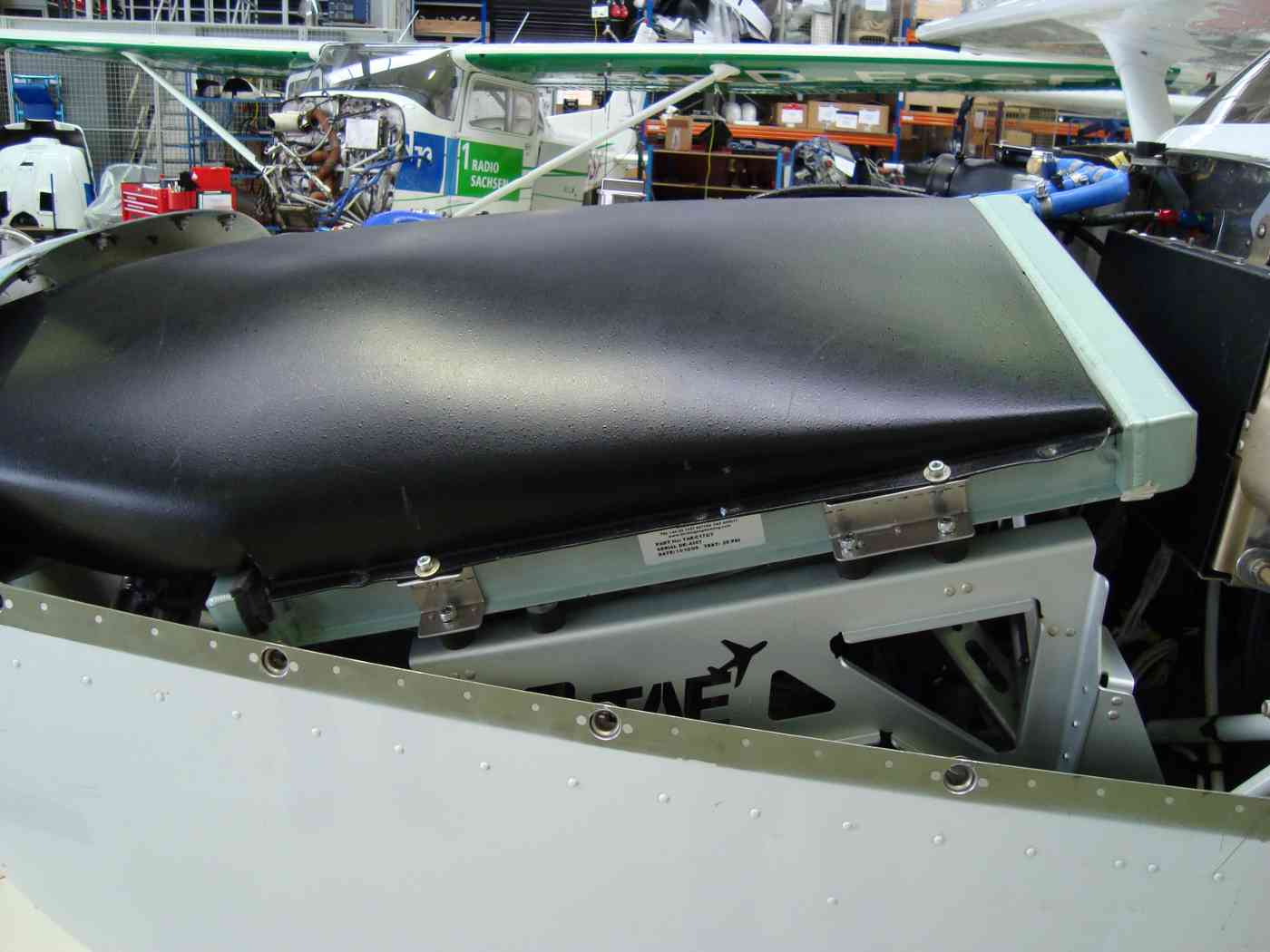
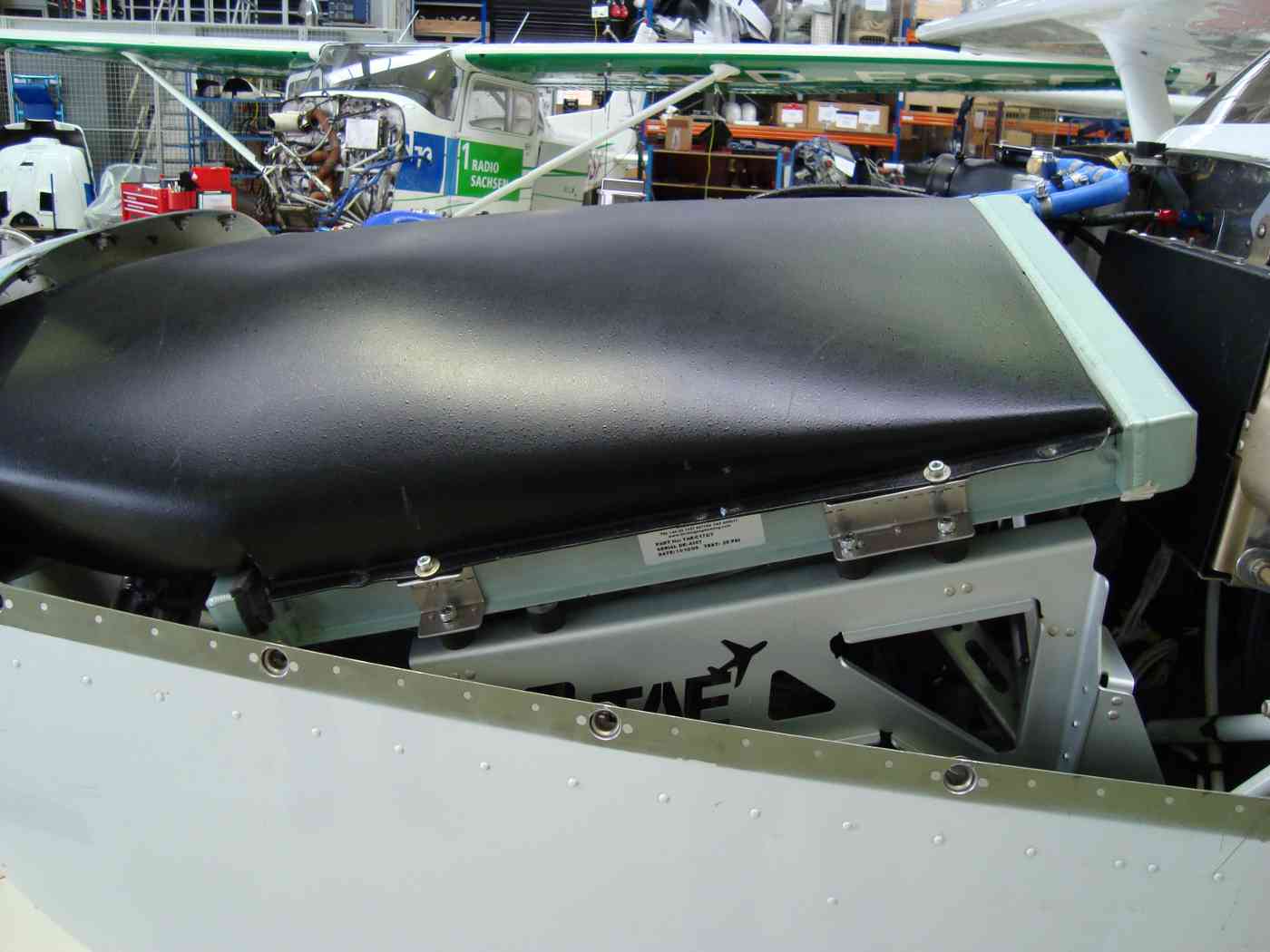
Please see the attached photograph of the Thielert installation we
supply for the C172 STC program.
Kind regards Mel
That is an excellent diffuser Mel. If you can sell those at a
reasonable price rotary builders all over the world will think they
have died and gone to rotary heaven. Time taken to install the rotary
in the many diverse aircraft designs is the rotaries largest draw back.
If you can scan and send me some sample data sheets I can publish them
here and extrapolate the data for the more popular aircraft kit designs.
I like the idea of the one pass tanks on the sides you supplied to Mistral.
My friends at AIXRO and Rotran will also be requiring coolers
for ultra light and light sport aircraft designs. AIXRO are working
on a 2 rotor, 100 HP LSA engine which will be extremely popular
here in the U.S..
Poul Henrik Woelfle
Woelfle Engineering GmbH
Randstraße 109
D - 47804 Krefeld
Tel. +49 2151 151020
Fax +49 2151 151019
www.woelfle-engineering.com
HRB 7369, Amtsgericht Krefeld
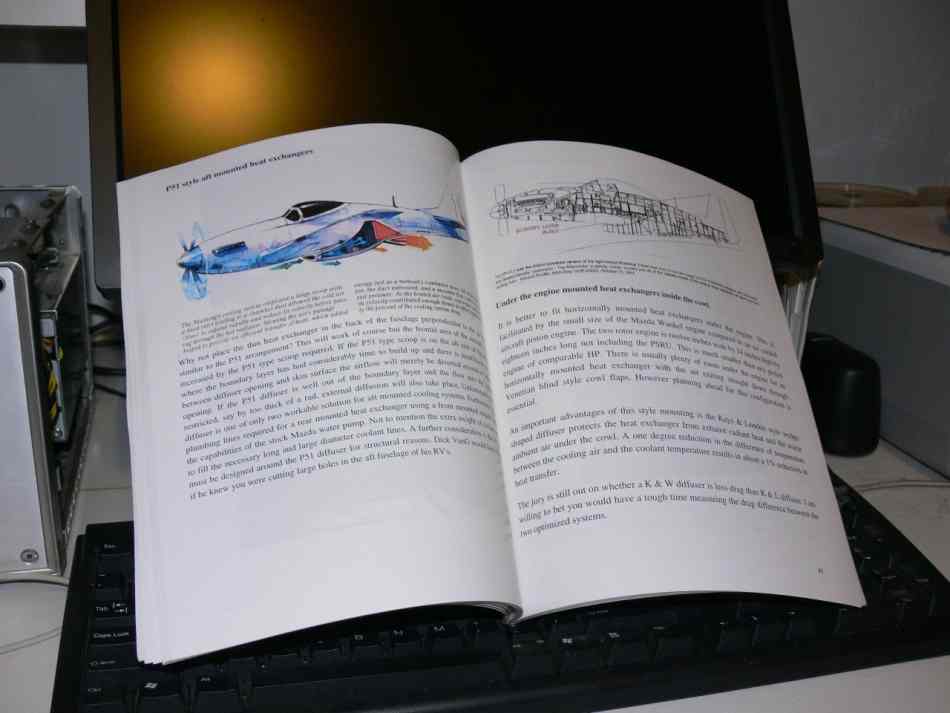
If you do a nice single sheet brochure and send me a batch
I will insert it into each "How to Cool Your Wankel" book I sell.
Paul Lamar
--
The Rotary Engine NewsLetter. Powered by Linux.
ACRE NL web site.
http://www.rotaryeng.net
Youtube key word PaulLamar2
Copyright 1998-2010 All world wide rights reserved.