Paul,
Check out pages 9-11 in this issue of the RVator:
http://www.vansaircraft.com/RVator/2010/1-2010-RVator.pdf
Look at the [intake] manifold and the muffler.
Steve Brazil
That intake manifold is called a dynamic chamber. It was invented by
Mazda to increase torque at 3000 RPM. Very important in a car engine
but kind of useless for a aircraft engine that cruises at 4500 to 6500
RPM.
In effect it doubles the length of the runners.
The early "standard" intake system mentioned in some of the illustrations
was pretty bad as it had runners of different lengths fed by a 4 barrel
carb so just about anything tuned properly would be a improvement.
This was a point many people over looked when dynamic chambers
were all the rage. It was like comparing apples with oranges.
Mazda PR did a good job of selling it :) Just about all modern
engines use simple tunned intake manifolds with equal length
runners.
You want the torque to peak at the cruise RPM as that gives
the best BSFC or lowest fuel burn per HP.
The very complicated stock RX8 intake manifold is the same thing
except it has more stages as it goes all the way up to 9000 RPM.
Tracy was the first to build one for an aircraft engine but then
he gave up on the idea when he went to the RX8 engine and used
simple equal length runners. That is when he went 217 MPH in
the 100 mile Sun n Fun X country race.
I suspect most people have given up on the idea for aircraft
use but there still could be some die hards out there:)
Paul Lamar
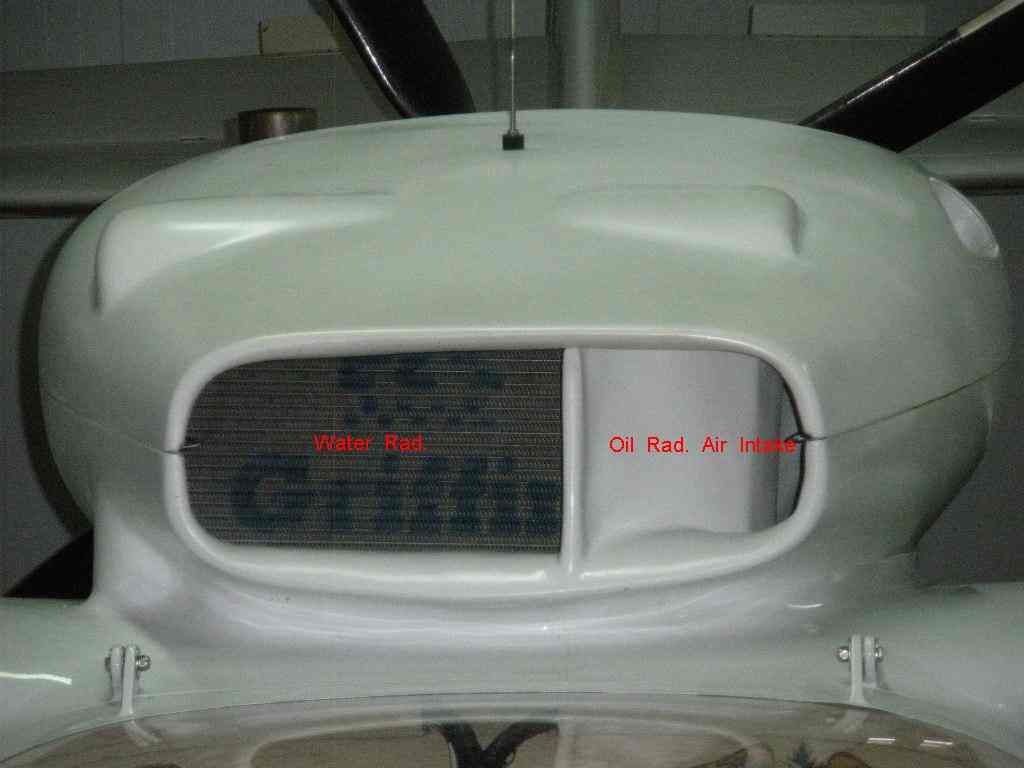
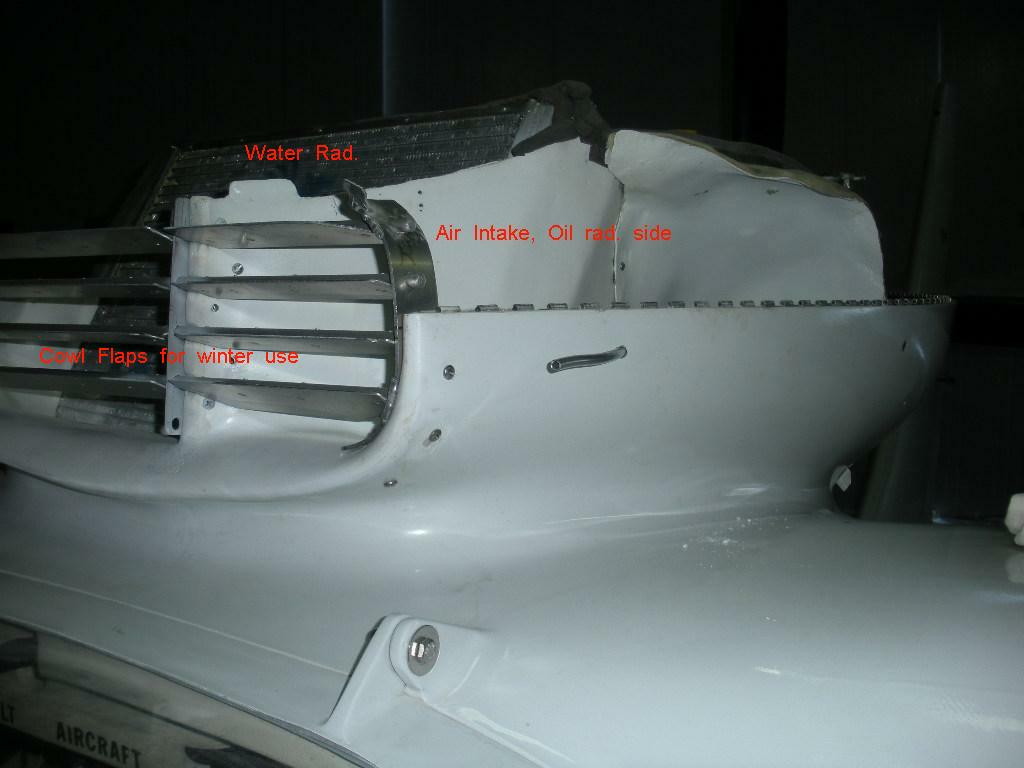
In the article you pointed to, I see a Griffin oil radiator. I tried a
Griffin in my glass goose, it was a waste of my time and money, it does
not
work.I had to reinstall the RX 7 oil radistor I had before.
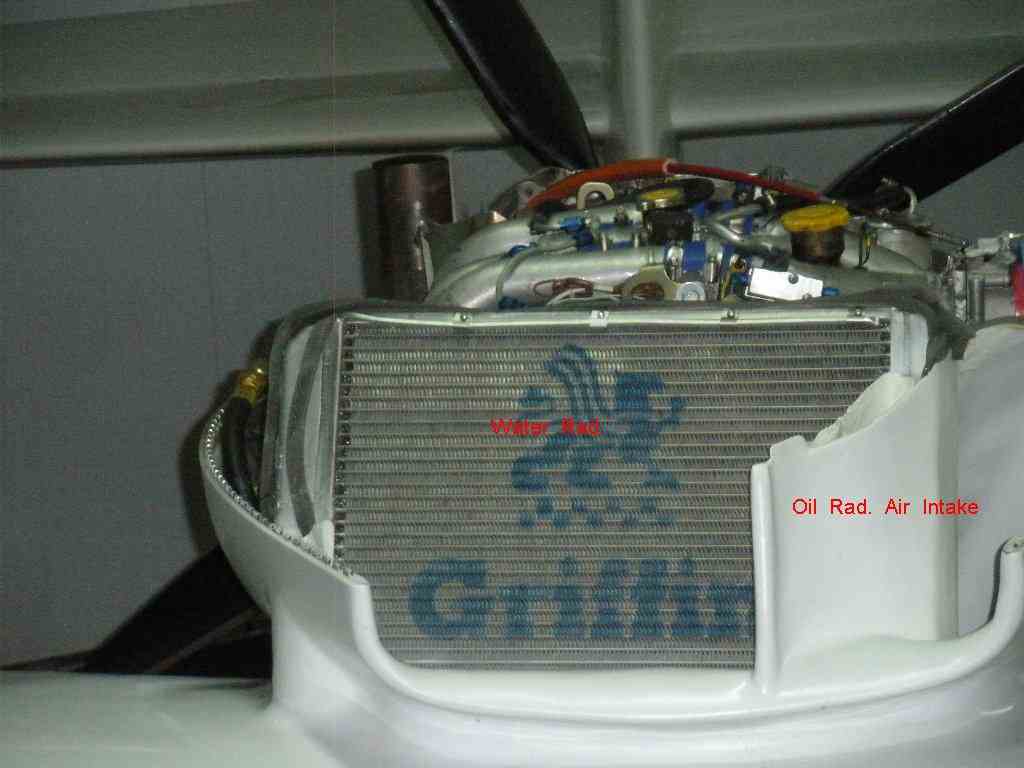
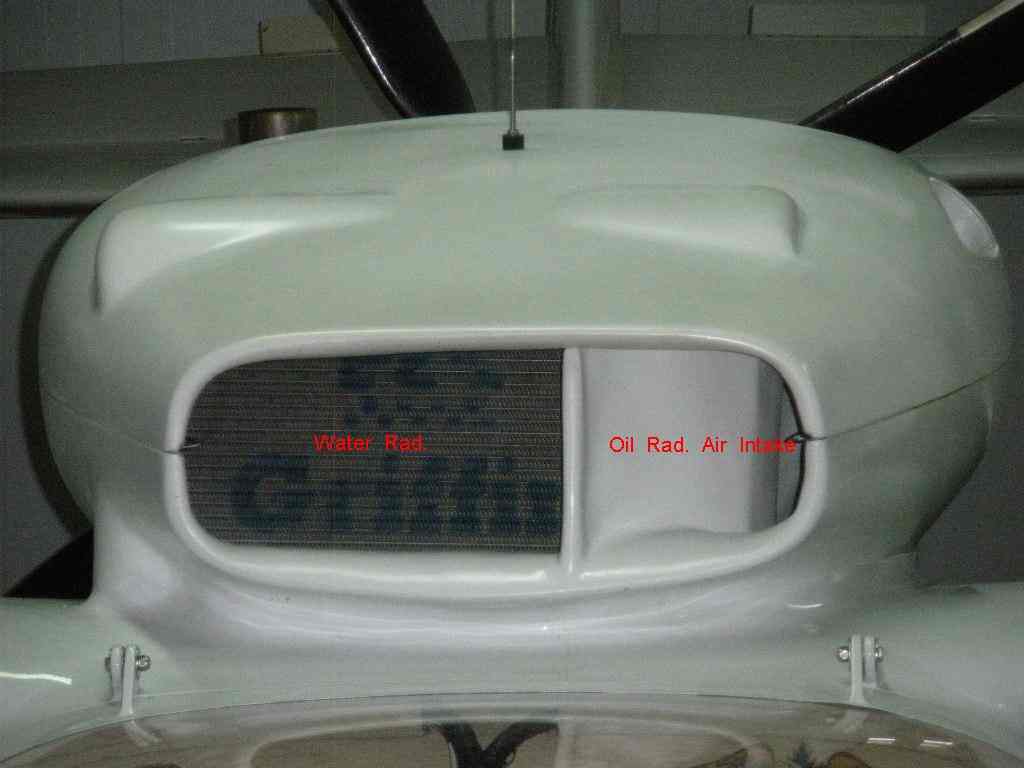
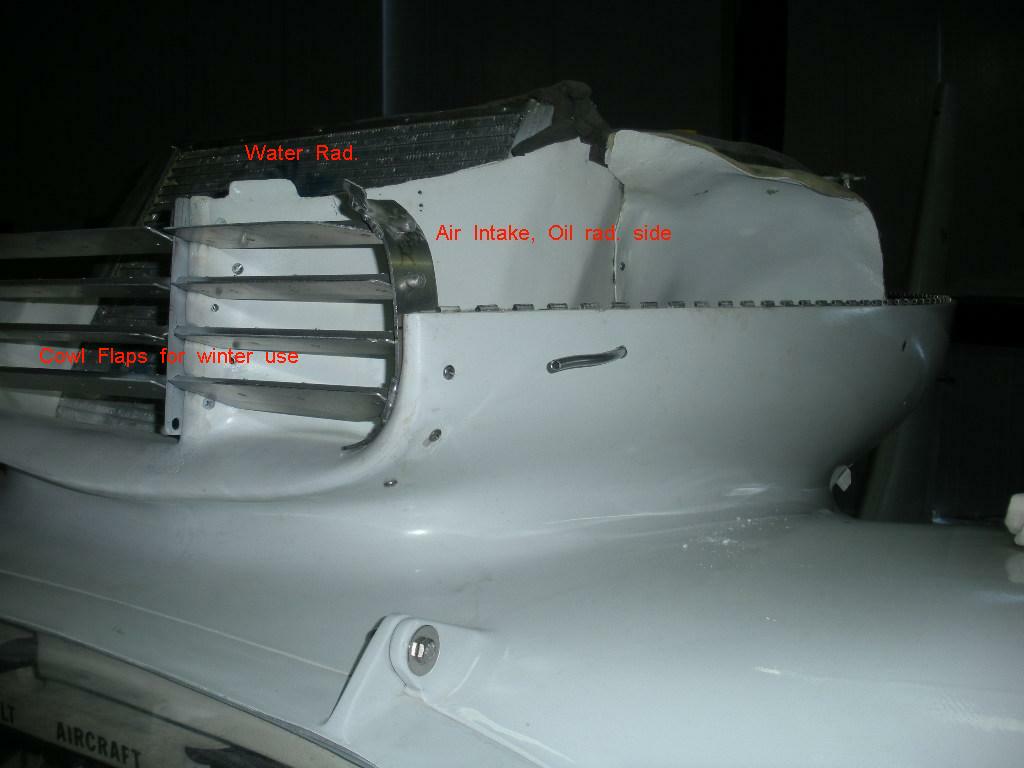
The Griffin [one pass] crossflow radiator was a: CX-27256-01
core: 22" x 7.5" x 2.75",area 135, volume 371
The [two pass] Mazda radiator core is: 17.5" x 4.5" x 2, area 87, volume
157
The Griffin water radiator I have works fine, it is a GR1-2-58185-X
It is a crossflow, core 18" x 13" x 2.75 dual row 1.25" tubes
area 234, volume 643
Rino Lacombe
Renesis powered Glass Goose
Thanks Rino. Good work.
Cooling is relative to one's engine HP.
My guess is Rino's engine may be generating more HP than
the RV7 in the article. I think Rino could get even more
HP by putting the intake plenum on the other side of the
oil filler and shortening the runners.
On the other hand Rino lives in Canada which is a bit
cooler than the southern U.S.There are of course many
other factors.
All that does not mean I endorse Griffin anything :)
The best way to compare cooling systems is measure the
water temp in and out of the rad and the air pressure
on front and back of the rad with 4 to 10 pressure taps
equally distributed over the face of the core at a given
air speed.
BTW Rino, do you have a picture of your latest rad set up.
I don't think this one is current.
Paul Lamar
Your are right about the intake runners, they are a bit long. It needs more
fuel to keep proper mixture between 5000 and 5800 rpm than above that. I
cannot run above 6500 rpm because of the prop. diameter.
Rino
Thanks Rino. That clears it up.
That sounds like the HP is dropping off big time above 5800.
Well may be not on the other side of the oil filler neck but
right were the oil filler neck is :) Put a 6 inch
diameter hole in the plenum with the oil filler neck in
the middle.
Paul Lamar
--
The Rotary Engine NewsLetter. Powered by Linux.
ACRE NL web site.
http://www.rotaryeng.net
Youtube key word PaulLamar2
Copyright 1998-2010 All world wide rights reserved.