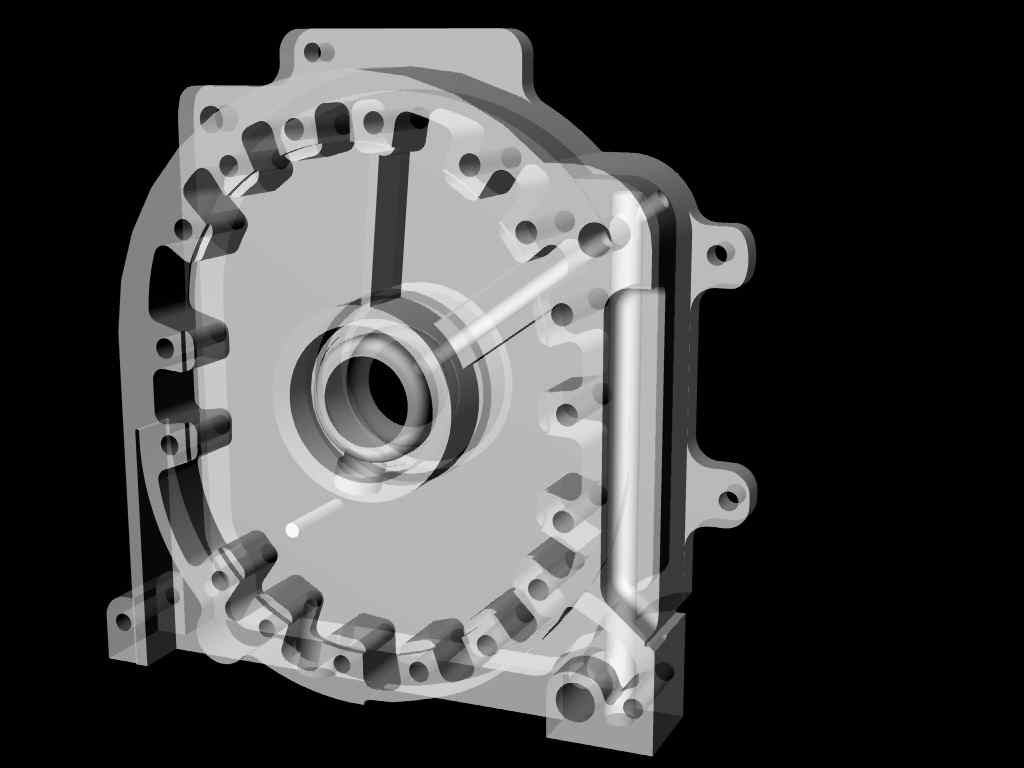
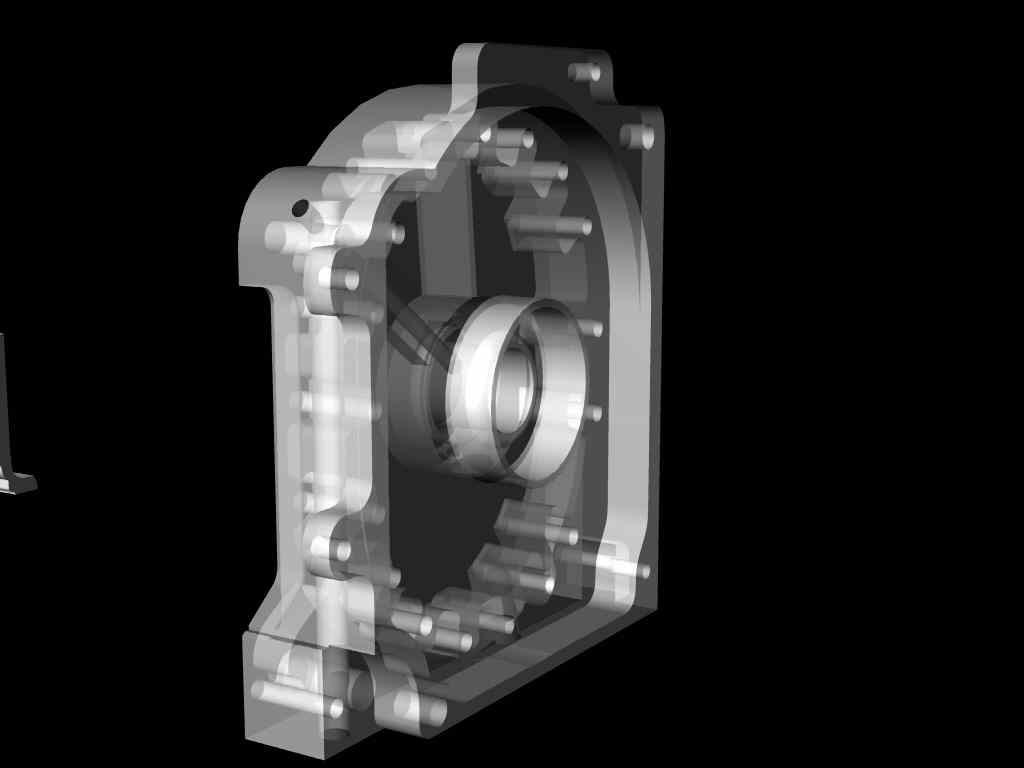
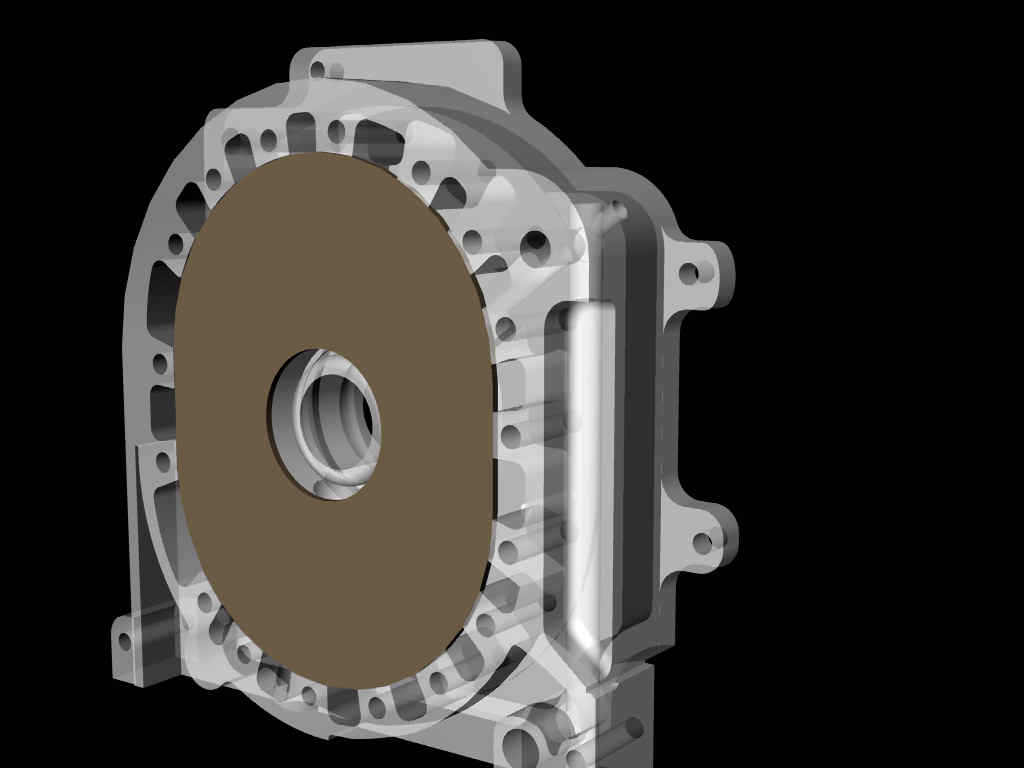
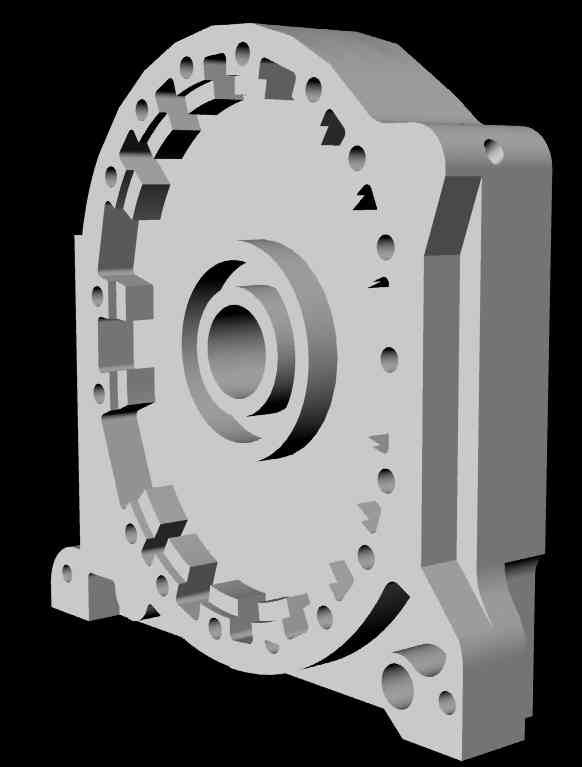
Dale, I wouldn't classify housings that cose $2650.00 apiece for end
housings as cost effective. As a basis for a four rotor I am not
comfortable with the series cooling at continuous 6400 RPM. Using
390 or 398 alloy housings no coatings for wear are needed. This
material (390) is used in lawn mower engines and despite the post
last week that it wasn't successful in the chevrolet vega it was.
The problems with the vega were a result of cost cutting on the
part of GM where they used a much too small radiator and other
cooling system problems. With no maintenance of coolant level there
were overheating issues. During overhaul after overheating it took
a 3 step process to restore the cylinder bores that was ignored by
amatuer mechanics in favor of the methods they used for cast iron
blocks. Imformation on the vega durability and cooling problems are
easy to access in yahoo or google.
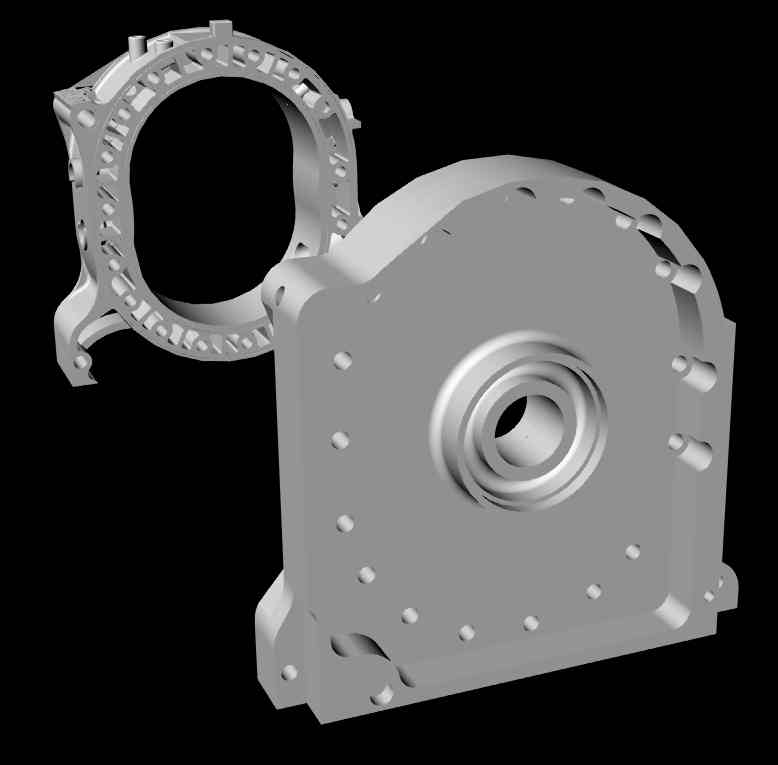
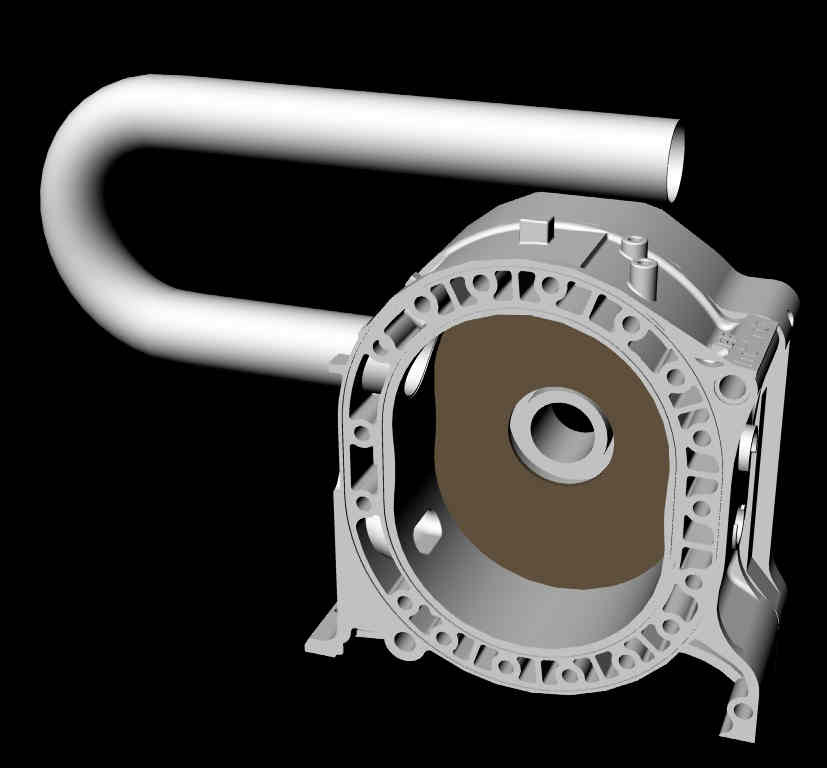
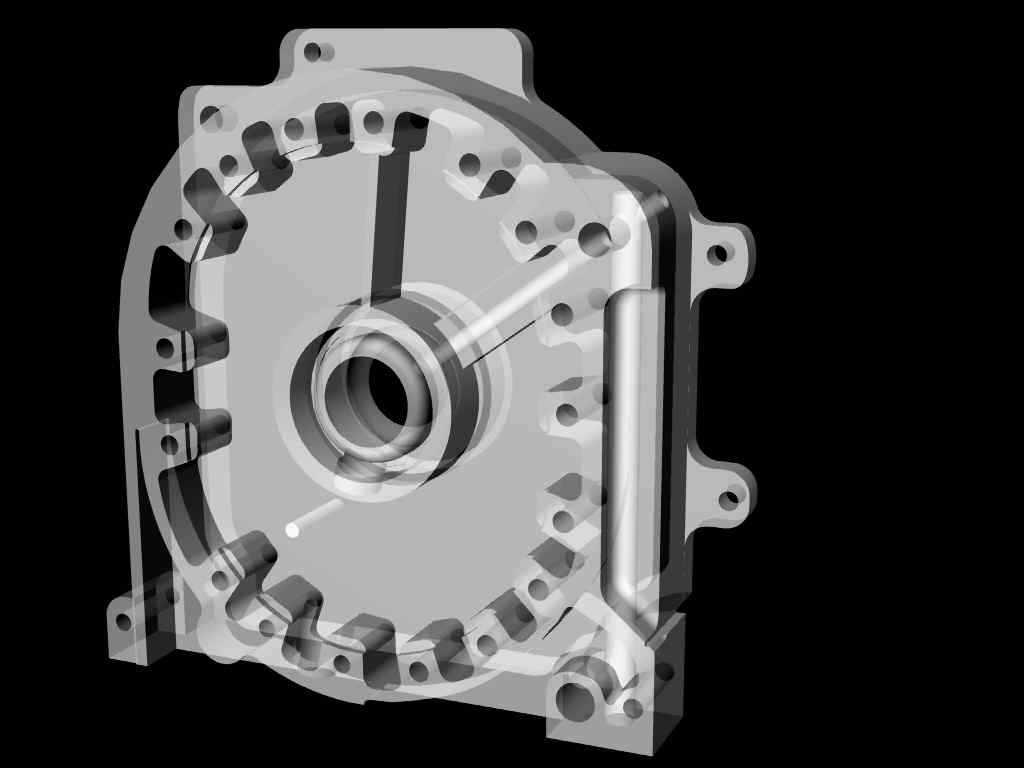
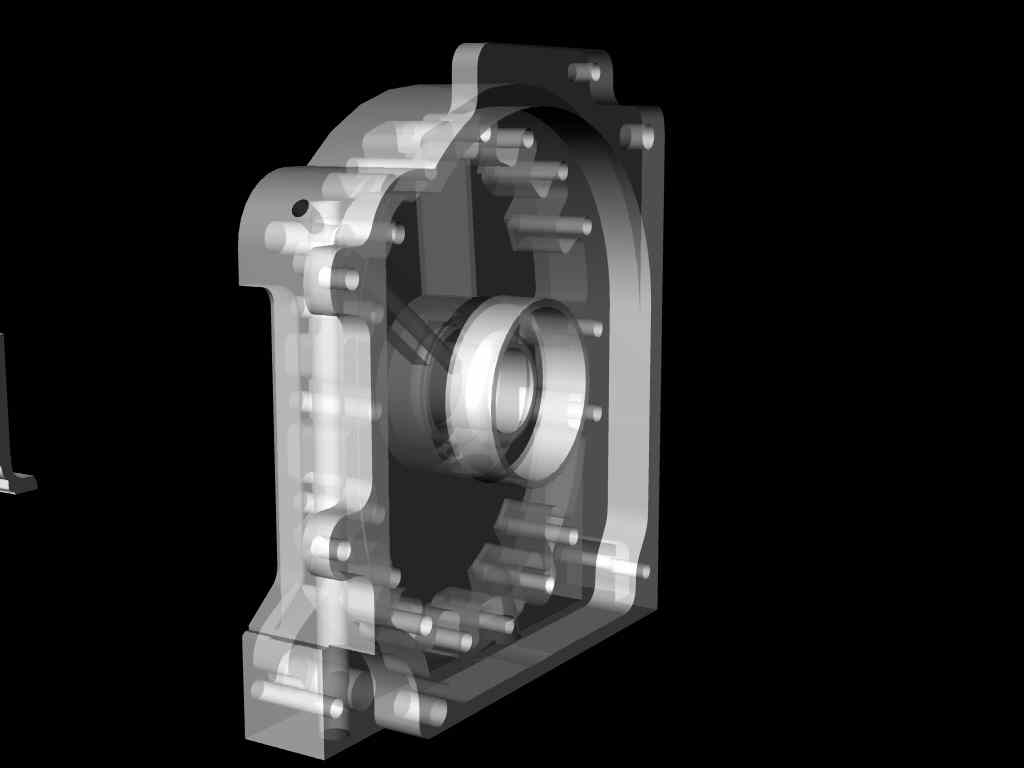
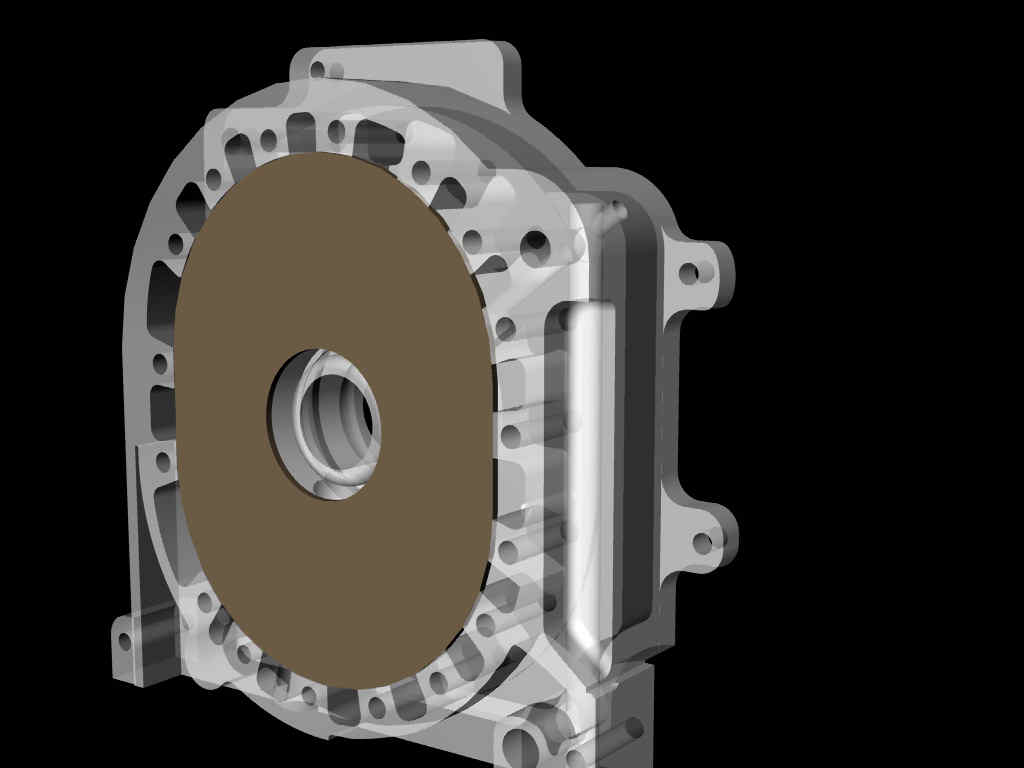
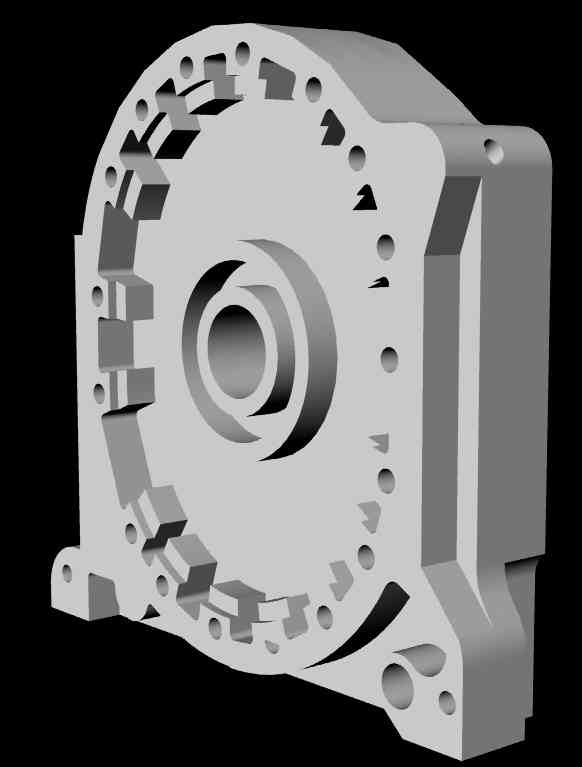
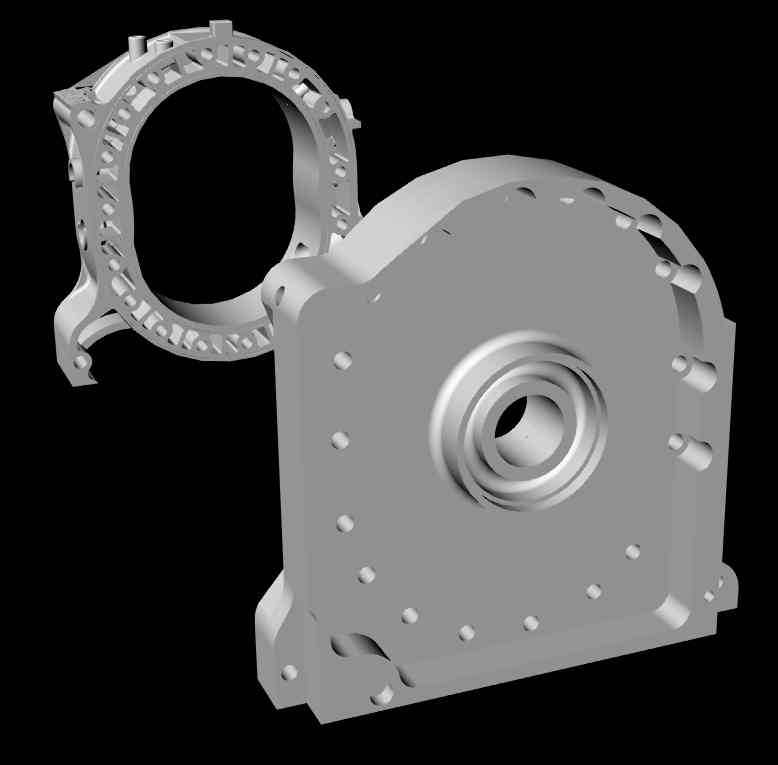
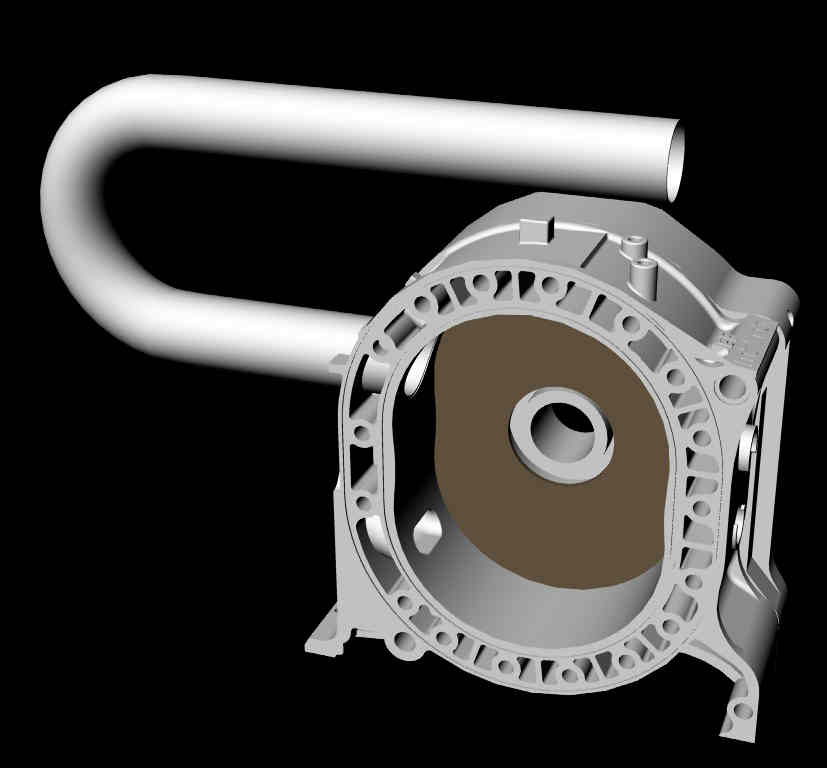
To produce a two piece end housing with coolant flow paths
(parallel cooling) as well as increased flow rates and including
mounting provisions is not that difficult. The housings can be
faced off in a large lathe and lapped. The lathe approach allows
boring the stationary gear bore and some "O" ring seats while it is
chucked up for accuracy. "O" ring paths for rotor housing seals can
be done in a CNC router. If I didn't have the machine tools I could
farm out everything with an end cost of $700 for the front or
center housing and $850 for the bellhousing end. I drew mine up
with a front and rear bellhousing which are dowel alligned so that
two sets of RX8 internals can be used for a 4 rotor. As a six rotor
the prop end e-shaft would need modifications. If I farm out the
foundary casting at $140 and buy the "O" rings for $90 which
includes double sealing the water to oil seals at the stationary
gear I can build them for $250 apiece. That would be about $1500
for all the housings of a four rotor.
george grimes
Yea, the retail prices on aftermarket alum housings forces me into
the foundry yard. It really is much cheaper that way. I am too
skilled to pay $6k for something I can produce on my own.
The 390 alum used in the 928/944/968 porsche engines worked great as
a cylinder surface, even great for the 944 turbo. The correct
boring/honing process had to be followed. This is totally different
from the air cooled 911 mahle cylinders.
I'm definitely in the game for producing these light weight parts.
Ed Carver
Hi guys,
I was looking at some speculation on the possible internal
measurements of the
16X engine and why Mazda may be doing things the way it appears they
may be
looking at. The increased radius (R) and offset (e) are easy to
understand.
Like stroking a boing boing engine. The reduced rotor depth or width
and the
explanation of flame travel sounds reasonable; more burned fuel for
better
economy and less emissions. The proposed dimensions for the 16X are
similar to
the 13A engine. Now I know parts for that really rare engine will not be
readily available or inexpensive.
My thought is that if people on this news letter are going to the
expense in
time and money to build parts dedicated to aircraft use, maybe it
would be an
opportunity to make use of some of the possible design benefits that
Mazda and
others have spent millions on. If the R and e of the 13A were
incorporated
with the 70mm width of the 12A, the apex seals would be readily
available. End
housings would not be very different. Building rotor housngs would
pose a
bigger difficulty. The inner oil seals could pose a small
difficulty with
respect to the diameter around the rotor diameter for the greater
eccentricity. The other problem would be side seals as the greater
length
between apex seals would require custom build. Corner seals could be
used from
what is todays most durable design.
It would not take Jeff a lot to scale the Al rotors to get them to the
required size and also to make the e-shafts.
Maybe I am leaving yellow snow, but just thinking, and maybe get you
people
thinking also. It could help bsfc and the larger displacement looks
like 305
to 310 HP for a 2 rotor based on the pport numbers. A 3 rotor could
be in the
450 to 475 HP range. This with the same weights as current engines.
Dale Davies
If somebody can show us how to make the steel liner for the rotor
housings, and then make the hard chrome stick permanently to the
liner, We're good to go. No shortage of chrome around, just can't
make it stick.
Ed Carver
You don't need chrome Ed. Just hard steel 4130 sheet and then have it
nitride'ed. I would start with .090 thick. If that does not work out
you can go thicker later on with the same Al water jackets.
However if you insist on chrome you contact the people that
re chrome cylinder liners as there is a trick to making it porous.
The porosity retains an oil film.
Richard Sohn uses a cast iron liner which has a porosity of it's own.
However Mazda induction hardens the cast iron and then nitride'ed
it. I think Richard is doing the same.
Paul Lamar
--
The Rotary Engine NewsLetter. Powered by Linux.
ACRE NL web site.
http://www.rotaryeng.net
Youtube key word PaulLamar2
Copyright 1998-2010 All world wide rights reserved.