A while back reduction gearing methodologies were discussed IIRC, to
reduce
turbo charger turbine speed to something manageable to direct drive for
turbo compounding and or an electric motor turbo compounding.
Was there one or more methods recommended that are or may be viable to go
from 90,000 rpm down to 5000, to 10000 rpm range?
Also a side question that is not related to rotary engines so apologies in
advance. Does anyone know how to calculate what the equivalent Hp is for a
turbojet engine developing 27 lbs of thrust?
Thanks.
Cheers,
Brian Feeney
President, CEO
DreamSpace Group
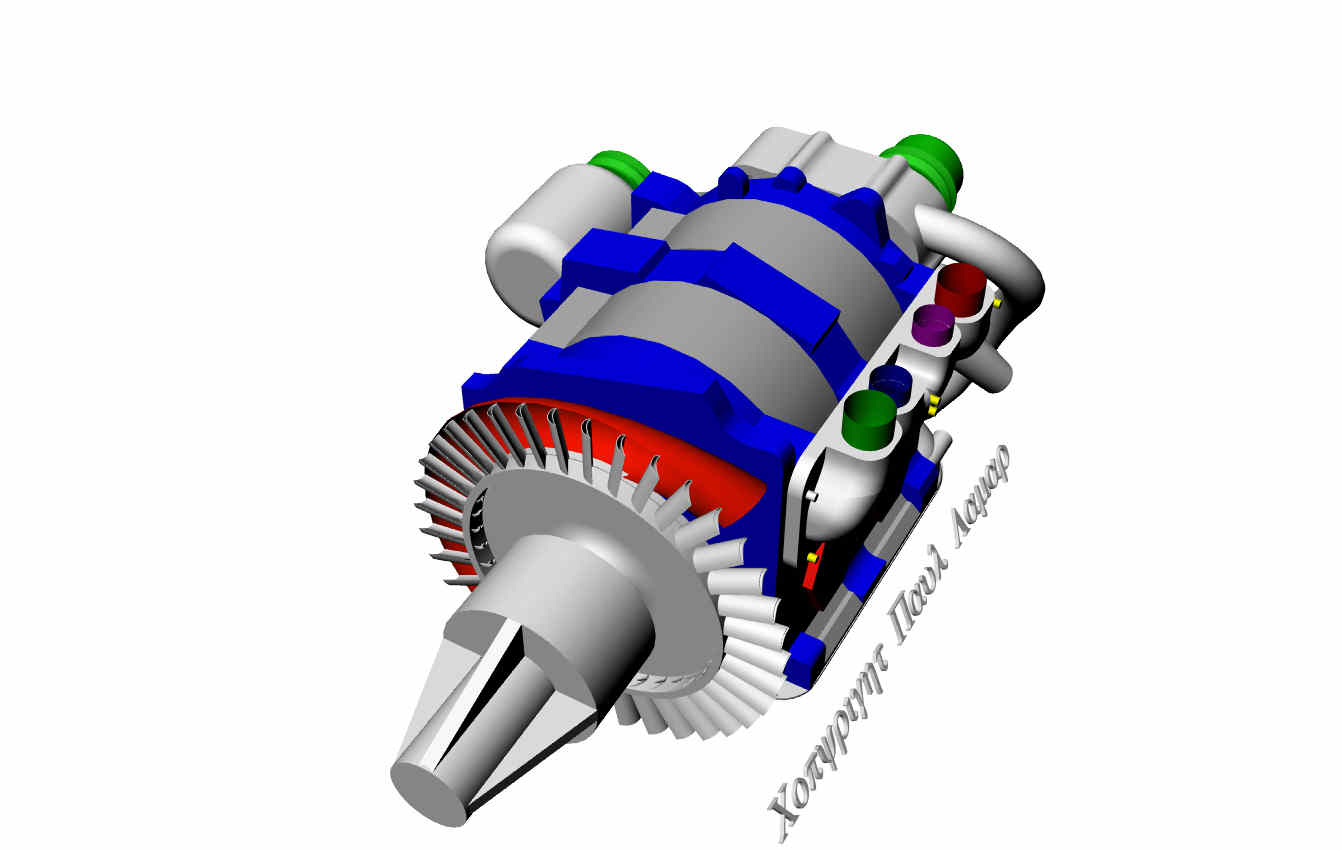
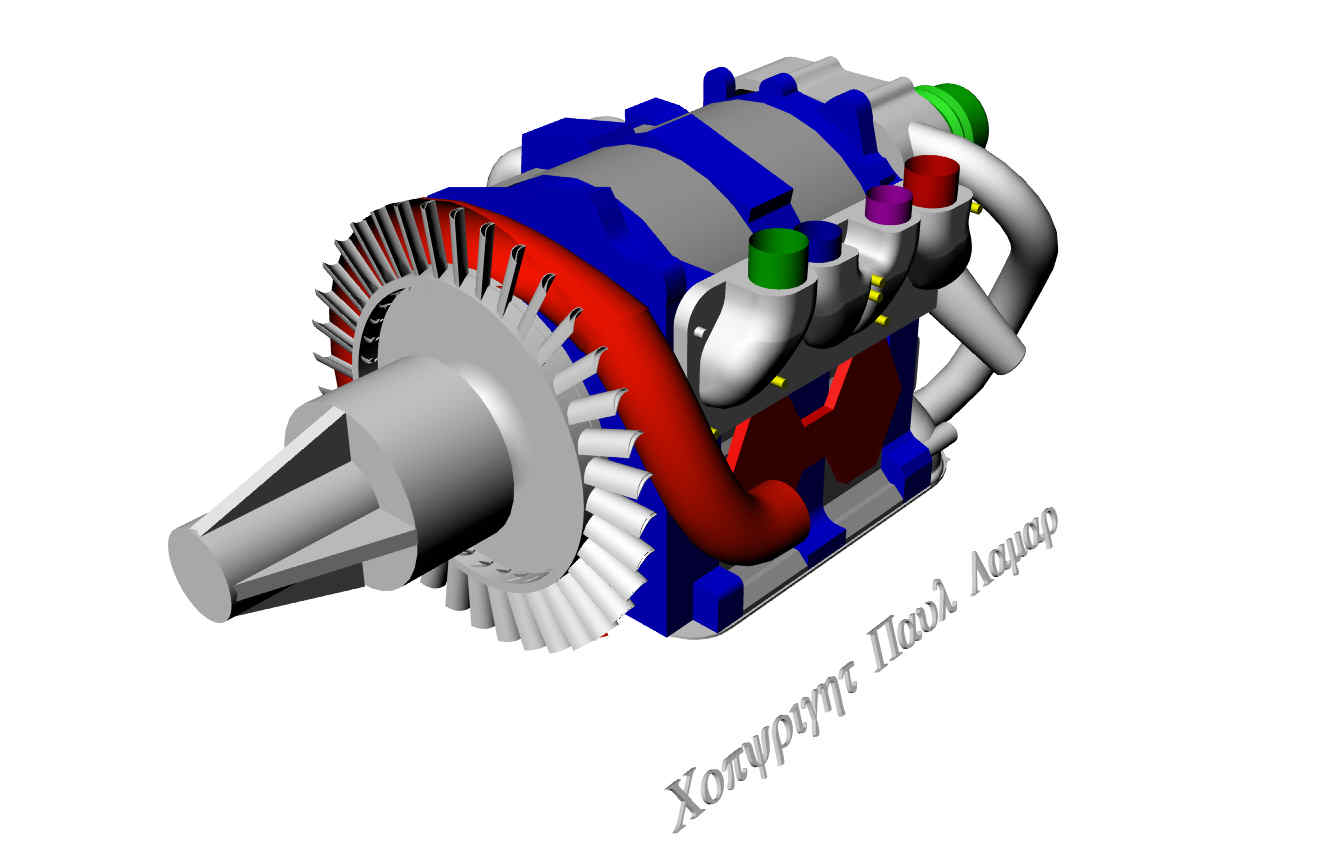
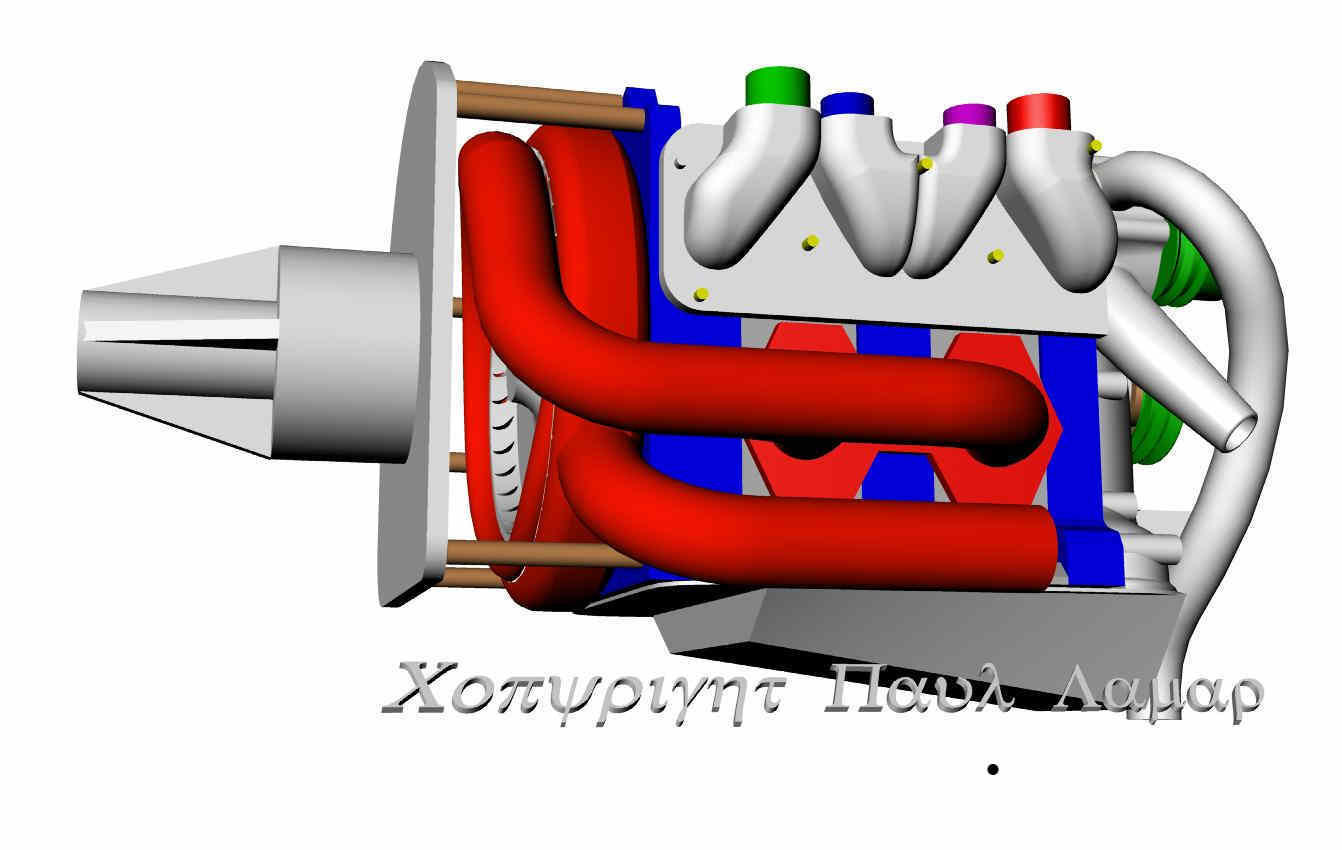
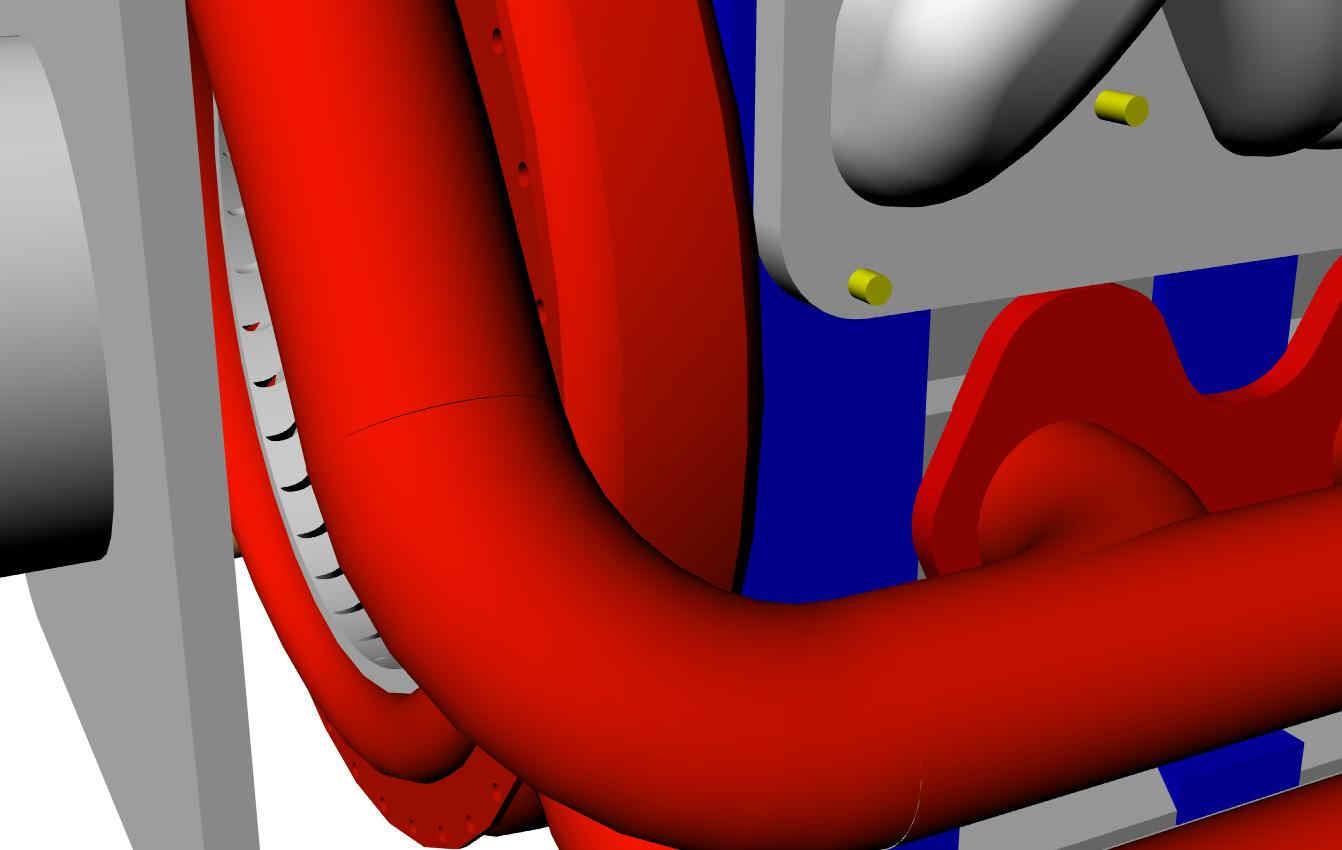
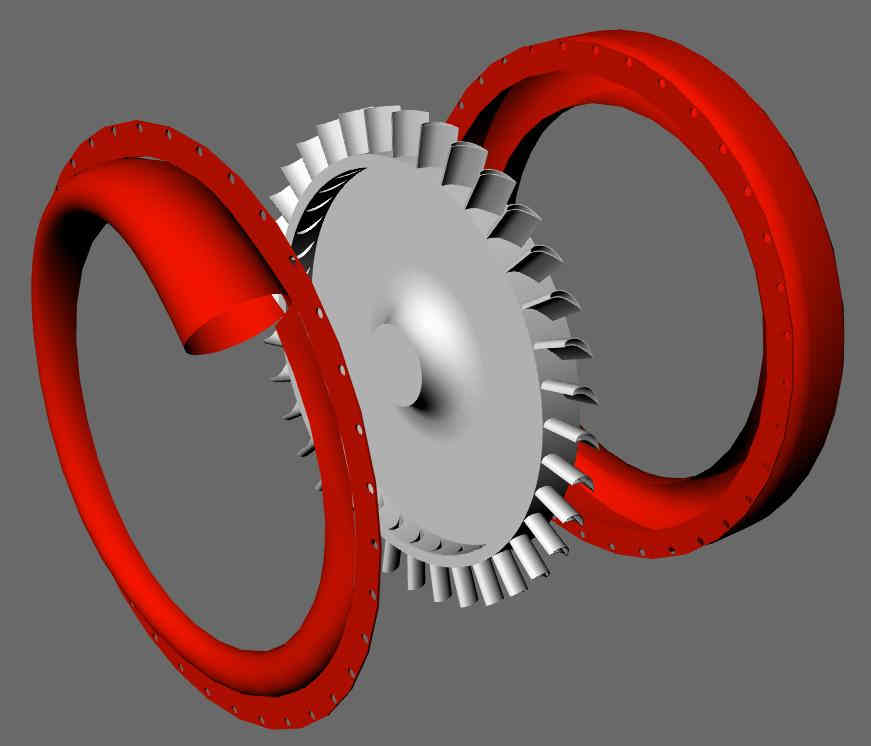
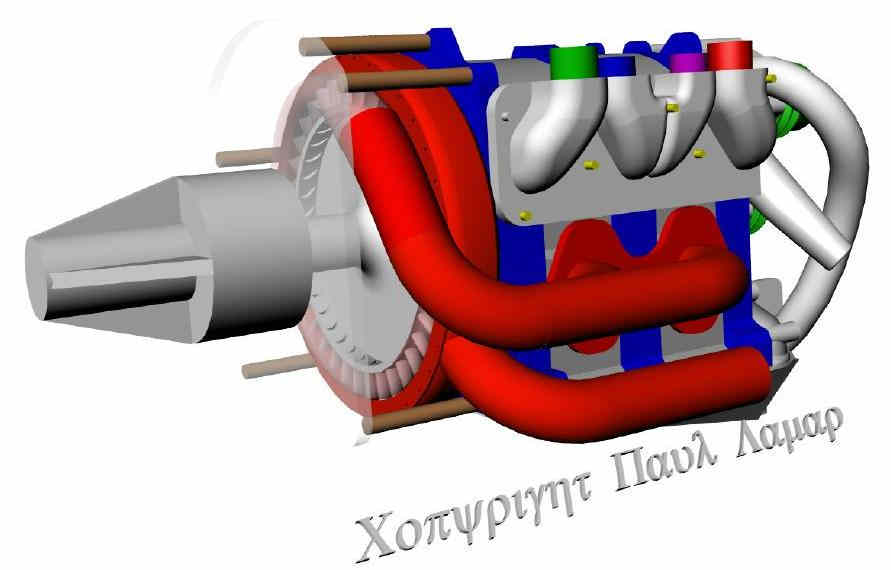
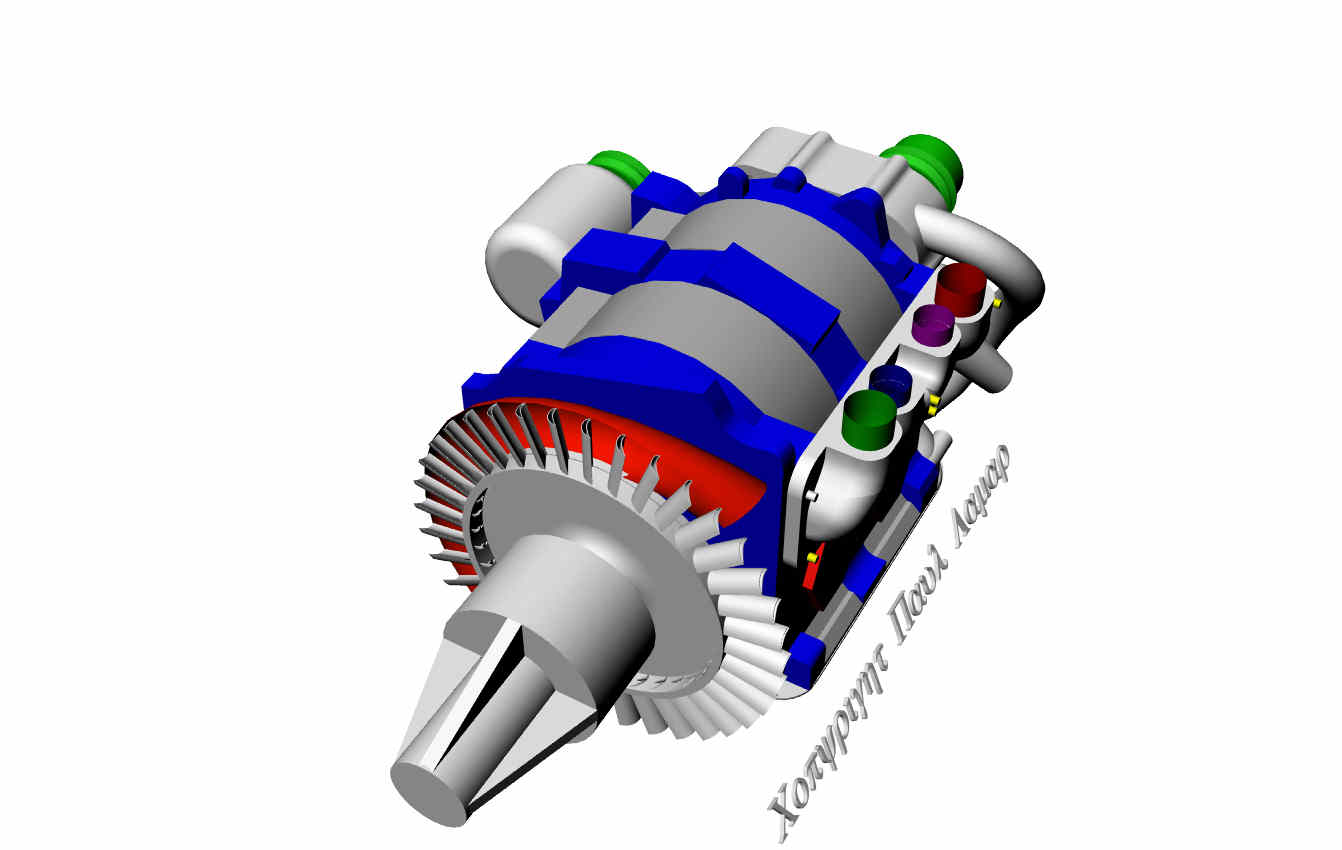
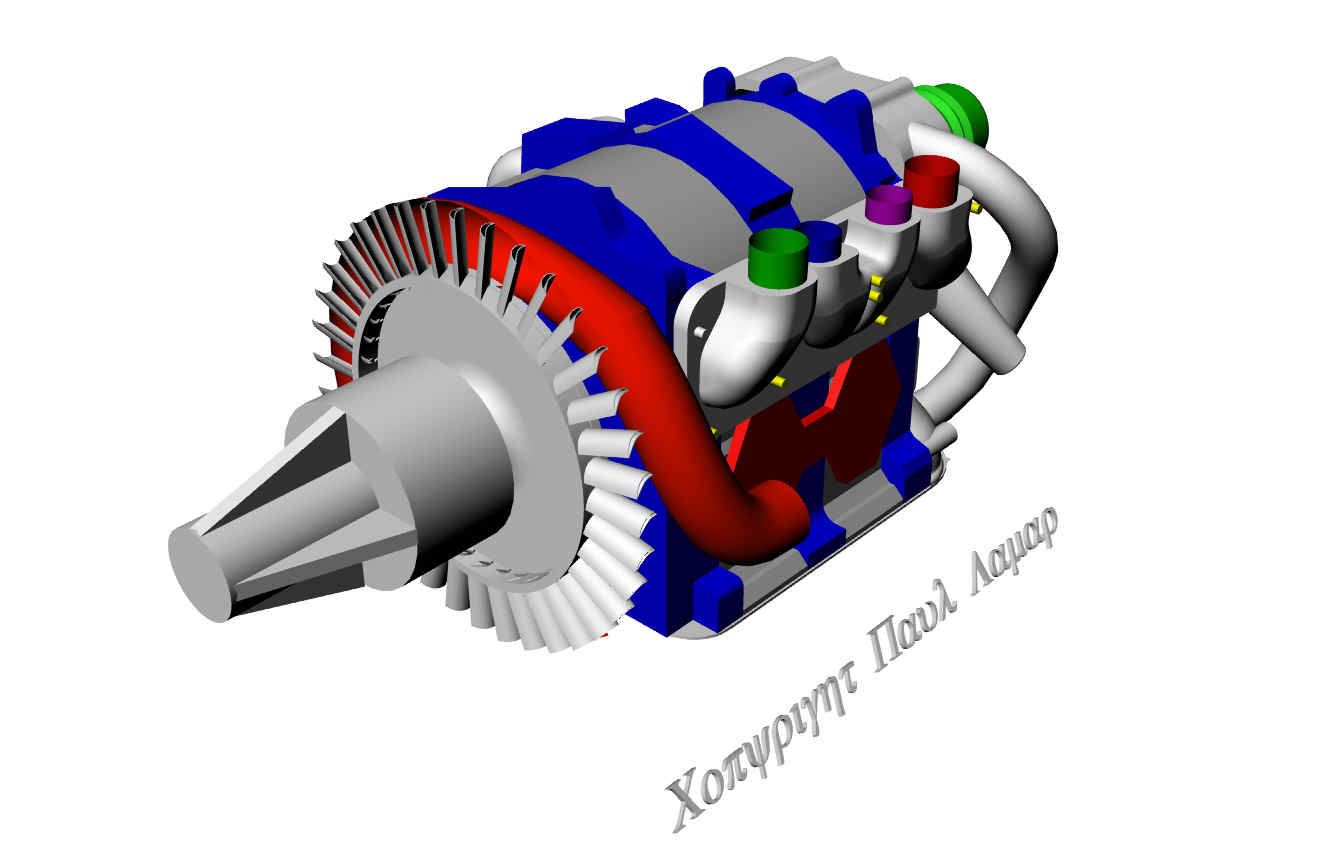
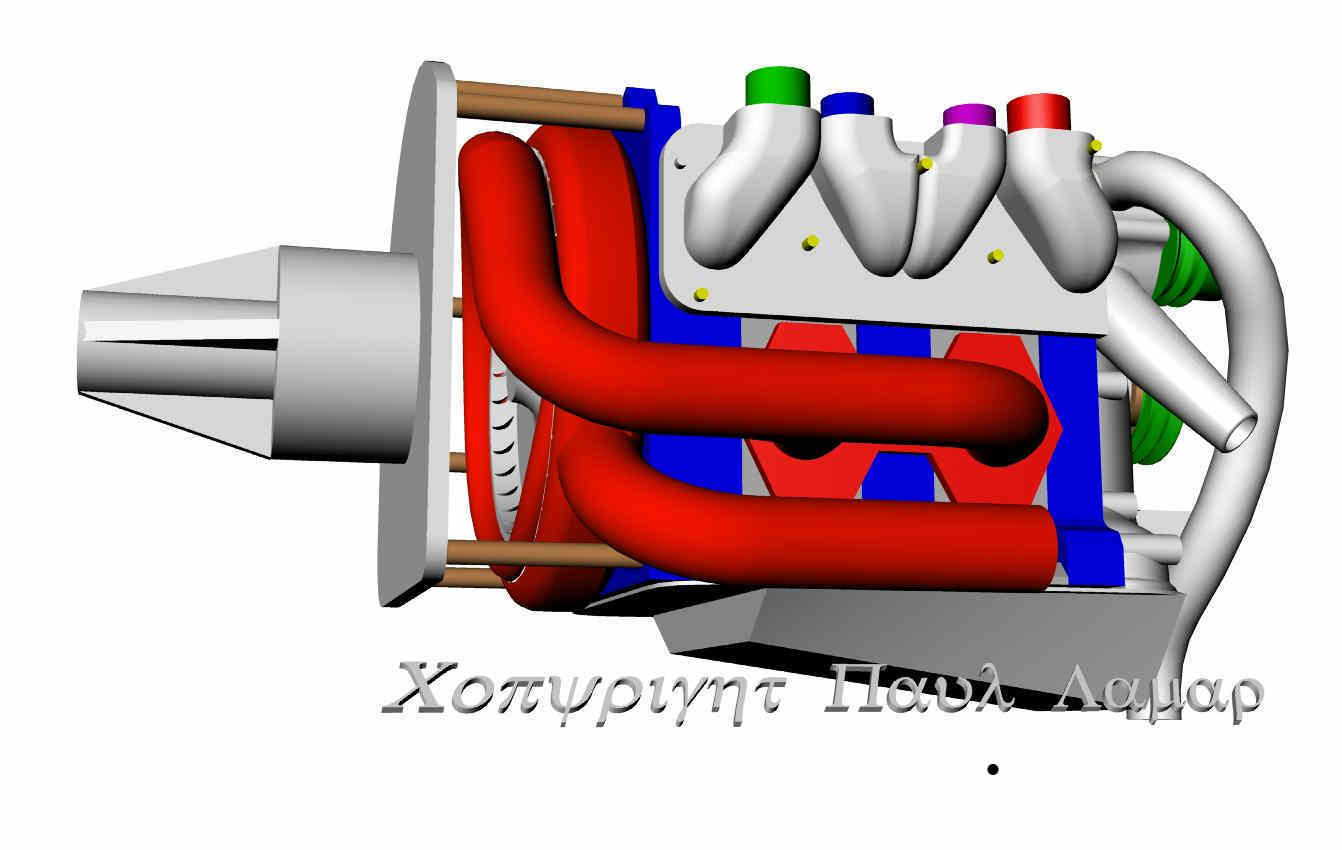
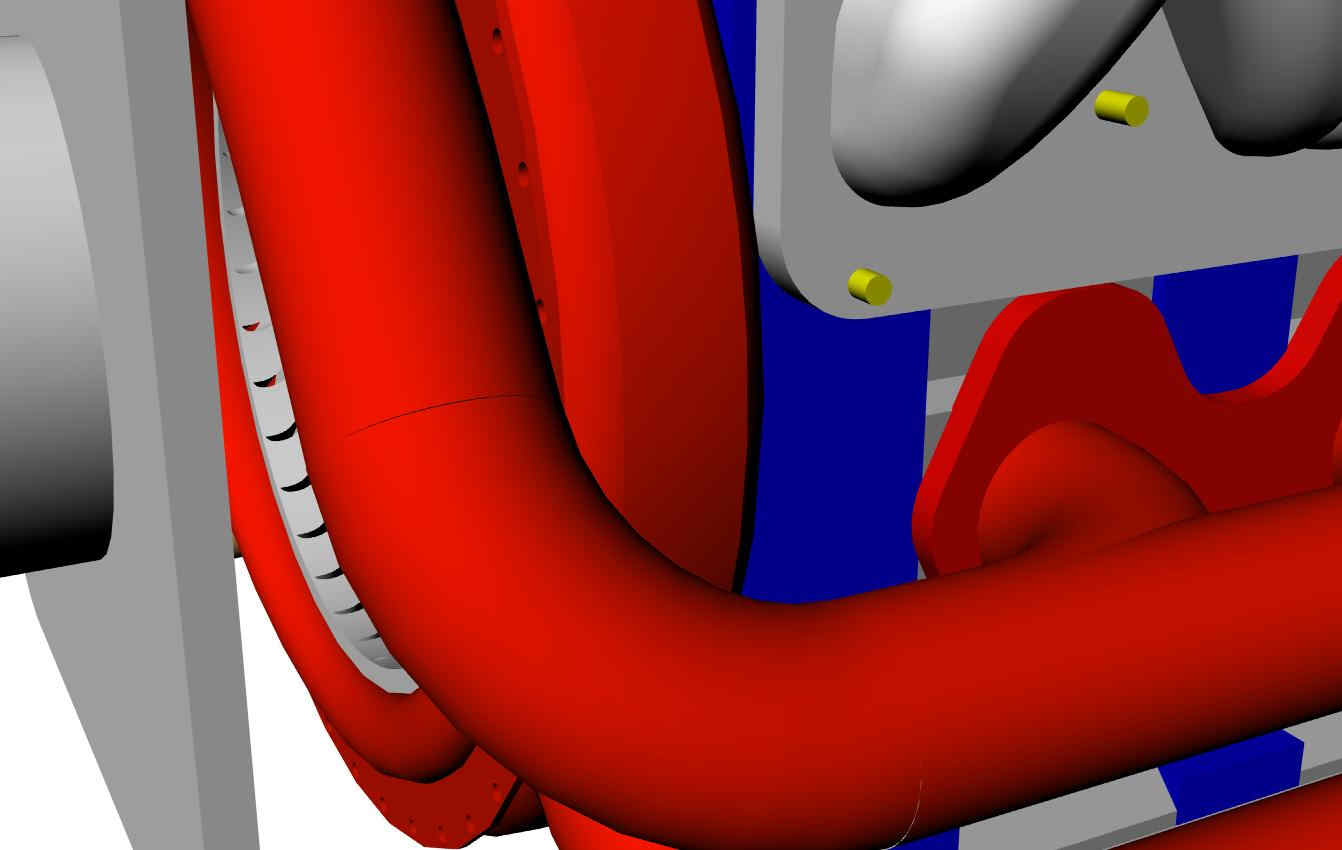
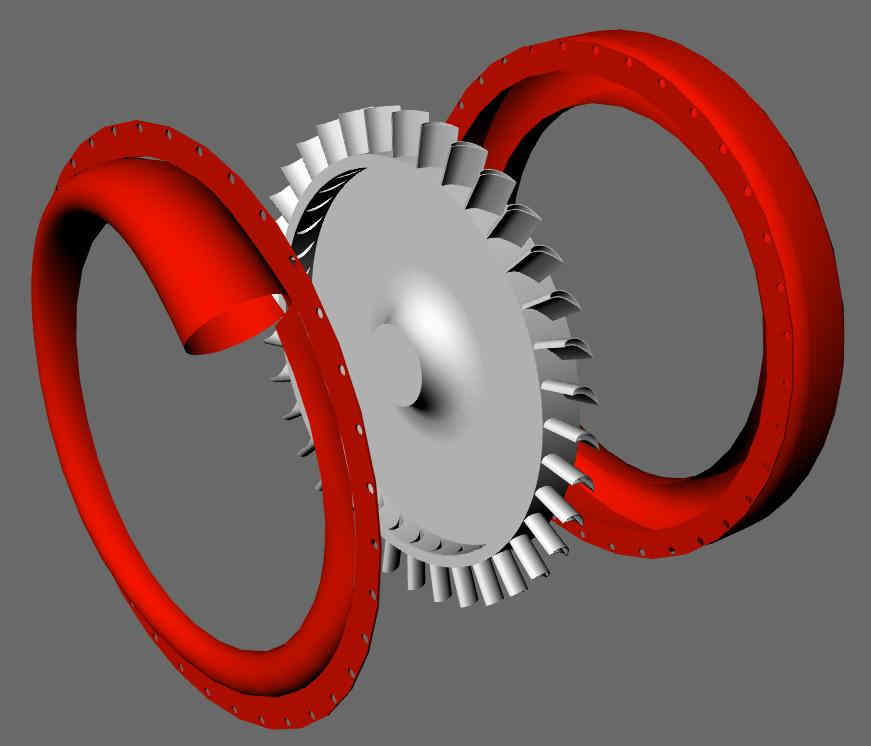
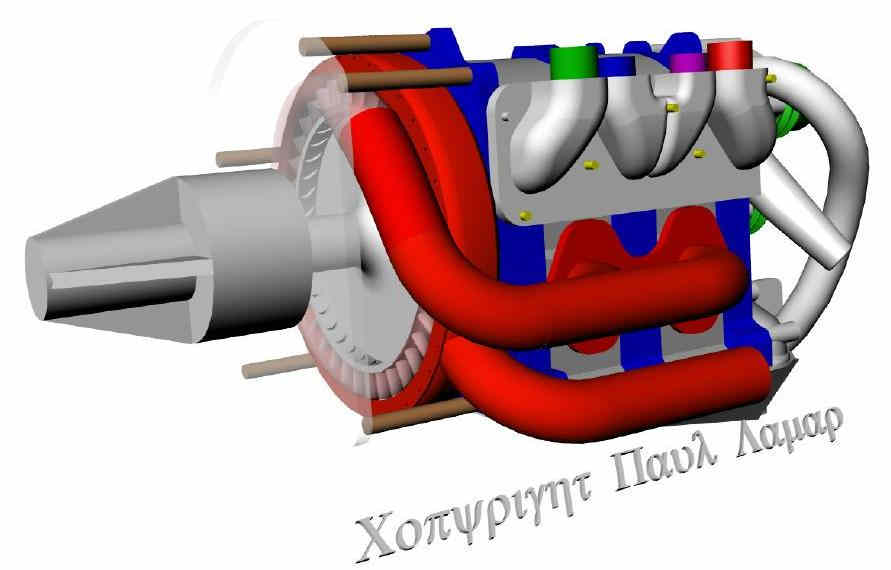
IMHO our traction gear box is the best way to go as super high
spur gear pitch lines velocities are problematic.
http://www.rotaryeng.net/14-traction-drive-exploded-3D.jpg
http://www.rotaryeng.net/17-complete-reduction-less-eng-transp-3D.jpg
http://www.rotaryeng.net/parts1.jpg
http://www.rotaryeng.net/parts3.jpg
http://www.rotaryeng.net/parts5.jpg
http://www.rotaryeng.net/parts6.jpg
Jet engines have thrust that is more or less independent of speed so HP
depends on how fast you are going. For example:
27 pounds of thrust at 400 feet per second is 10,800 pound/feet/second.
Divide that by 550 and you get 19.6 HP.
400 feet per second is 272 MPH. The drag on any reasonable size
air plane would be way more than 27 pounds.
At 200 FPS HP is half that or about 10 HP.
The dilemma is at zero speed HP is also zero in theory :)
What is really happening is all that static trust is just
stirring up the air and heating it in the process.
Paul Lamar
Thanks for the reduction drive pics / info. It's very much appreciated Paul.
It looks very compact and light weight. What might be the approximate weight
of the design vs. the Hp input and or output capability?
On the Hp from 27 lbs of thrust, I see what you mean. What I should have
said though was how much shaft horse power - SHP - can one develop from a 27
lbs thrust engine as in a turbo prop, at zero velocity? I am assuming (maybe
wrong) that turbo prop engines begin life on paper as some equivalent level
of thrust output that is converted - about 90% I think - to SHP.
One reference I have read that is non aviation based indicates 94 Hp output
from a 27 lb thrust engine when properly, mechanically converted.
Cheers,
Brian Feeney
I assume you mean feeding 27 pounds of thrust through a turbine
to convert that to mechanical HP. I don't know the answer to that.
If I know the diameter of the pipe and the velocity and density
of the gas exiting the pipe I can figure the HP out by calculating
the lift on a bunch of turbine blades. The lift numbers will give
me the torque and RPM of the turbine.
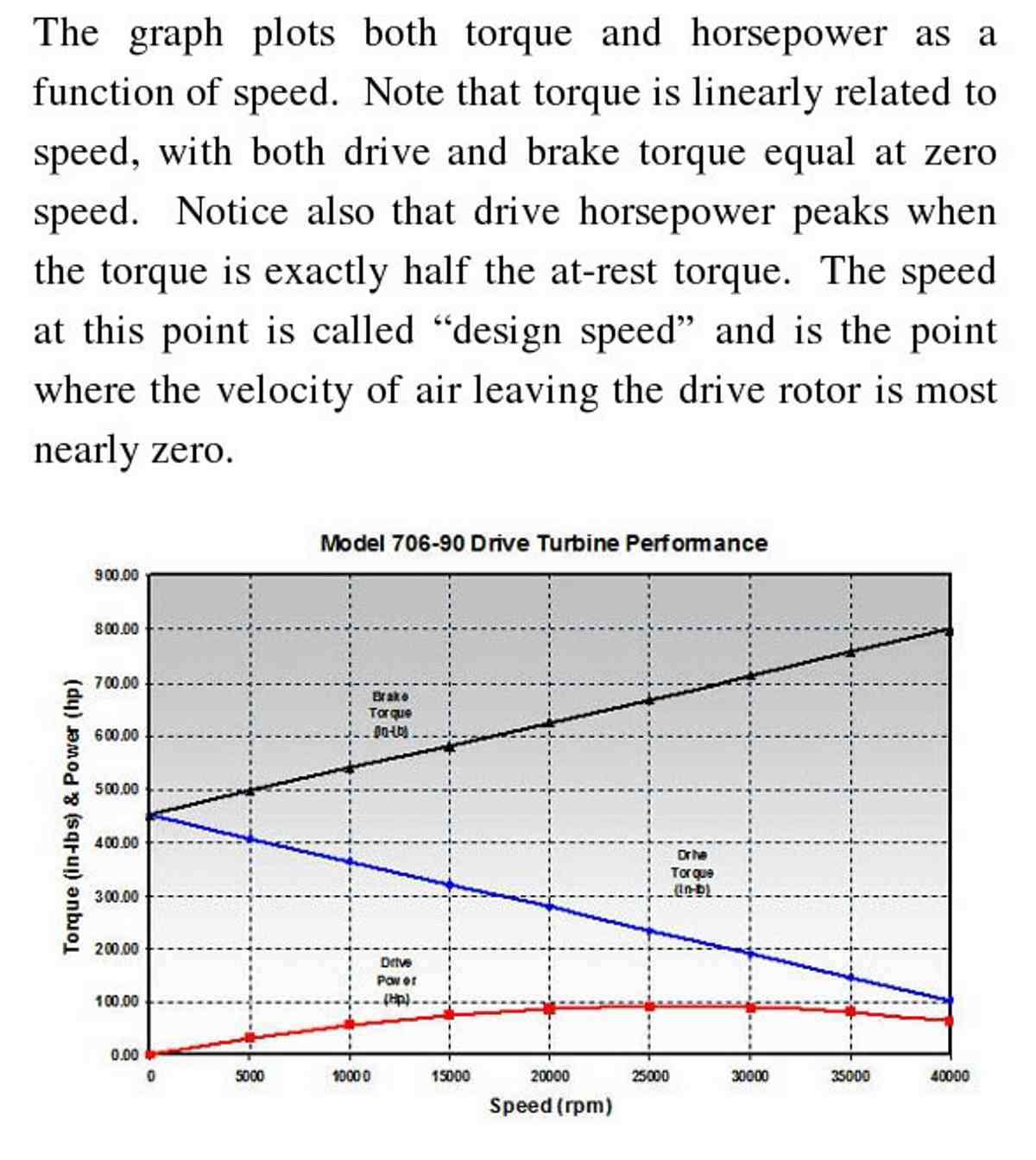
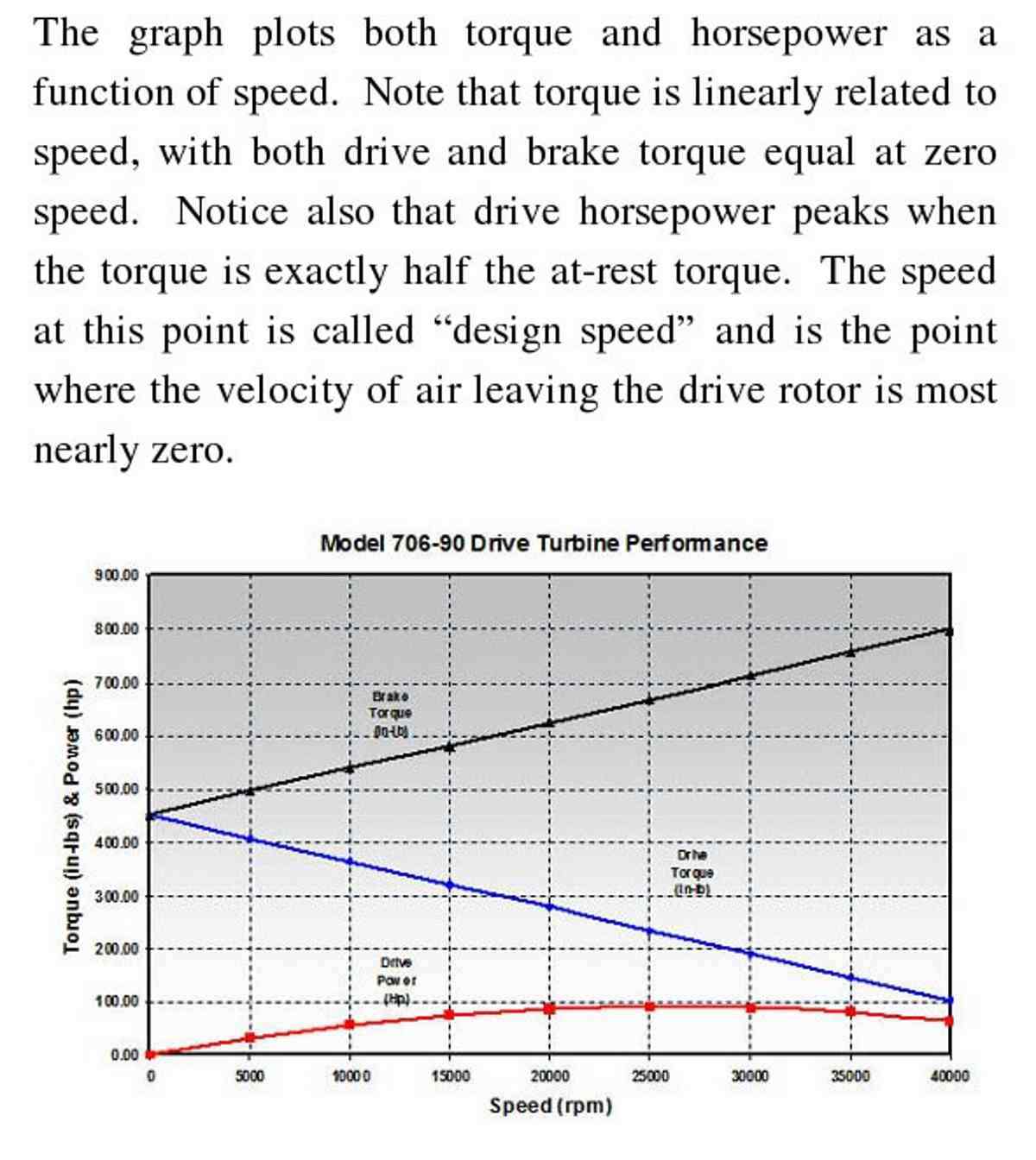
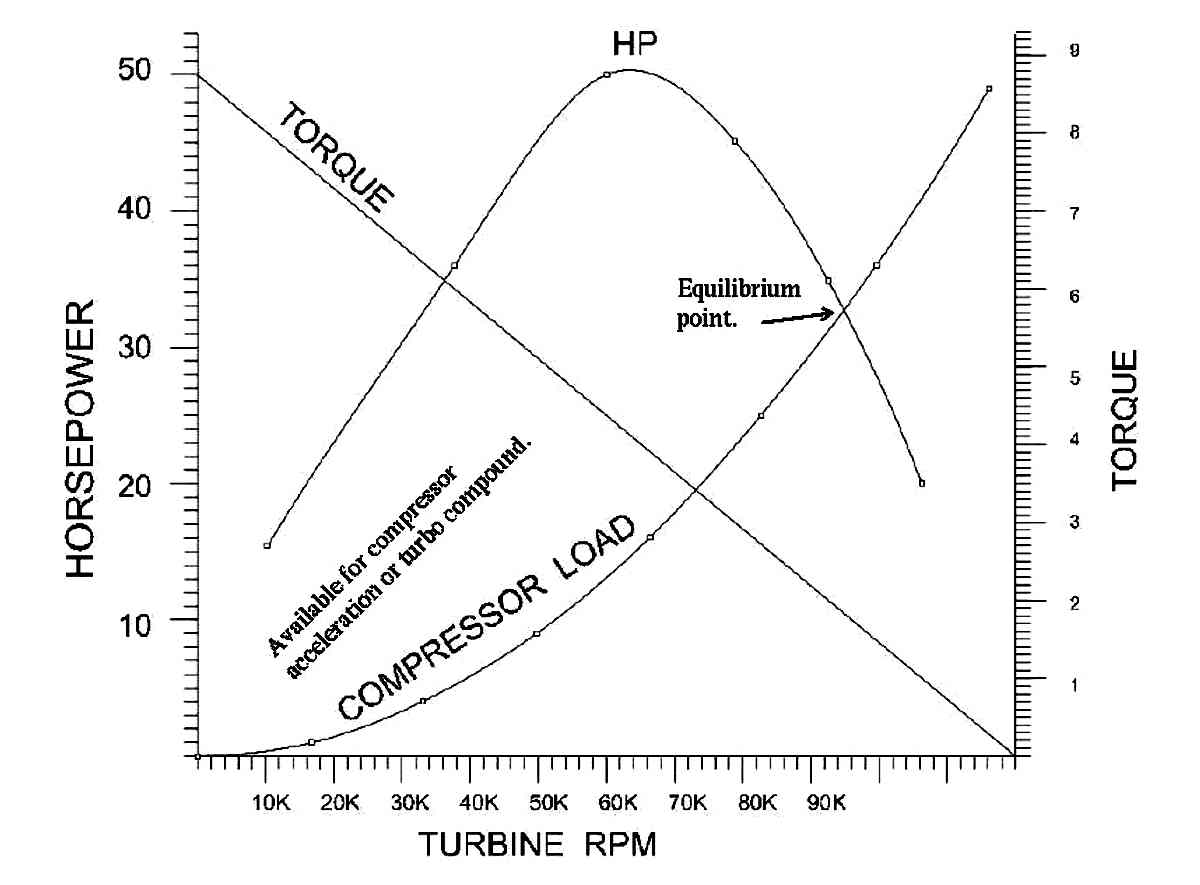
Here is a chart on the subject. When the turbine blade is stationary the
torque is at its peak. When the turbine blade is going the same speed
as the gas velocity the torque is zero. Somewhere around or slightly
above half max RPM the HP output from the turbine is max.
One can change the velocity of the gas to a limited extent by changing
the exit area of the nozzle.
Paul Lamar
--
The Rotary Engine NewsLetter. Powered by Linux.
ACRE NL web site.
http://www.rotaryeng.net
Youtube key word PaulLamar2
Copyright 1998-2010 All world wide rights reserved.