From past experience of piston cranks, I know they can be welded
and repaired. Now, the question, could I cut, weld, and heat treat
two 13B cranks to make a four rotor?
Regards,
Norm P.
Well yes and no. Most 4 rotor e-shafts are three pieces.
Other wise you can not get the engine together.
You almost have to have taken apart and put back
together a 2 rotor to understand why.
Paul Lamar
Norm P. There is a lot you can do for drag racing that will not survive
in airraft use. The first problem is that a normally aspirated P-
Port four rotor is 500 HP at takeoff RPM and 440 continuous
available for cruise. With more gear reduction than 2.85 to 1 the
horsepower can be well over 600. Using the stock components lined
up on a custom eccentric shaft the cooling glycol goes from the
pump through all the side housings and rotor housings, then crosses
across the rear housing and back to the front housing outlet . As
the water heats up progressing through the assorted housings the
cooling around the spark plug area becomes inadequate resulting in
detonation. The plugs, apex seals and stationarg gears will have
problems from the detonation. There have been conversions of
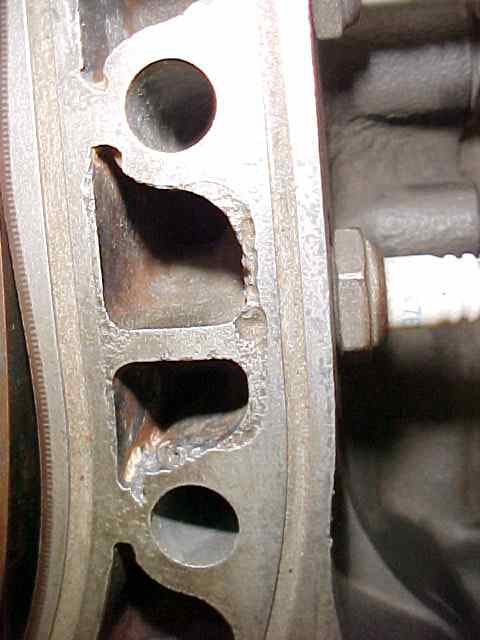
intermediate housings to allow parallel cooling where the coolant
only passes through a single rotor housing. This is possible but the
tension bolts and water seal "O" rings limit the size of opening
into the housings.
Second concern is balancing the e-shaft. Many people have
built four or more rotor engines with the eccentrics staggered 180
degrees to balance the rotating assembly with counterweights only on
the ends of the shaft. Theu use stock counterweights which are also used
as mounting flanges and spacers for other parts. If the two intermediate
eccentrics don't need counterweights then using that same logic the end
counterweights on a two rotor which is an 180 degree offset wouldn't
have counterweights either.
The accessory pumps are also a problem. An oil pump designed
for a three rotor would be a stretch on a high output four rotor, If
all the oil was for lubrication of eccentric and stationary gear
bearings that would be fine. However 1/3 of the heat rejection of the
engine is from oil sprayed into the rotors and around the E-shaft. As
continuous power increases so does this need for heat rejection. The
three rotor water pump is also low on flow rate for a four rotor
which needs 50 GPM at full power. The pump has twice as many
passages to push the water through and therefore more back pressure
which will reduce the flow rateeven further.
There are several ways to address these issues. You can search
the Internet for the five rotor Curtis Wright aircraft engine which
might give some insight. Also on the Internet is Grannies speed shop
which close coupled two complete two rotor engines less one flywheel
and starter. This was raced in a circle track modofied. The stock
E-shafts were connected with a home made coupling. After you get
through Paul Lamars web site you should also go thru
Craigsrotarypage.com which has a lot of info particularly on the foreign
engines such as the Russian 3 and 4 rotors aircraft engines.
The basic Mazda parts are accurately described as robust as
evidenced by huge two stage turbochargers and NOS systems on drag racing
cars making 1600 HP. The cooling and lubrication issues of an engine
under load for seven seconds is different than hours at near wide open
throttle in an aircraft.
Personally I went with stacking complete engine rotating
assemblies with aluminum end housings, The rear or the front engine and
front of the rear engine have matching bell housings located on dowel
pins for alignment. The center housings are modified for parallel
cooling and extra fasteners are added. The oil system is a 5 stage
stock car gerotor type and the water pump is 426 Chrysler big block.
The designs are frozen, the G-code is compiled for my CNC gantry
router but I haven't built a test engine yet. I plan on putting a
six rotor in a 1965 E-type Jag with turbocharging.
George grimes
AA Drag racing engine frequently don't have any cooling what so ever.
The metal does not get a chance to over heat in 5 seconds.
One way to cool a four rotor is make all end an intermediate housing
two pieces NC furnace brazed together with parallel radial cooling by
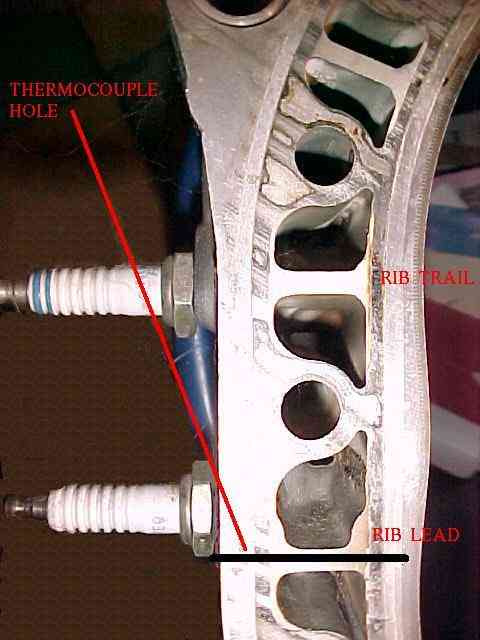
external plumbing. The secret to making this work is monitoring
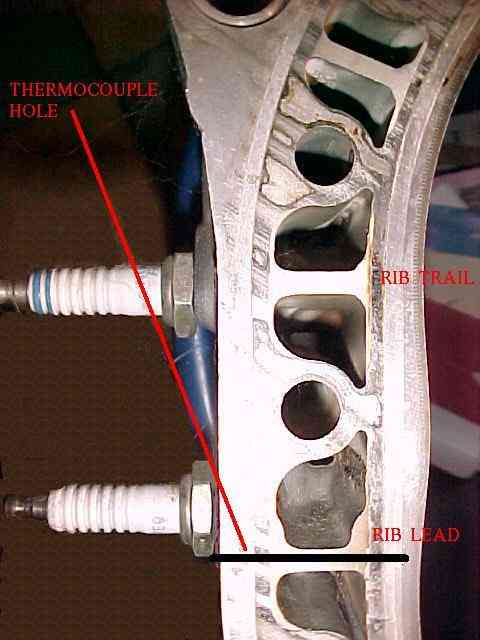
the rotor housing with four thermocouples mounted just below the
lower spark plugs sending info to four temp gages on the instrument panel.
Then tailoring the flow accordingly. Not a bad idea for a 3 rotor
as well.
Endurance racing Chev V8'a are frequently modified with parallel
cooling system using a plethora of external plumbing hoses.
The Orenda big block based Chev V8 $100,000 aircraft engine had
external parallel cooling galleries cast into a custom block design.
Paul Lamar
Paul,
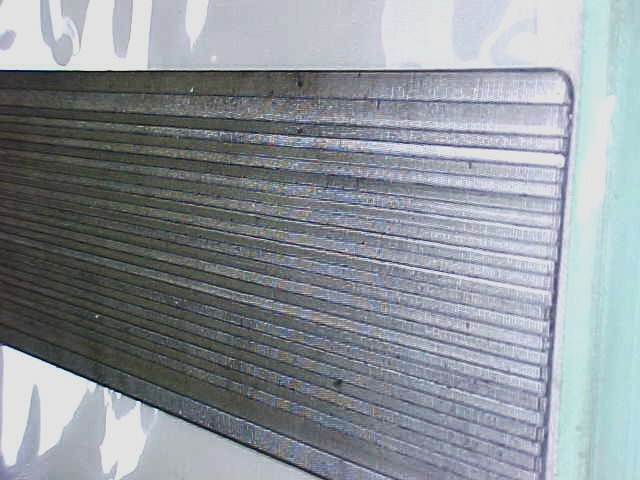
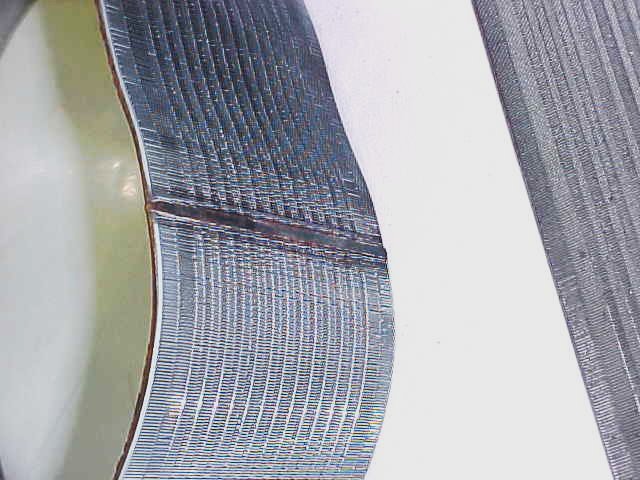
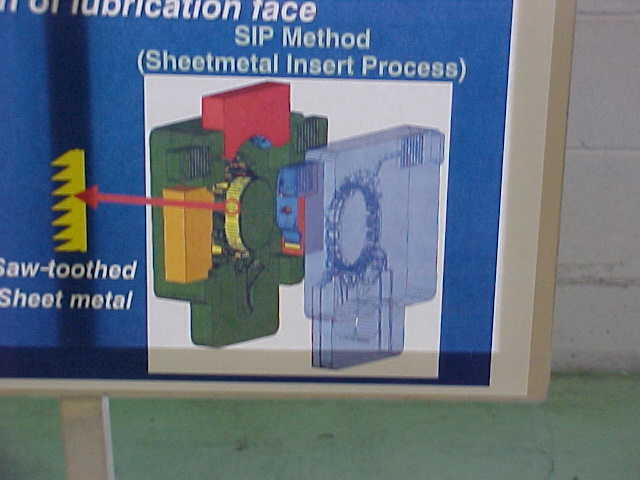
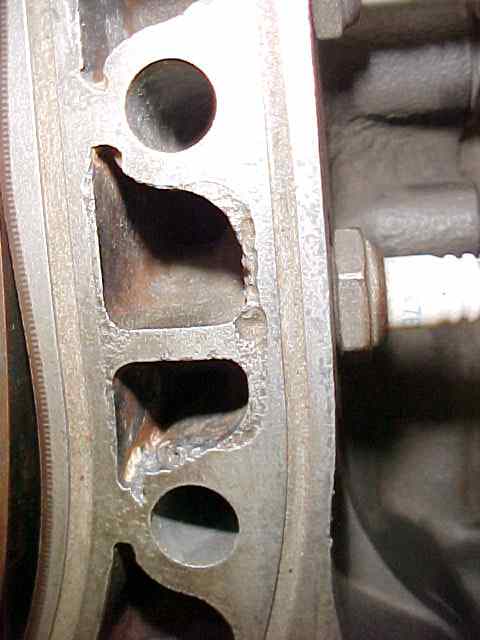
With regard to the Attachment 9 photo of Mark's rotor housing with the
thermocouple hole: there are some marks on the edge of the rotor housing just
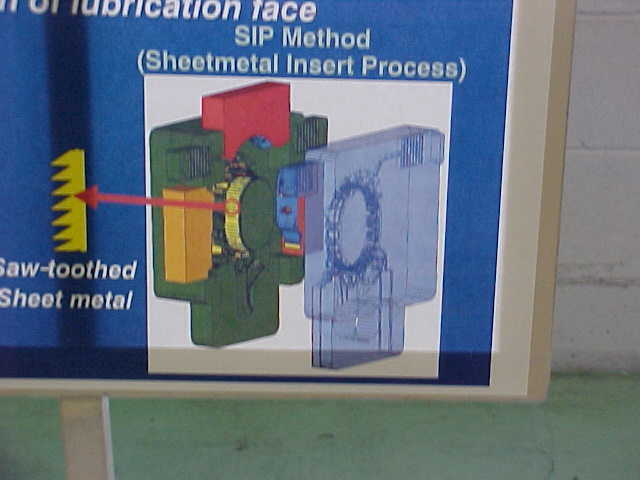
in from the inner edge. Are those the SIP rolled in ribs for the cast in place
Al to hold to?
Dale Davies
Yes. It is fruitless to try to improve on this technology :)
Paul Lamar
--
The Rotary Engine NewsLetter. Powered by Linux.
ACRE NL web site.
http://www.rotaryeng.net
Youtube key word PaulLamar2
Copyright 1998-2010 All world wide rights reserved.