Took about 2-3 hours per housing. Dremel tool, abrasive disk,
sanding drum, coarse and fine cratex wheels. Checked for
interference with starret machinists scale.
C. Smith
A Dremel tool is a bit under powered :)
Paul Lamar
Hmmm. Not sure what you mean by that. I'll say this, the dremel
never got away from me and nicked the liner anywhere I didn't want
it to. Die grinders, and other high speed pneumatic rotary tools do
that to me all the time. 8-O
C. Smith
I have watched a pro do it. John at Mazdatrix. In his 40 years
working with rotaries he has probably ported a thousand end housings
:) He makes a wood clamp to securely hold the rotor housing and then
uses two hands on the die grinder. Takes him 15 minutes :) The other
secret is you use grinding stones and those sandpaper wrapped
sanding drums. Less "catching" than a bur.
Paul Lamar
Another tip I have found is to use light pressure. Let the burr or
stone and
the speed do the work rather than leaning on the grinder to make it
go faster.
It is called finesse. You found out it works on women years ago.
Dale Davies
First of all, I do not have the benefit of having 40 years of
experience with
rotaries and porting thousands of housings. My experience prior to
this was
zero. Nor do I have the luxury of unlimited finances. My investment
so far in
each housing at this point is somewhere around $500. I cannot afford
a mistake.
Therefore I chose to proceed with great care and caution. I used a
lot of
finess, perhaps why it took 8 to 12 times longer than the
professional with 40
years of experience, and I always use 2 hands on my rotary tools.
I used the tools and materials I had at hand, my hangar is currently
about 11
degrees F which is where my compressor is, another reason I used a
dremel. In
spite of my lack of professionalism, I was successful in that I
believe the seals will make it past the port without being damaged
or excessive wear. In that respect, I am quite satisfied that the
time and effort was worth it.
Your results may vary.
C. Smith
11 F heck? I would not have been there C :)
I would be home by the heater. I am too old for that.
That shows real dedication.
Paul Lamar
Paul,
I've now done a few rotor housings now, but not thousands by any means.
I purposely position the tube a little below the chrome surface for
welding. My intent was to have a step where I could fill with filler
rod while keeping the minimum amount of weld bead above the seal
surface. I can then clean up and radius the weld without causing leaks.
So far, that approach has worked well.
As for grinding the weld, the less there is to grind, the less chance of
having the grinder get away from you and damage the housing. If you
grind too much, you end up with a pinhole leak. Caution and patience is
the rule of the day.
Mark
As I'm now looking to collect parts for a marine version of a single
rotor P port 13B is there someone who can supply me with good rotor
housing already P ported? All the housings I have seem to have lost a
bit much chrome. I guess I could do the job myself if I brush up my TIG
welding skills.
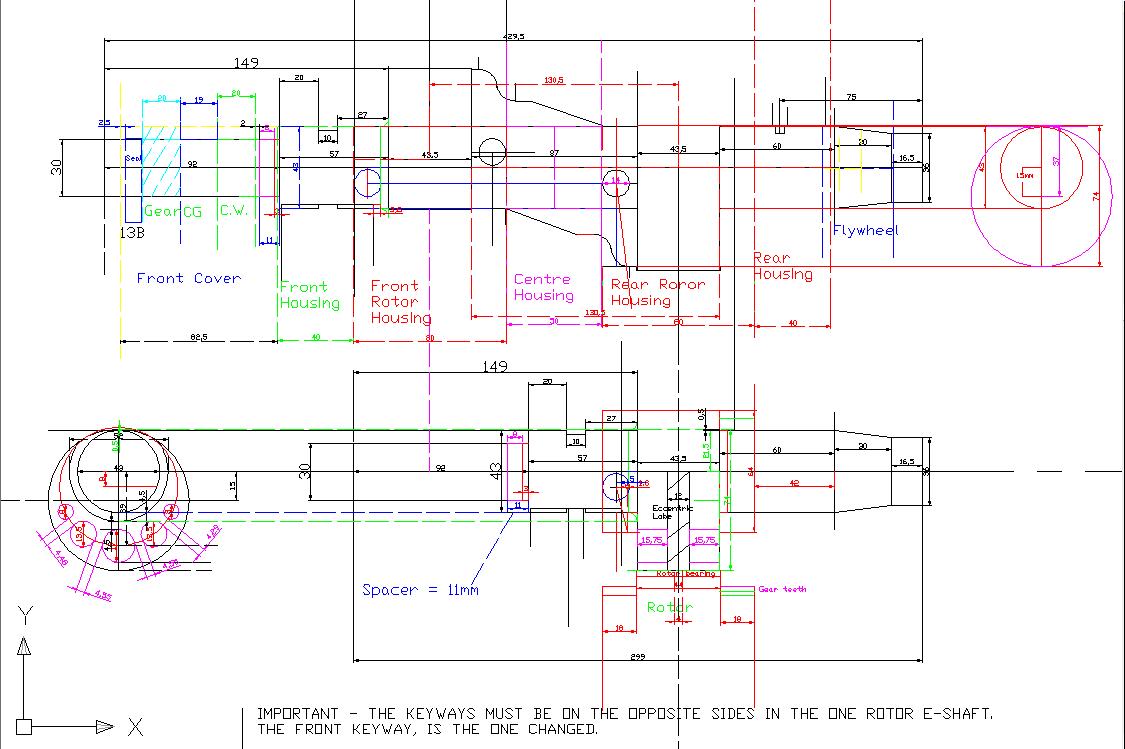
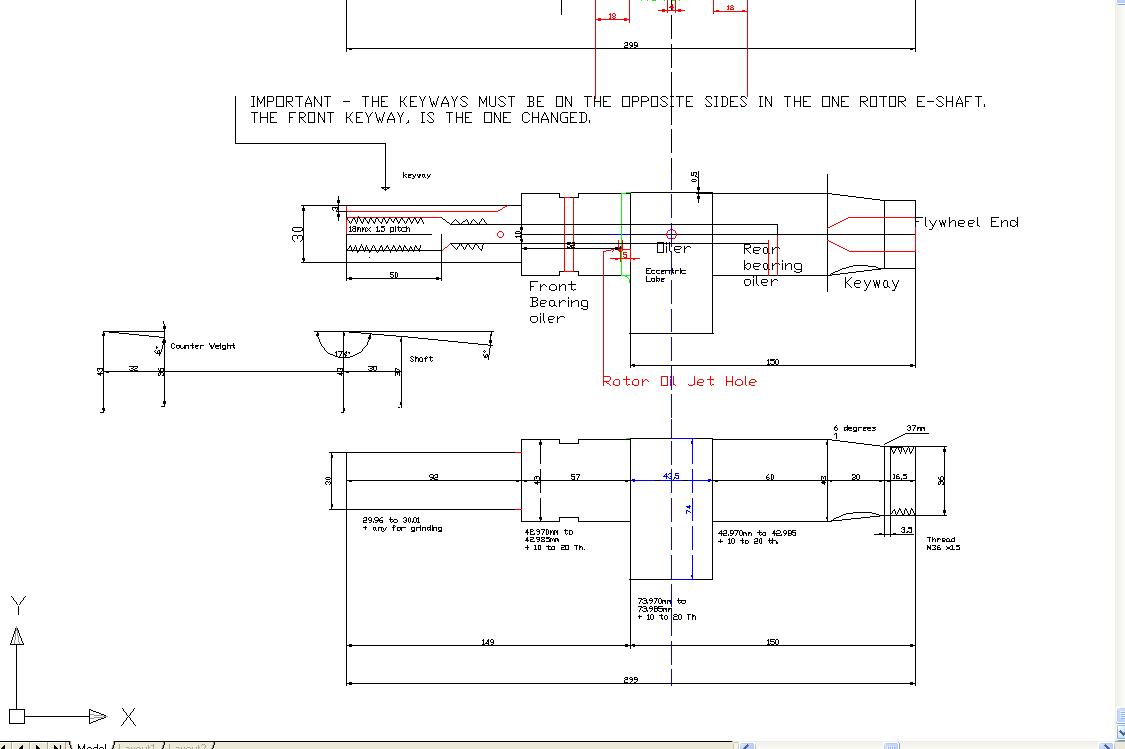
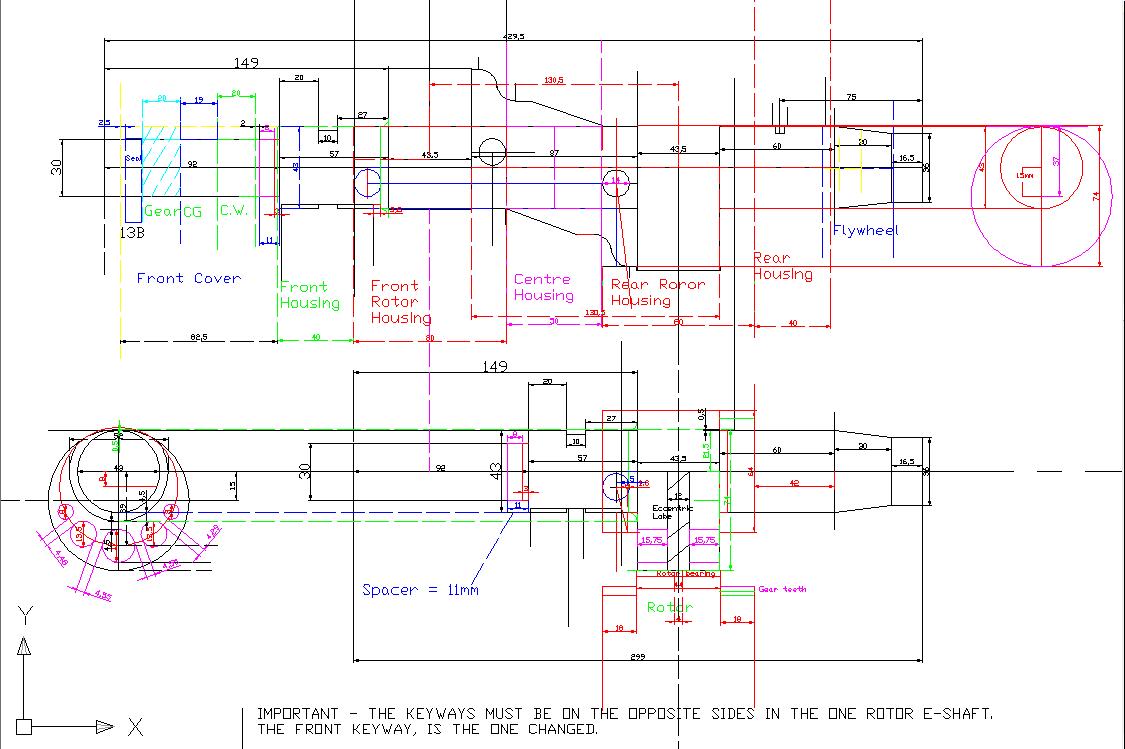
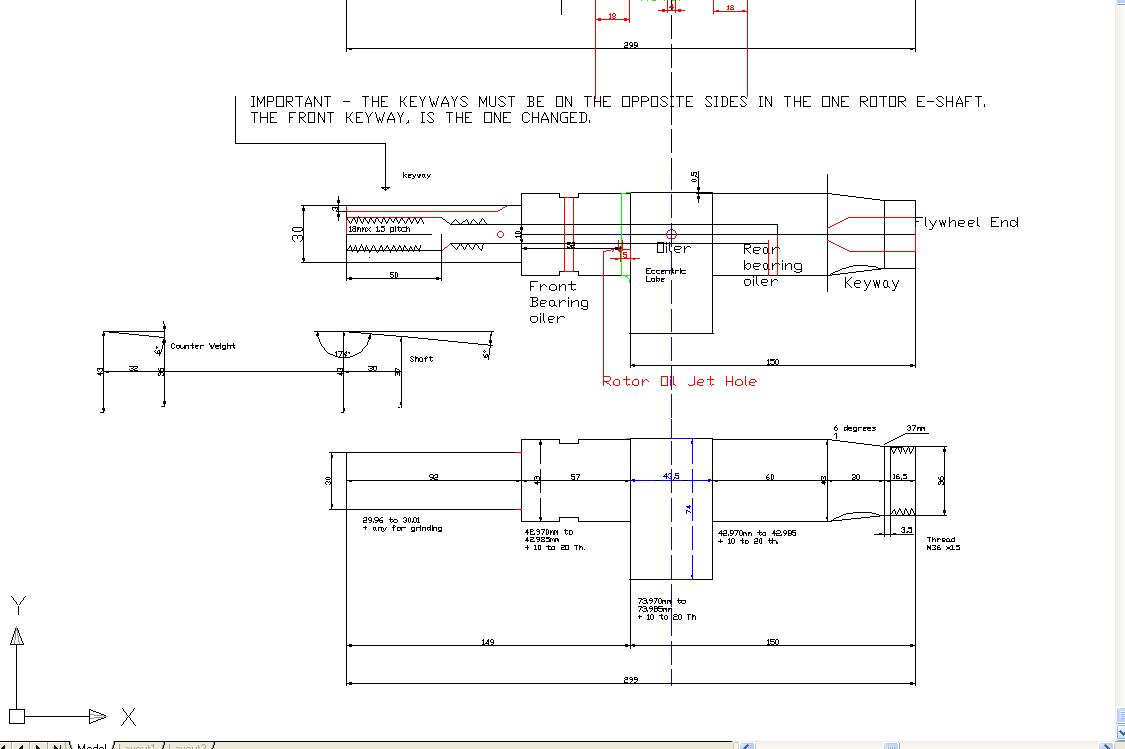
Are there any dimensioned drawings available for modifying the E shaft
to single rotor? Does the new main bearing journal need to be nitrided?
John Evans
Jeff does p-ports but you need to send him the rotor housing.
New or otherwise.
jeff doddridge
<4starr@cox.net>
Here is the 1 rotor drawing.
Paul Lamar
--
The Rotary Engine NewsLetter. Powered by Linux.
ACRE NL web site.
http://www.rotaryeng.net
Youtube key word PaulLamar2
Copyright 1998-2010 All world wide rights reserved.