Paul,
Can you see the 20B P-ported, turbo , and super charged being able
to put
out 400 HP?
Regards,
Norm Parmley
Are you kidding? Do you mean 400 HP PER rotor? :)
Have you read the web site below? :)
http://www.rotaryeng.net/rb3rot1.jpg
I would not supercharge the engine. For every additional
100 HP you get out of the e-shaft the engine must develop
an extra 30 HP for the supercharger. Read BAD BSFC.
A turbo charger is a like a turbo compound engine recovering
waste HP from the exhaust. About 50% of the HP in a gallon
of gas goes out the exhaust in the form of heat.
Paul Lamar
Paul,
How many turbo-charged p-port engines do you know about? My
experience
with exhaust systems would make me think twice about doing it
due to the
overlap of the intake and exhaust strokes where both ports are
open at
the same time. Any back pressure can cause the exhaust to be
redirected
into the next intake stroke. Maybe that's why they don't
turbo-charge
2-stroke engines. This also causes more heat buildup inside the
engine,
and in my case resulted in failed o-rings. While a supercharger
is less
efficient, it may be the better choice when boosting a p-port.
Mark
I have seen several. There is a picture of one on the front
page of the web site. I took the picture.
One could turbo charge a P-port RX8 motor and have no more
overlap than a turbo charged side intake port 13B.
What kind of O-rings failed? TES O-rings failed?
Actual measurements have shown the intake pressure always higher
than the exhaust pressure so if anything fresh air flows into the
exhaust.
Just about all competitive turbo charged drag racing rotary engines
are now p-ported.
Pressure is pressure so a supercharged engine will put as much heat
in as a turbo charger all things being equal like inter coolers.
Any time one compresses air heat is added.
The latest trick is use early peripheral exhaust port rotor housings
with RX8 side exhaust port end and center housings. That makes
three exhaust ports per rotor.
The rotary is as close as you can come to a turbo jet engine
without a turbine :) Unlike a piston engine the intake flow
never stops.
Notice there is nothing in a turbo jet engine to prevent the burner
heated air from blowing back into the compressor. Why does it work
anyway?
The fact of the matter is air has inertia. Once it gets going it
does not
like to change direction. Gases are interesting objects or devices
from a physics point of view. They have mass, viscosity and
adheasion.
Much like molasses only thiner :)
Paul Lamar
Paul,
Yes, TES o-rings failed... twice before I figured out the reason for the
failures. EGT would go above 1800F if I tried to go fast (WOT).
Changed exhaust and temps dropped to around 1640F.
Mark
I think you are using a RX8 water pump on a 3 rotor so the water flow in
theory is 2/3rds of what otherwise would be required. The heat transfer
from the metal to coolant is a strong function of the water velocity
so local over heating is occurring.
This KSE sprint car pump has
been used for many years. You can download a pdf catalog from here.
http://www.kse-racing.com/Products.html
These people sell them. Also they are on ebay new and used.
http://www.speedwaymotors.com/KSE-Water-Pump-Front-Cover-and-Components,1820.html
Jim Mederer at Racing Beat used this pump on his 1200 HP 3 rotor.
You will have to make some sort of bearing block so the pump
can be belt driven. Mazda speed may also have a heavy duty 3 rotor
pump as the Rolex 3 rotor RX8 cars are getting more HP than your engine.
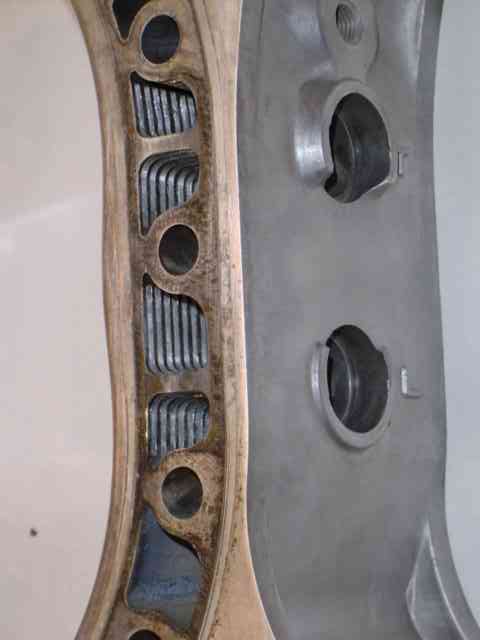
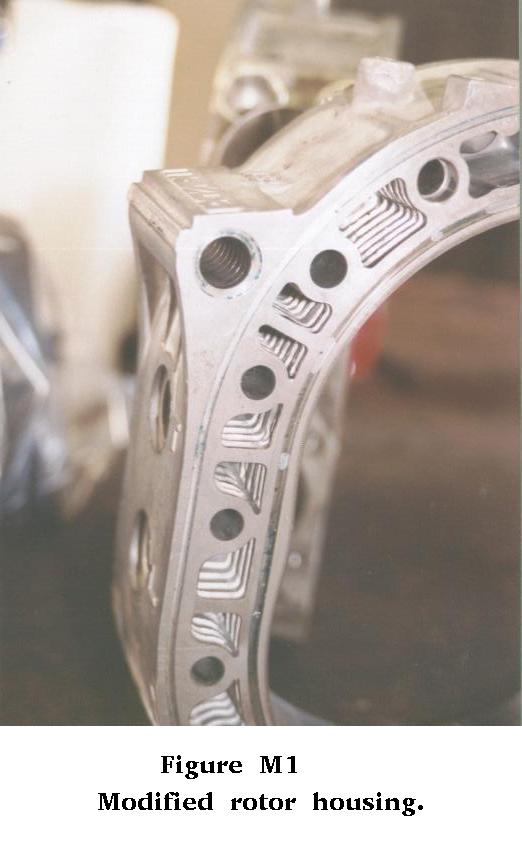
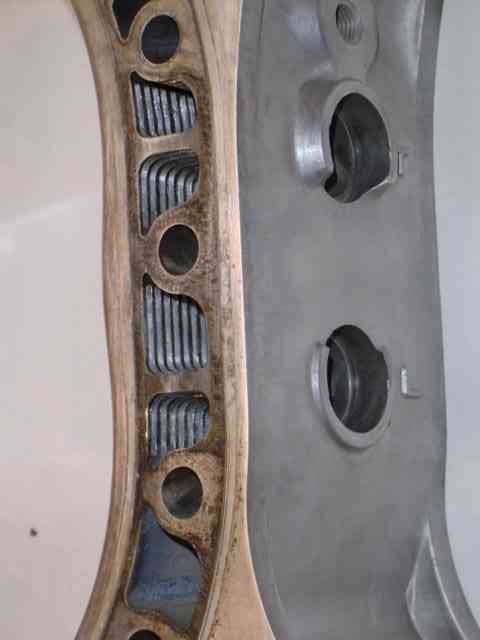
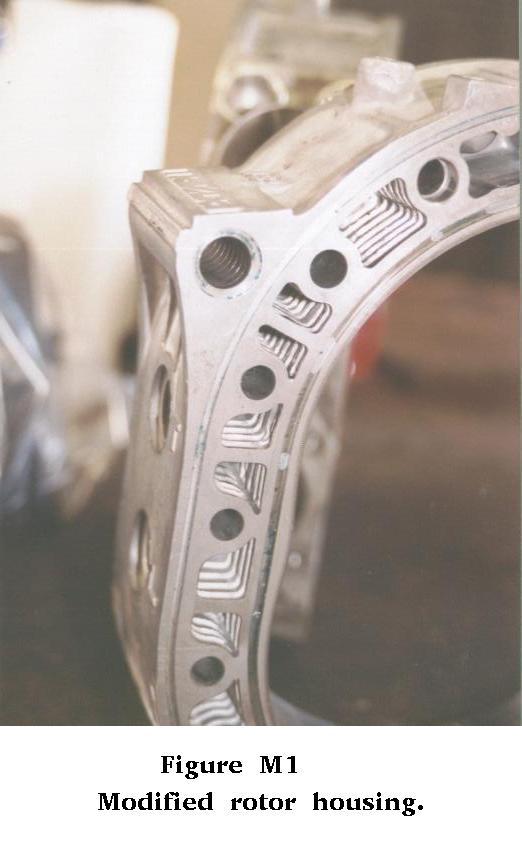
I assume the O ring failure happened near the peripheral exhaust
port. I would
grind a few grooves in this area on both side of the port as per the
pictures.
Paul Lamar
Paul,
The first failure was with the stock 20b water pump. It failed in the
vicinity of the spark plugs. This failure occurred shortly after
installing the tangential muffler though. I would like to see some
tests on tangential muffler flow rates. It may just be my design as I
installed a perforated baffle. While taming the bark, it also increased
the back pressure, especially at WOT.
During last rebuild, I drilled a hole in the #3 rotor housing for a
thermocouple. With the Renesis Mazmart water pump it is reading 10*
over the discharge water temp (measured at the wp outlet). I still need
more actual flight data, but this looks promising. Last flight water
temps and oil temps were within a few degrees of each other. Level
flight readings were from 175* to as low as 138*, but then OAT was
pretty cool at the time. I'll monitor temps closely as Spring/Summer
approaches.
Regarding the Mazmart water pump, the impellor is very similar in size
and shape to the 20b impellor. I think it is going to be up to the task.
Mark
I have no idea what SpeedSource is using on the Rolex RX8 3 rotor.
The guys at Mazdatrix agree with you on the Mazmart part. If it were me
I would use the KSE pump and not worry about it any longer. Have you done
the ribs in the rotor housing trick near the lower spark plug?
The back rotor is always the problem due to serial cooling.
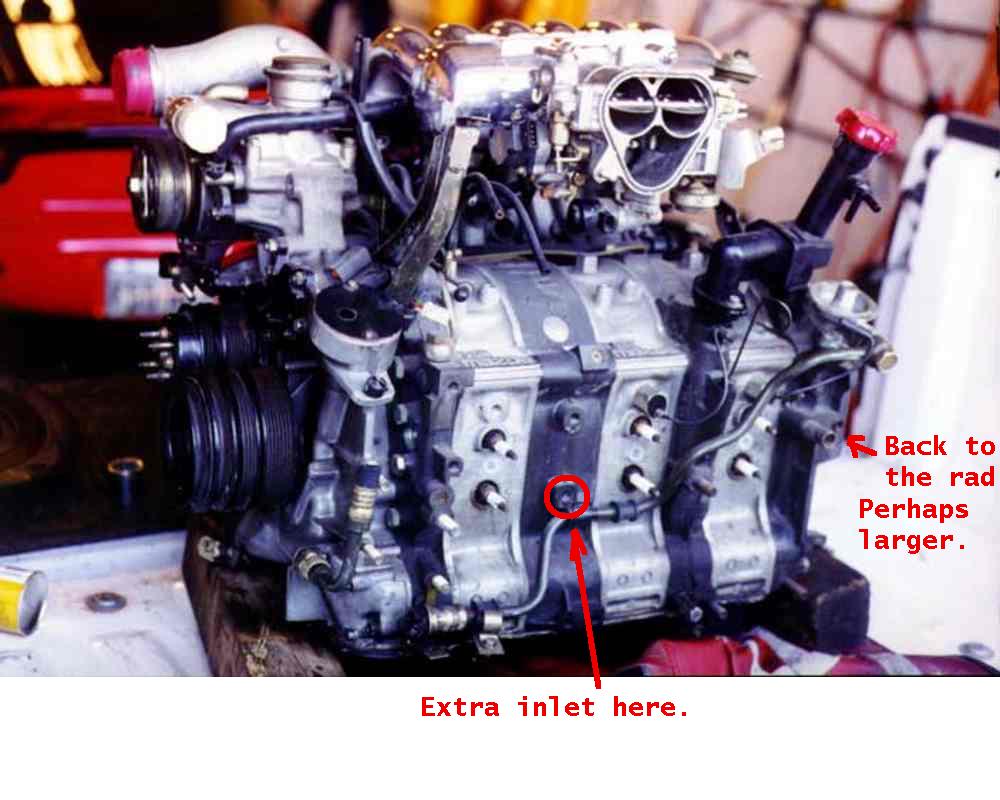
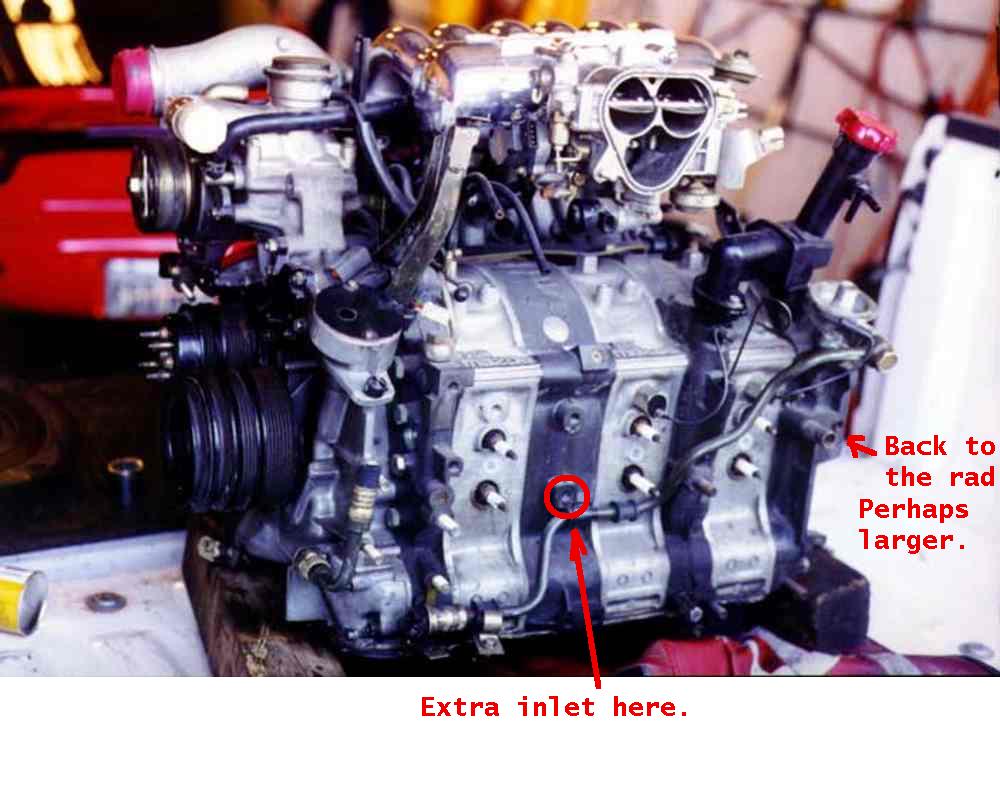
Here is an idea. The KSE pump has two outlets and the wide 3 rotor center
housing may have enough room for another water inlet. The heater outlet
could be sent back to the rad. That will increase the flow of cool
water to the lower spark plug area. Especially the rear rotor
housing.
Paul Lamar
--
The Rotary Engine NewsLetter. Powered by Linux.
ACRE NL web site.
http://www.rotaryeng.net
Youtube key word PaulLamar2
Copyright 1998-2010 All world wide rights reserved.