Roger,
Many piston engines are not well balanced, it is a matter of the design.
Horizontally opposed engines are inherently balanced. As long as the
components are close, the engine is smooth running. Inline six's and the
derivative V-12's are also well balanced.
Inline fours suffer from a secondary shaking force. When the engine is at TDC
two pistons are at TDC and two are at BDC. The engine has a center of gravity.
Now rotate the engine 90*. The center of gravity has changed. The explanation
is that as the crank rotates, the conn rod and piston not only move down the
bore, but the rod also moves to the side. Pythagorean theorm states Asq'd +
Bsq'd = Csq'd. Now if the C is the rod length and B is 1/2 the stoke the math
will tell you the effective rod length at 90*. The piston will be lower in the
bore the 1/2 the stroke. Thus the center of gravity wants to move the engine
to keep the Cg in the same spot.
V6 engines are a nasty mess of vibrations with rocking couples in the mix.
They want to rock forward and back, and then side to side depending on where
in the rotation the rod throws are. Early Buick V6's had very soft engine
mounts to try to isolate the vibrations.
The rotor moving in the housing is sort of like an inline 6 crank. When two
throws are at TDC the other four are at 120* and 240*. The two low ones have a
higher mass combined, but that is closer to the rotational center. Now the
rotor when at TDC has two apex seals that are vertically one over the other.
If you measure from a line between them and another horizontally to the
e-shaft center line and measure the distance it is less the the rotor radius.
Thus you have a higher mass at a shorter radius. There is still some imbalance
that the balance weights take care of. Many piston engines also have balance
weights. Sm block Fords, 400 Chev, BB Chevs to mention a few.
Dale Davies
Like an inline six? Hardly.
"When two throws are at TDC the other four are at 120* and 240*."
What do you mean by a "throw" ?
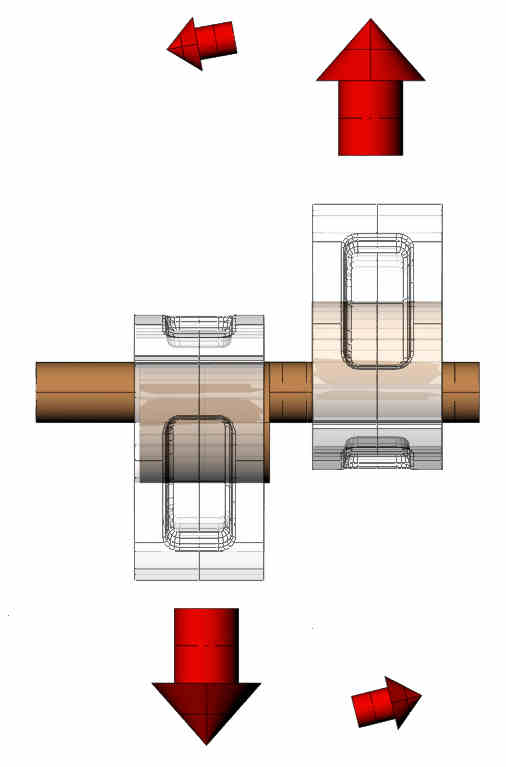
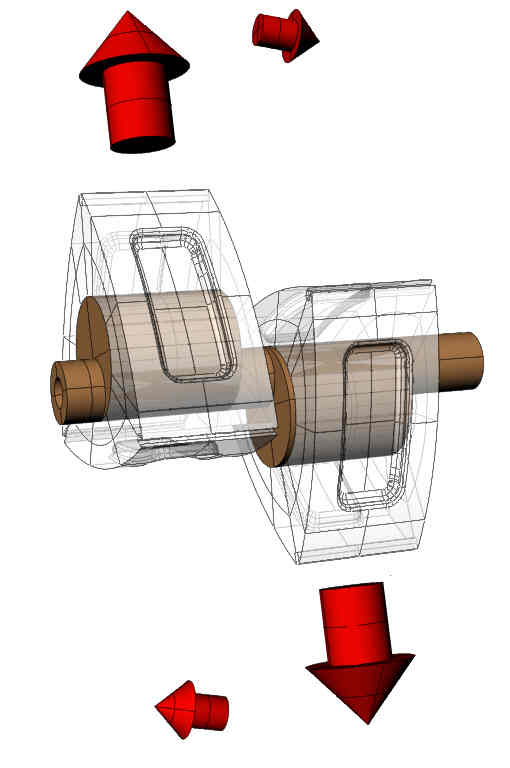
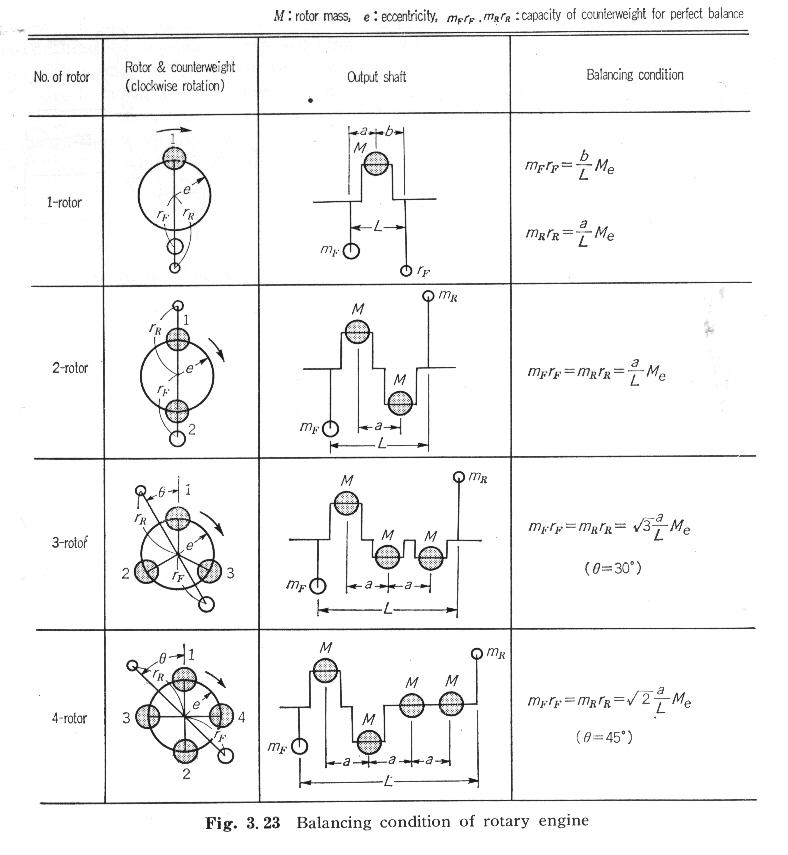
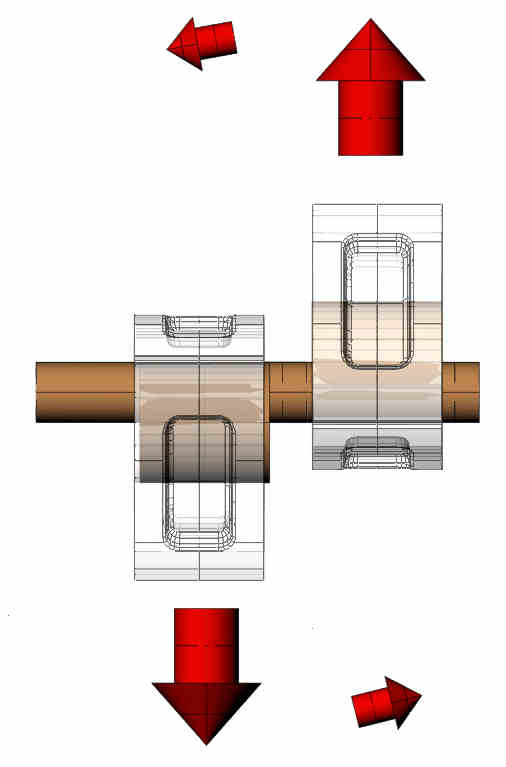
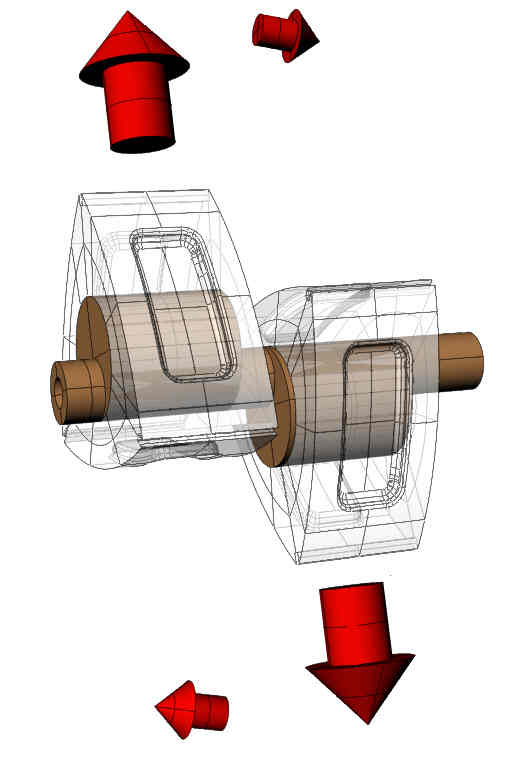
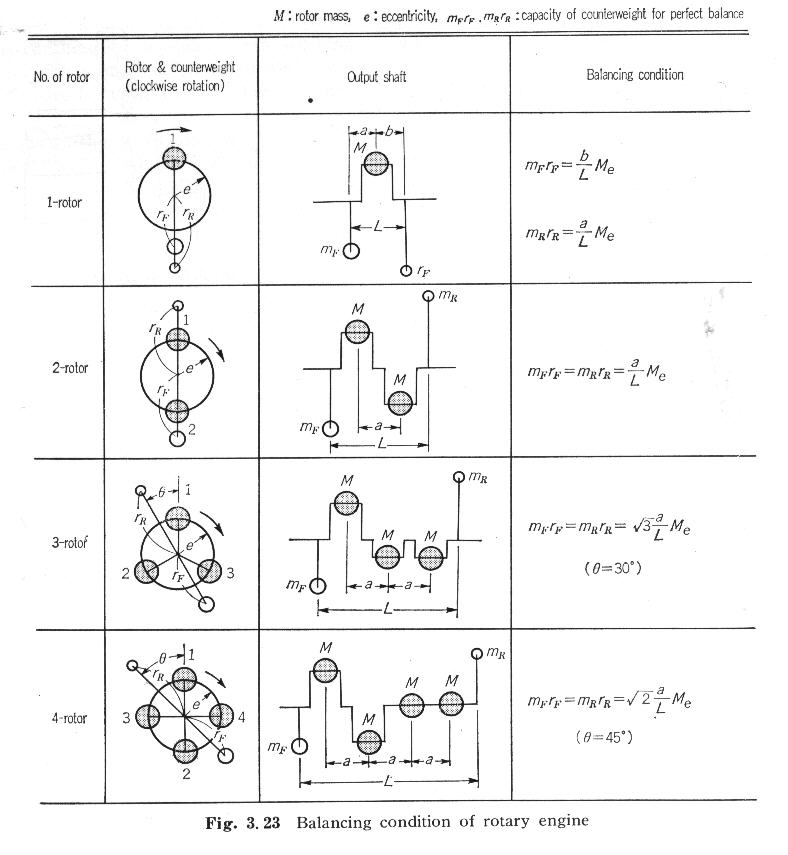
The two rotor has two eccentric 180 degrees out. The two rotors
exactly statically balance each other. Since there is an offset between
them they are dynamically out of balance. This is completely canceled by the
counter weights. As you add more rotors the counter weights get
smaller and smaller.
Piston engine balance is a complex subject.
The rotary is very simple by comparison.
I recommend For those of you with an engineering degree or equivalent Taylor's
series of books is the best there is. The bible of engine design.
The Internal Combustion Engine in Theory and Practice.
Volume 2: Combustion, Fuels, Materials, Design. Revised. Charles
Fayette Taylor. The MIT Press Cambridge Massachusetts, and London
England.
Engine Balance Chapter 8 page 240.
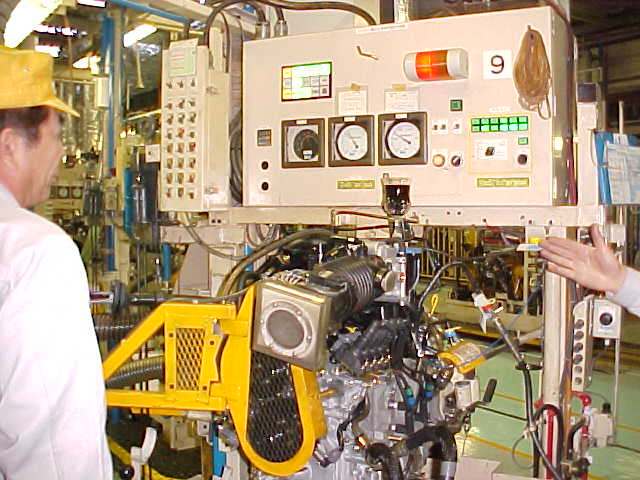
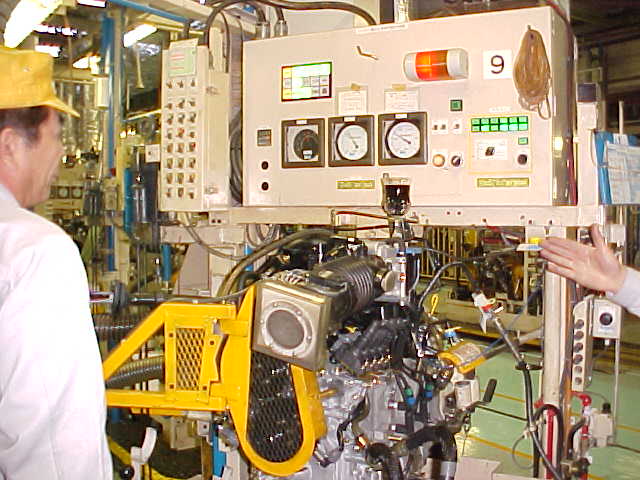
When I was at the Mazda factory the vibration test was a glass of wine sitting
on the top of the engine when running on the dyno. No disturbance.
All engines coming off the assemble line were run on dynos.
Perry Mick's rotary is bolted solidly in his Long Ez airframe for
the last 16 years or so. No rubber bushings. One can hardly
feel the engine running.
Paul Lamar
--
The Rotary Engine NewsLetter. Powered by Linux.
ACRE NL web site.
http://www.rotaryeng.net
Youtube key word PaulLamar2
Copyright 1998-2010 All world wide rights reserved.