Now that torsional vibration is being discussed let's get back to the
single rotor version. Does anyone know what would be a satisfactory
torsional vibration damper for these as they don't have the overlapping
power pulses from the other rotor to smooth things out i.e. how much
flywheel do they need?
I note that Richard Sohn uses a Hirth reduction box on his - I think
they use a rubber dough nut like the Rotax 2 stroke reductions?
Are the rubber isolators used by Tracey suitable for the frequencies
of a single rotor, let alone the increased amplitude with no overlapping
power strokes?
It would be nice if the collected wisdom on single rotors was available
in one place, after all about 100 to 120 HP (Rotax 912 to 914
territory) is commonly needed for very light aircraft. I must admit
I'm not all that impressed with my 912, it only has 29.9 hours on it,
the fuel pump failed - leaked oil, coolant seems to ooze out
everywhere, and after all it still has exhaust valves to fail. I've
just discovered a pinhole exhaust pipe leak that was burning the
paint on the engine mount, it's not that far from fuel and oil
lines. Just what I need, an in-flight fire:( I think my old Subaru
E$A 81 is better engineered and cheaper.
John Evans
(Heretic)
I think you are going to have to make your own.
Tracy's system works well for a two rotor but a one rotor
fires half as often. Tracy's system allows the engine to idle
down to 1500 RPM. That should be your target idle RPM.
I would use his general design and increase the diameter
of the rubber bushings and use a lower Durometer rubber.
Silicone rubber is called for as it has a higher heat tolerance.
A lot of heat will be going into the rubber.
You can make the bushings out of silicone rubber sheet
from McMaster. Allow a bit of expansion room.
There may also be an off the shelf off road rear wheel
motor cycle part that might work.
The Centeflex is too stiff and they don't make a much softer
one.
Paul Lamar
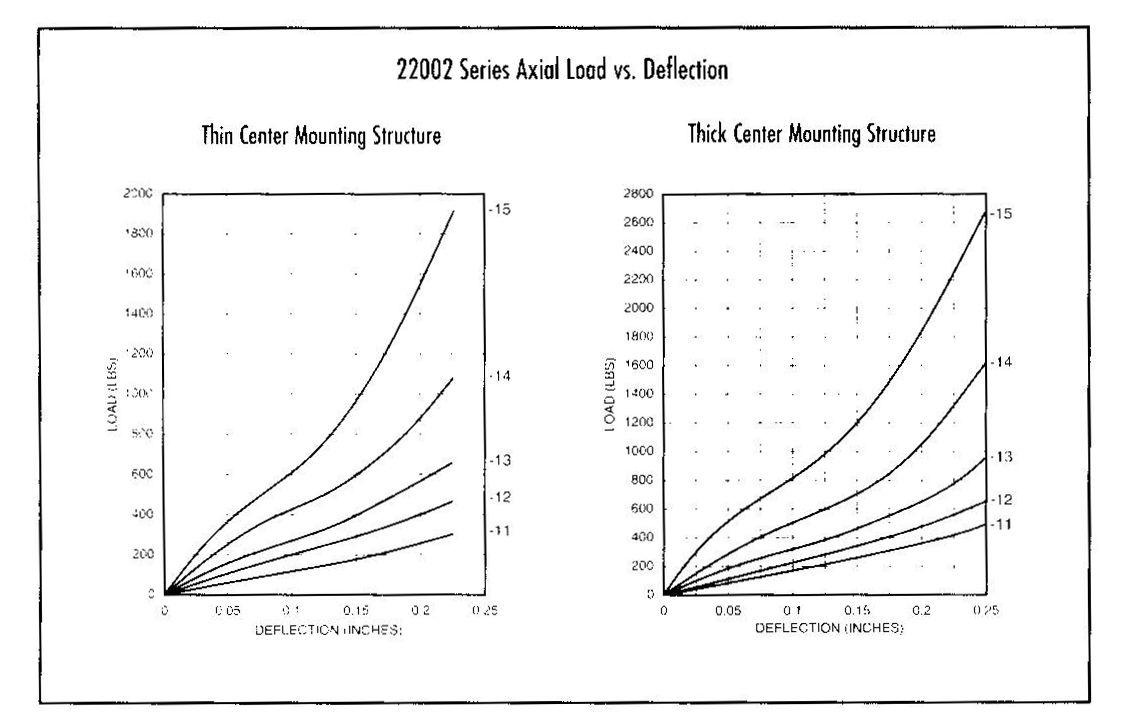
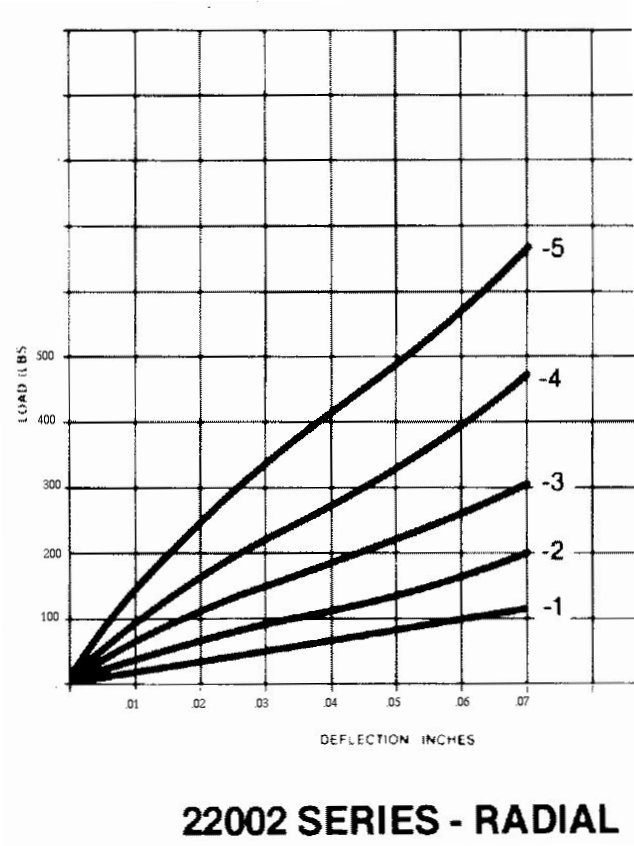
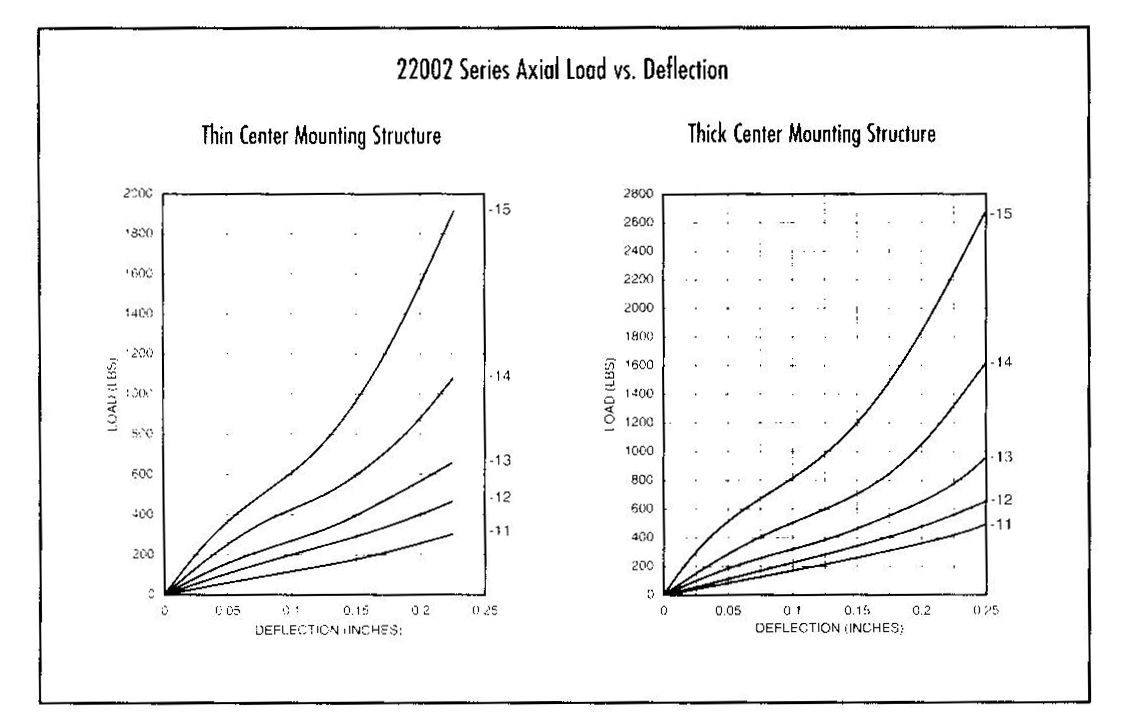
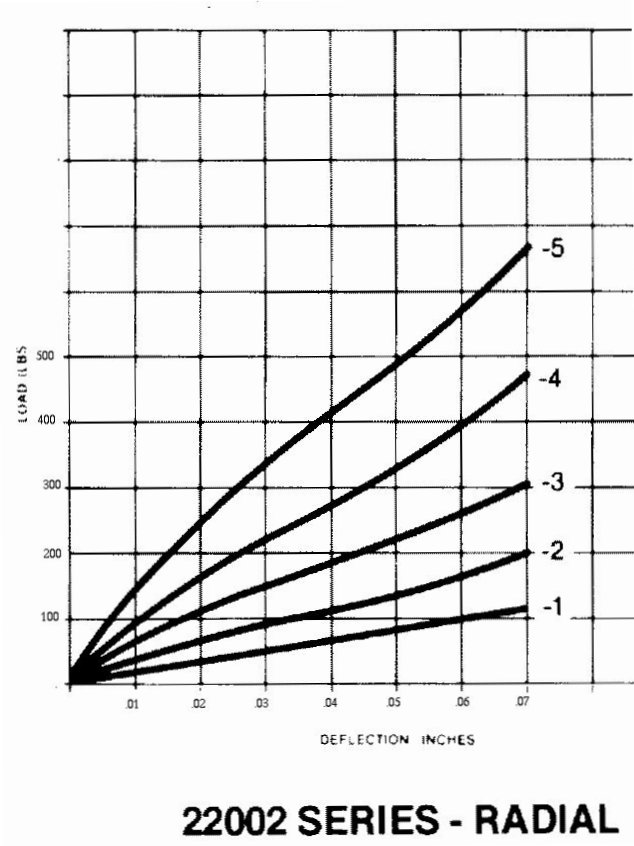
I was wondering if the engine mount isolators could be used in a plate like
Tracy's.
Dale Davies
Yes I think they could but the radial direction is much stiffer
than the axial direction so there is a space problem in implementing
them. Most isolators have the same problem. They are rarely
designed to be soft in the radial direction.
The Barry VHC 1A-5A style might work in shear but they need 4 inches
between the Mazda flex plate and the output disk. They would be used
in groups of 3 or 4. Not really practical. I have used them before on a 3 cyl
diesel engine in a sail boat and they work well in that application.
Paul Lamar
--
The Rotary Engine NewsLetter. Powered by Linux.
ACRE NL web site.
http://www.rotaryeng.net
Youtube key word PaulLamar2
Copyright 1998-2010 All world wide rights reserved.