Paul,
Once more you've written an excellent article for Kitplanes, "Makes you
go Hmmm". However I must disagree with your contention that the e-shaft
does not experience reciprocating forces. The rotor subjects the
e-shaft to a point loading force that eccentrically contacts the e-shaft
at a different locus as it rotates around it, causing it to bow out like
a jump rope spun between two girls. The force is also pulsatile in
response to combustion.
While not equivalent to the shock loading experienced by a crankshaft,
the e-shaft does experience a circular reciprocating force, not the pure
centrifugal force of a turbine.
If I may summarize all that I learned from the automobile engine
articles in the February 2011 issue of Kit Planes magazine: amateur
airplane builders fantasize about using automobile engines because they
are cheap due to the economies of scale; have superior FADEC electronic
ignition and carburetion or fuel injection and burn cheap, readily
available auto gas.
However automobile conversions do not make satisfactory airplane engines
because:
1) auto engine conversion and installation is fraught with difficulty,
resulting an initial high accident rate secondary to engine failure.
2) automobile engines are not engineered to run at constant high power
outputs for prolonged periods of time and consequently suffer frequent
and early fatigue failures limiting time before overhaul (TBO).
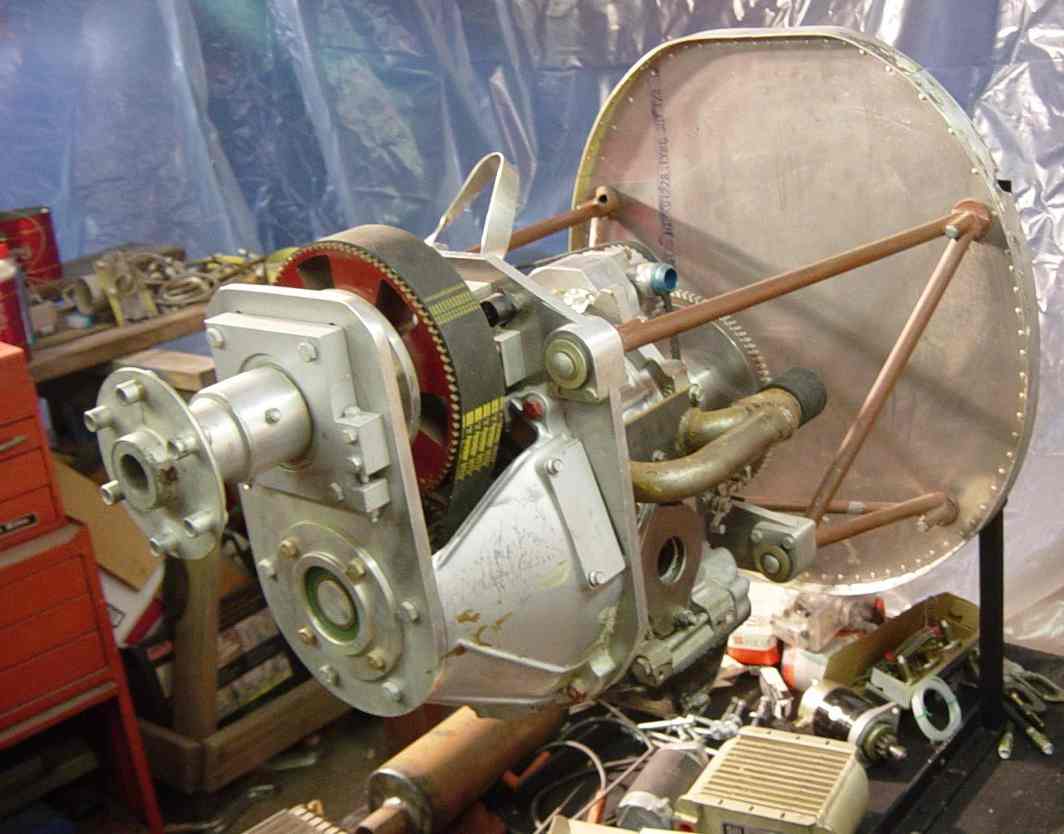
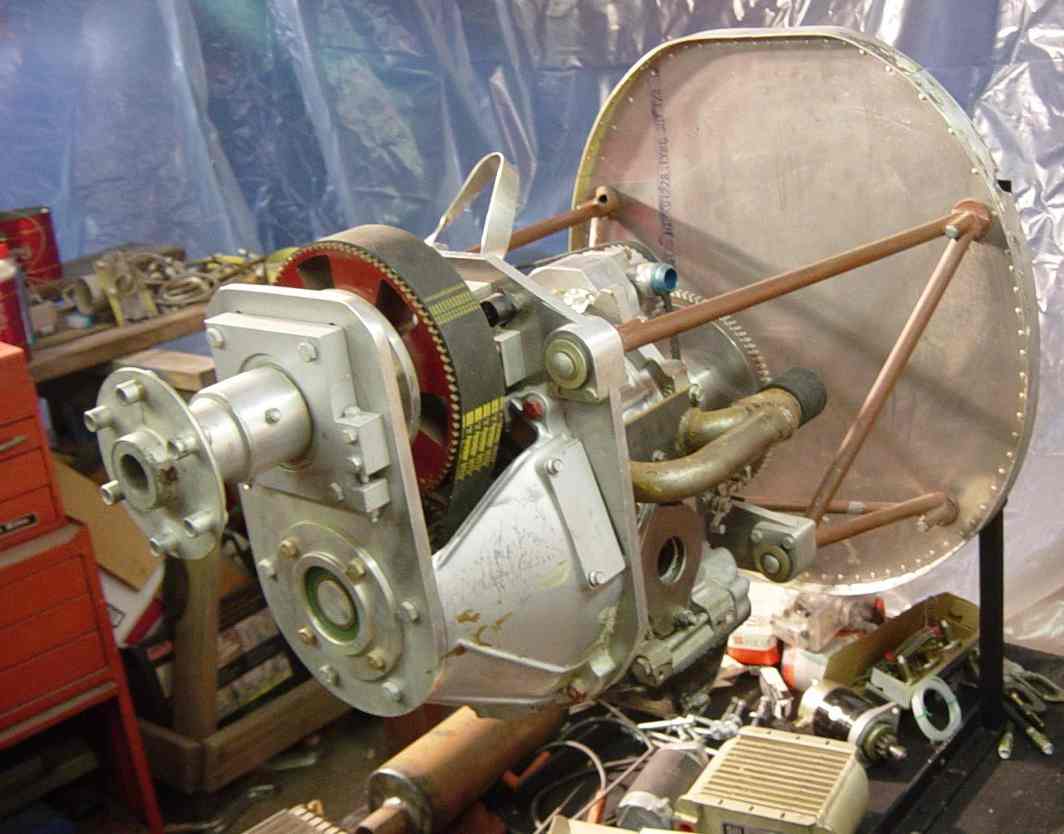
3) require the use of a propeller speed reduction unit, another source
of failure.
4) Auto engines have a high weight to horsepower penalty.
5) Auto engines are always used.
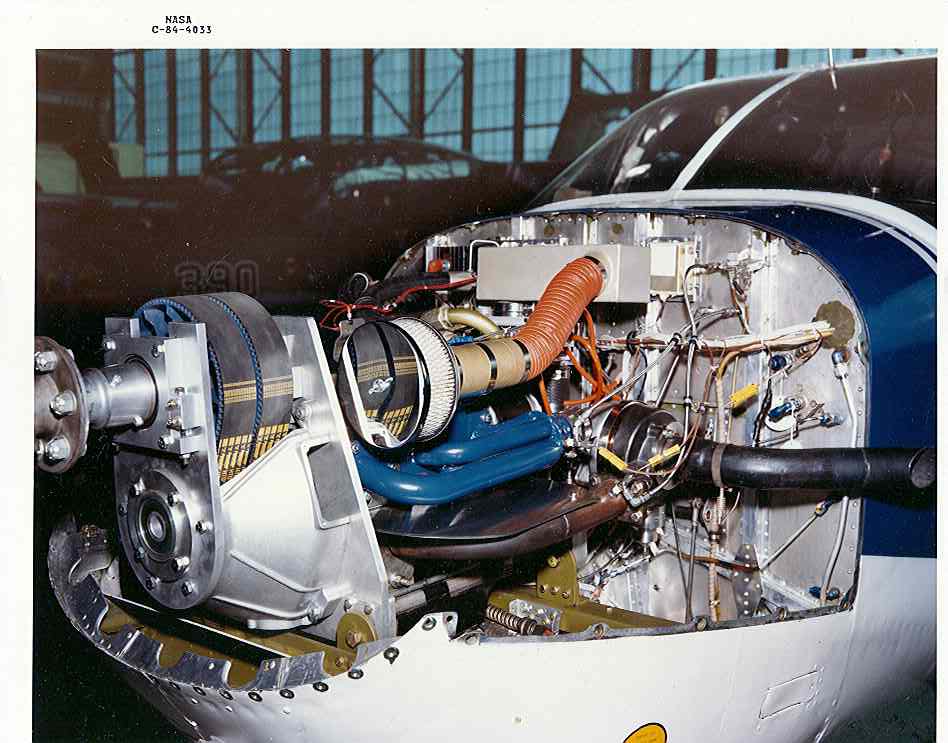
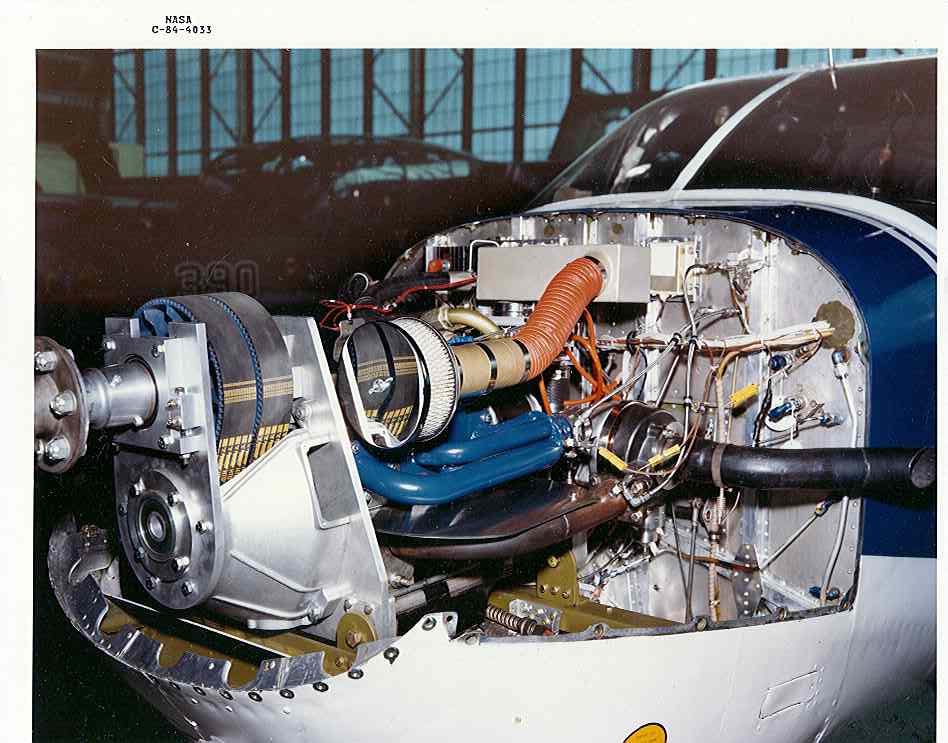
Wankel engines are inherently less complex because they have few moving
parts and don't vibrate or fatigue fail due to a minimum of
reciprocating motion (thus have a long TBO) and and have a very high
power output to weight ratio. Unfortunately they are not certified and
therefore can't be used in manufactured airplanes, nor come in ready to
install firewall forward packages for many kitplanes.
Do to all its advantages, it seems to me that a Wankel engine would make
an ideal generator for hybrid installations
Barry Gloger
Read this and get back to me.
http://www.rotaryeng.net/how-wank-works.html
Some two rotors have a center main bearing.
The shaft is plenty stiff enough with out it for 9000 RPM.
We use 7500 max.
Of course it pulsates but so does any intermittent internal
combustion engine. It pulsates less than a 4 cylinder.
Who cares about certified airplanes?
You are free to offer a firewall forward package
but you would go broke like some others I know.
In some cases the engine is free to the end user. How are
you going to compete with that? We have had people
buy an engine in the junkyard with 100,000 miles on
it, install it in their airplane and fly it 600 hours.
Paul Lamar
Paul,
You or someone else might be able to fill me in on some rotary engine
history or nostalgia. It hit a nerve with me, when you mentioned that
many have gone broke trying to make a firewall forward package.
Seems like there was a few that went that way too, when they tried to
buy a firewall forward package.
A close friend of mine, he was the Robinson in Rand Robinson engineering
when the KR aircrafts was marketed.
Anyhow, he got out of the business, but got a customer that wanted a
very special custom made aircraft, based on some really good power
figures for the engine package. Mr Robinson was a bit skeptic about the
figures, but as this was a custom made aircraft , he calculated
everything around the weight and power, and built a twin, one engine on
each wing, and had the airplane delivered to the customer, he got paied
and that was pretty much that.
He did however had sporadic contact with the customer, and found out
that the customer had later on, been ripped off when it came to the
engines promised and paid for.
It was the usual, send the money .............and you get them when you
get them...........but.... money first.
Very long time passed, endless calls, and eventually the customer found
out that the company had gone belly up.
Eventually the customer put some other engines on the aircraft, but it
didn't behave as calculated, as the substitute engines was heavier and
had less power than the aircraft was originally designed for, and thus
flew like a.....well not a lead balloon but kind of.... approaching it.
Later on the guy behind the engines promised, had some operation in
Mexico, and there was a couple of more adds out, and then the guy
disappeared.
This was a mid -70 thing, and it popped up sporadically in the
-80's....and if I only could remember the name of the engine...Suncan,
Buncan, Duncan, Luncan, or Bluncan .....or something like that.
Anyone that can shed some light of the history behind that engine.
It would be nice to have the ....-"and now you know the rest of the
story" ....on that.
Also if anyone knows about that aircraft, it ended up in the CA central
valley somewhere, it is( if it still exist) built very much in basic
style, and manufacturing technique like the KR aircrafts.
Roger
I know who you are talking about. I forgot his name but he gave
rotaries a black eye for many years. Its on the tip of my tongue
and trying to get off :) Ah so Duncan!!
Recently there has been a person selling Soobs claiming the stock
engine HP generated at 6500 RPM with a PSRU that allows only 4500 RPM.
Many people bought the Soob engines and were highly disappointed when
they finally got it installed and flying. This kind of stuff gives
fire wall forward packages a bad name.
I have seen this happen dozen of times with Chev V8's.
People don't have a clue until you hear an automotive engine
running full chat on a dyno under full load. The load makes
all the difference in the world as to how an engine feels and sounds.
If you are standing next to it your first impulse is to run
like hell as you get the feeling it is a bomb waiting to go off.
Not a real bomb NSA so don't cogitate over this message too long? :)
Paul Lamar
--
The Rotary Engine NewsLetter. Powered by Linux.
ACRE NL web site.
http://www.rotaryeng.net
Youtube key word PaulLamar2
Copyright 1998-2010 All world wide rights reserved.