Paul,
I started up the plane today for the first time since I installed the
taps. The engine seems to run much smoother, even though it was running
on the rich side. I ran it for about 10 minutes just to get it up to 130
degrees on the oil temp while twiddling the mixture knob. I'm not going
to program it until I can get it running at temp for a good while. Today
was just to see how the taps work.
They work great. Now I have some confidence that the tuning will go a
lot smoother than before. I run it up to about 5900 RPM before shutting
down. Aside from being rich, there were no stumbles or other glitches
through the power band.
Brian Trubee
Thanks for the update Brian.
It did for the P-port Mustang but I am beginning to wonder why.
Victor mentioned that Tracy was probably filtering the signal out
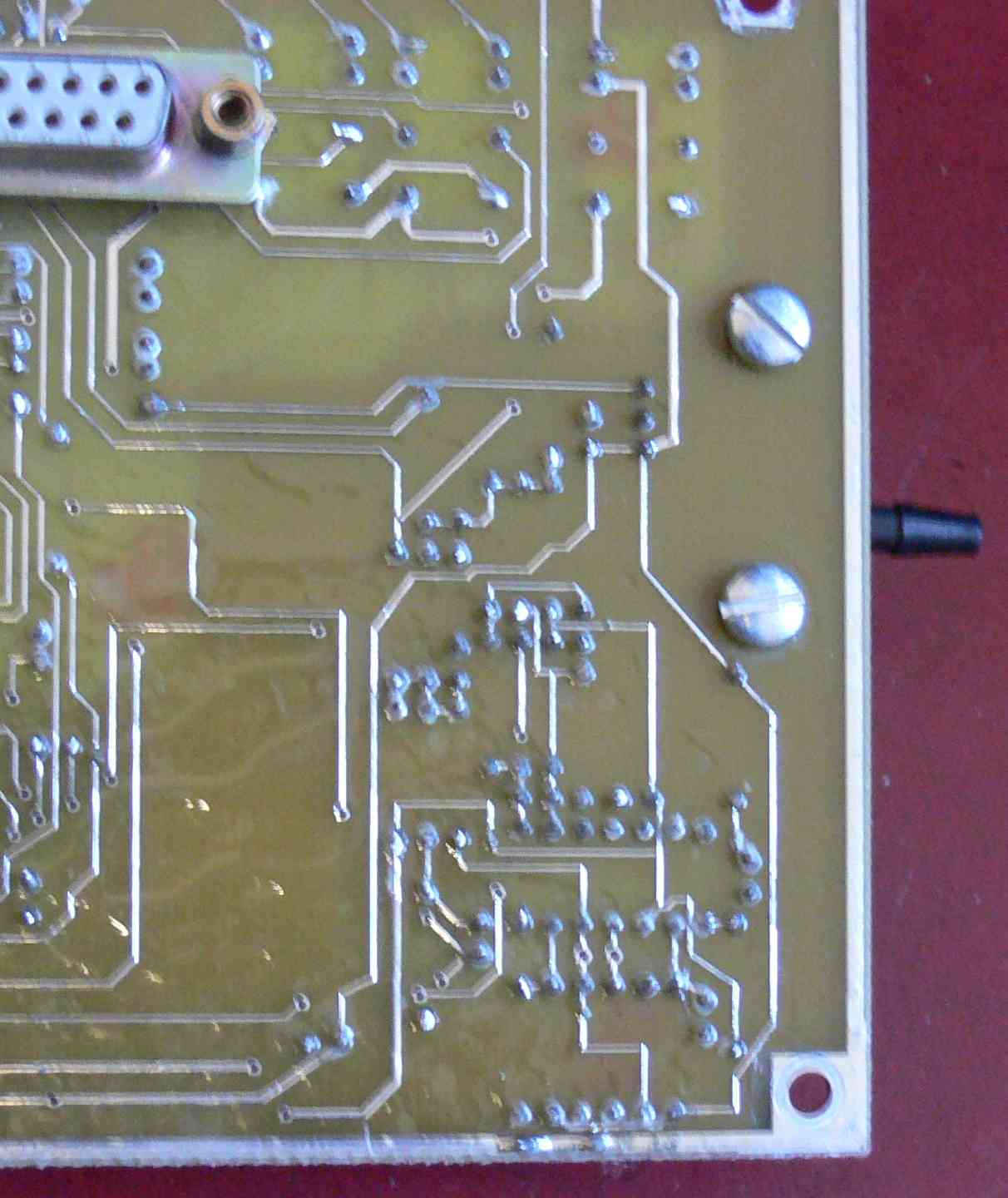
of the manifold pressure sensor in hardware and I took a look the
at the PC board of the EC1. It does look like there is a
hardware filter in there to average the intake manifold pressure.
I sure wish Tracy would be more up front about what he is doing.
When I get this test engine going in the next few days I will take
a look at the data going into the EC2 PIC internal analog to digital
converter pin and record it on my data aq module.
That way I can get a direct comparison of the pressure taps
in the apex seal oil holes or in the intake manifold
plenum. What the A to D in the computer is actually seeing.
In any event it would be nice if we were all measuring the
intake manifold pressure in the same place with the same
configuration. The apex seal oil holes fill that need.
That happens right after the port is closed and represents
the actual air getting past the manifold runners and into
the engine itself. It is like measuring the air pressure
in the cylinder just before the piston starts to compress it.
I firmly believe that mixture maps would then all be similar
for the same prop loads making it much easier to tune the
engine.
This apex seal oil hole pressure data was taken at 8000 foot
density altitude at part throttle. The pressure reading are
only about 14" of Hg. As I recall the pressure sensors
tracy used and I copied goes up to 60 inches of Hg.
Now as I recall the internal analog to digital converter in
Tracy computer chip is only ten bits. Ten bits is a resolution
of 1 part in a thousand. That sounds pretty good but the
pressure sensor goes to 60" HG to handle turbo charged
applications so the real resolution could be only one part in 500
I suspect. Analog to digital converters really are step
function devices. Like a stair case. That could perhaps
cause a bit of instability in the data. The other fact
as I recall is there are only 64 data points in the mixture map.
I am not sure. Could be 128. You people that have them working
should know.
On the other hand what you are looking at here was taken
with a stand alone 12 bit analog to digital converter.
Resolution is one part in 4000. A product of Micr0chip.
Ironically the same people that made Tracy's
PIC 17C752033/L computer chip in the EC1. No doubt Tracy has
upgraded the chip in the EC2 and EC3 upgrades but they may still
be using an internal 10 bit A to D.
Paul Lamar
Ten bits should be more than enough. That gives 9 bits over the 0-30" range.
Eight-bit resolution for a 32" HG sensor gives 8 points per inch of
MAP. At 22.5 " each increment represents a change of 1 part in 180
Viewed in another way, that means for a rotary turning 6000 rpm if
22.5" requires an injector pulse of 5ms, the next increment up (22.625")
requires a pulse of 5.0277 ms I am not convinced the injectors can be
controlled more accurately than that. The latency of the injector
operation shows over 0.5 ms to turn on and 0.3 ms to turn off for one
Bosch model, and the turn-on time varies slightly with the supply voltage.
You may increase the resolution by lowering the reference voltage to the
A/D converter. For a 60" sensor with an output range of 0-5 volts,
using a 2.5 volt reference gives 10 bits for 0-30 inches, just as 5 volt
reference gives 10 bits for 0-60 inches.
Victor
Thanks Victor.
We don't have that option as we are dealing with Tracy's computer.
We have to live with what he gives us.
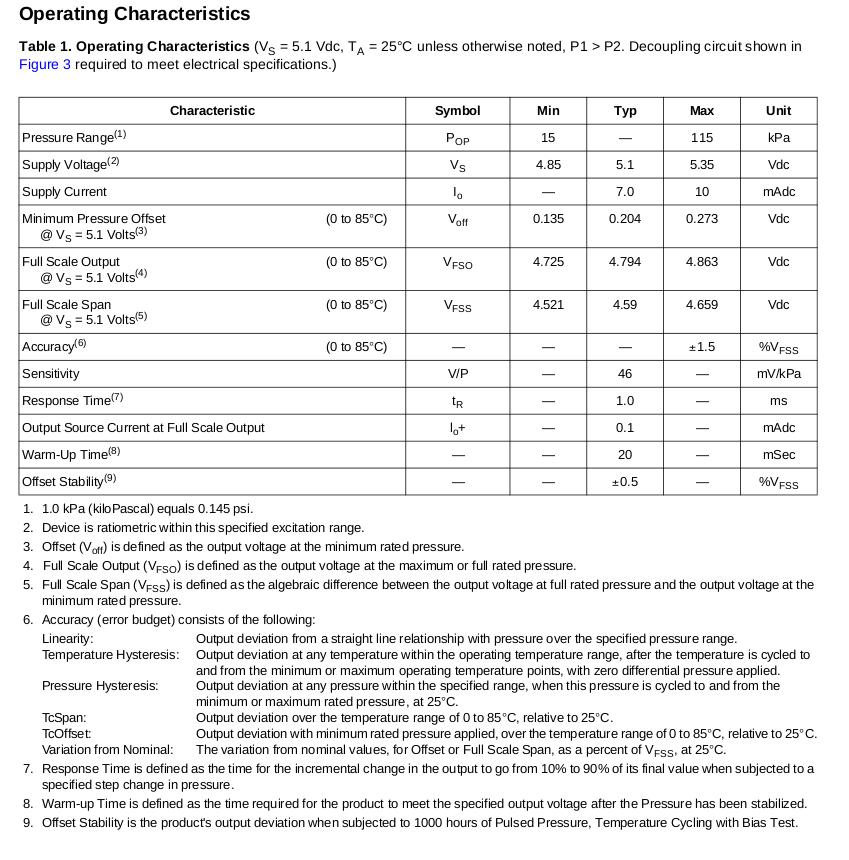
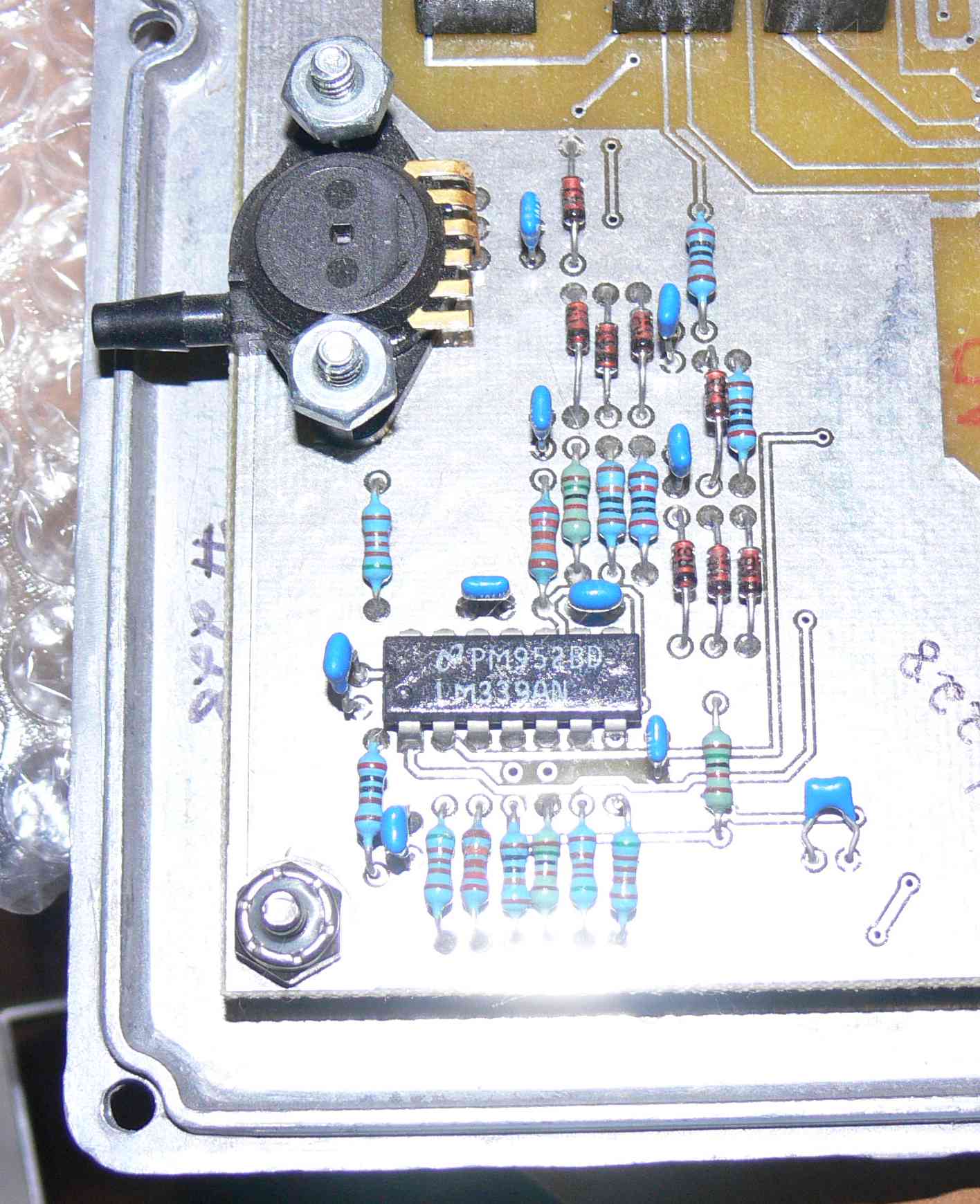
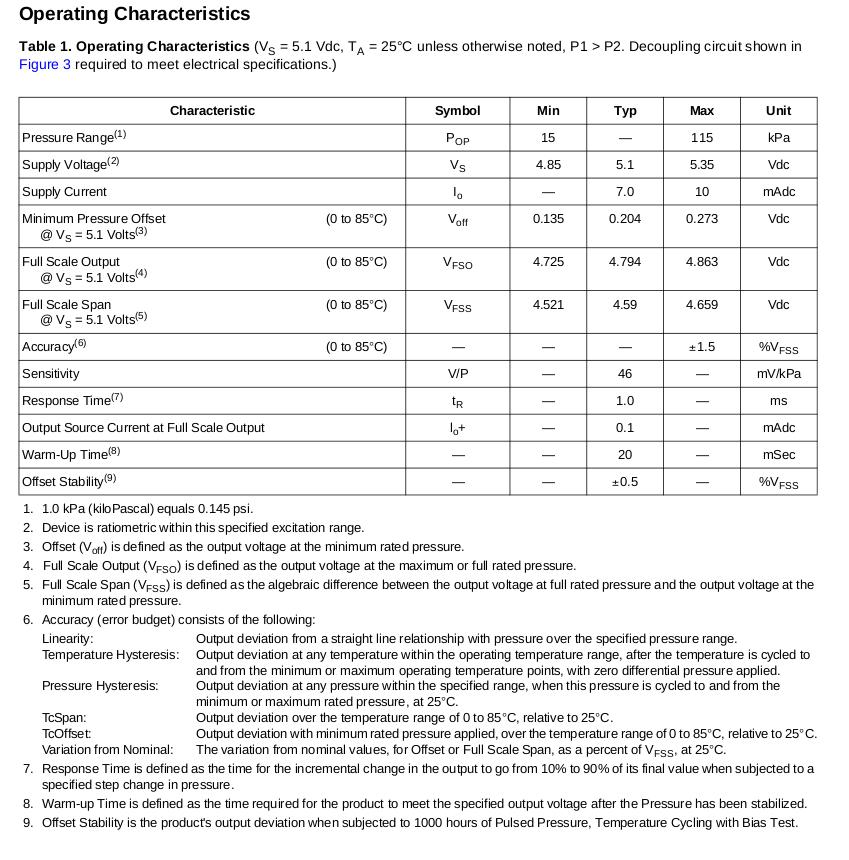
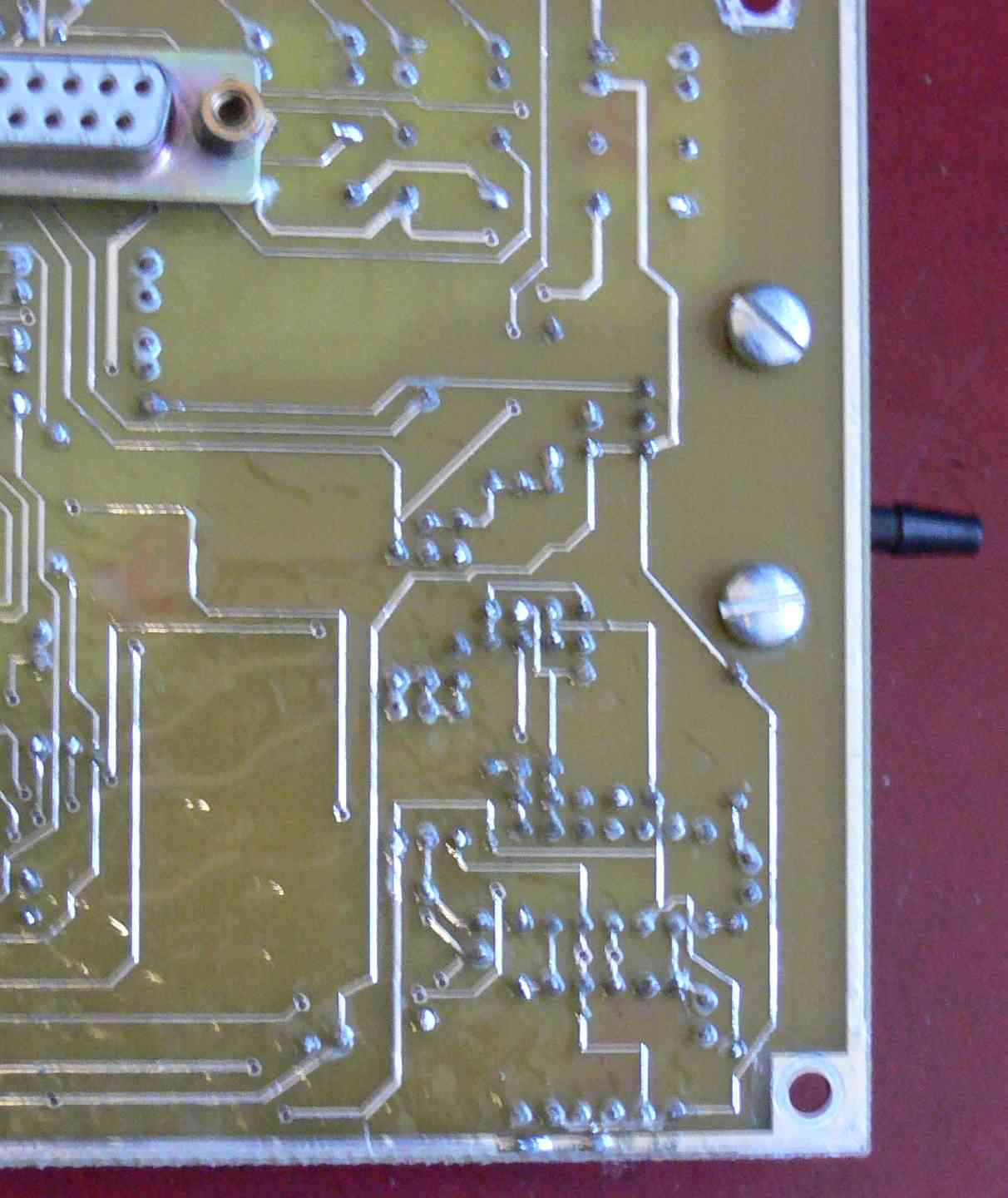
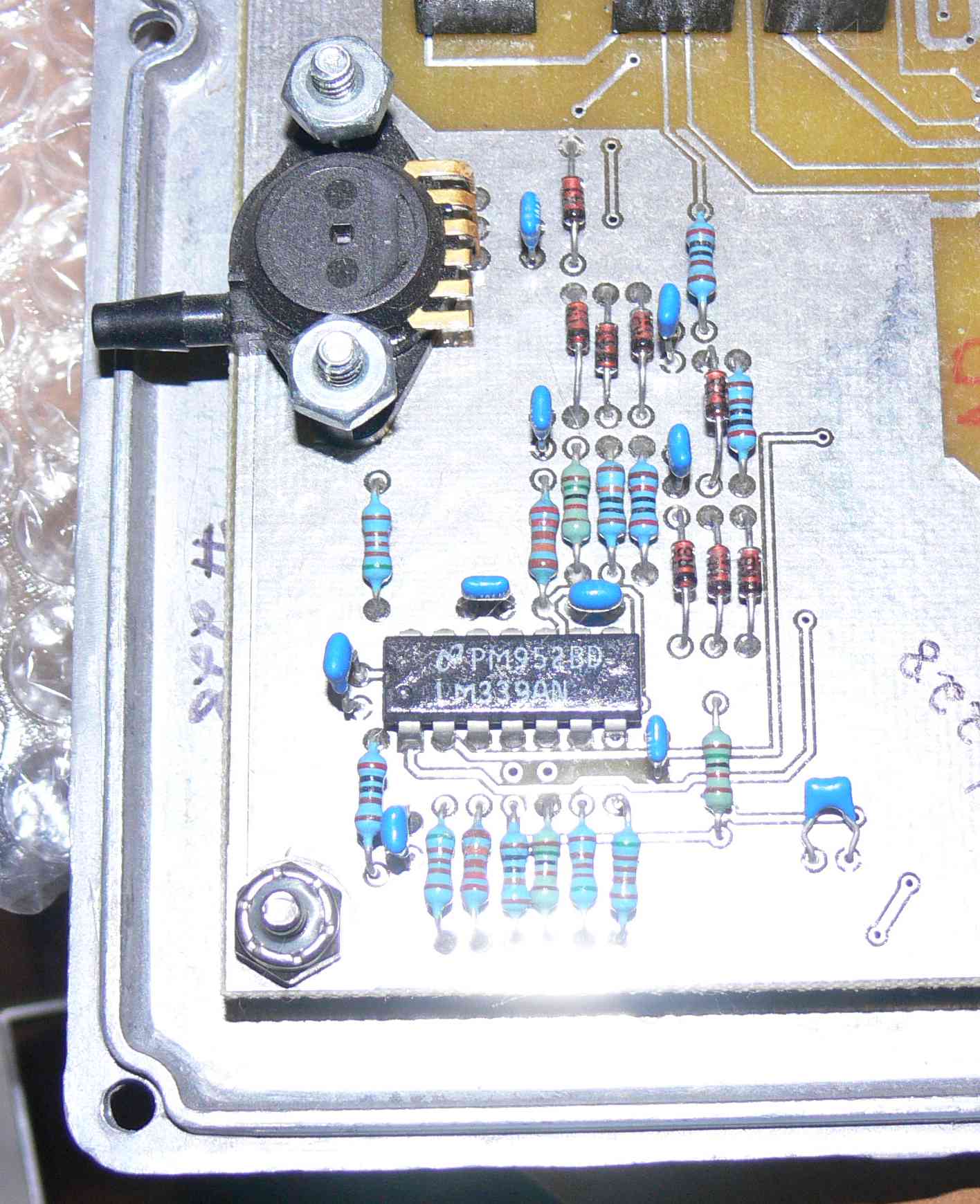
BTW here is a picture of the bottom of the EC1 quad op amp
he may be using as a low pass filter for the
Free Scale MPX 4115 AP pressure sensor I suspect.
There are two of these circuits on the board for the two
pressure sensors.
115 kilopascal = 16.679 339 871 pound/square inch
Later version of the EC may be using a wider range pressure
sensor to accommodate turbo's.
We have got to figure out how to tune this thing easier.
some people fool with them for months if not years.
I think both Tracy and us would be better off with a mass airflow
sensor. Could be mounted almost anywhere in the intake
system. Don't hold your breath :)
Paul Lamar
--
The Rotary Engine NewsLetter. Powered by Linux.
ACRE NL web site.
http://www.rotaryeng.net
Youtube key word PaulLamar2
Copyright 1998-2011 All world wide rights reserved.