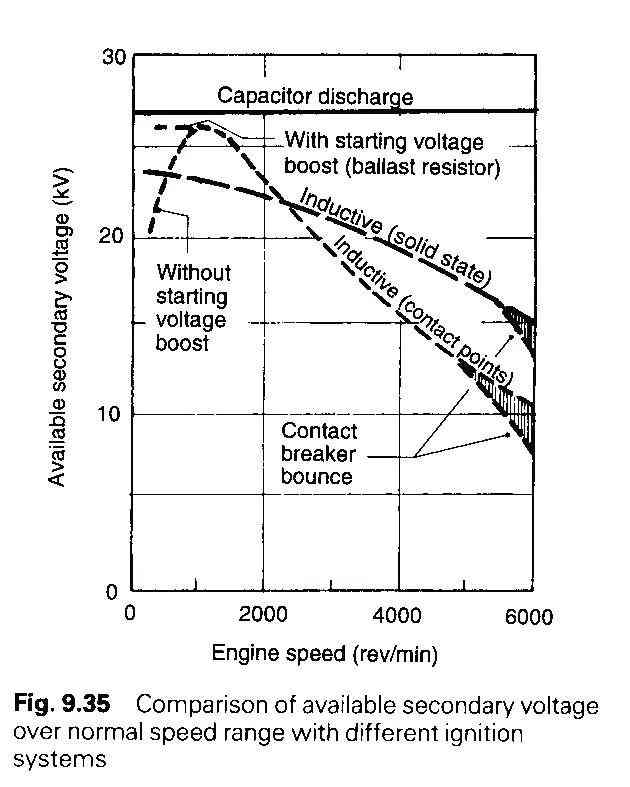
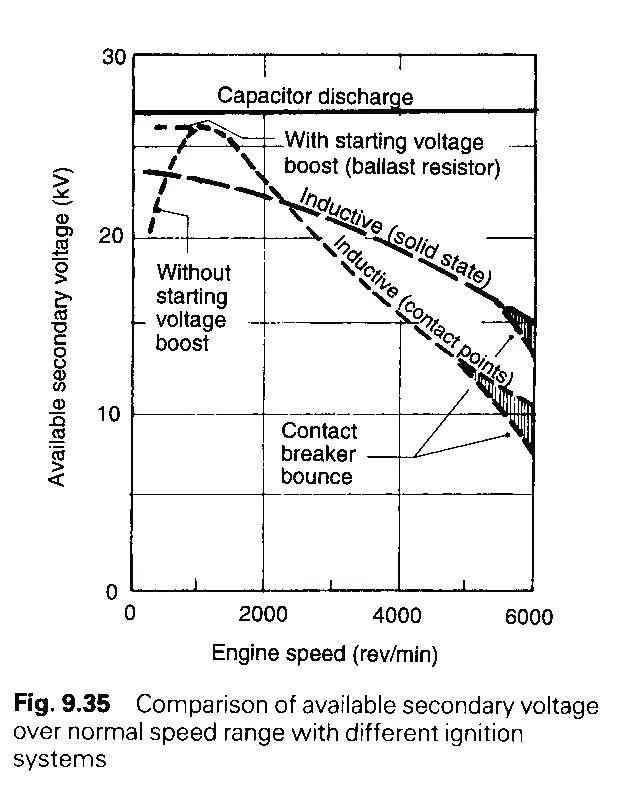
The RX8 coils are the only coils on the market
that will fire 9000 times a minute.
The GM LS2 or LS3 or GM truck coils are only designed
to fire 3500 times a minute at the most.
Some are using them on the rotary and there is some
evidence they start having trouble around 6500 to 7000 RPM.
The reason for this is the four stroke piston engine
fires the plug every other revolution. So 7500
RPM in a Corvette engine the plugs are only firing
3550 times a minute. A rotary fires the plug every
revolution. One reason they get so much power
for the small size of the engine.
I therefore conclude the RX8 coils are our best bet
long term. Mazda had trouble with the early versions.
Some early coils over heated and died killing the engine by
washing off the apex seal oil with raw unburnt fuel.
Poor Mazda had to increase the RX8 engine warranty to
100,000 miles or eight years.
I must say I am not surprised because Mazda was out
there on the bleeding edge with a 9000 RPM
red line and a rotary to boot. Law of unintended
consequences.
Mazda finally identified the problem and improved
the coil (we think) about 2006 to 2007.
Here is a heat sink that should add a bit of long term
reliability.
If you are running a 2.85:1 gear box I recommend RX8 coils.
Paul Lamar
The old (late '60's and early '70's) Trans Am racers were running the engines
to 9000 RPM regularly and occasionally to 9500 RPM. Destroked Chrysler 340's
would run to 10000 RPM. This with inductive coils and points or early
electronic ignition.
Now 9000 RPM is 4500 that fire. I think the Pertronix CD box might work. The
delay of the second spark could be adjusted by dyno tune or in use by watching
BSFC or fuel usage. The trailing delay could be set to the max 18* if possible
to get closer to the trailing end of the rotor. Would involve using 3 or 4
control boxes though which is extra weight and cost.
Dale Davies
Really? Back in those days we rarely saw 8500 RPM. After
2 hours the Chevy engine was junk with hundreds of cracks
every where including the block.
I was with the Jerry Titus Pontiac TransAm team and we ran Chevies.
Before that I was with Chaparral. The max RPM and life of the
Chevy V8 engine was the same. To get it to go 24 hours
we had to back it off to 7500 RPM and then it was junk
if it even made 24 hours.
Yes I can see how shortening the stroke
will raise the max RPM. The 2.4 L Form 1 V8 with about a 1.5 inch
stroke are turning up to 19,000 RPM. The bore is limited to
3.85" so that puts a lower limit on the stroke. Each cyl is limited
to 18.3 cubic inches. The area of the bore is 11.64 square inches
so the stroke is 1.57 inches.
But this does bring up a good point. As I recall the distributer
had eight wires for eight plugs and the distributor shaft ran at half crank
speed or 4250 RPM times 8 or 34000 sparks per minute. That is 566 sparks per
second or one spark every .00176 seconds. That is 1.76 millisecond.
http://auto.howstuffworks.com/ignition-system4.htm
That is not much dwell time at all. An amazing coil. Perhaps they were CD
systems as I did not pay too much attention to type of ignitions on
the engines. They came in a crate from GM or the contract engine builder.
The spark must have been falling off with the points floating.
Now if they were two level distributors with two sets of points then
each set of points had only 4 plugs to fire so the dwell time
would double to 3.53 milliseconds. A more reasonable number.
About what the LS2 is today.
Check my arithmetic. I have been known to make mistakes.
Paul Lamar
--
The Rotary Engine NewsLetter. Powered by Linux.
ACRE NL web site.
http://www.rotaryeng.net
Youtube key word PaulLamar2
Copyright 1998-2011 All world wide rights reserved.