By the way, after SEVERAL issues, I have now flown off the 40
hours on my KIS. I am on travel again, so further flight testing
will be in April and May. The biggest setback was the death of my
Blue Mountain EFIS, at the same time that BMA went belly up. Took me
months to get a new system (Grand Rapids) installed. Then some
issues with SAG and a Pitot Static leak.
Flying good now, probably marginal cooling in hot weather, have to
see if the cowl flap I installed helps.
Bill Schertz
KIS Cruiser #4045
N343BS
Phase I testing
Hi Bill,
A few cooling suggestions
Bring the duct further out so it is the first
thing the air see's. It does not need to
be attached to the cowl.
Put a radius on it even if you have to cut the
existing radius on the cowl to fit it in.
Cut away the adapter plate for cooling air exit.
It is way over kill for what it does and it is partially
blocking the back side of the rad.
Paul
Would it be better to use a hole saw in both locations requiring relieving to
leave a bit of material along the outside circumference. It would help prevent
flexing around the PSRU bolts in the cutout area. I do not think there would
be a lot of flex to create problems. But after 30 years as a mechanic, I have
seen some weird things happen.
Dale Davies
The loads are primarily torsional when the rubber motor mounts are
on the engine. Up to 600 foot pounds average prop torque is fed
back through the spacer blocks in shear into the rubber motor mounts.
The original plate design is way over kill in most respects. It is also
a bit too heavy hence the adapter plates sold by Jeff that pocket
the plate extensively. By placing the rubber motor mounts on the adapter
plate itself these torsional loads in the spacer blocks are reduced
to 200 foot pounds engine torque maximum.
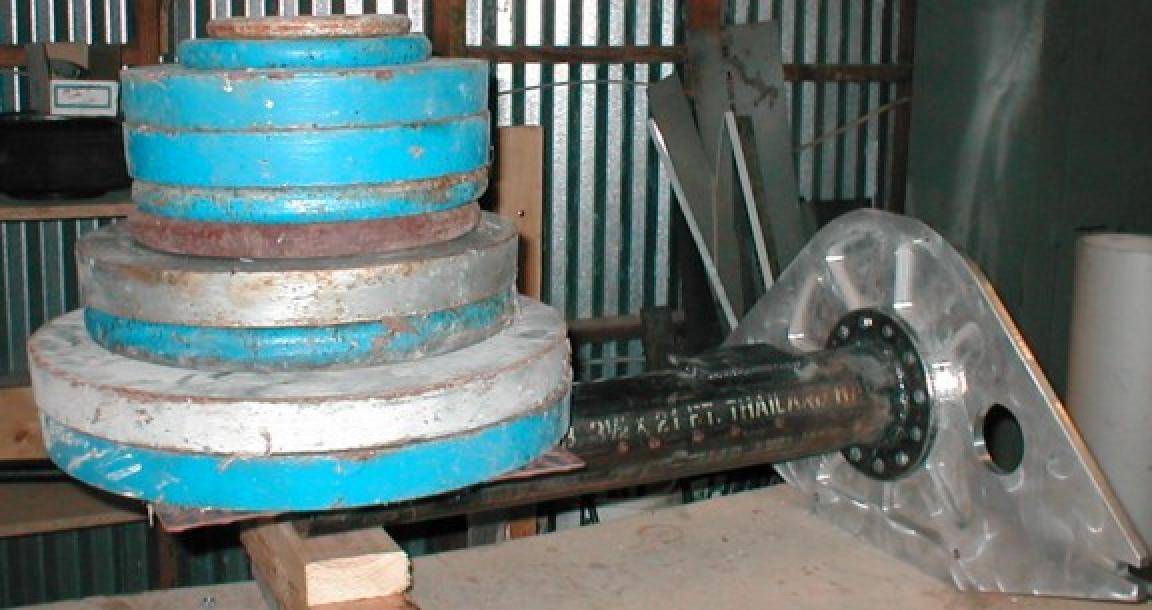
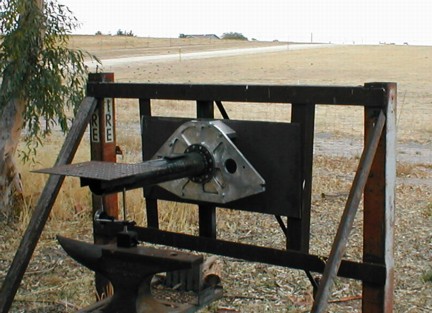
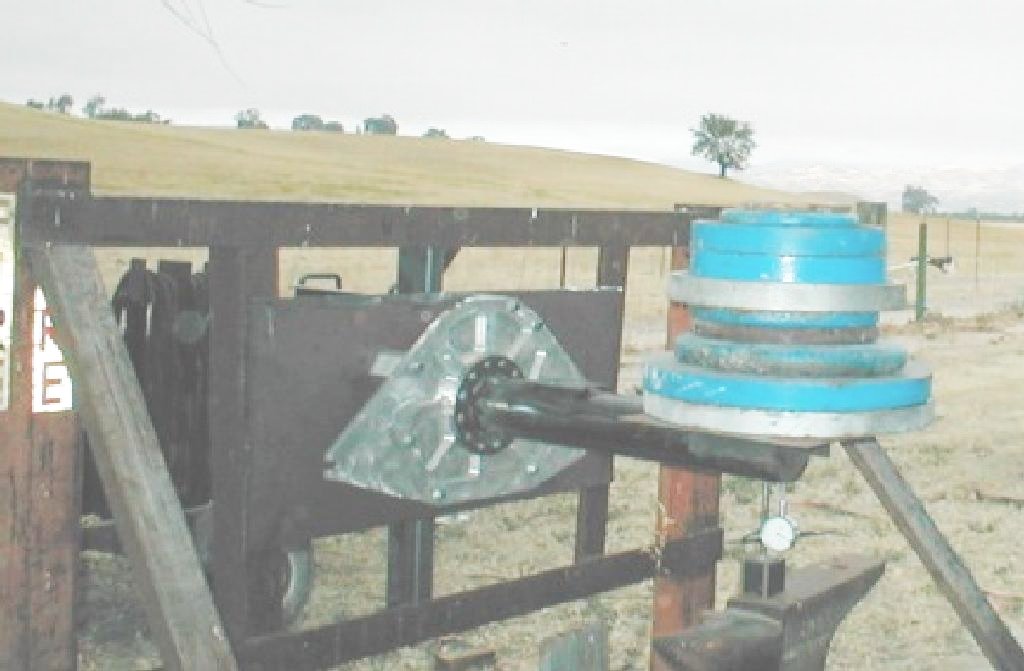
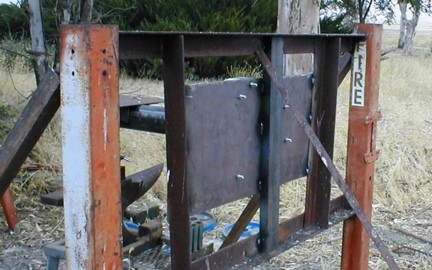
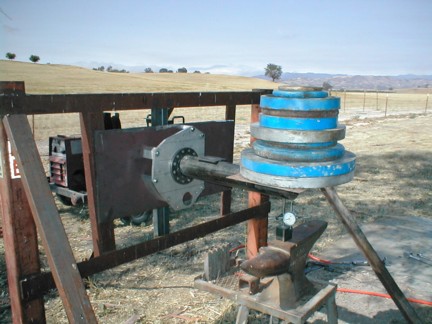
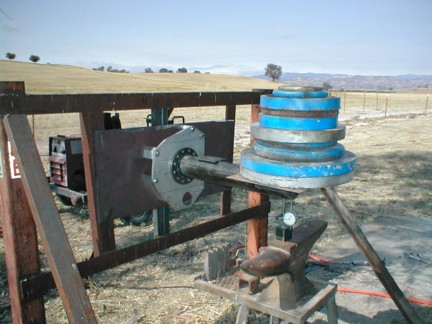
We did a little bending deflection testing on the stock plate awhile
back. See the attached jpgs. The deflection was minimal.
We did not test for prop torque stress or deflection
as it was very easy to calculate.
The best way is to put it in a mill and make the cuts with radial
lines but that is a bit much if you don't own a mill. In that case
a band saw, a hole saw or even a saber saw will do. Assuming one
is using a band saw then a cut out like that is the easiest thing
to do. Yes you could use a band for cutting a hole but then you
would have to cut and re weld the band saw blade.
The reason we don't put holes in Jeffs plate is the best cooling system
design has progressed to either one rad under the engine or one vertical rad
on the cool side of the engine. It is much easier to get the air out of the
backside of the rad in both cases. Getting the air out the back is as important
as getting it to go in the front. I mentioned this in my book based on the
research work of Kuchemann and Weber. Also one rad is easier to plumb than 2.
Potentially the cooling system plumbing is more reliable as well. Bill made
all these decisions years ago before we gained extensive experience
with one rad under the engine. It is a long story but the wedged
shaped diffuser invented/discovered by Kays & London well after WW II
was the key to making the one rad under the engine work.
Paul Lamar
--
The Rotary Engine NewsLetter. Powered by Linux.
ACRE NL web site.
http://www.rotaryeng.net
Youtube key word PaulLamar2
Copyright 1998-2011 All world wide rights reserved.