Hi Dave Leonard,
Did you do your own turbo upgrade to the TO4 big shaft wheel, with
the TO4E 50-trim compressor? Where did you buy the parts?
Paul Lamar
Yes, Paul,
BNR Supercars did the mods to the stock turbo housing. Google
them. I
did the stage 4 upgrade, but selected a high pressure (instead of high
flow) compressor (they can install just about any TO4 compressor you
want.).
--
David Leonard
Turbo Rotary RV-6 N4VY
http://N4VY.RotaryRoster.net <http://n4vy.rotaryroster.net/>
http://RotaryRoster.net <http://rotaryroster.net/>
Where did you buy the parts for stage 4 upgrade high pressure
compressor?
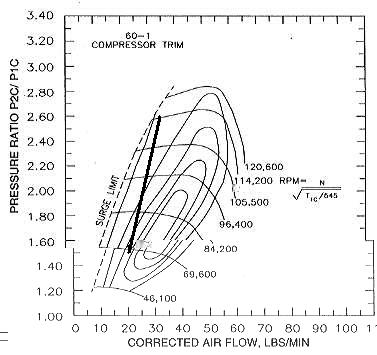
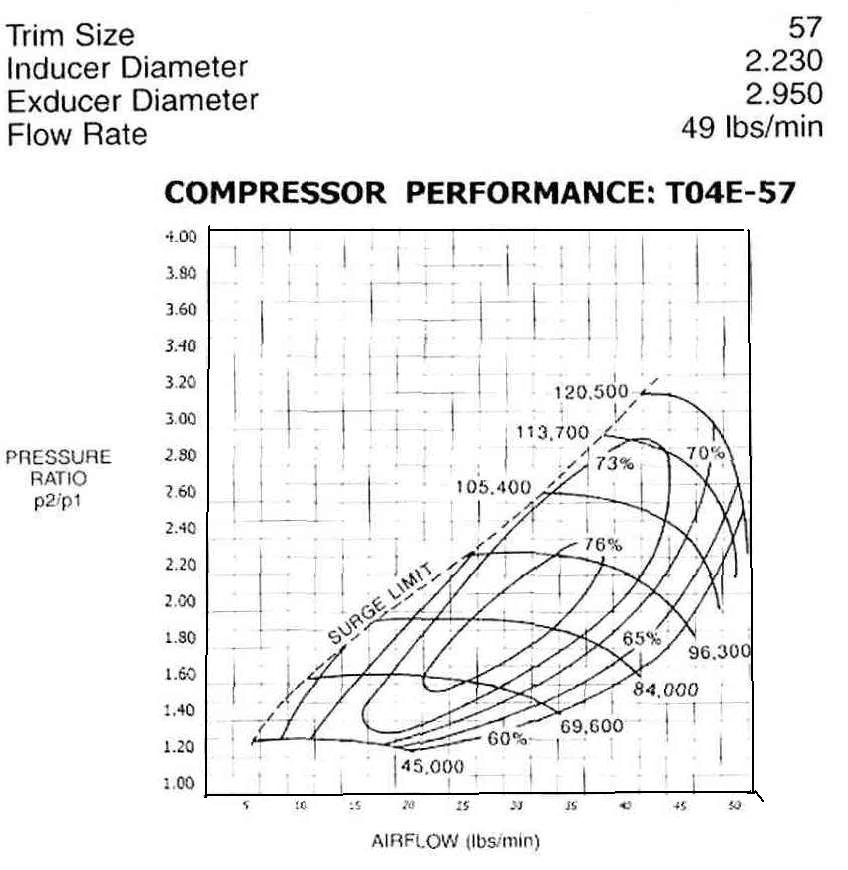
Do you have the maps for both? I think I have your earlier map.
Paul Lamar
I just sent my turbo to BNR and they did all the work and supplied the
parts... boring out the housing, enlarging the waste-gate, making
everything fit, balance turbine and compressor... Cost about 1 AMU.
I looked up the maps on the internet, easy search. To be honest, I
cant
say for sure which compressor I have right now... but I think it is
the
to4-e 50trim... Garrett has a page with all the compressor maps.
--
David Leonard
Turbo Rotary RV-6 N4VY
http://N4VY.RotaryRoster.net <http://n4vy.rotaryroster.net/>
http://RotaryRoster.net <http://rotaryroster.net/>
I spoke to Bryan on the phone. He did not seem to grasp
the problem we are having. He kept talking engine HP.
That is the least of our worries :) I got the impression
he had never installed a tach.
Paul Lamar
Dave, do I have a deal for you. We are about to do a tach
install on Michael's turbo. My next door hangar neighbor Jim Poole
is an excellent machinist. It takes most of the time
setting up the compressor housing on the mill.
If you buy a tach kit we will do yours at the same
time. All you have to do is unbolt the compressor housing
and send it to me.
I am certain if you keep the turbo RPM below 80,000 RPM
at all altitudes you will not blow up another turbo.
Paul Lamar
You are right about Bryan, he does not really get our application. I
had to basically make him put in the to4e instead of the v-trim.
But he
does a good job once you tell him what you want. There are other good
turbo guys out there, but he is the only one I found (besides the guys
in Auz that John Slade used) that can put a TO4 into the stock
housing.
If you want to keep the RPM under 80k at ALL altitudes and power
settings, you will probably have to go to a different class of turbo
all
together, something larger than the TO4 stuff. Or maybe sequentials.
80k is a pretty low number Once you get above a P/R of about 1.6 all
the map I have seen will be above 80k, let alone the worst-case 2.5
P/R
that I expect.
Unfortunately, like I have said. To remove the compressor housing, I
have to remove the whole turbo, exhaust, coolant and oil lines, drain
the coolant etc...I'm just not interested in the extra work. Cause
no matter what the tach says, I'm going to keep doing the same thing I
am now. (keeping EGT under 590C, and on the rich side if I am using
any
significant amount of boost).
Sorry.
--
David Leonard
Turbo Rotary RV-6 N4VY
http://N4VY.RotaryRoster.net <http://n4vy.rotaryroster.net/>
http://RotaryRoster.net <http://rotaryroster.net/>
Maybe I am misunderstanding pressure ratio.
60 inches of HG sounds like a P/R of 2.
That means 400 HP I think.
What am I missing?
Pressure Ratio defined: Garrett.
* Pressure Ratio is defined as the Absolute
outlet pressure divided by the Absolute inlet pressure.
http://www.turbobygarrett.com/turbobygarrett/tech_center/turbo_tech103.html
Why would you need more than about 1.5 ?
or 45" Hg.
My guess is find a compressor that puts out 1.5 P/R
at less than 80K.
BTW 590C is 1100 F. Rich as the ocean :)
Do the tach when BNR sends it back.
We have about a month.
I'll take off just the compressor housing today
on the mock up to see what is needed to be removed.
I can see your coolant line would be a problem.
Paul Lamar
But if you want to make 45" at 17k', that is a PR of 3. You said all
altitudes and all power settings. normalize to 17k' and the PR is 2.
You are right, I was mistaken about the EGT. I meant 890C [1634 F].
Peak is about 920C [1688 F], and I usually keep it significantly less.
--
David Leonard
Turbo Rotary RV-6 N4VY
http://N4VY.RotaryRoster.net <http://n4vy.rotaryroster.net/>
http://RotaryRoster.net <http://rotaryroster.net/>
Easy for you to say as you have oxygen given your profession :)
I think most people fly 12,000 to 14,000 without oxygen.
Yes, under certain circumstance it would be nice to have
45" Hg at 17,000 feet.
Btw what manifold pressure are you seeing?
What is the highest you have seen at 12,000?
Paul Lamar
I once recorded these numbers in level flight:
altitude 17600
IAS 153 kts
TAS 207 kts
GS 257 kts (nice tailwind) [296 MPH!!!!!!!!!!]
MAP 28.0
RPM 6560
But I can't remember if I was full throttle or holding back because of
the RPM. Pretty close to full throttle anyway.
Not sure about 12k off the top of my head. My guess is upper 30's at least.
--
David Leonard
Wow that is cool. Flat rated to 17,000 feet.
Not bad for a under $5000 engine and 200 HP.
An aircraft version would cost you $50,000 and up.
However an untold number of hours of T&E.
I'll up the suggested turbo red line to 85,000 RPM.
I think we would get 90% of what we need at 85,000 RPM
That is 27% less centrifugal load on the blades than
at 100,000 RPM.
That will also give us a P/R of about 1.85 or 12 psi boost
or about 54" Hg at sea level. HP will be up to about 300 HP
so of course one must back off the throttle or leave the waste
gate open. You don't want to bust the gear box which Dave
did once.
BTW one must also monitor the intake air temperature after the
inter cooler to make sure one does not get detonation. WW II P38
pilots were told to never exceed 140 degrees F.
Injecting the fuel just after the inter cooler will cool the
intake air to near 32 F by evaporation. Mark Suspinski's 13B
got frost on the intake tubes because the injectors were
about 18 inches upstream of the intake p-ports.
An advantage the P38 did not have.
Paul Lamar
The Rotary Engine NewsLetter. Powered by Linux.
ACRE NL web site.
http://www.rotaryeng.net
Youtube key word PaulLamar2
Copyright 1998-2011 All world wide rights reserved.